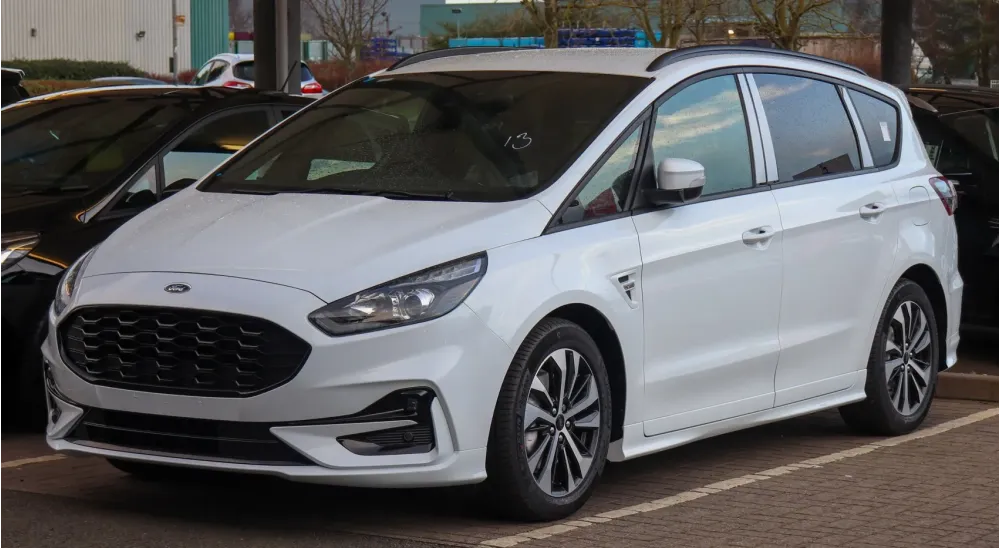
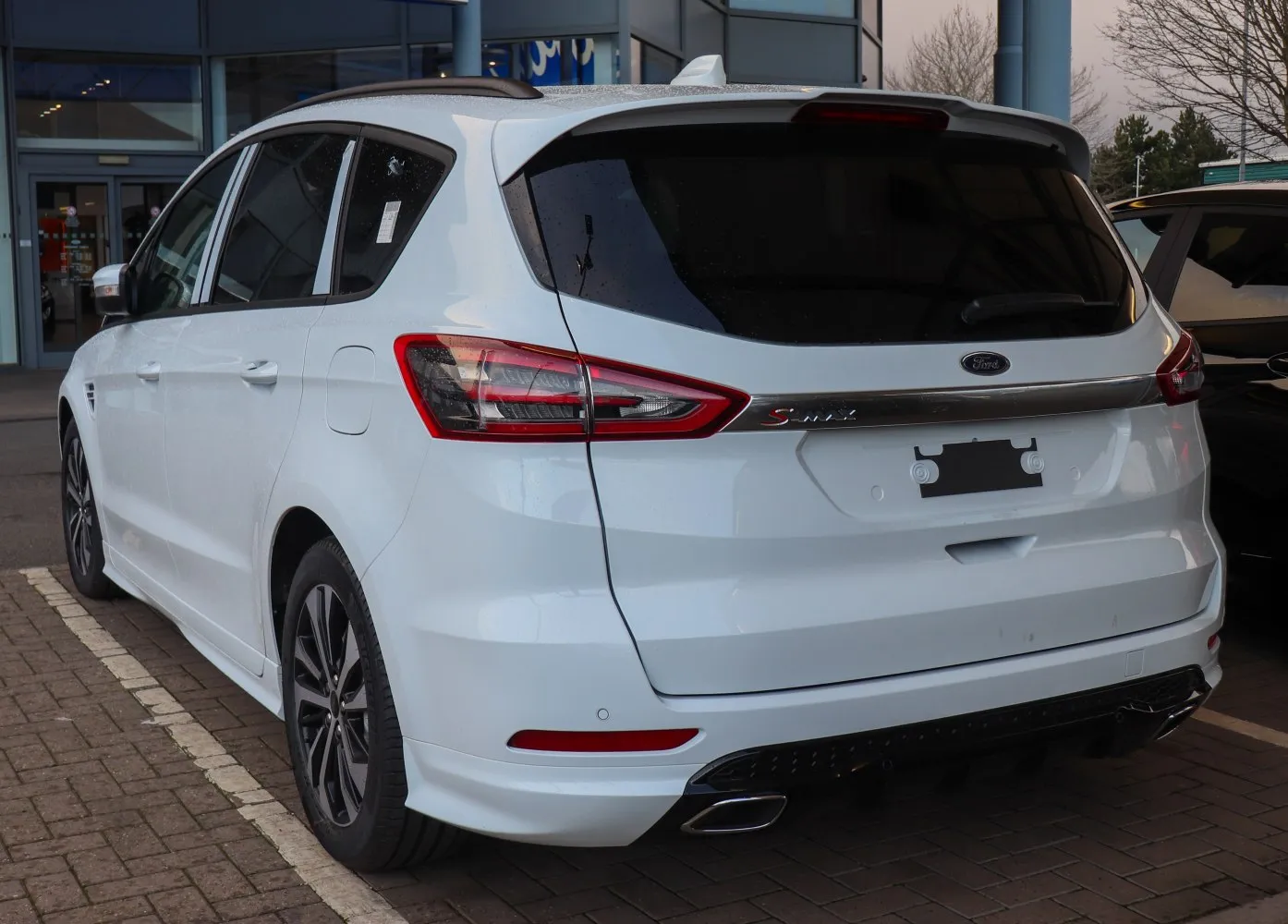
Ford S-MAX II (facelift 2019) 2.5 (190 Hp) Hybrid CVT
People\'s Opinion
N/A / 5
Ford S-MAX:
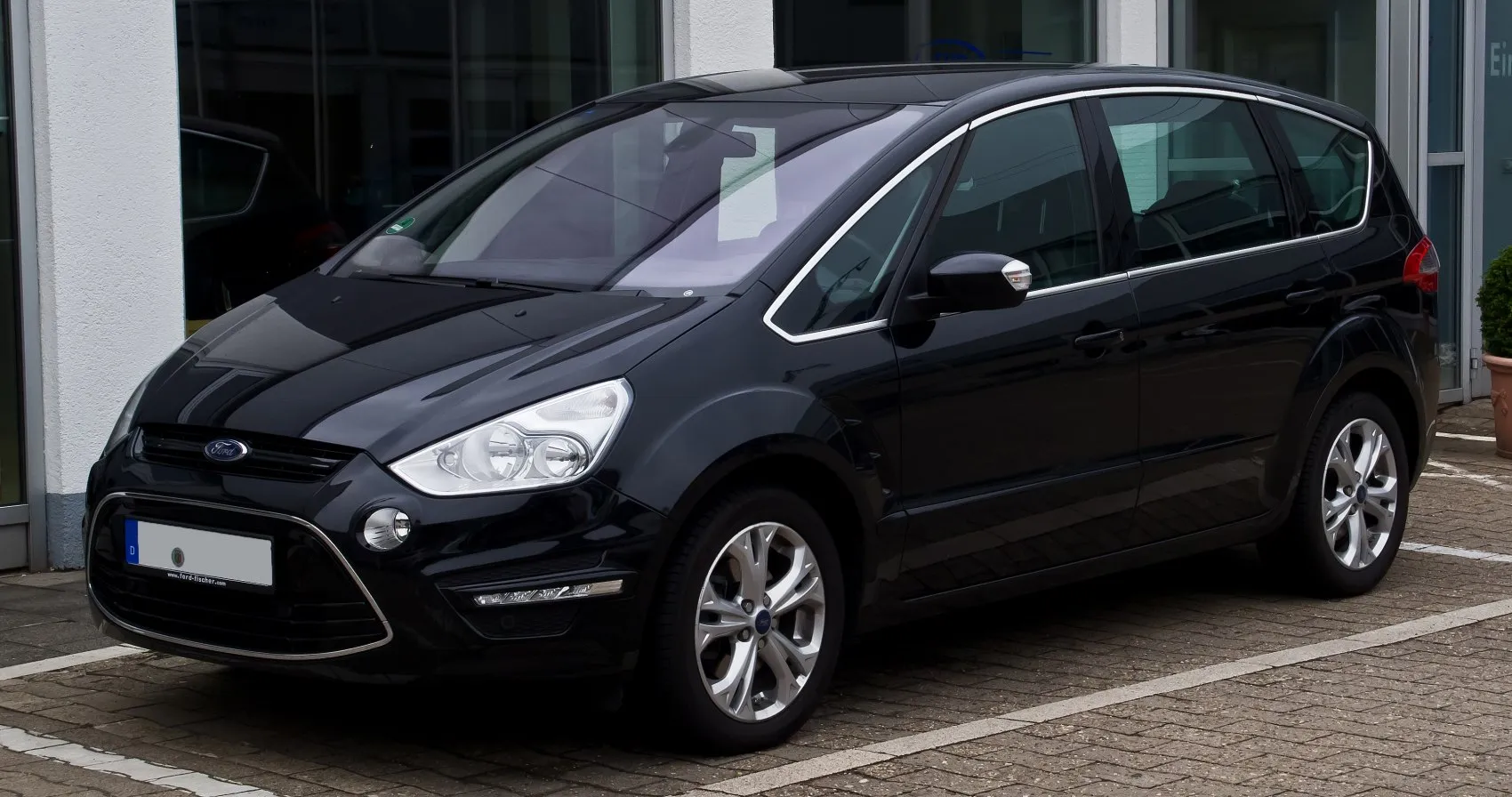
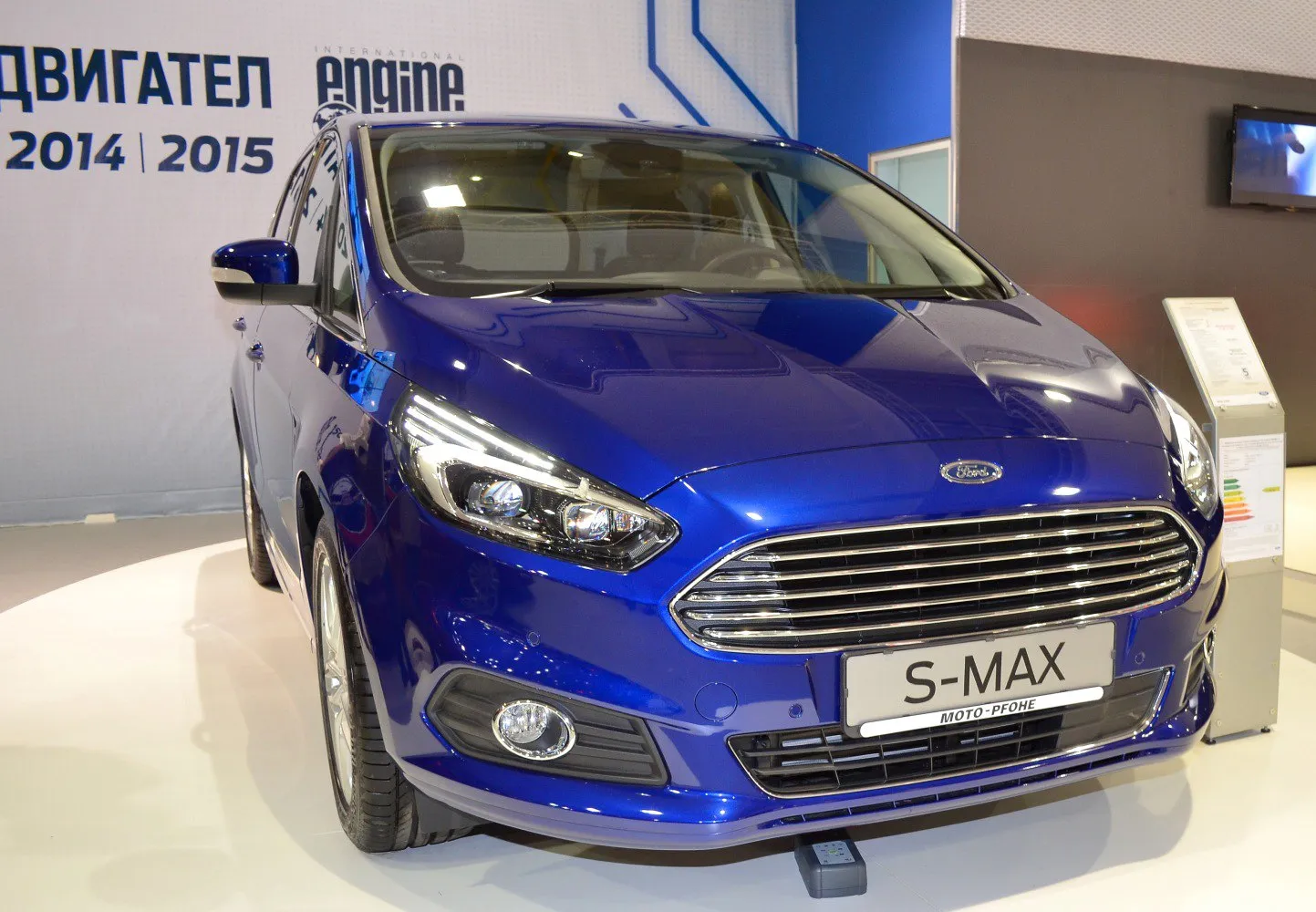
The Ford S-Max is a mid-size MPV that was produced by Ford Europe for the European market. A multi-purpose vehicle , Ford also describes the S-Max as an SAV. Introduced at the 2006 Geneva Motor Show, the S-Max went on sale alongside the new generation Ford Galaxy in June 2006.
The S-Max was intended to be as sporty as a saloon car, and spacious as an MPV. It drew inspiration from the seven-seater large MPV Galaxy and the compact MPV Ford C-Max. The S-Max received many positive reviews and awards, and was voted European Car of the Year 2007 on 13 November 2006. Ford had plans to sell the S-Max in Japan under the then subsidiary brand Mazda, but that was no longer viable upon the latter's split....(Read more on Wikipedia)
II (facelift 2019) Overview:
Ford S-MAX (II (facelift 2019)). With 200 Nm of torque, it offers ample pulling power. It has moderate fuel consumption (~6.3 l/100km). With a weight of 1827 kg, it falls in the mid‑range. Front‑wheel drive delivers efficiency and easy handling. Acceleration is relatively slow (0–100 km/h in 9.8 s). The top speed reaches 185 km/h. A multi-purpose vehicle designed to transport passengers with ample interior space. Seating for 5 makes it ideal for daily use.
Performance Verdict
Smooth and responsive acceleration, particularly effective in urban environments with instant electric torque. The CVT ensures seamless power delivery.
Fuel Economy
Very good fuel economy for a petrol hybrid of this size, especially in stop-and-go traffic, contributing to lower running costs.
Best Use Case:
Urban and mixed driving, eco-conscious buyers, and those prioritizing refinement.
Pros and Cons:
Pros:
- • Dynamic driving experience for an MPV
- • Spacious and versatile interior with 5 or 7 seats
- • Wide range of efficient engine options, including hybrid
- • Comfortable ride quality and refined handling
- • Modern infotainment and driver assistance features
Cons:
- • Rearmost seats are best for children or short journeys
- • Some interior plastics feel less premium than rivals
- • Fuel economy of the petrol EcoBoost can be high
- • Visibility can be challenging due to thick pillars
- • Boot space is limited with all seven seats in use
Specifications:
Specifications are compared to those of the previous generation(II: 2018 - 2019).
| General: |
| Brand: | Ford |
|---|
| Model: | S-MAX |
|---|
| Generation: | II (facelift 2019) |
|---|
| Modification (Engine): | 2.5 (190 Hp) Hybrid CVT |
|---|
| Start of production: | February, 2021 |
|---|
| End of production: | April, 2023 |
|---|
| Powertrain Architecture: | FHEV (Full Hybrid Electric Vehicle) |
|---|
| Body type: | MPV |
|---|
| Seats: | 5 |
|---|
| Doors: | 5 |
|---|
| Engine: |
| Engine systems: | Start & Stop System |
|---|
| Power: | 150 Hp Same horsepower |
|---|
| Power per litre: | 60.3 Hp/l [8mm more] |
|---|
| Torque: | 200 Nm |
|---|
| Engine Model/Code: | BGCA More details about the engine BGCA |
|---|
| Engine displacement: | 2488 |
|---|
| Number of cylinders: | 4 |
|---|
| Engine configuration: | Inline |
|---|
| Number of valves per cylinder: | 4 |
|---|
| Fuel injection system: | Multi-port manifold injection |
|---|
| Engine aspiration: | Naturally aspirated engine |
|---|
| Valvetrain: | DOHC, VCT |
|---|
| Engine oil capacity: | 5.4 l |
|---|
| Engine layout: | Front, Transverse |
|---|
| Cylinder Bore: | 89 mm |
|---|
| Piston Stroke: | 100 mm |
|---|
| Compression ratio: | 13:1 |
|---|
| Performance: |
| Fuel Type: | Petrol (Gasoline) |
|---|
| Fuel consumption (economy) - urban: | 6.3 l/100 km |
|---|
| Fuel consumption (economy) - extra urban: | 5.2 l/100 km |
|---|
| Combined fuel consumption (WLTP): | 6.4 l/100 km |
|---|
| Fuel consumption (economy) - combined (NEDC): | 5.6 l/100 km |
|---|
| Fuel consumption (economy) - urban (NEDC): | 6.3 l/100 km |
|---|
| Fuel consumption (economy) - extra urban (NEDC): | 5.2 l/100 km |
|---|
| Fuel consumption (economy) - combined: | 5.6 l/100 km |
|---|
| Emission standard: | Euro 6d-ISC-FCM |
|---|
| Acceleration 0 - 100 km/h: | 9.8 sec |
|---|
| Acceleration 0 - 62 mph: | 9.8 sec |
|---|
| Maximum speed: | 185 km/h |
|---|
| Weight-to-power ratio: | 9.6 kg/Hp, 104 Hp/tonne |
|---|
| Weight-to-torque ratio: | 9.1 kg/Nm, 109.5 Nm/tonne |
|---|
| Acceleration 0 - 60 mph: | 9.3 sec |
|---|
| Space: |
| Kerb Weight: | 1827 |
|---|
| Max. weight: | 2350 |
|---|
| Max. roof load: | 75 kg |
|---|
| Max load: | 523 |
|---|
| Trunk (boot) space - maximum: | 2200 l |
|---|
| Trunk (boot) space - minimum: | 700 l |
|---|
| Permitted trailer load with brakes (12%): | 1750 kg |
|---|
| Fuel tank capacity: | 65 l |
|---|
| Permitted trailer load without brakes: | 750 kg |
|---|
| Size: |
| Length: | 4804 mm [8mm more] |
|---|
| Width: | 1916 mm [Same width.] |
|---|
| Height: | 1684-1710 mm [29mm more] |
|---|
| Wheelbase: | 2850 mm [1mm more] |
|---|
| Width with mirrors folded: | 1953 mm |
|---|
| Width including mirrors: | 2137 mm |
|---|
| Front track: | 1606 mm |
|---|
| Rear (Back) track: | 1606 mm |
|---|
| Ride height (ground clearance): | 141 mm |
|---|
| Minimum turning circle (turning diameter): | 11.95 m [above average] |
|---|
| Powertrain: |
| Drivetrain Architecture | The Internal combustion engine (ICE) and electric motor drive the front wheels of the car with the ability to work in full electric or mixed mode. |
|---|
| Drive wheel | Front wheel drive |
|---|
| Transmission type | Automatic |
|---|
| Gearbox type | CVT |
|---|
| Front brakes | Ventilated discs, 316x28 mm [Best for performance and cooling.] |
|---|
| Rear brakes | Disc, 316x11 mm [above average] |
|---|
| Assisting systems | ABS (Anti-lock braking system) |
|---|
| Steering type | Steering rack and pinion |
|---|
| Power steering | Electric Steering |
|---|
| Tires size | 235/55 R17; 235/50 R18; 245/45 R19 |
|---|
| Wheel rims size | 7.5J x 17; 7.5J x 18; 8J x 19 |
|---|
| Front suspension | Independent, type McPherson with coil spring and anti-roll bar |
|---|
| Rear suspension | Independent multi-link spring suspension with stabilizer |
|---|
| Electric: |
| Gross battery capacity: | 1.1 kWh |
|---|
| Battery technology: | Lithium-ion (Li-Ion) |
|---|
| Battery location: | Below the floor |
|---|
| System power: | 190 Hp @ 5500 rpm. |
|---|
| System torque: | 200 Nm |
|---|
| Electric motor power: | 133 Hp |
|---|
| Electric motor type: | Synchronous |
|---|












Is it love at first sight with the Ford S-MAX? Tell us your story!