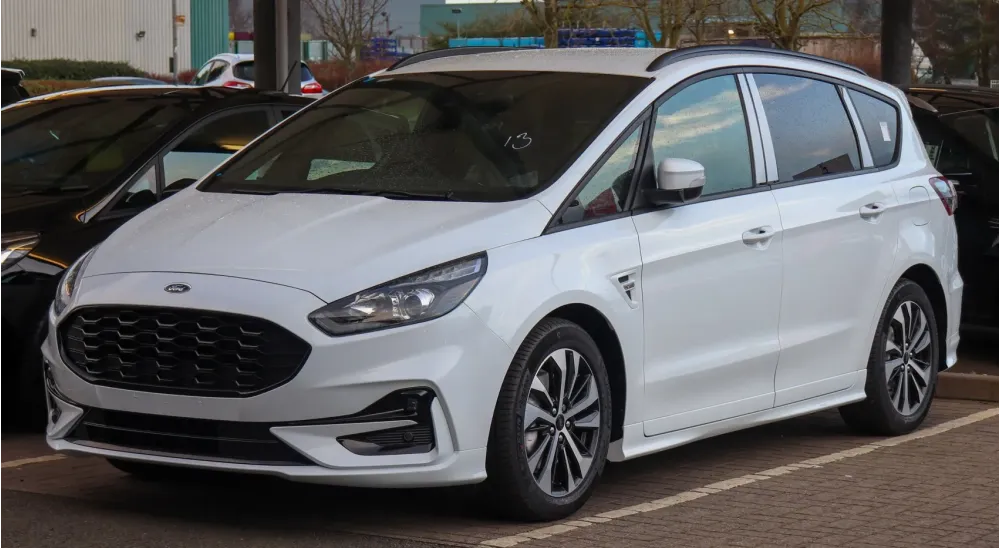
Click on image to view the full photo gallery
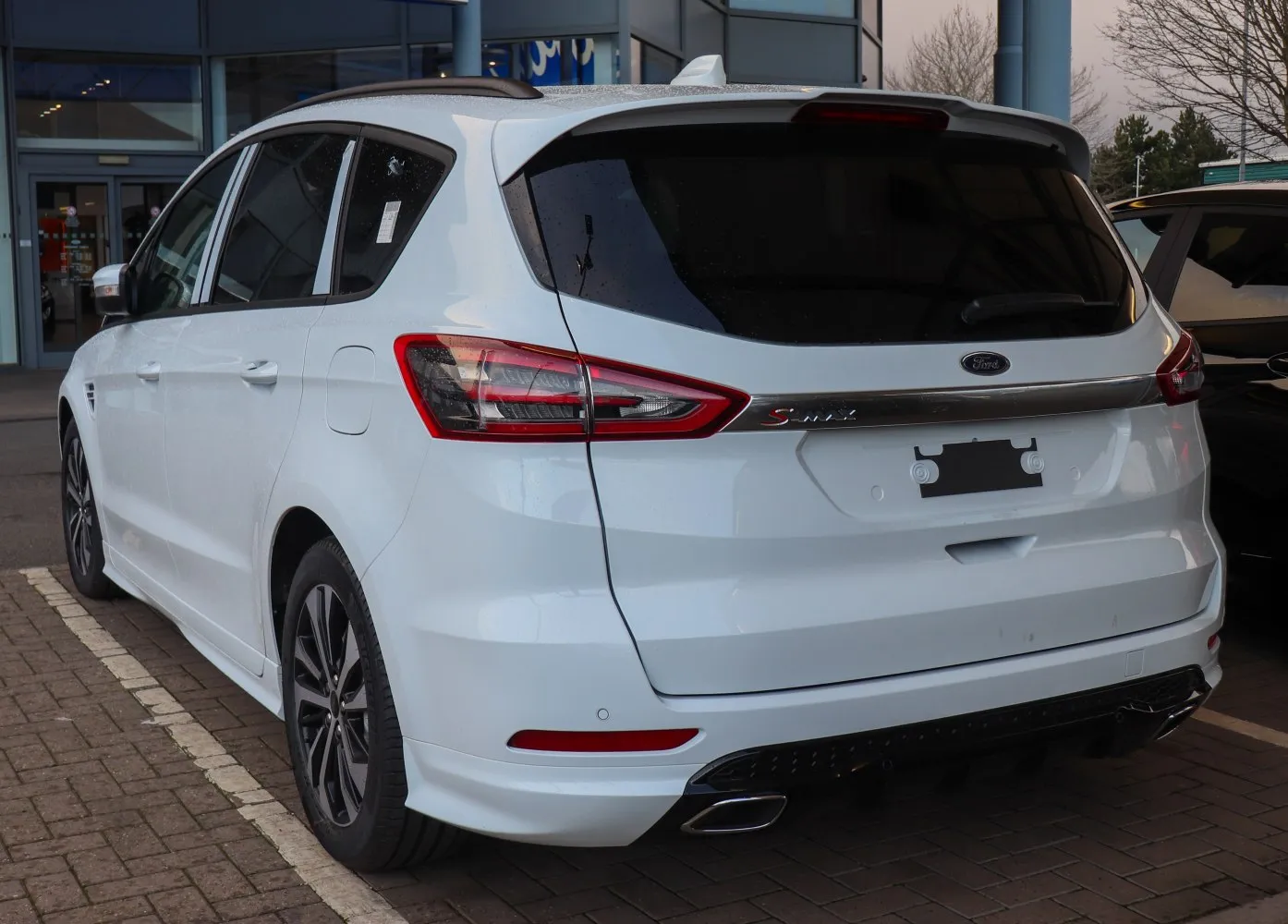
Ford S-MAX II (facelift 2019) 2.0 EcoBlue (190 Hp) Automatic
Overall Rating
Ford S-MAX:
The Ford S-Max is a mid-size MPV that was produced by Ford Europe for the European market. A multi-purpose vehicle , Ford also describes the S-Max as an SAV. Introduced at the 2006 Geneva Motor Show, the S-Max went on sale alongside the new generation Ford Galaxy in June 2006.
The S-Max was intended to be as sporty as a saloon car, and spacious as an MPV. It drew inspiration from the seven-seater large MPV Galaxy and the compact MPV Ford C-Max. The S-Max received many positive reviews and awards, and was voted European Car of the Year 2007 on 13 November 2006. Ford had plans to sell the S-Max in Japan under the then subsidiary brand Mazda, but that was no longer viable upon the latter's split....(Read more on Wikipedia)
II (facelift 2019) Overview:
Ford S-MAX (II (facelift 2019)). With 400 Nm of torque, it offers ample pulling power. It has moderate fuel consumption (~6.2 l/100km). With a weight of 1830 kg, it falls in the mid‑range. Front‑wheel drive delivers efficiency and easy handling. Acceleration is relatively slow (0–100 km/h in 9.7 s). The top speed reaches 208 km/h. A multi-purpose vehicle designed to transport passengers with ample interior space. Seating for 5 makes it ideal for daily use.
2.0 EcoBlue (190 Hp) Automatic Verdict:

Performance Verdict
Noticeably quicker and more responsive than the 150hp variant, making highway overtaking and carrying heavier loads effortless.
Fuel Economy
Excellent fuel economy considering the increased power output, offering a great balance of performance and efficiency.
Pros and Cons:
Pros:
- • Dynamic driving experience for an MPV
- • Spacious and versatile interior with 5 or 7 seats
- • Wide range of efficient engine options, including hybrid
- • Comfortable ride quality and refined handling
- • Modern infotainment and driver assistance features
Cons:
- • Rearmost seats are best for children or short journeys
- • Some interior plastics feel less premium than rivals
- • Fuel economy of the petrol EcoBoost can be high
- • Visibility can be challenging due to thick pillars
- • Boot space is limited with all seven seats in use
Specifications:
Specifications are compared to those of the previous generation(II (facelift 2019): February, 2021 - April, 2023).
| General: | |
|---|---|
| Brand: | Ford |
| Model: | S-MAX |
| Generation: | II (facelift 2019) |
| Modification (Engine): | 2.0 EcoBlue (190 Hp) Automatic |
| Start of production: | November, 2019 |
| End of production: | April, 2023 |
| Powertrain Architecture: | Internal Combustion engine |
| Body type: | MPV |
| Seats: | 5-7 |
| Doors: | 5 |
| Engine: | |
|---|---|
| Engine systems: | Start & Stop System |
| Power: | 190 Hp @ 3500 rpm. Same horsepower |
| Torque: | 400 Nm @ 2000-3000 rpm. |
| Engine Model/Code: | BCCC More details about the engine BCCC |
| Number of cylinders: | 4 |
| Engine configuration: | Inline |
| Number of valves per cylinder: | 4 |
| Fuel injection system: | Diesel Commonrail |
| Engine aspiration: | Turbocharger, Intercooler |
| Engine oil capacity: | 6.4 l |
| Coolant: | 10.7 l |
| Performance: | |
|---|---|
| Fuel Type: | Diesel |
| Fuel consumption (economy) - urban: | 6.0-6.4 l/100 km |
| Fuel consumption (economy) - extra urban: | 4.7-5.2 l/100 km |
| Fuel consumption (economy) - urban (NEDC, WLTP equivalent): | 6.0-6.4 l/100 km |
| Fuel consumption (economy) - extra urban (NEDC, WLTP equivalent): | 4.7-5.2 l/100 km |
| Fuel consumption (economy) - combined (NEDC, WLTP equivalent): | 5.2-5.7 l/100 km |
| Fuel consumption (economy) - combined: | 5.2-5.7 l/100 km |
| Emission standard: | Euro 6d-TEMP-EVAP-ISC |
| Acceleration 0 - 100 km/h: | 9.7 sec |
| Acceleration 0 - 62 mph: | 9.7 sec |
| Maximum speed: | 208 km/h |
| Weight-to-power ratio: | 9.6 kg/Hp, 103.8 Hp/tonne |
| Weight-to-torque ratio: | 4.6 kg/Nm, 218.6 Nm/tonne |
| Acceleration 0 - 60 mph: | 9.2 sec |
| Space: | |
|---|---|
| Kerb Weight: | 1830 |
| Max. weight: | 2555 |
| Max. roof load: | 75 kg |
| Max load: | 725 |
| Trunk (boot) space - maximum: | 2020 l |
| Trunk (boot) space - minimum: | 965 l |
| Permitted trailer load with brakes (12%): | 2000 kg |
| Fuel tank capacity: | 63 l |
| Permitted trailer load without brakes: | 750 kg |
| Permitted towbar download: | 90 kg |
| Permitted trailer load with brakes (8%): | 2000 kg |
| Size: | |
|---|---|
| Length: | 4796 mm mm [8mm less] |
| Width: | 1916 mm mm [Same width.] |
| Height: | 1655 mm mm [29mm less] |
| Wheelbase: | 2850 mm mm [Same wheelbase.] |
| Width with mirrors folded: | 1953 mm |
| Width including mirrors: | 2137 mm |
| Minimum turning circle (turning diameter): | 11.95 m [above average] |
| Powertrain: | |
|---|---|
| Drivetrain Architecture | The Internal combustion engine (ICE) drives the front wheels of the vehicle. |
| Drive wheel | Front wheel drive |
| Number of gears | 8 |
| Transmission type | Automatic |
| Front brakes | Ventilated discs [Best for performance and cooling.] |
| Rear brakes | Disc [above average] |
| Assisting systems | ABS (Anti-lock braking system) |
| Steering type | Steering rack and pinion |
| Power steering | Electric Steering |
| Tires size | 235/55 R17; 235/50 R18 |
| Wheel rims size | 7.5J x 17; 7.5J x 18 |
| Front suspension | Independent, type McPherson with coil spring and anti-roll bar |
| Rear suspension | Independent coil spring |










Driven it? Loved it? Hated it? Share your honest review!