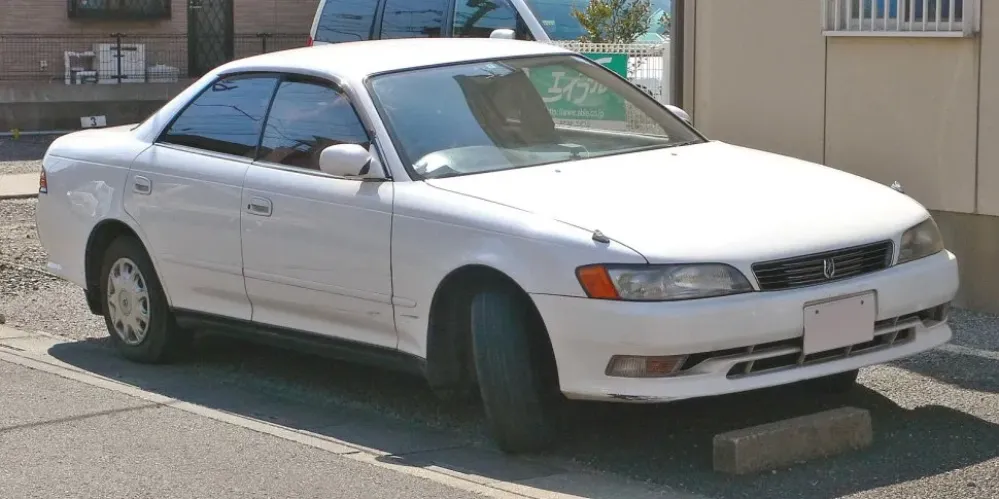
Click on image to view the full photo gallery
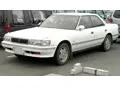
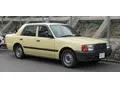
Toyota Mark II GX90 2.5i 24V Twin-turbo (280 Hp) Automatic
Overall Rating
Toyota Mark II:
The Toyota Mark II is a compact, later mid-size sedan manufactured and marketed in Japan by Toyota between 1968 and 2004. Prior to 1972, the model was marketed as the Toyota Corona Mark II. In most export markets, Toyota marketed the vehicle as the Toyota Cressida between 1976 and 1992 across four generations. Toyota replaced the rear-wheel-drive Cressida in North America with the front-wheel-drive Avalon. Every Mark II and Cressida was manufactured at the Motomachi plant at Toyota, Aichi, Japan from September 1968 to October 1993, and later at Toyota Motor Kyushu's Miyata plant from December 1992 to October 2000, with some models also assembled in Jakarta, Indonesia and Parañaque, Philippines as the Cressida....(Read more on Wikipedia)
GX90 Overview:
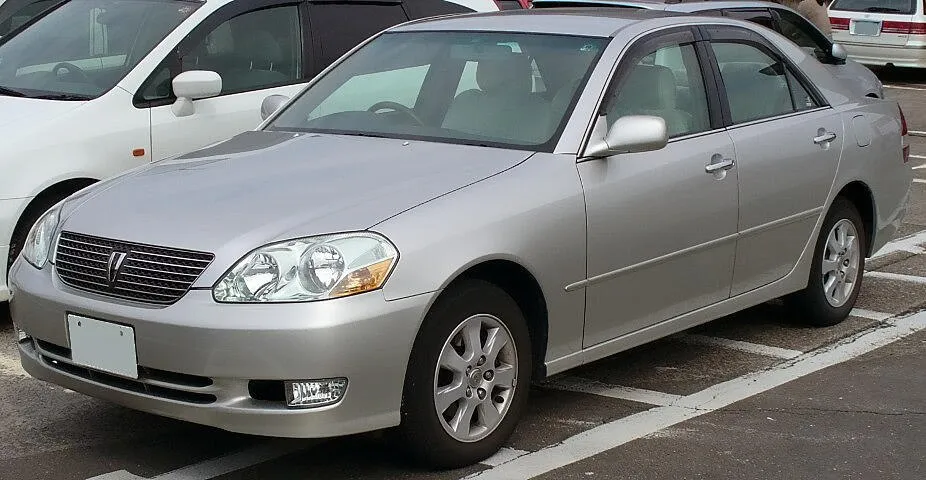
Toyota Mark II (GX90). With 378 Nm of torque, it offers ample pulling power. It has moderate fuel consumption (~10.99 l/100km). With a weight of 1450 kg, it falls in the mid‑range. Rear‑wheel drive offers dynamic handling and sporty feedback. A four-door car with a separate trunk, ideal for families and daily commuting. Seating for 5 makes it ideal for daily use.
2.5i 24V Twin-turbo (280 Hp) Automatic Verdict:

Performance Verdict
Exceptional performance with strong twin-turbocharged acceleration, delivering a thrilling driving experience. A true enthusiast's engine.
Fuel Economy
High fuel consumption is expected for a powerful twin-turbo engine, not its strong suit. Performance comes at a cost.
Pros and Cons:
Pros:
- • Legendary JDM reliability and build quality
- • Wide range of powerful and smooth inline-six engines, including the iconic 1JZ-GTE
- • Spacious and comfortable interior with excellent ride quality
- • Strong aftermarket support for performance and customization
- • Timeless, understated styling that ages well
Cons:
- • Base models can feel underpowered for the vehicle's size
- • Fuel economy can be poor, especially on higher-performance models
- • Lack of modern safety features (common for its era)
- • Finding well-maintained examples can be challenging outside Japan
- • Rust can be an issue in certain climates
Specifications:
Specifications are compared to those of the previous generation(GX 81: 1989 - 1992).
| General: | |
|---|---|
| Brand: | Toyota |
| Model: | Mark II |
| Generation: | GX90 |
| Modification (Engine): | 2.5i 24V Twin-turbo (280 Hp) Automatic |
| Start of production: | 1992 |
| End of production: | 1996 |
| Powertrain Architecture: | Internal Combustion engine |
| Body type: | Sedan |
| Seats: | 5 |
| Doors: | 4 |
| Engine: | |
|---|---|
| Power: | 280 Hp @ 6200 rpm. Same horsepower |
| Power per litre: | 112.4 Hp/l [worst than previous generation] |
| Torque: | 378 Nm @ 2400 rpm. |
| Engine Model/Code: | 1JZ-GTE More details about the engine 1JZ-GTE |
| Engine displacement: | 2492 |
| Number of cylinders: | 6 |
| Engine configuration: | Inline |
| Number of valves per cylinder: | 4 |
| Fuel injection system: | Multi-port manifold injection |
| Engine aspiration: | Turbocharger |
| Valvetrain: | DOHC |
| Engine oil capacity: | 5.4 l |
| Engine layout: | Front, Longitudinal |
| Cylinder Bore: | 86 mm |
| Piston Stroke: | 71.5 mm |
| Compression ratio: | 9:1 |
| Performance: | |
|---|---|
| Fuel Type: | Petrol (Gasoline) |
| Fuel consumption (economy) - urban: | 10.99 l/100 km |
| Fuel consumption (economy) - extra urban: | 6 l/100 km |
| Fuel consumption (economy) - combined: | 8.5 l/100 km |
| Weight-to-power ratio: | 5.2 kg/Hp, 193.1 Hp/tonne |
| Weight-to-torque ratio: | 3.8 kg/Nm, 260.7 Nm/tonne |
| Space: | |
|---|---|
| Kerb Weight: | 1450 |
| Max. weight: | 1725 |
| Max load: | 275 |
| Fuel tank capacity: | 70 l |
| Size: | |
|---|---|
| Length: | 4750 mm |
| Width: | 1750 mm |
| Height: | 1390 mm |
| Wheelbase: | 2730 mm |
| Front track: | 1485 mm |
| Rear (Back) track: | 1490 mm |
| Powertrain: | |
|---|---|
| Drivetrain Architecture | The Internal combustion engine (ICE) drives the rear wheels of the vehicle. |
| Drive wheel | Rear wheel drive |
| Number of gears | 4 |
| Transmission type | Automatic |
| Front brakes | Ventilated discs [Best for performance and cooling.] |
| Rear brakes | Ventilated discs [Best for performance and cooling.] |
| Assisting systems | ABS (Anti-lock braking system) |
| Steering type | Steering rack and pinion |
| Power steering | Hydraulic Steering |
| Tires size | 205/55 R16; 225/50 R16V |
| Wheel rims size | 16 |
| Front suspension | Several levers and rods |
| Rear suspension | Several levers and rods |
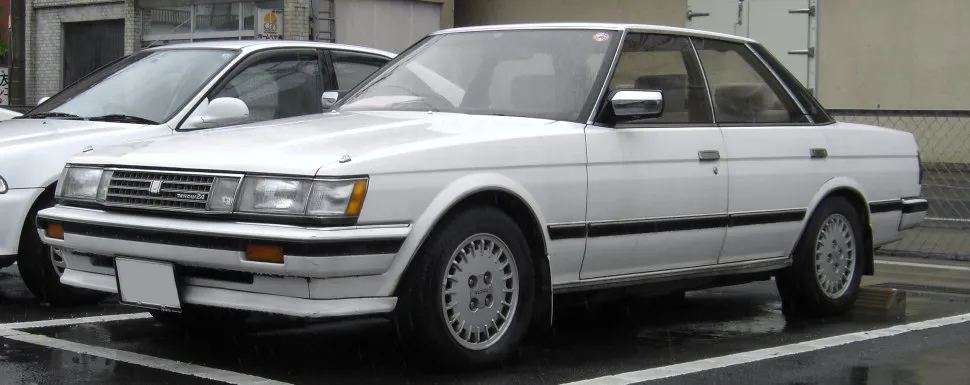
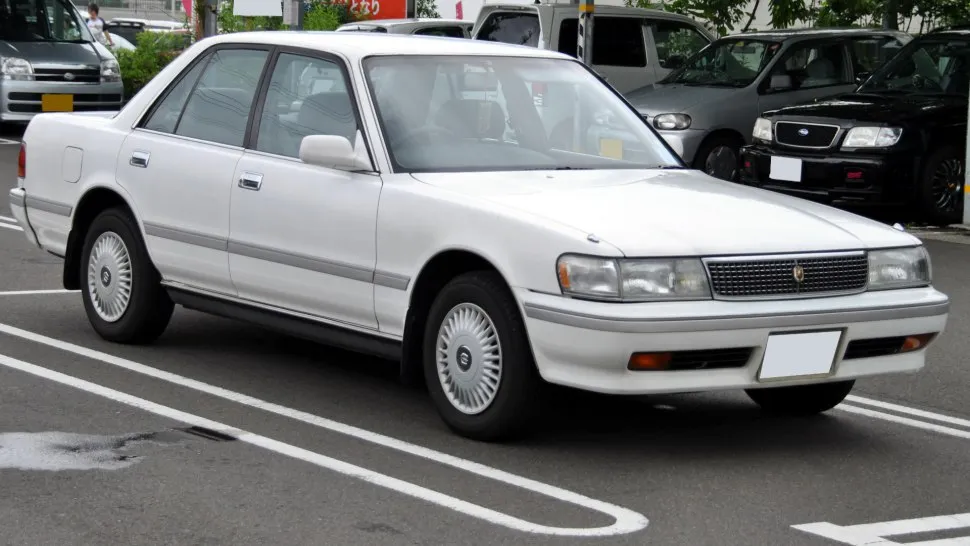
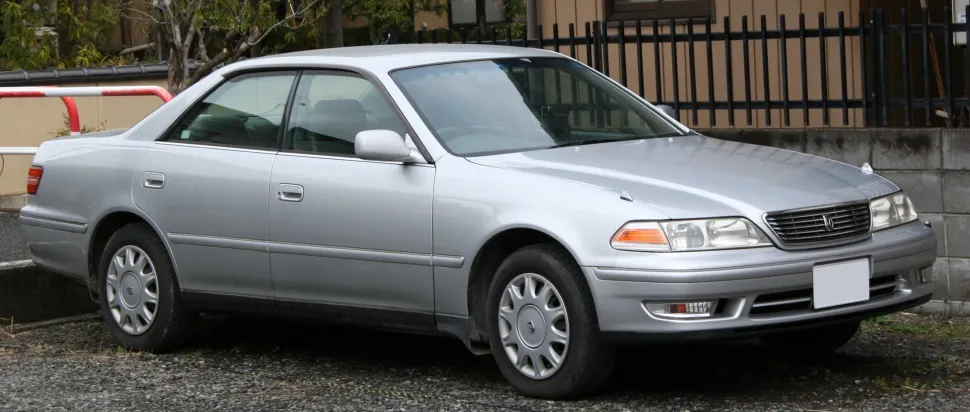





Your first impression of the Toyota Mark II in one word? Go!