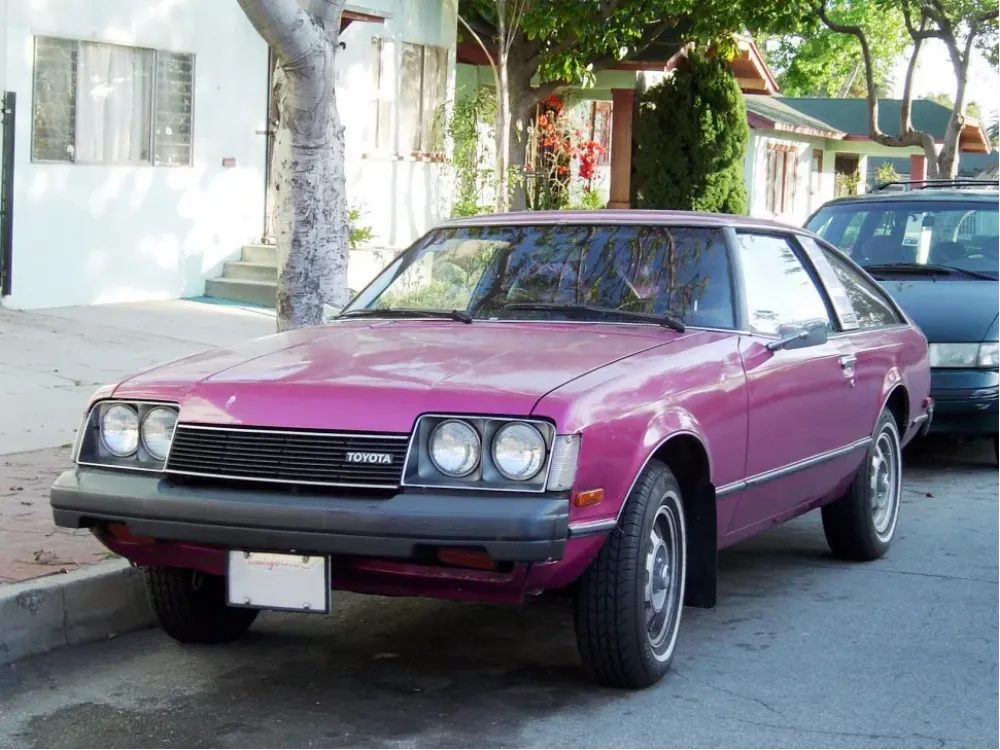
Click on image to view the full photo gallery
Toyota Celica TA60,RA40,RA6 1.6 LT (TA4C) (75 Hp)
Overall Rating
Toyota Celica:
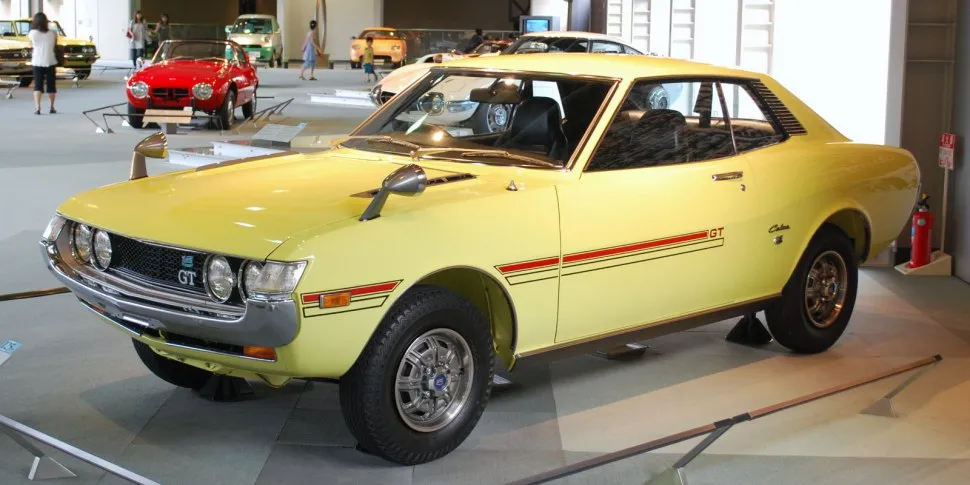
The Toyota Celica is an automobile produced by Toyota from 1970 until 2006. The Celica name derives from the Latin word coelica meaning heavenly or celestial. In Japan, the Celica was exclusive to Toyota Corolla Store dealer chain. Produced across seven generations, the Celica was powered by various four-cylinder engines, and body styles included convertibles, liftbacks, and notchback coupé.
In 1973, Toyota coined the term liftback to describe the Celica fastback hatchback, and the GT Liftback would be introduced for the 1976 model year in North America. Like the Ford Mustang, the Celica concept was to attach a coupe body to the chassis and mechanicals from a high volume sedan, in this case the Toyota Carina....(Read more on Wikipedia)
TA60,RA40,RA6 Overview:
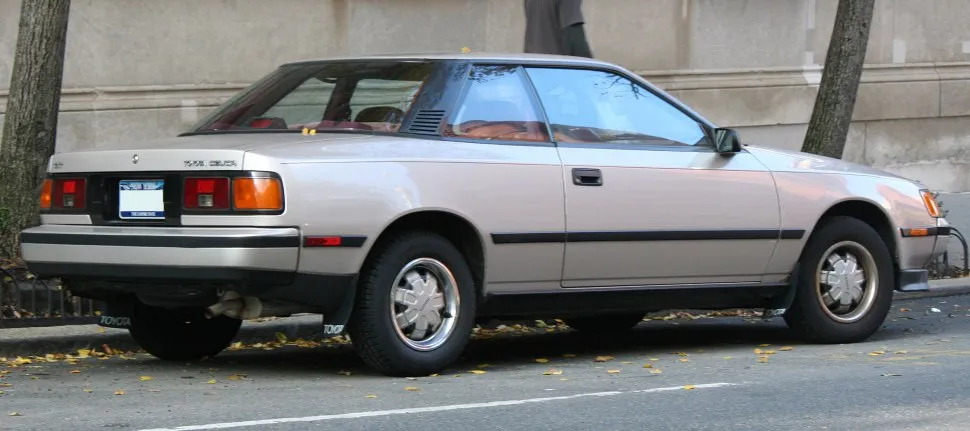
Toyota Celica (TA60,RA40,RA6). With 116 Nm of torque, it offers ample pulling power. Weighing only 953 kg, it’s quite light. Rear‑wheel drive offers dynamic handling and sporty feedback. The top speed reaches 165 km/h. A two-door car with a fixed roof, known for its sporty design and dynamic performance. Seating for 5 makes it ideal for daily use.
1.6 LT (TA4C) (75 Hp) Verdict:

Performance Verdict
An entry-level engine focused purely on economy and basic transportation, with very limited performance capabilities.
Fuel Economy
Likely the most fuel-efficient option in the lineup, ideal for urban commuting and minimal performance demands.
Pros and Cons:
Pros:
- • Iconic 80s styling and classic sports coupe appeal
- • Toyota's renowned reliability and durability
- • Variety of engine options catering to different needs
- • Engaging driving dynamics for its era
- • Strong aftermarket support for restoration and modification
Cons:
- • Performance of lower-tier engines can be modest by modern standards
- • Fuel economy, while reasonable for its time, isn't exceptional
- • Limited modern safety features
- • Interior comfort and features are basic compared to contemporary cars
- • Rust can be an issue on unrestored examples
Specifications:
Specifications are compared to those of the previous generation(TA60,RA40,RA6: 1978 - 1982).
| General: | |
|---|---|
| Brand: | Toyota |
| Model: | Celica |
| Generation: | TA60,RA40,RA6 |
| Modification (Engine): | 1.6 LT (TA4C) (75 Hp) |
| Start of production: | 1979 |
| End of production: | 1983 |
| Powertrain Architecture: | Internal Combustion engine |
| Body type: | Coupe |
| Seats: | 5 |
| Doors: | 3 |
| Engine: | |
|---|---|
| Power: | 75 Hp @ 5200 rpm. Same horsepower |
| Power per litre: | 47.2 Hp/l [worst than previous generation] |
| Torque: | 116 Nm @ 3800 rpm. |
| Engine Model/Code: | 2T More details about the engine 2T |
| Engine displacement: | 1588 |
| Number of cylinders: | 4 |
| Engine configuration: | Inline |
| Number of valves per cylinder: | 2 |
| Fuel injection system: | Carburettor |
| Engine aspiration: | Naturally aspirated engine |
| Valvetrain: | OHV |
| Engine oil capacity: | 4.2 l |
| Coolant: | 8 l |
| Engine layout: | Front, Longitudinal |
| Cylinder Bore: | 85 mm mm |
| Piston Stroke: | 70 mm mm |
| Compression ratio: | 9:1 |
| Performance: | |
|---|---|
| Fuel Type: | Petrol (Gasoline) |
| Maximum speed: | 165 km/h |
| Weight-to-power ratio: | 12.7 kg/Hp, 78.7 Hp/tonne |
| Weight-to-torque ratio: | 8.2 kg/Nm, 121.7 Nm/tonne |
| Space: | |
|---|---|
| Kerb Weight: | 953 |
| Max. weight: | 1440 |
| Max load: | 487 |
| Fuel tank capacity: | 61 l |
| Size: | |
|---|---|
| Length: | 4330 mm mm |
| Width: | 1635 mm mm |
| Height: | 1320 mm mm |
| Wheelbase: | 2500 mm mm |
| Front track: | 1335 mm |
| Rear (Back) track: | 1350 mm |
| Minimum turning circle (turning diameter): | 10 m [above average] |
| Powertrain: | |
|---|---|
| Drivetrain Architecture | The Internal combustion engine (ICE) drives the rear wheels of the vehicle. |
| Drive wheel | Rear wheel drive |
| Number of gears | 4 |
| Transmission type | Manual |
| Front brakes | Disc [bad for performance and cooling.] |
| Rear brakes | Drum [bad for performance and cooling.] |
| Steering type | Worm-reduction unit |
| Power steering | Hydraulic Steering |
| Front suspension | Independent coil spring |
| Rear suspension | Rigid axle suspension |






Fuel, speed, and comfort: How does the Toyota Celica rank in your book?