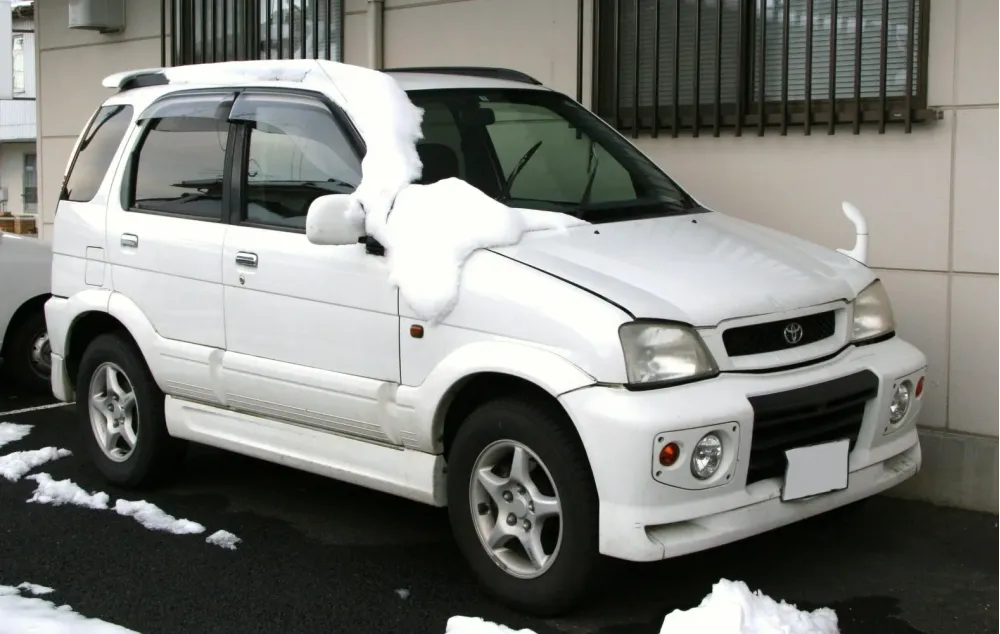
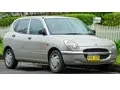
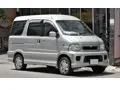
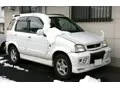
Click on image to view the full photo gallery
Toyota Cami J1 1.3 i 16V P (90 Hp) 2WD Automatic
Overall Rating
Toyota Cami:
The Daihatsu Terios is a mini SUV produced by the Japanese automobile manufacturer Daihatsu since 1997 as the successor to the F300 series Rocky. It was initially offered in both short- and long-wheelbase configurations before the former stopped production in 2016 to be replaced by the A200 series Rocky crossover in 2019. The long-wheelbase variant is available mainly for the Indonesian market with three-row seating options. A smaller kei car model called it the Terios Kid/Lucia was also available for the first-generation model....(Read more on Wikipedia)
J1 Overview:
Toyota Cami (J1). With 123 Nm of torque, it offers ample pulling power. It has moderate fuel consumption (~7.14 l/100km). Weighing only 1040 kg, it’s quite light. Rear‑wheel drive offers dynamic handling and sporty feedback. A sport utility vehicle offering higher ground clearance and versatile cargo space. Seating for 5 makes it ideal for daily use.
The Toyota Cami J1 (Daihatsu Terios twin) was not directly tested by Euro NCAP. Safety features are basic for its era, lacking modern active safety systems.
1.3 i 16V P (90 Hp) 2WD Automatic Verdict:

Performance Verdict
The naturally aspirated 90 Hp K3-VE engine provides adequate power for city driving, but can feel sluggish on highways or when fully loaded, especially with the automatic transmission.
Fuel Economy
Fuel economy is decent for a compact automatic SUV, making it an economical choice for daily urban commutes.
Pros and Cons:
Pros:
- • Compact and maneuverable, ideal for city driving
- • Available 4WD system provides good traction for light off-road or adverse weather
- • Toyota/Daihatsu reliability ensures dependable ownership
- • Practical interior with decent cargo space for its size
- • Turbocharged engine offers surprisingly good performance
Cons:
- • Naturally aspirated engines can feel underpowered, especially with automatic and 4WD
- • Interior design and materials are dated compared to modern SUVs
- • Lack of modern safety features and no Euro NCAP rating
- • Not ideal for long highway journeys due to limited power and potentially firm ride
- • Fuel economy for 4WD automatic versions can be average
Specifications:
| General: | |
|---|---|
| Brand: | Toyota |
| Model: | Cami |
| Generation: | J1 |
| Modification (Engine): | 1.3 i 16V P (90 Hp) 2WD Automatic |
| Start of production: | 1999 |
| End of production: | 2006 |
| Powertrain Architecture: | Internal Combustion engine |
| Body type: | SUV |
| Seats: | 5 |
| Doors: | 5 |
| Engine: | |
|---|---|
| Power: | 90 Hp @ 3200 rpm. |
| Power per litre: | 69.4 Hp/l |
| Torque: | 123 Nm @ 3200 rpm. |
| Engine Model/Code: | K3-VE |
| Engine displacement: | 1297 |
| Number of cylinders: | 4 |
| Engine configuration: | Inline |
| Number of valves per cylinder: | 4 |
| Fuel injection system: | Multi-port manifold injection |
| Engine aspiration: | Naturally aspirated engine |
| Valvetrain: | DOHC |
| Engine oil capacity: | 3.2 l |
| Coolant: | 5.55 l |
| Engine layout: | Front, Longitudinal |
| Cylinder Bore: | 72 mm mm |
| Piston Stroke: | 79.7 mm mm |
| Compression ratio: | 10:1 |
| Performance: | |
|---|---|
| Fuel Type: | Petrol (Gasoline) |
| Fuel consumption (economy) - urban: | 7.14 l/100 km |
| Weight-to-power ratio: | 11.6 kg/Hp, 86.5 Hp/tonne |
| Weight-to-torque ratio: | 8.5 kg/Nm, 118.3 Nm/tonne |
| Space: | |
|---|---|
| Kerb Weight: | 1040 |
| Max. weight: | 1315 |
| Max load: | 275 |
| Trunk (boot) space - maximum: | 559 l |
| Trunk (boot) space - minimum: | 221 l |
| Fuel tank capacity: | 46 l |
| Size: | |
|---|---|
| Length: | 3785 mm mm |
| Width: | 1555 mm mm |
| Height: | 1675 mm mm |
| Wheelbase: | 2420 mm mm |
| Front track: | 1305 mm |
| Rear (Back) track: | 1310 mm |
| Minimum turning circle (turning diameter): | 9.4 m |
| Powertrain: | |
|---|---|
| Drivetrain Architecture | The Internal combustion engine (ICE) drives the rear wheels of the vehicle. |
| Drive wheel | Rear wheel drive |
| Number of gears | 4 |
| Transmission type | Automatic |
| Front brakes | Disc |
| Rear brakes | Drum |
| Steering type | Steering rack and pinion |
| Power steering | Hydraulic Steering |
| Tires size | 205/70 R15 |
| Front suspension | Wishbone |
| Rear suspension | Coil spring |






Behind the wheel of the Toyota Cami. How does it handle on the road?