
Click on image to view the full photo gallery
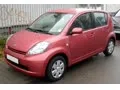
Toyota Sparky 1.3 i (88 Hp)
Overall Rating
Toyota Sparky:
The Daihatsu Hijet , is a cab over microvan and kei truck produced and sold by the Japanese automaker Daihatsu since 1960. The Daihatsu Atrai , a passenger-specific version, was introduced in 1981. Despite the similarities between the Hijet name and Toyota's naming scheme for its trucks and vans , the name "Hijet" has been in use for Daihatsu's kei trucks and microvans since 1960, over two decades before Toyota took control. "Hijet", when transliterated into Japanese, is very similar to "Midget", one of Daihatsu's other mini-trucks. According to Daihatsu, the name "Hijet" was created to imply that the vehicle offers higher performance than the Midget. The Hijet competes in Japan with the Honda Acty, Mitsubishi Minicab, Nissan Clipper, Subaru Sambar and Suzuki Carry....(Read more on Wikipedia)
Sparky Overview:
Toyota Sparky (Sparky). With 123 Nm of torque, it offers ample pulling power. It has moderate fuel consumption (~7.5 l/100km). Weighing only 1110 kg, it’s quite light. Rear‑wheel drive offers dynamic handling and sporty feedback. A spacious vehicle designed to transport passengers comfortably, often with sliding doors. With seating for 7, it’s perfect for larger families.
The Toyota Sparky generation was not officially tested by Euro NCAP. As a compact minivan from the early 2000s, its passive safety features would likely be basic compared to modern standards, focusing on fundamental protection.
1.3 i (88 Hp) Verdict:

Performance Verdict
The 1.3 i (88 Hp) K3-VE engine provides modest performance, suitable for city driving and light loads. Highway acceleration can feel sluggish, especially with a full complement of passengers or cargo.
Fuel Economy
With a combined fuel consumption of 6.3 l/100 km, this engine offers good fuel efficiency for its class, making it an economical choice for daily commutes and family errands.
Pros and Cons:
Pros:
- • Excellent fuel economy for a minivan
- • Spacious and versatile 7-seat interior
- • Reliable Toyota engineering (K3-VE engine)
- • Compact dimensions for city maneuverability and parking
Cons:
- • Underpowered for highway driving or heavy loads
- • Basic safety features (no NCAP rating)
- • Dated interior design and materials
- • Limited availability outside specific markets (e.g., Japan)
Specifications:
| General: | |
|---|---|
| Brand: | Toyota |
| Model: | Sparky |
| Generation: | Sparky |
| Modification (Engine): | 1.3 i (88 Hp) |
| Start of production: | July, 2000 |
| End of production: | November, 2004 |
| Powertrain Architecture: | Internal Combustion engine |
| Body type: | Minivan |
| Seats: | 7 |
| Doors: | 5 |
| Engine: | |
|---|---|
| Power: | 88 Hp @ 6000 rpm. |
| Power per litre: | 67.7 Hp/l |
| Torque: | 123 Nm @ 4400 rpm. |
| Engine Model/Code: | K3-VE |
| Engine displacement: | 1299 |
| Number of cylinders: | 4 |
| Engine configuration: | Inline |
| Number of valves per cylinder: | 4 |
| Fuel injection system: | Multi-port manifold injection |
| Engine aspiration: | Naturally aspirated engine |
| Valvetrain: | DOHC |
| Engine oil capacity: | 3.4 l |
| Coolant: | 6.5 l |
| Engine layout: | Rear, Longitudinal |
| Cylinder Bore: | 75 mm |
| Piston Stroke: | 73.5 mm |
| Compression ratio: | 10.5:1 |
| Performance: | |
|---|---|
| Fuel Type: | Petrol (Gasoline) |
| Fuel consumption (economy) - urban: | 7.5 l/100 km |
| Fuel consumption (economy) - extra urban: | 5.5 l/100 km |
| Fuel consumption (economy) - combined: | 6.3 l/100 km |
| Weight-to-power ratio: | 12.6 kg/Hp, 79.3 Hp/tonne |
| Weight-to-torque ratio: | 9 kg/Nm, 110.8 Nm/tonne |
| Space: | |
|---|---|
| Kerb Weight: | 1110 |
| Max. weight: | 1810 |
| Max load: | 700 |
| Fuel tank capacity: | 46 l |
| Size: | |
|---|---|
| Length: | 3765 mm |
| Width: | 1515 mm |
| Height: | 1895 mm |
| Wheelbase: | 2430 mm |
| Powertrain: | |
|---|---|
| Drivetrain Architecture | The Internal combustion engine (ICE) drives the rear wheels of the vehicle. |
| Drive wheel | Rear wheel drive |















Is it love at first sight with the Toyota Sparky? Tell us your story!