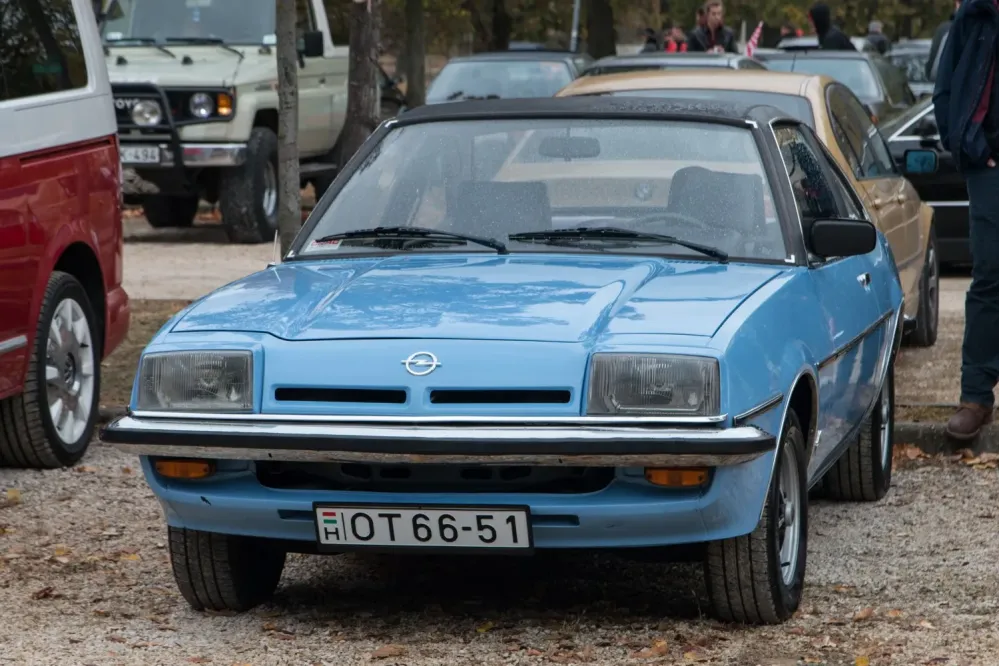
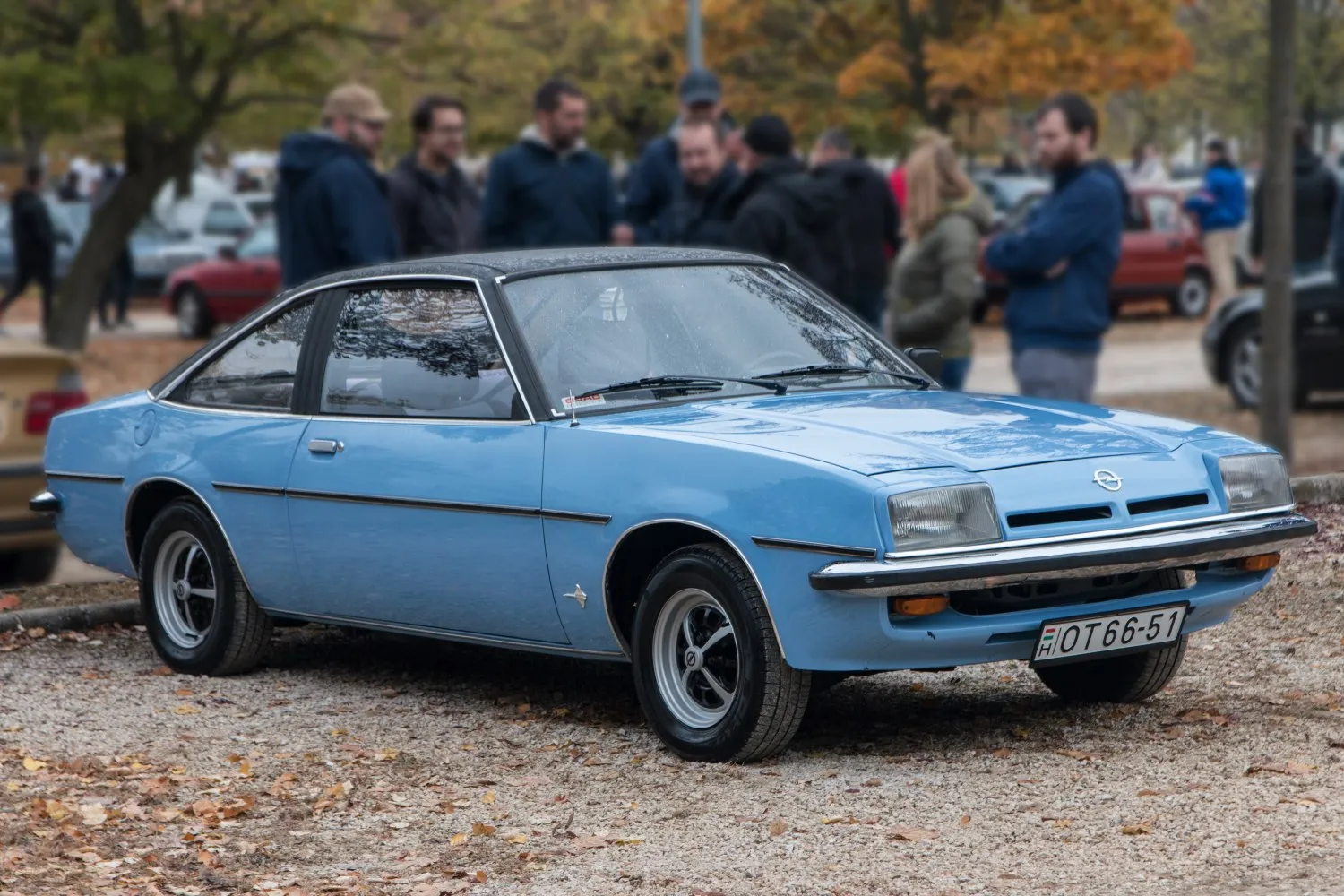
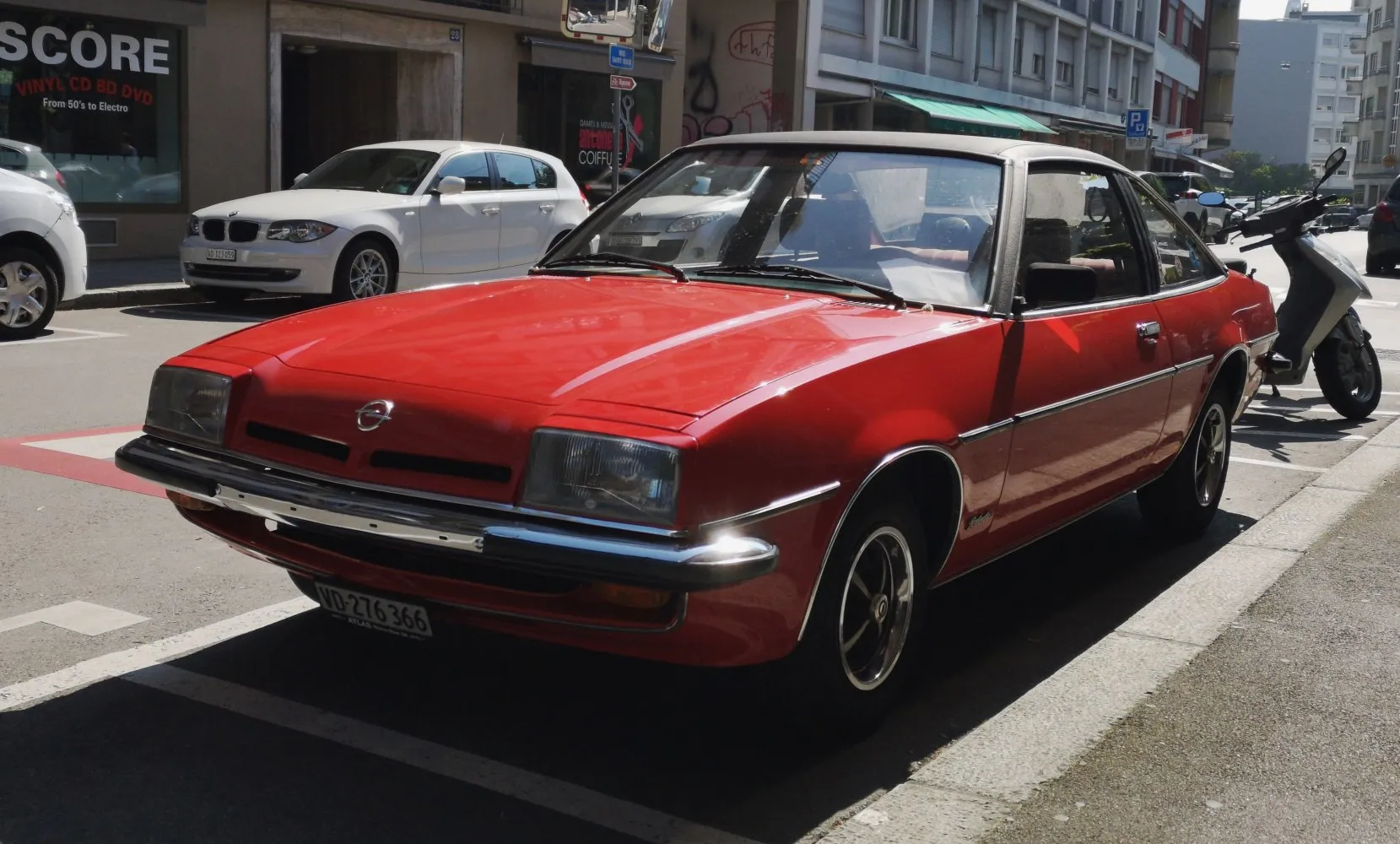
Click on image to view the full photo gallery
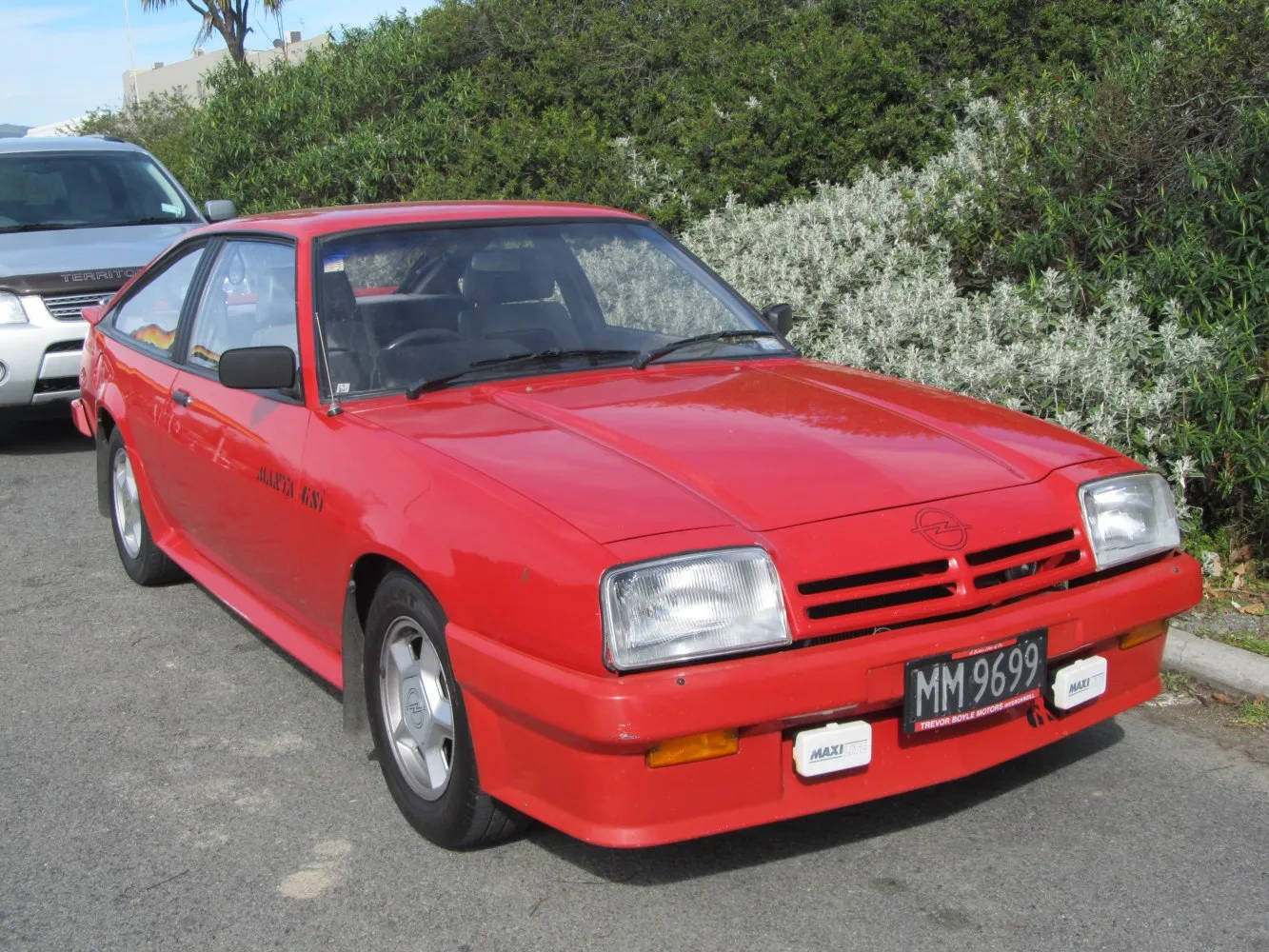
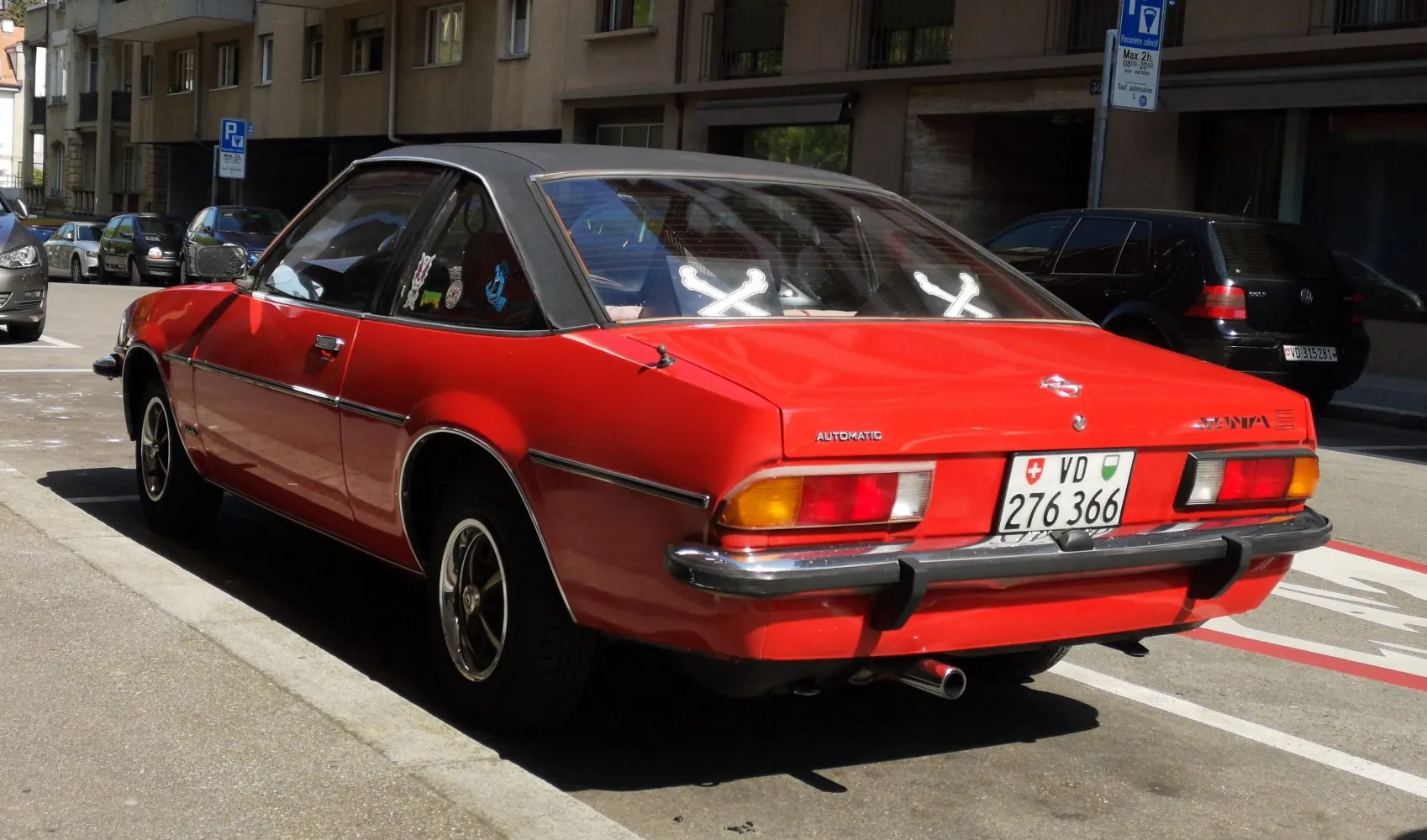
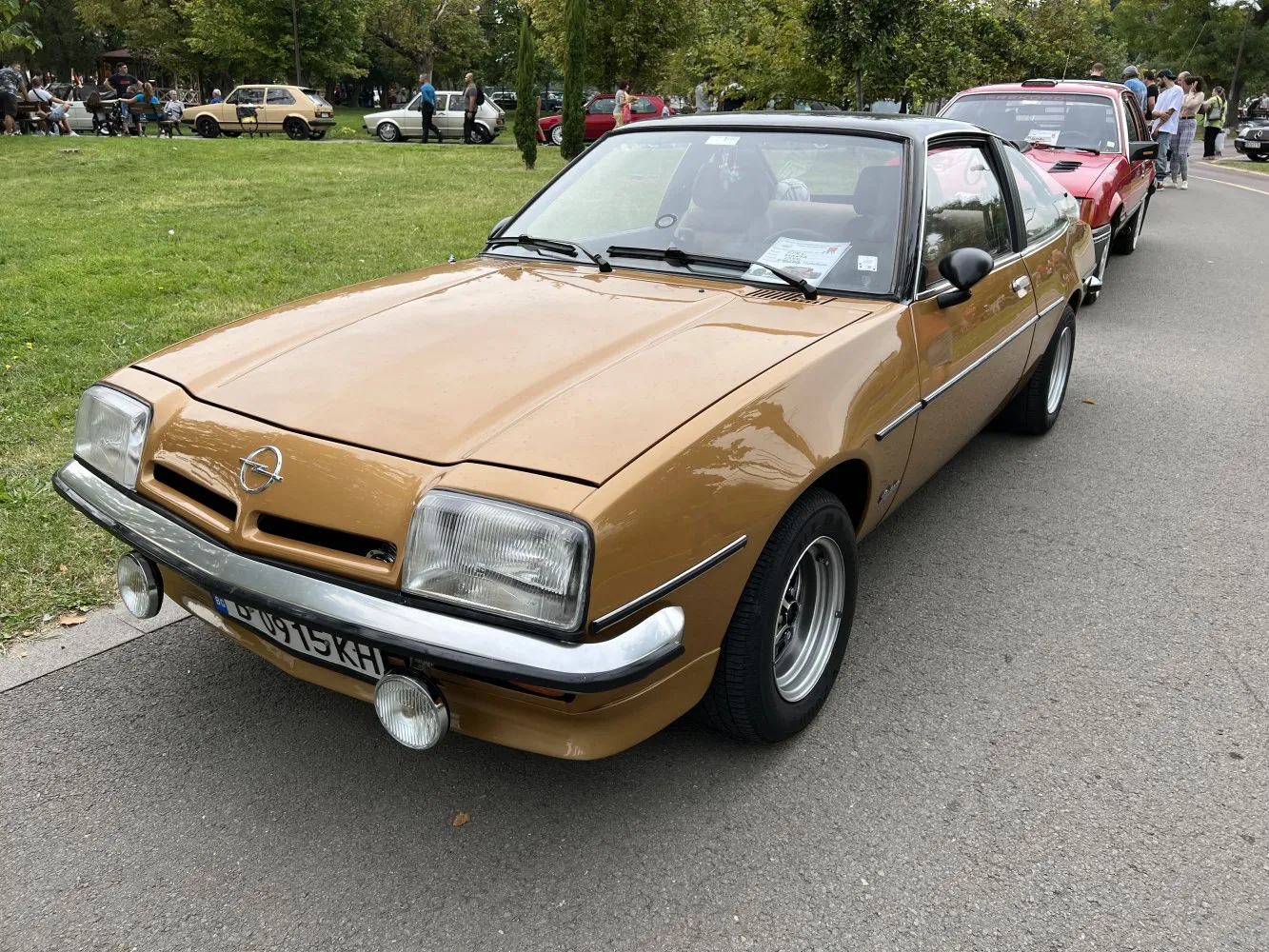
Opel Manta B 2.0 S (100 Hp)
Overall Rating
Opel Manta:
The Opel Manta is a car which was built by German manufacturer Opel in two generations from 1970 to 1988. The Manta was a mildly sporting coupé based on the Ascona family car, competing with cars such as the Ford Capri. The Manta remained rear-wheel drive for both generations and also saw certain competition success. Its name comes from the manta ray. The first generation only has a two-door body style, whilst the second generation added a three-door hatchback alongside the two-door variant.
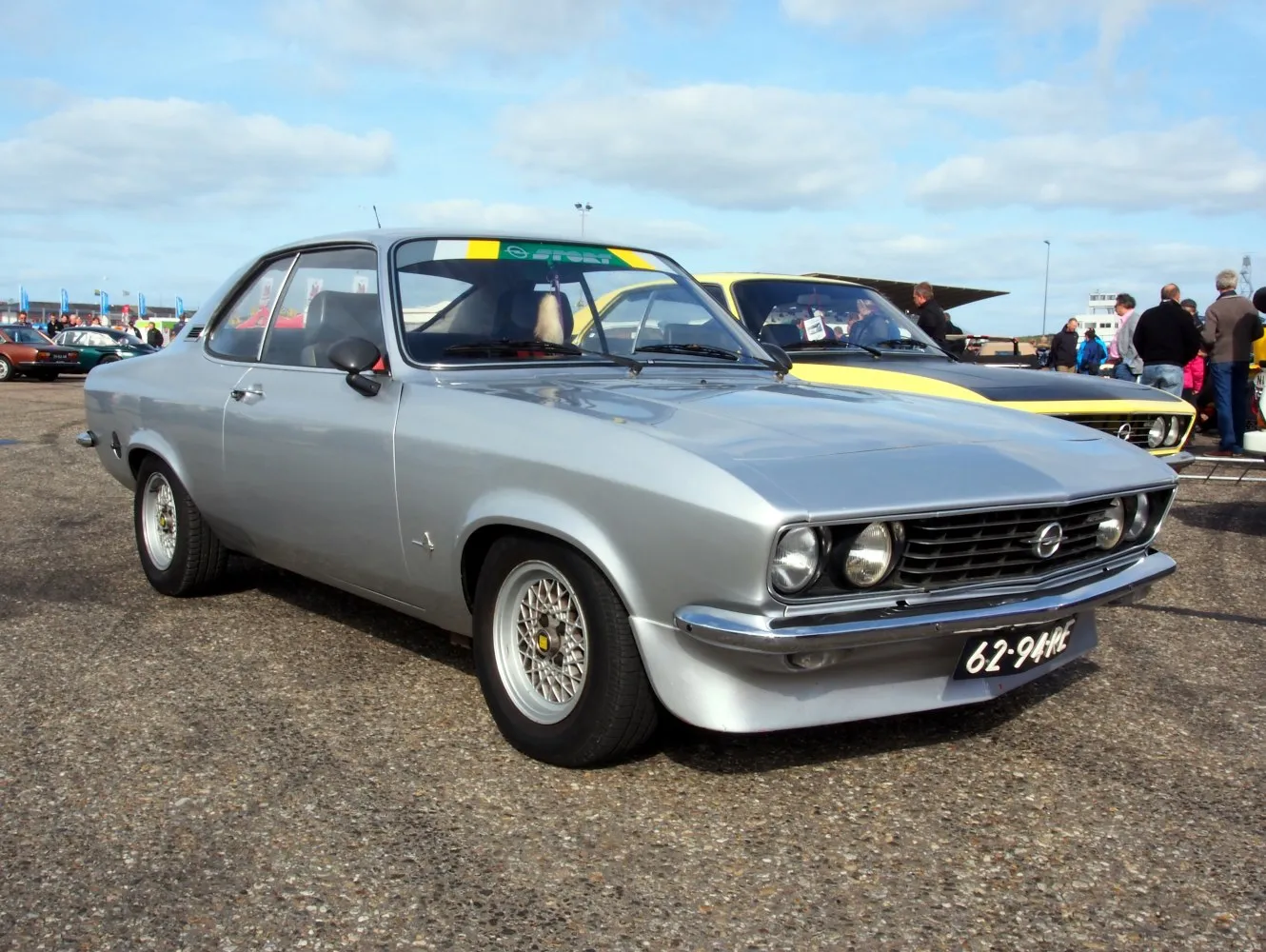
The Manta A was released in September 1970, two months ahead of the then new Opel Ascona on which it was based. A competitor to the Ford Capri, it was a two-door "three-box" coupé, and featured distinctive round tail lights, quite similar to those on the Opel GT and which in fact were used on the GT in 1973, its final model year. It took its name, and a few minor styling cues, from the Manta Ray concept car , which also famously influenced the 1968 Chevrolet Corvette C3. 498,553 Manta As were built from 1970 until 1975....(Read more on Wikipedia)
B Overview:
Opel Manta (B). With 153 Nm of torque, it offers ample pulling power. Weighing only 1020 kg, it’s quite light. Rear‑wheel drive offers dynamic handling and sporty feedback. Acceleration is relatively slow (0–100 km/h in 11 s). The top speed reaches 180 km/h. A two-door car with a fixed roof, known for its sporty design and dynamic performance. Seating for 4 makes it ideal for daily use.
The Opel Manta B was produced before the establishment of Euro NCAP and therefore has no official safety rating. Safety features are basic by modern standards, typical for vehicles of its era.
2.0 S (100 Hp) Verdict:

Performance Verdict
Offers decent power for spirited driving, a step up from the base models, though carbureted.
Fuel Economy
Average fuel consumption for a carbureted 2.0L, not outstanding but acceptable.
Pros and Cons:
Pros:
- • Iconic classic styling and strong road presence
- • Engaging rear-wheel-drive handling characteristics
- • Wide range of engines catering to various needs, from economy to high performance
- • Robust and relatively simple mechanicals, aiding reliability and maintenance
- • Strong rally heritage, especially with the Manta 400
- • Active and supportive enthusiast community
Cons:
- • Prone to rust, particularly in older models
- • Basic safety features by modern standards
- • Lower-powered engines can feel sluggish outside of urban areas
- • Carbureted engines can be temperamental and require regular tuning
- • Parts availability for specific or unique components can be challenging
- • Interior comfort and refinement are dated compared to modern vehicles
Specifications:
Specifications are compared to those of the previous generation(B: 1976 - 1981).
| General: | |
|---|---|
| Brand: | Opel |
| Model: | Manta |
| Generation: | B |
| Modification (Engine): | 2.0 S (100 Hp) |
| Start of production: | 1977 |
| End of production: | 1981 |
| Powertrain Architecture: | Internal Combustion engine |
| Body type: | Coupe |
| Seats: | 4 |
| Doors: | 2 |
| Engine: | |
|---|---|
| Power: | 100 Hp @ 5400 rpm. Same horsepower |
| Power per litre: | 50.5 Hp/l [Same length.] |
| Torque: | 153 Nm @ 3800 rpm. |
| Engine Model/Code: | 20S More details about the engine 20S |
| Engine displacement: | 1979 |
| Number of cylinders: | 4 |
| Engine configuration: | Inline |
| Number of valves per cylinder: | 2 |
| Fuel injection system: | Carburettor |
| Engine aspiration: | Naturally aspirated engine |
| Valvetrain: | SOHC |
| Engine oil capacity: | 3.8 l |
| Coolant: | 6.2 l |
| Engine layout: | Front, Longitudinal |
| Cylinder Bore: | 95 mm mm |
| Piston Stroke: | 69.8 mm mm |
| Compression ratio: | 9:1 |
| Performance: | |
|---|---|
| Fuel Type: | Petrol (Gasoline) |
| Acceleration 0 - 100 km/h: | 11 sec |
| Acceleration 0 - 62 mph: | 11 sec |
| Maximum speed: | 180 km/h |
| Weight-to-power ratio: | 10.2 kg/Hp, 98 Hp/tonne |
| Weight-to-torque ratio: | 6.7 kg/Nm, 150 Nm/tonne |
| Acceleration 0 - 60 mph: | 10.5 sec |
| Space: | |
|---|---|
| Kerb Weight: | 1020 |
| Max. weight: | 1390 |
| Max load: | 370 |
| Trunk (boot) space - maximum: | 490 l |
| Fuel tank capacity: | 50 l |
| Size: | |
|---|---|
| Length: | 4445 mm mm [Same length.] |
| Width: | 1670 mm mm [Same width.] |
| Height: | 1330 mm mm [Same height.] |
| Wheelbase: | 2518 mm mm [Same wheelbase.] |
| Front track: | 1380 mm |
| Rear (Back) track: | 1375 mm |
| Minimum turning circle (turning diameter): | 10.5 m [above average] |
| Powertrain: | |
|---|---|
| Drivetrain Architecture | The Internal combustion engine (ICE) drives the rear wheels of the vehicle. |
| Drive wheel | Rear wheel drive |
| Number of gears | 4 |
| Transmission type | Manual |
| Front brakes | Disc [bad for performance and cooling.] |
| Rear brakes | Drum [bad for performance and cooling.] |






Is the Opel Manta the king of its class? Share your thoughts.