Jaguar E-Pace facelift 2020 1.5i P270e (269 Hp) Plug-in Hybrid AWD Automatic
People\'s Opinion
N/A / 5
Jaguar E-Pace:
The Jaguar E-Pace is a subcompact luxury crossover SUV produced by the British car manufacturer Jaguar Land Rover under their Jaguar marque. It was officially revealed on 13 July 2017 and was the second production Jaguar SUV.
The car is built in Graz, Austria, by Magna Steyr and from 2018 by Chery Jaguar Land Rover, JLR's joint venture with partner Chery, in Changshu, China.
Designed under the direction of Jaguar chief designer Ian Callum, the vehicle uses the JLR PTA platform, as used by the second incarnation of Range Rover Evoque and the second incarnation of Land Rover Discovery Sport....(Read more on Wikipedia)
facelift 2020 Overview:
Jaguar E-Pace (facelift 2020). At around 2098 kg, it’s on the heavier side. All‑wheel drive provides excellent grip, ideal for off‑road use. Acceleration is good (0–100 km/h in 7.3 s). The top speed reaches 190 km/h. A sport utility vehicle offering higher ground clearance and versatile cargo space. Seating for 5 makes it ideal for daily use.
Performance Verdict
Delivers a robust blend of electric and petrol power, ensuring smooth acceleration and confident handling in various conditions.
Fuel Economy
Highly efficient for daily commutes with its electric range, significantly reducing fuel consumption if charged regularly.
Best Use Case:
Urban & Suburban Efficiency / Company Car
Pros and Cons:
Pros:
- • Stylish exterior design with strong road presence
- • Refined and comfortable interior, significantly improved post-facelift
- • Wide range of efficient mild-hybrid and plug-in hybrid powertrains
- • Good handling and composed ride for an SUV
- • Strong 5-star Euro NCAP safety rating
Cons:
- • Rear passenger space can be tight for adults on longer journeys
- • Boot space is average for the compact SUV class
- • Higher running costs and purchase price than some mainstream rivals
- • Pivi Pro infotainment system can be complex for some users
- • Some lower trims may feel less premium compared to higher specifications
Specifications:
Specifications are compared to those of the previous generation(E-Pace: 2018 - October, 2020).
| General: |
| Brand: | Jaguar |
|---|
| Model: | E-Pace |
|---|
| Generation: | facelift 2020 |
|---|
| Modification (Engine): | 1.5i P270e (269 Hp) Plug-in Hybrid AWD Automatic |
|---|
| Start of production: | April, 2024 |
|---|
| End of production: | November, 2024 |
|---|
| Powertrain Architecture: | PHEV (Plug-in Hybrid Electric Vehicle) |
|---|
| Body type: | SUV |
|---|
| Seats: | 5 |
|---|
| Doors: | 5 |
|---|
| Engine: |
| Engine systems: | Start & Stop System |
|---|
| Power: | 200 Hp Same horsepower |
|---|
| Power per litre: | 133.5 Hp/l [Same length.] |
|---|
| Engine Model/Code: | Ingenium / AJ20P3 More details about the engine Ingenium / AJ20P3 |
|---|
| Engine displacement: | 1498 |
|---|
| Number of cylinders: | 3 |
|---|
| Engine configuration: | Inline |
|---|
| Number of valves per cylinder: | 4 |
|---|
| Fuel injection system: | Direct injection |
|---|
| Engine aspiration: | Turbocharger, Intercooler |
|---|
| Valvetrain: | DOHC |
|---|
| Engine oil capacity: | 5.9 l |
|---|
| Engine layout: | Front, Transverse |
|---|
| Cylinder Bore: | 83 mm |
|---|
| Piston Stroke: | 92.29 mm |
|---|
| Compression ratio: | 10.5:1 |
|---|
| Performance: |
| Fuel Type: | Petrol / electricity |
|---|
| Combined fuel consumption (WLTP): | 1.4-1.6 l/100 km |
|---|
| Emission standard: | Euro 6e |
|---|
| Acceleration 0 - 100 km/h: | 7.3 sec |
|---|
| Acceleration 0 - 62 mph: | 7.3 sec |
|---|
| Maximum speed: | 190 km/h |
|---|
| Weight-to-power ratio: | 7.8 kg/Hp, 128.2 Hp/tonne |
|---|
| Weight-to-torque ratio: | 3.9 kg/Nm, 257.4 Nm/tonne |
|---|
| Max speed (electric): | 135 km/h |
|---|
| Acceleration 0 - 60 mph: | 6.8 sec |
|---|
| Space: |
| Kerb Weight: | 2098 kg |
|---|
| Max. weight: | 2670 kg |
|---|
| Max. roof load: | 75 kg |
|---|
| Max load: | 572 kg |
|---|
| Trunk (boot) space - maximum: | 1170 l |
|---|
| Trunk (boot) space - minimum: | 494 l |
|---|
| Permitted trailer load with brakes (12%): | 1600 kg |
|---|
| Fuel tank capacity: | 56.5 l |
|---|
| Permitted trailer load without brakes: | 750 kg |
|---|
| Permitted towbar download: | 100 kg |
|---|
| Size: |
| Ramp-over (brakeover) angle: | 20.7° |
|---|
| Wading depth: | 500 mm |
|---|
| Length: | 4395 mm [Same length.] |
|---|
| Width: | 1984 mm [Same width.] |
|---|
| Height: | 1648 mm [1mm less] |
|---|
| Wheelbase: | 2681 mm [Same wheelbase.] |
|---|
| Width with mirrors folded: | 1984 mm |
|---|
| Width including mirrors: | 2088 mm |
|---|
| Front track: | 1625 mm |
|---|
| Rear (Back) track: | 1624 mm |
|---|
| Front overhang: | 882 mm |
|---|
| Rear overhang: | 832 mm |
|---|
| Ride height (ground clearance): | 212 mm |
|---|
| Minimum turning circle (turning diameter): | 12 m [above average] |
|---|
| Approach angle: | 22° |
|---|
| Departure angle: | 28° |
|---|
| Powertrain: |
| Drivetrain Architecture | The Internal combustion engine (ICE) permanently drives the front wheels of the vehicle, the electric motor drives the rear wheels of the vehicle, capable of running in full electric mode, only by the Internal combustion engine (ICE) or in mixed mode. |
|---|
| Drive wheel | All wheel drive (4x4) |
|---|
| Number of gears | 8 |
|---|
| Transmission type | Automatic |
|---|
| Front brakes | Ventilated discs, 349 mm [Best for performance and cooling.] |
|---|
| Rear brakes | Ventilated discs, 325 mm [Best for performance and cooling.] |
|---|
| Assisting systems | ABS (Anti-lock braking system) |
|---|
| Steering type | Steering rack and pinion |
|---|
| Power steering | Electric Steering |
|---|
| Tires size | 235/60 R18; 235/55 R19; 235/50 R20 |
|---|
| Wheel rims size | 18; 19; 20 |
|---|
| Front suspension | Independent, type McPherson with coil spring and anti-roll bar |
|---|
| Rear suspension | Independent multi-link spring suspension with stabilizer |
|---|
| Electric: |
| Net (usable) battery capacity: | 11.6 kWh |
|---|
| Gross battery capacity: | 15 kWh |
|---|
| Battery technology: | Lithium-ion (Li-Ion) |
|---|
| Battery location: | Below the floor, under the rear seats |
|---|
| System power: | 269 Hp @ 5000-5500 rpm. |
|---|
| System torque: | 540 Nm @ 2000-3250 rpm. |
|---|
| All-electric range: | 58-69 km |
|---|
| Electric motor power: | 109 Hp |
|---|
| Electric motor Torque: | 260 Nm |
|---|
| Average Energy consumption: | 20.9 kWh/100 km |
|---|
| Electric motor location: | Rear axle, Transverse |
|---|
| Average Energy consumption (WLTP): | 20.9 kWh/100 km |
|---|
| All-electric range (WLTP): | 58-69 km |
|---|
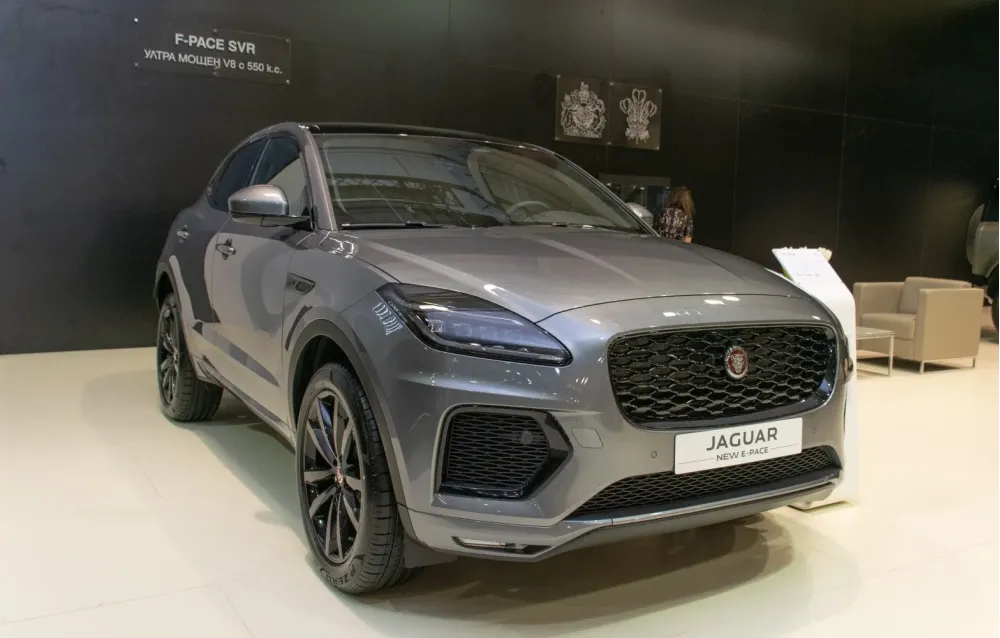








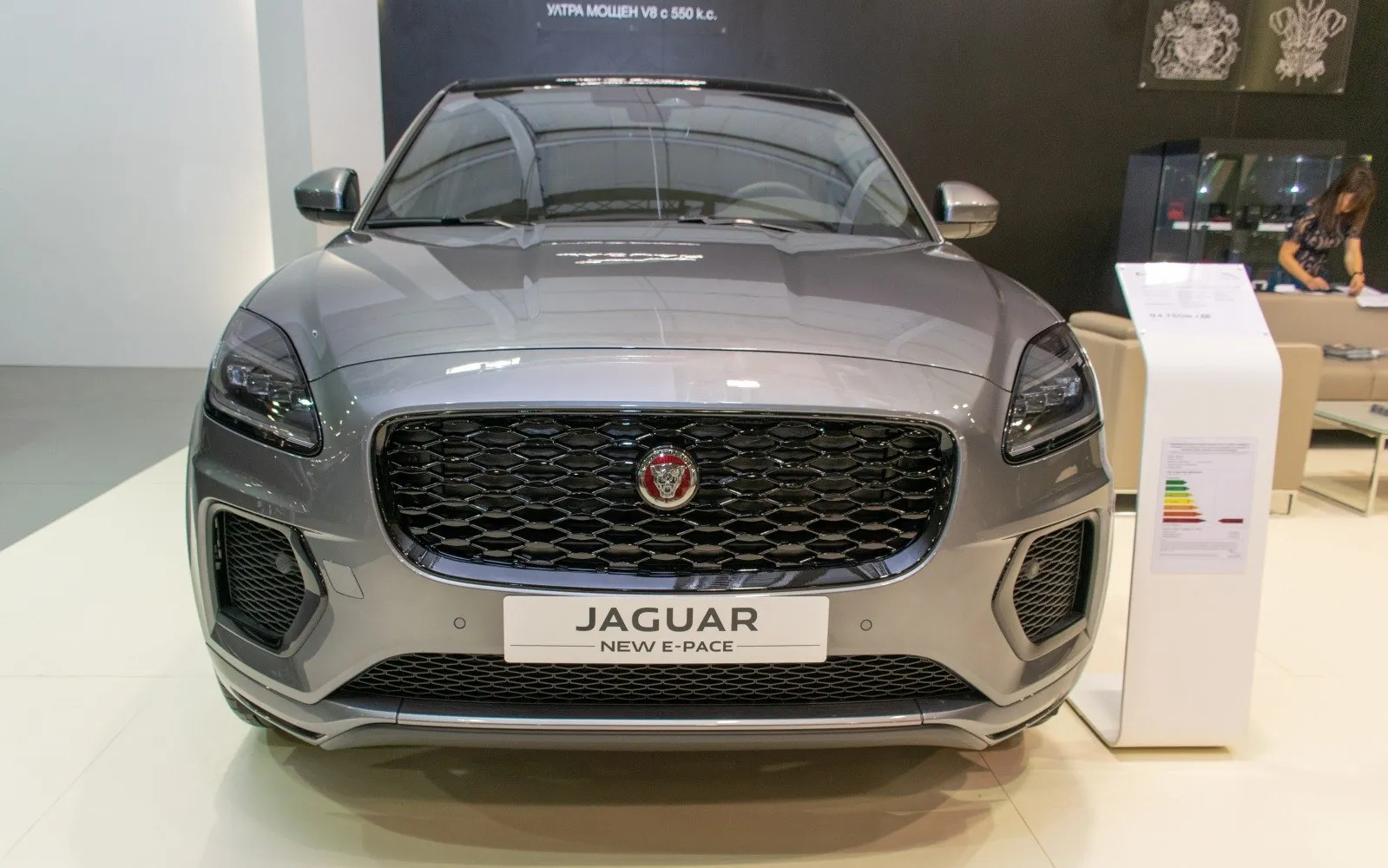
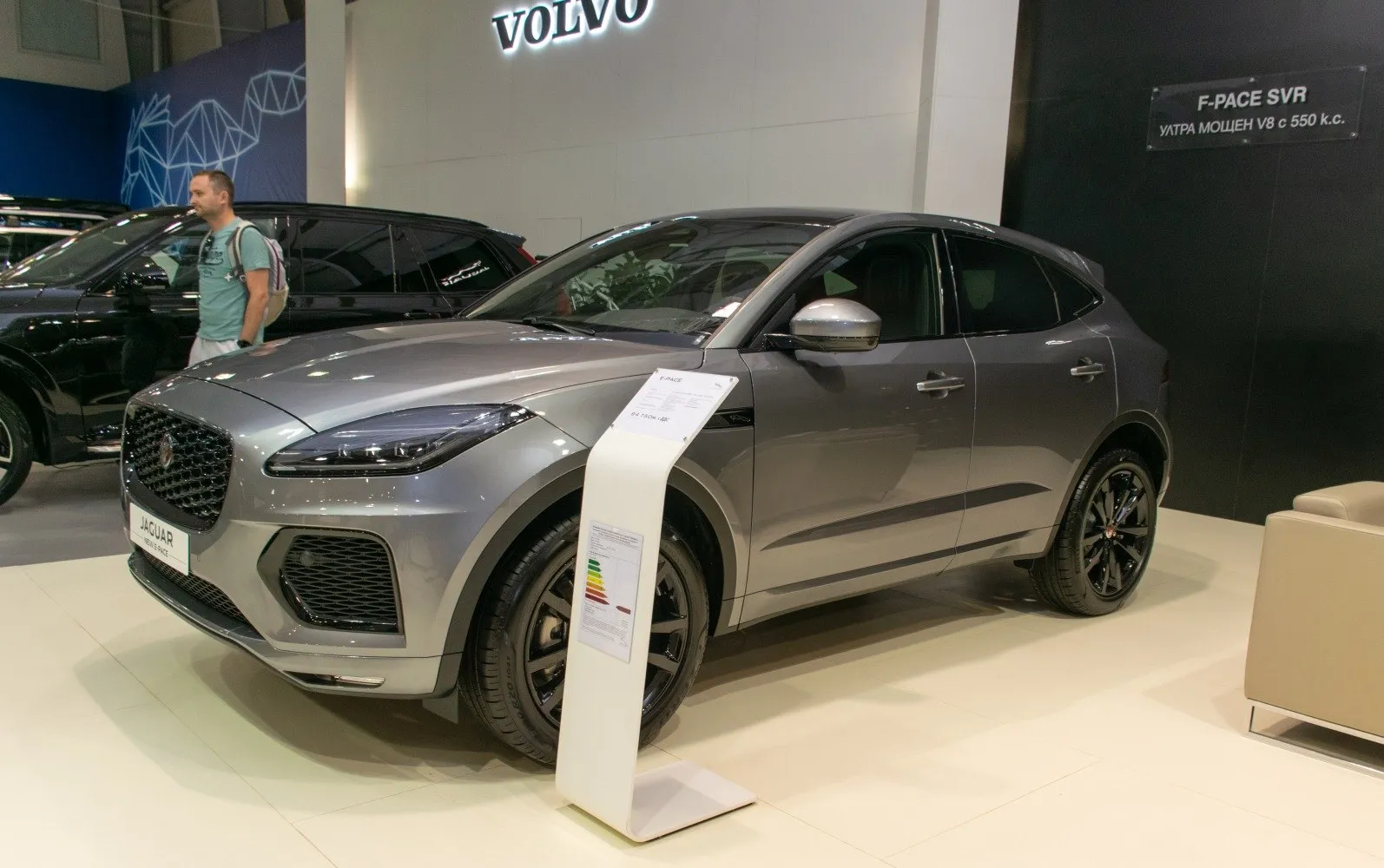
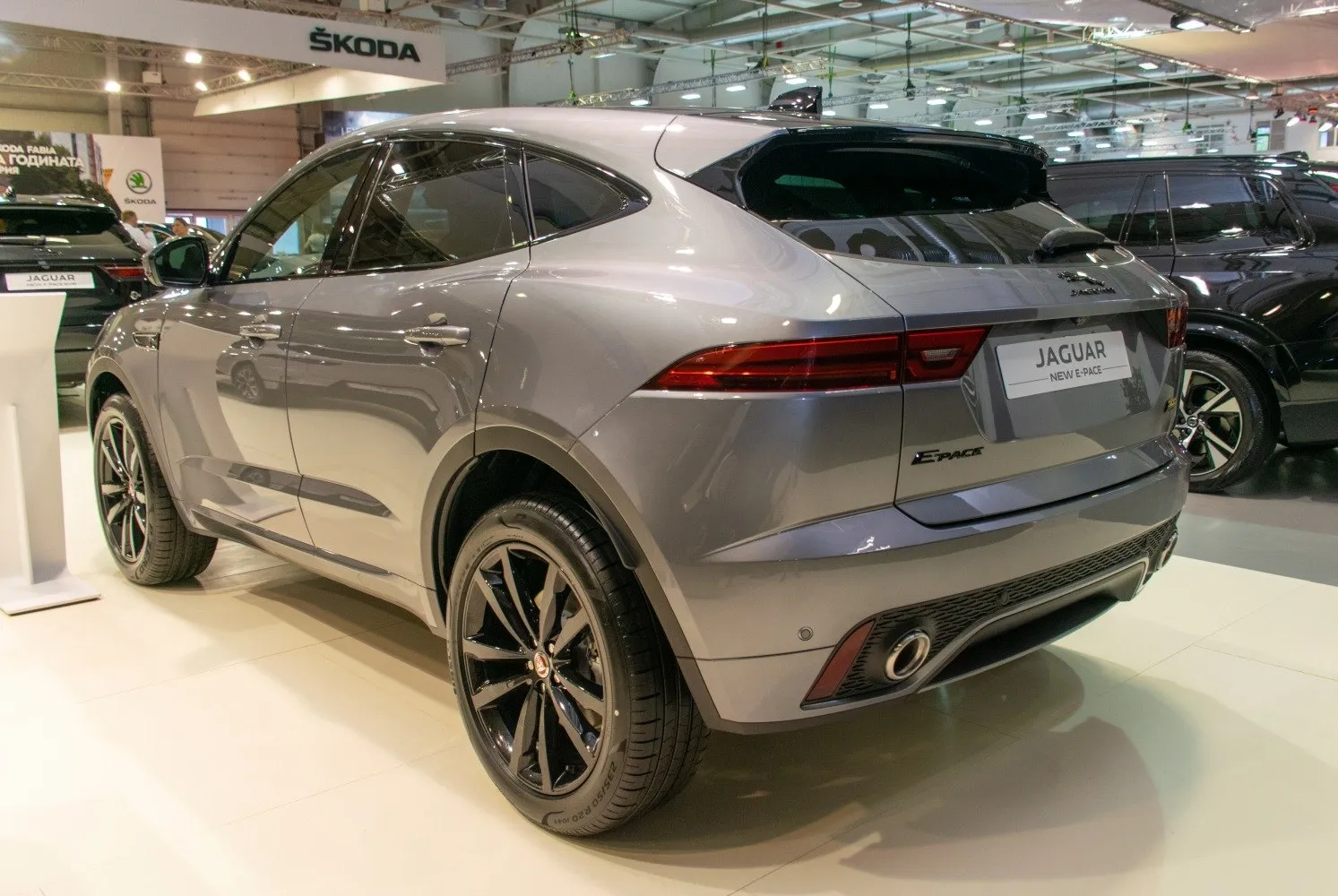
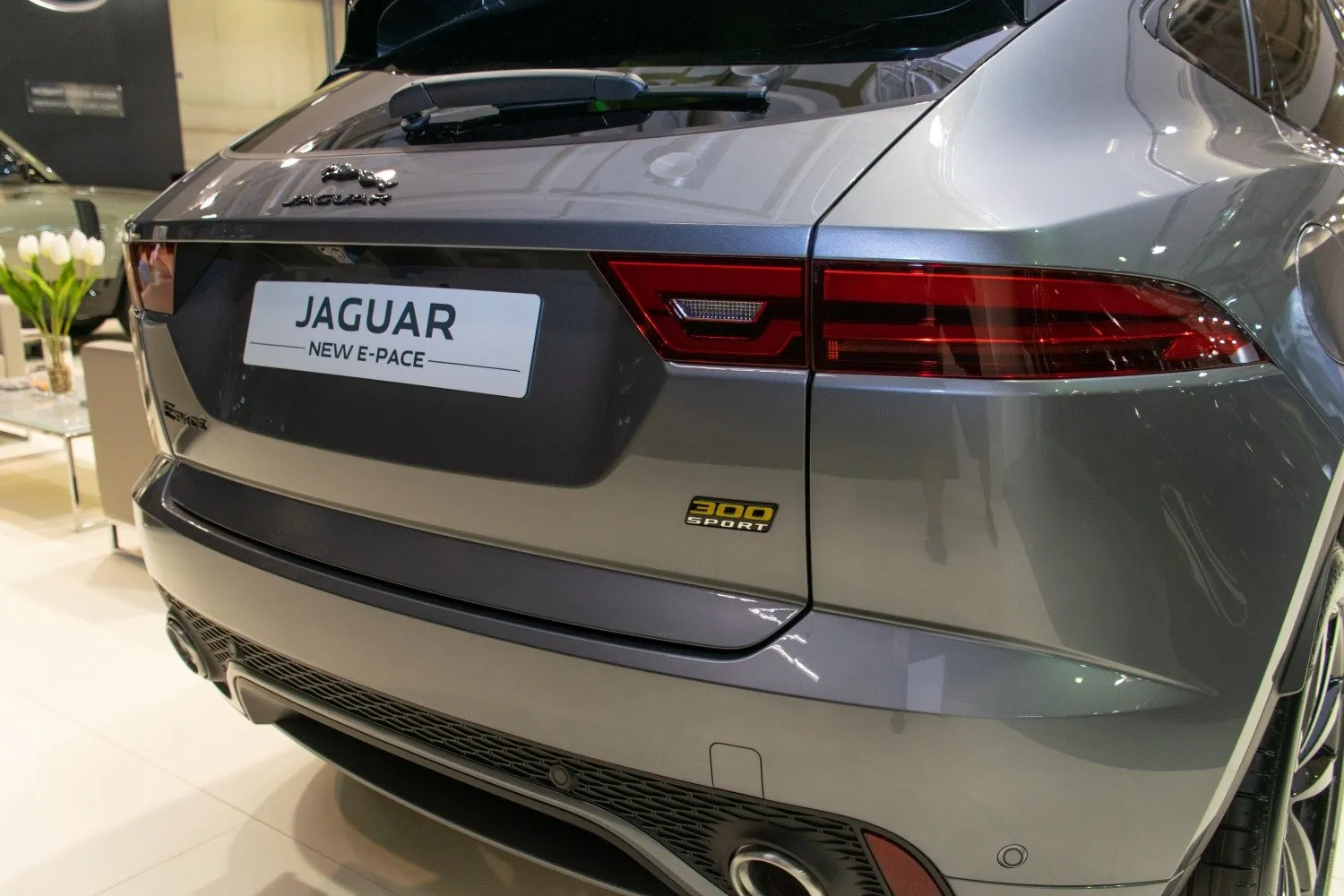
Behind the wheel of the Jaguar E-Pace. How does it handle on the road?