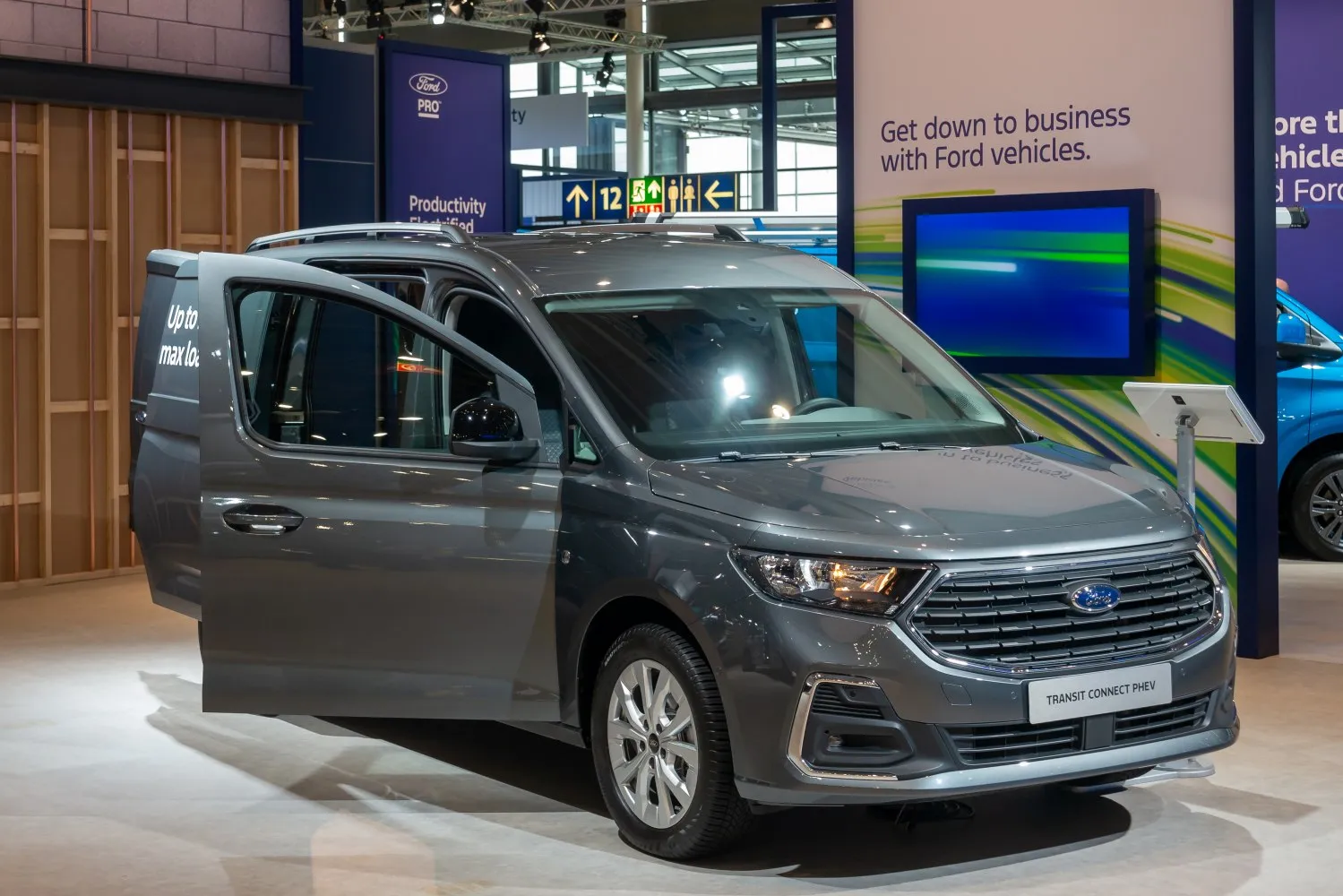
Ford Transit Connect III FlexCab L2 1.5 EcoBoost (150 Hp) Plug-in Hybrid DSG
People\'s Opinion
N/A / 5
Ford Transit Connect:
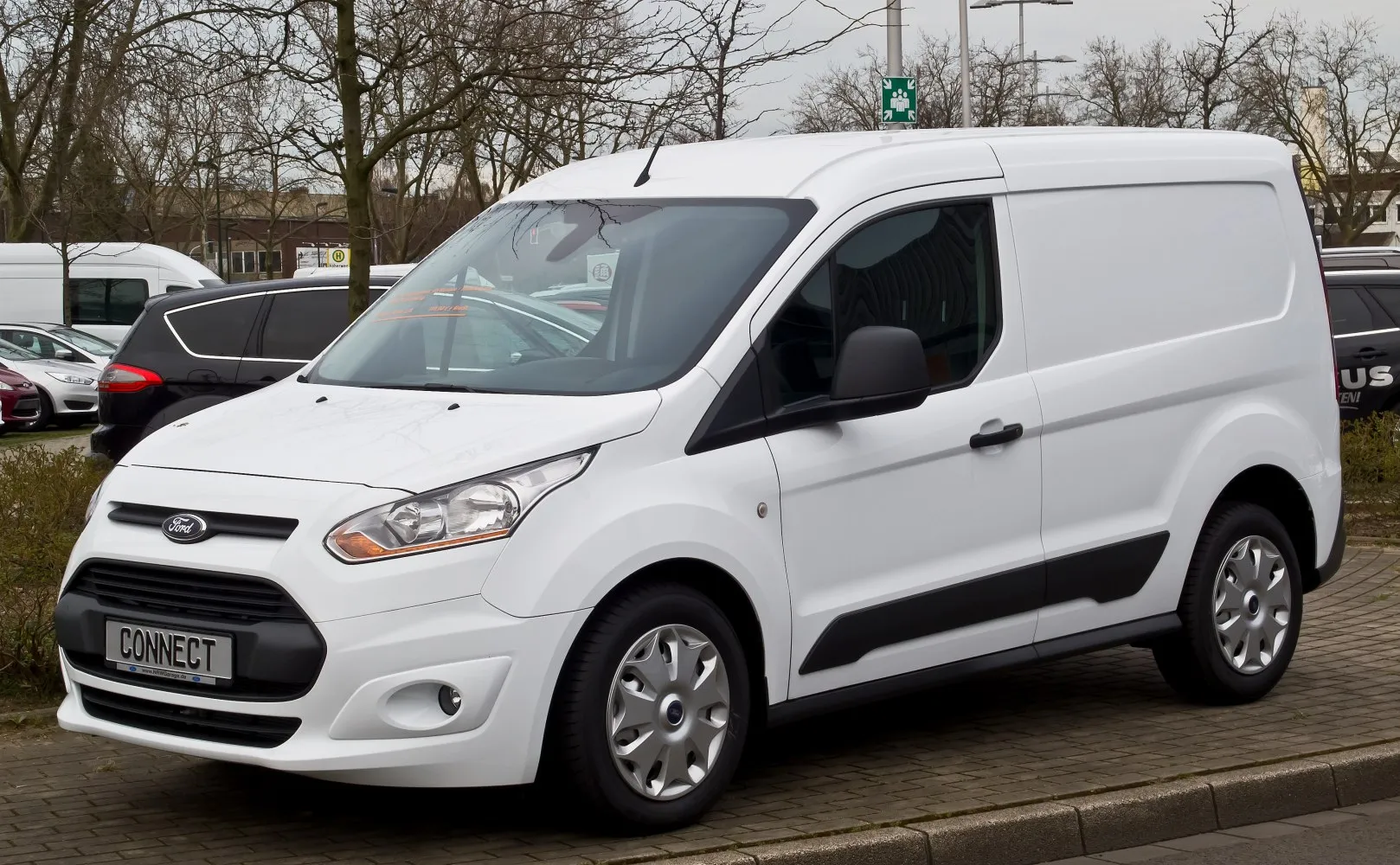
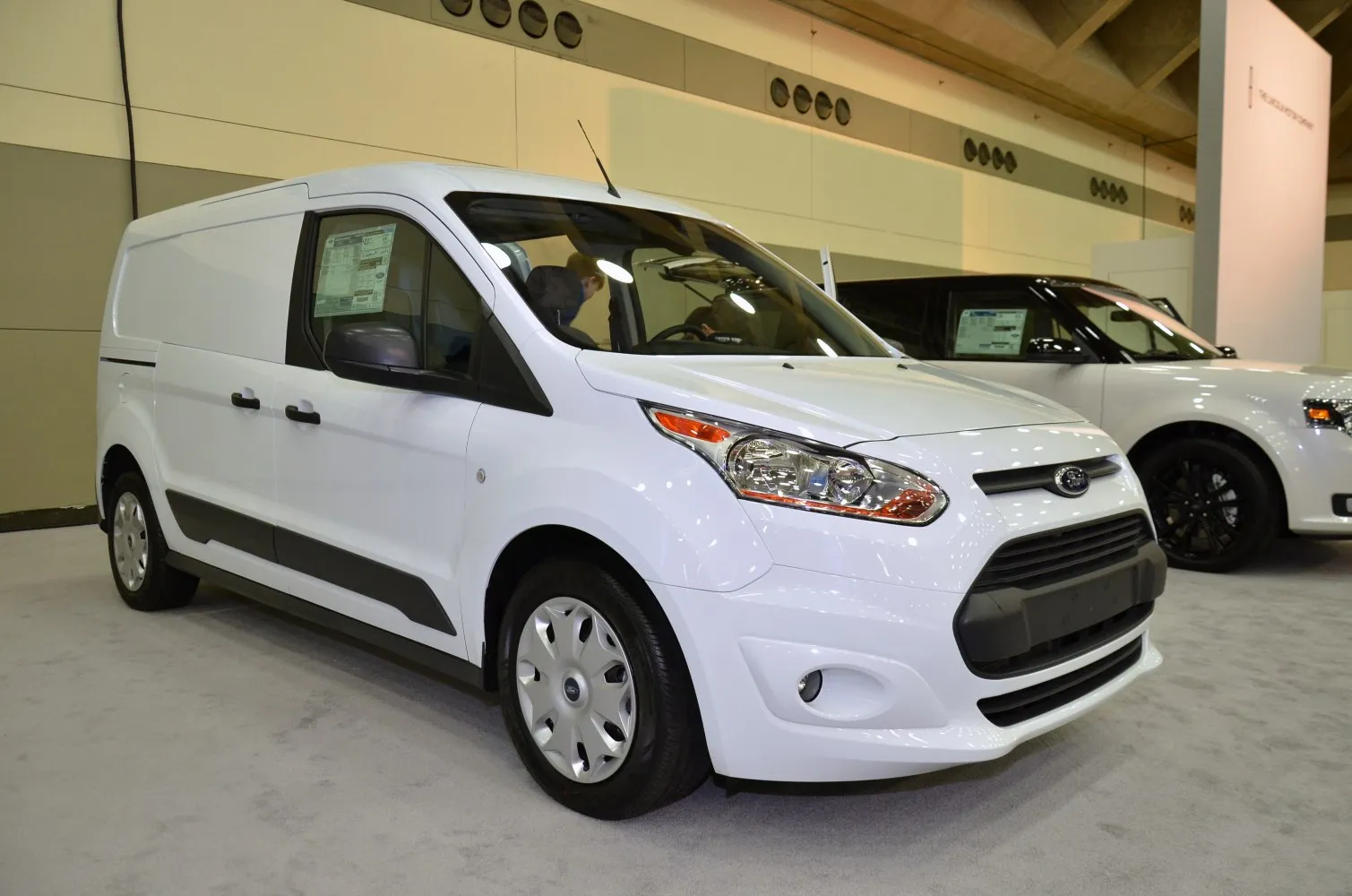
The Ford Transit Connect is a compact panel van manufactured and marketed by Ford since 2002. Developed by Ford of Europe, the model line replaced sedan-based vans with a dedicated commercial vehicle platform. The model line is the second-smallest vehicle of the Ford Transit range, positioned between the Ford Transit Courier LAV and the Ford Transit Custom LCV/MPV. In line with other Ford Transit variants, passenger-oriented models are marketed as the Ford Tourneo Connect with side windows and rear seats....(Read more on Wikipedia)
III FlexCab L2 Overview:
Ford Transit Connect (III FlexCab L2). With 250 Nm of torque, it offers ample pulling power. With a weight of 1866 kg, it falls in the mid‑range. Front‑wheel drive delivers efficiency and easy handling. A spacious vehicle designed to transport passengers comfortably, often with sliding doors. Seating for 5 makes it ideal for daily use.
Performance Verdict
Offers strong, immediate torque delivery thanks to the electric motor, providing brisk acceleration suitable for urban and highway driving. The 150 Hp system output feels responsive.
Fuel Economy
Exceptional fuel economy with a WLTP combined consumption of 0.5 l/100 km and an all-electric range of 110-118 km, making it highly cost-effective for daily commutes and short-haul deliveries.
Best Use Case:
City & Mixed Driving (especially with charging access), Short-Haul Deliveries
Pros and Cons:
Pros:
- • Excellent fuel efficiency and low emissions with the Plug-in Hybrid option.
- • Versatile FlexCab L2 configuration offers good balance of passenger and cargo space.
- • Modern infotainment and driver assistance systems (shared with VW Caddy).
- • Strong safety rating derived from its platform twin.
- • Good maneuverability for its size with a reasonable turning circle.
Cons:
- • PHEV model's full efficiency depends on regular charging access.
- • Diesel engine, while robust, may feel less refined than the hybrid.
- • Ride height is relatively low for a van, limiting rough terrain capability.
- • Fuel tank capacity (32.5L) is small, especially for the PHEV when running on petrol only.
- • Kerb weight is substantial, impacting payload slightly for the PHEV.
Specifications:
Specifications are compared to those of the previous generation(II (facelift 2018) Double Cab-in-Van L1: 2018 - 2024).
| General: |
| Brand: | Ford |
|---|
| Model: | Transit Connect |
|---|
| Generation: | III FlexCab L2 |
|---|
| Modification (Engine): | 1.5 EcoBoost (150 Hp) Plug-in Hybrid DSG |
|---|
| Start of production: | 2024 |
|---|
| Powertrain Architecture: | PHEV (Plug-in Hybrid Electric Vehicle) |
|---|
| Body type: | Minivan |
|---|
| Seats: | 5 |
|---|
| Doors: | 5 |
|---|
| Engine: |
| Engine systems: | Start & Stop System |
|---|
| Power: | 116 Hp @ 3500-6000 rpm. Same horsepower |
|---|
| Power per litre: | 77.4 Hp/l [428mm more] |
|---|
| Torque: | 250 Nm @ 1500-3000 rpm. |
|---|
| Engine Model/Code: | EA211 evo2 / DUCC More details about the engine EA211 evo2 / DUCC |
|---|
| Engine displacement: | 1498 |
|---|
| Number of cylinders: | 4 |
|---|
| Engine configuration: | Inline |
|---|
| Number of valves per cylinder: | 4 |
|---|
| Fuel injection system: | Direct injection |
|---|
| Engine aspiration: | Turbocharger, Intercooler |
|---|
| Valvetrain: | DOHC |
|---|
| Engine layout: | Front, Transverse |
|---|
| Cylinder Bore: | 74.5 mm mm |
|---|
| Piston Stroke: | 85.9 mm mm |
|---|
| Performance: |
| Fuel Type: | Petrol / electricity |
|---|
| Combined fuel consumption (WLTP): | 0.5 l/100 km |
|---|
| Emission standard: | Euro 6e |
|---|
| Weight-to-power ratio: | 12.4 kg/Hp, 80.4 Hp/tonne |
|---|
| Weight-to-torque ratio: | 5.3 kg/Nm, 187.6 Nm/tonne |
|---|
| Space: |
| Kerb Weight: | 1866 |
|---|
| Max. weight: | 2500 |
|---|
| Max load: | 634 |
|---|
| Trunk (boot) space - maximum: | 3100 l |
|---|
| Permitted trailer load with brakes (12%): | 1300 kg |
|---|
| Fuel tank capacity: | 32.5 l |
|---|
| Permitted trailer load without brakes: | 750 kg |
|---|
| Permitted towbar download: | 75 kg |
|---|
| Size: |
| Length: | 4853 mm mm [428mm more] |
|---|
| Width: | 1855 mm mm [20mm more] |
|---|
| Height: | 1835 mm mm [16mm more] |
|---|
| Wheelbase: | 2970 mm mm [308mm more] |
|---|
| Width with mirrors folded: | 1931 mm |
|---|
| Width including mirrors: | 2100 mm |
|---|
| Front track: | 1565-1572 mm |
|---|
| Rear (Back) track: | 1603-1606 mm |
|---|
| Front overhang: | 890 mm |
|---|
| Rear overhang: | 993 mm |
|---|
| Ride height (ground clearance): | 117 mm |
|---|
| Minimum turning circle (turning diameter): | 12.1 m [above average] |
|---|
| Approach angle: | 14.6° |
|---|
| Departure angle: | 15.9° |
|---|
| Powertrain: |
| Drivetrain Architecture | The Internal combustion engine (ICE) and electric motor drive the front wheels of the car with the ability to work in full electric or mixed mode. |
|---|
| Drive wheel | Front wheel drive |
|---|
| Number of gears | 6 |
|---|
| Transmission type | Automatic |
|---|
| Gearbox type | DSG |
|---|
| Front brakes | Ventilated discs [Best for performance and cooling.] |
|---|
| Rear brakes | Disc [above average] |
|---|
| Assisting systems | ABS (Anti-lock braking system) |
|---|
| Steering type | Steering rack and pinion |
|---|
| Power steering | Electric Steering |
|---|
| Tires size | 215/55 R17 |
|---|
| Wheel rims size | 6.5J x 17; 7J x 17 |
|---|
| Front suspension | Independent, type McPherson with coil spring and anti-roll bar |
|---|
| Rear suspension | Rigid axle suspension, Trailing arm, Coil spring |
|---|
| Electric: |
| Net (usable) battery capacity: | 19.7 kWh |
|---|
| Gross battery capacity: | 25.7 kWh |
|---|
| Battery technology: | Lithium nickel manganese cobalt oxides (Li-NMC) |
|---|
| System power: | 150 Hp |
|---|
| System torque: | 350 Nm |
|---|
| All-electric range: | 110-118 km |
|---|
| Electric motor power: | 116 Hp @ 2500-4500 rpm. |
|---|
| Electric motor Torque: | 330 Nm |
|---|
| Average Energy consumption: | 19.2 kWh/100 km |
|---|
| Electric motor location: | Integrated into the transmission |
|---|
| Average Energy consumption (WLTP): | 19.2 kWh/100 km |
|---|
| Electric motor type: | Synchronous |
|---|
| All-electric range (WLTP): | 110-118 km |
|---|















Is the Ford Transit Connect worth every penny? Give us your honest ROI.