
Click on image to view the full photo gallery
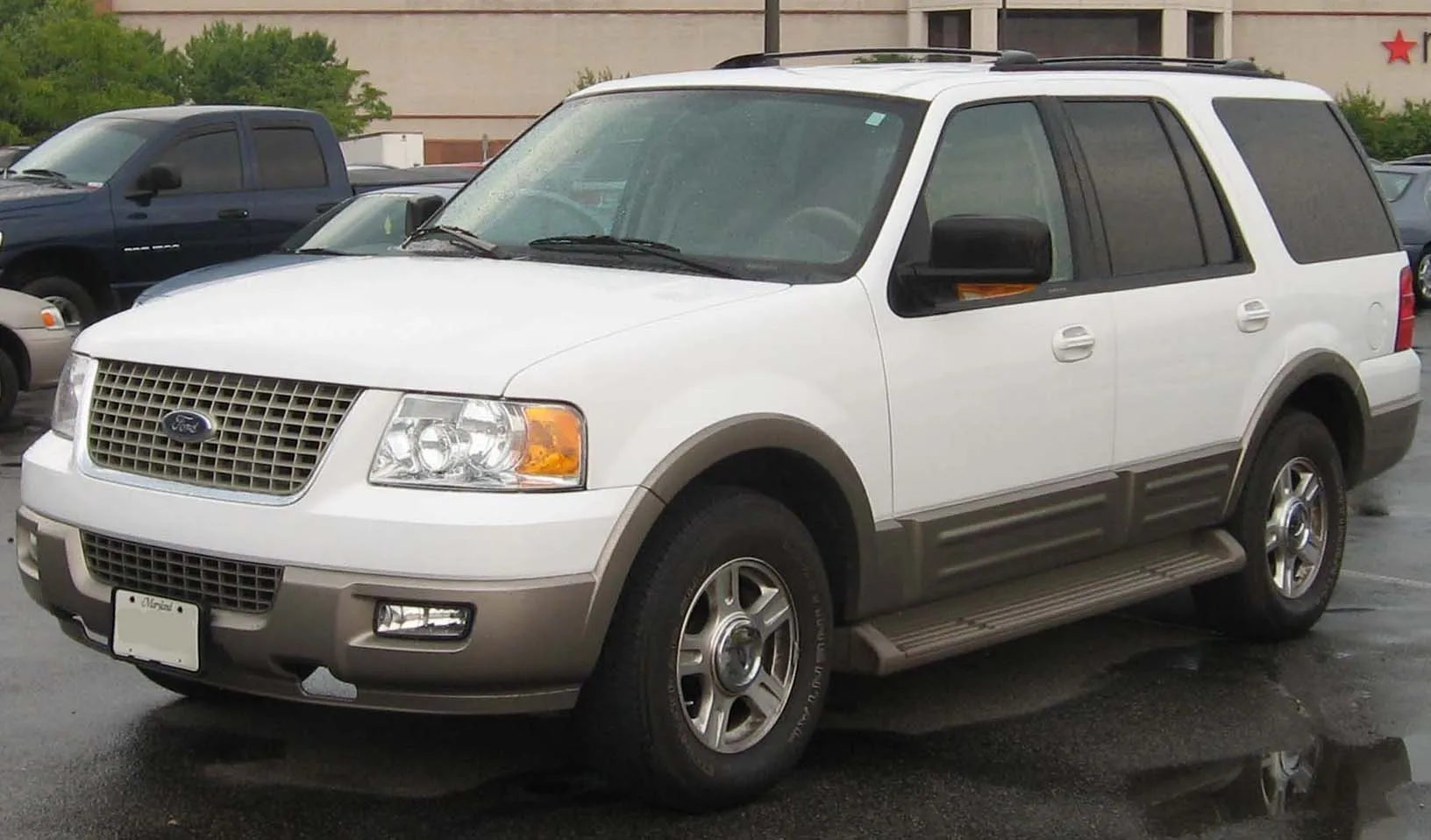
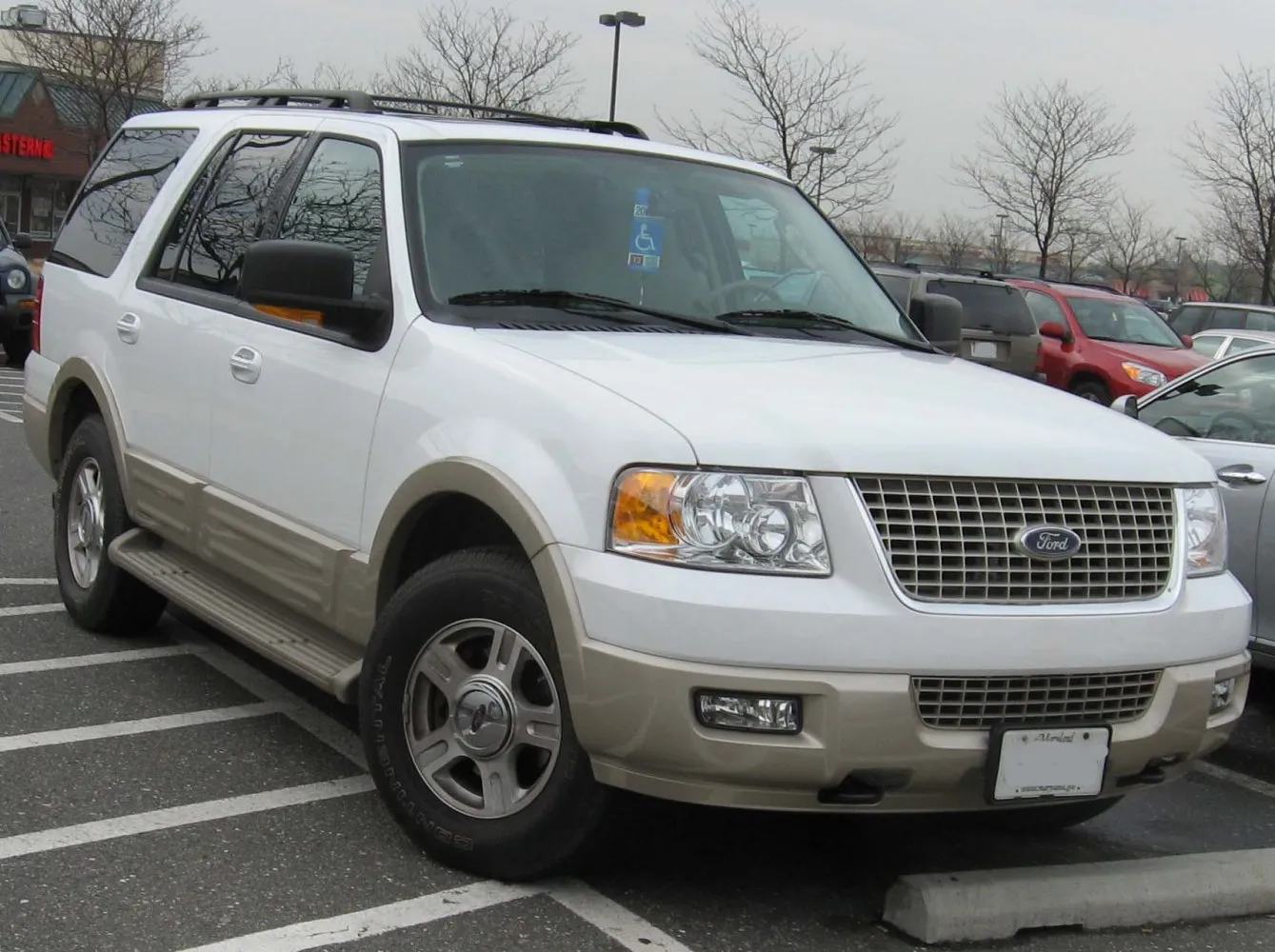
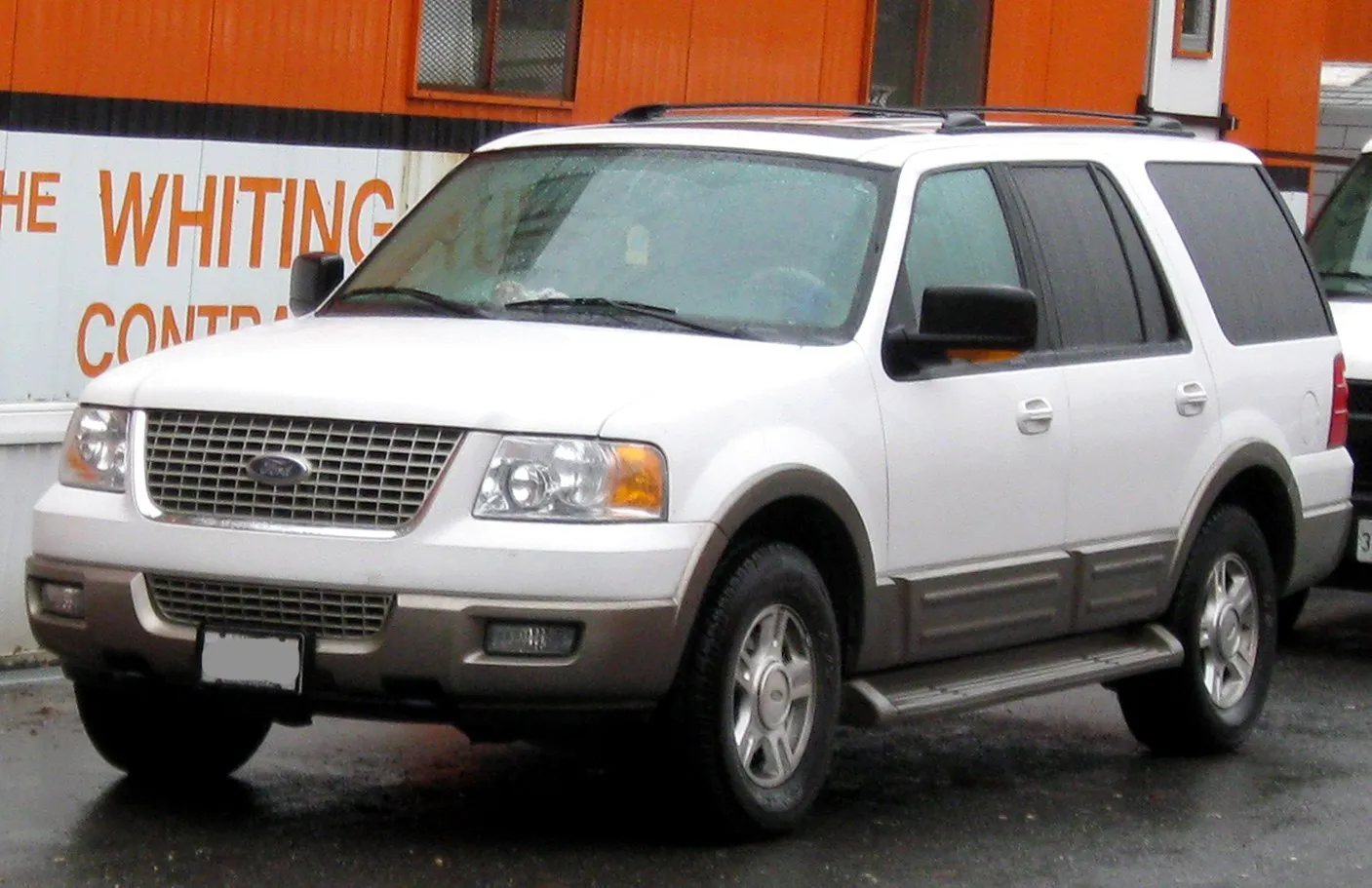
Ford Expedition II 5.4 i V8 24V (300 Hp) Automatic
Overall Rating
Ford Expedition:
The Ford Expedition is a full-size SUV produced by Ford Motor Company since the 1997 model year. The successor to the Ford Bronco, the Expedition shifted its form factor from an off-road oriented vehicle to a truck-based station wagon. Initially competing against the Chevrolet Tahoe, the Expedition also competes against the Toyota Sequoia, Nissan Armada, and the Jeep Wagoneer.
First used for a 1992 F-150 concept vehicle, Ford first marketed the Expedition nameplate for 1995 on a trim level package for the two-door Ford Explorer Sport. As with its Bronco predecessor, the Expedition heavily derives its chassis from the Ford F-150, differing primarily in suspension configuration. All five generations of the Expedition have served as the basis of the Lincoln Navigator–the first full-size luxury SUV. The model line is produced in two wheelbases , with seating for up to eight passengers....(Read more on Wikipedia)
II Overview:
Ford Expedition (II). With 495 Nm of torque, it offers ample pulling power. At around 2428 kg, it’s on the heavier side. Rear‑wheel drive offers dynamic handling and sporty feedback. A sport utility vehicle offering higher ground clearance and versatile cargo space. With seating for 7, it’s perfect for larger families.
The Ford Expedition II was primarily sold in North America and was not tested by Euro NCAP. It received good ratings from NHTSA and IIHS for its time, reflecting robust construction for the US market.
5.4 i V8 24V (300 Hp) Automatic Verdict:

Performance Verdict
Excellent power delivery for a large SUV, providing strong acceleration and effortless highway cruising and towing capabilities.
Fuel Economy
High fuel consumption is a given, though potentially slightly better than the 4WD variant due to less drivetrain loss.
Pros and Cons:
Pros:
- • Exceptional interior space for passengers and cargo.
- • Strong towing capabilities, especially with the 5.4L V8.
- • Comfortable ride quality, suitable for long journeys.
- • Robust body-on-frame construction for durability.
- • Available 4WD enhances versatility in various conditions.
Cons:
- • Very poor fuel economy across all engine options.
- • Large exterior dimensions make parking and maneuvering challenging.
- • Some known reliability issues with the Triton V8 engines (e.g., spark plugs, cam phasers).
- • Outdated interior design and technology compared to newer vehicles.
- • High running costs due to fuel consumption and potential maintenance.
Specifications:
Specifications are compared to those of the previous generation(II: 2003 - 2004).
| General: | |
|---|---|
| Brand: | Ford |
| Model: | Expedition |
| Generation: | II |
| Modification (Engine): | 5.4 i V8 24V (300 Hp) Automatic |
| Start of production: | 2005 |
| End of production: | 2006 |
| Powertrain Architecture: | Internal Combustion engine |
| Body type: | SUV |
| Seats: | 7-9 |
| Doors: | 5 |
| Engine: | |
|---|---|
| Power: | 300 Hp @ 5000 rpm. Same horsepower |
| Power per litre: | 55.5 Hp/l [Same length.] |
| Torque: | 495 Nm @ 3750 rpm. |
| Engine Model/Code: | Triton More details about the engine Triton |
| Engine displacement: | 5408 |
| Number of cylinders: | 8 |
| Engine configuration: | V-engine |
| Number of valves per cylinder: | 3 |
| Fuel injection system: | Multi-port manifold injection |
| Engine aspiration: | Naturally aspirated engine |
| Valvetrain: | SOHC, VCT |
| Engine oil capacity: | 6.6 l |
| Coolant: | 18.4 l |
| Engine layout: | Front, Longitudinal |
| Cylinder Bore: | 90.2 mm mm |
| Piston Stroke: | 105.8 mm mm |
| Compression ratio: | 9.8:1 |
| Performance: | |
|---|---|
| Fuel Type: | Petrol (Gasoline) |
| Fuel consumption (economy) - urban: | 16.8 l/100 km |
| Fuel consumption (economy) - extra urban: | 12.4 l/100 km |
| Fuel consumption (economy) - urban (EPA): | 16.8 l/100 km |
| Fuel consumption (economy) - extra urban (EPA): | 12.4 l/100 km |
| Weight-to-power ratio: | 8.1 kg/Hp, 123.6 Hp/tonne |
| Weight-to-torque ratio: | 4.9 kg/Nm, 203.9 Nm/tonne |
| Space: | |
|---|---|
| Kerb Weight: | 2428 |
| Max. weight: | 3220 |
| Max load: | 792 |
| Trunk (boot) space - maximum: | 3129 l |
| Trunk (boot) space - minimum: | 586 l |
| Permitted trailer load with brakes (12%): | 4037 kg |
| Fuel tank capacity: | 106 l |
| Size: | |
|---|---|
| Ramp-over (brakeover) angle: | 19.2° |
| Length: | 5228 mm mm [Same length.] |
| Width: | 2000 mm mm [Same width.] |
| Height: | 1948 mm mm [23mm less] |
| Wheelbase: | 3023 mm mm [Same wheelbase.] |
| Width with mirrors folded: | 2029 mm |
| Width including mirrors: | 2392 mm |
| Front track: | 1701 mm |
| Rear (Back) track: | 1708 mm |
| Front overhang: | 980 mm |
| Rear overhang: | 1226 mm |
| Ride height (ground clearance): | 224 mm |
| Minimum turning circle (turning diameter): | 11.9 m [above average] |
| Approach angle: | 22.5° |
| Departure angle: | 21.9° |
| Powertrain: | |
|---|---|
| Drivetrain Architecture | The Internal combustion engine (ICE) drives the rear wheels of the vehicle. |
| Drive wheel | Rear wheel drive |
| Number of gears | 4 |
| Transmission type | Automatic |
| Front brakes | Ventilated discs, 330 mm [Best for performance and cooling.] |
| Rear brakes | Ventilated discs, 343 mm [Best for performance and cooling.] |
| Assisting systems | ABS (Anti-lock braking system) |
| Steering type | Steering rack and pinion |
| Power steering | Hydraulic Steering |
| Tires size | 265/70 R17 |
| Wheel rims size | 17 |
| Front suspension | Double wishbone, Transverse stabilizer, Air Suspension - Optional |
| Rear suspension | Double wishbone, Transverse stabilizer, Air Suspension - Optional |













Rate the Ford Expedition from 1 to 10!