
Click on image to view the full photo gallery
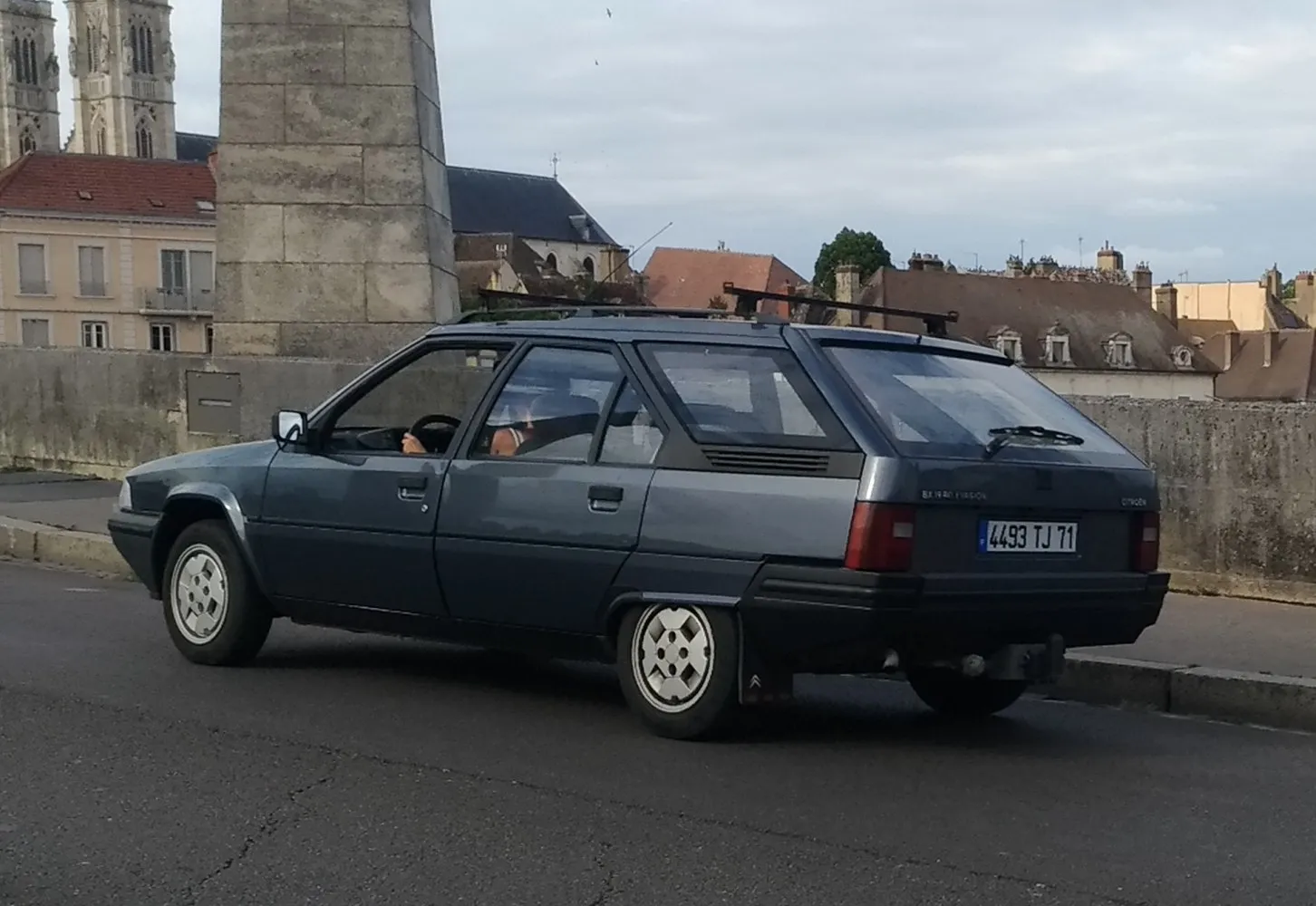
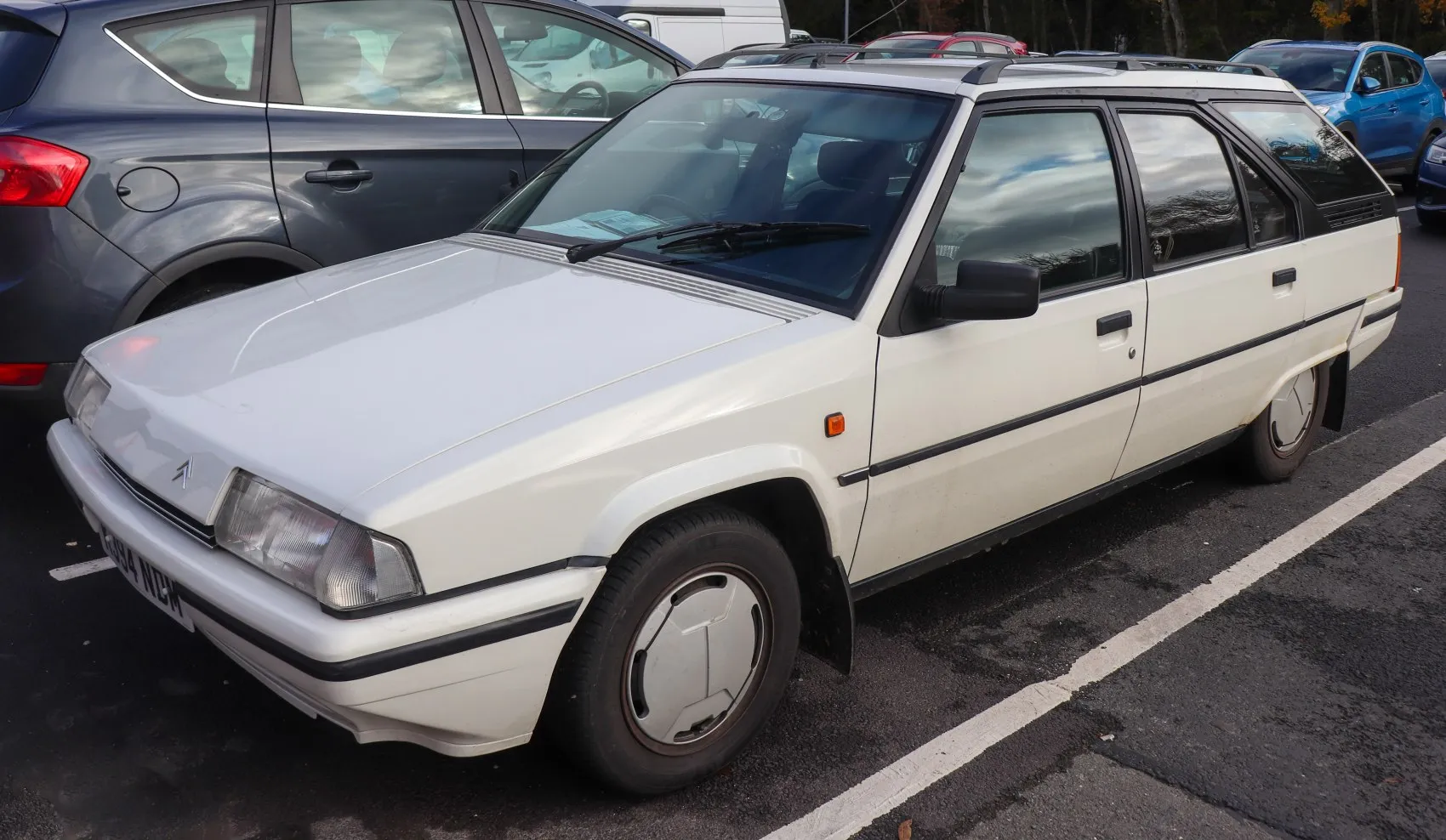
Citroen BX I Break (Phase II, 1987) 1.8 TRD Turbo (90 Hp)
Overall Rating
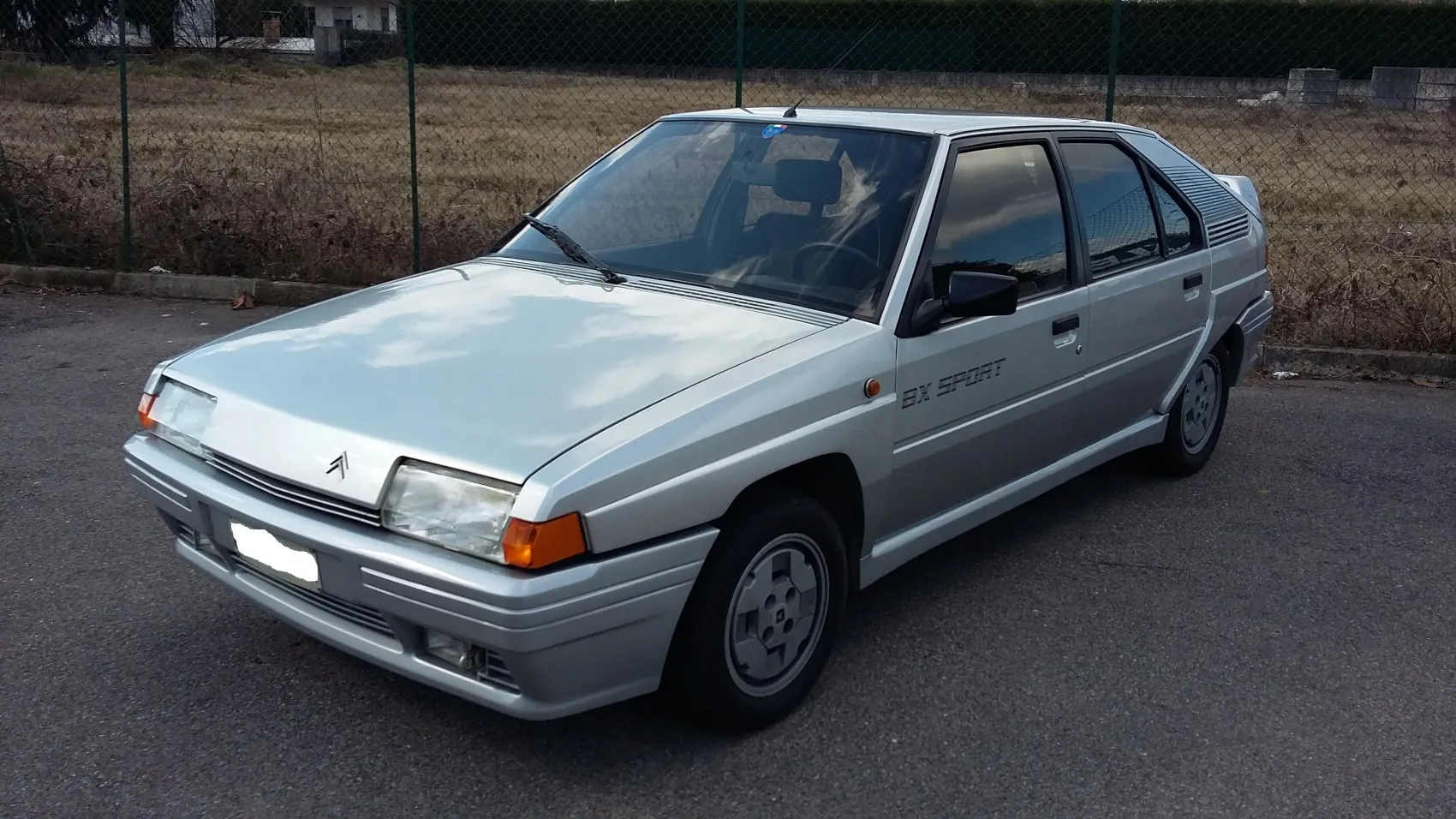
Citroen BX:
The Citroën BX is a large family car which was produced by the French manufacturer Citroën from 1982 to 1994. In total, 2,315,739 BXs were built during its 12-year history. The hatchback was discontinued in 1993 with the arrival of the Xantia, but the estate continued for another year. The BX was designed to be lightweight, using particularly few body parts, including many made from plastics.
The Citroën BX was announced in June 1982, but its commercial life really only began in the Autumn of that year, with a Paris presentation on 2 October 1982 under the Eiffel Tower. The BX was designed to replace the successful small family car Citroën GS/GSA that was launched in 1970, with a larger vehicle. The French advertising campaign used the slogan "J'aime, j'aime, j'aime" showing the car accompanied by music written specially by Julien Clerc. The British advertising campaign used the slogan "Loves Driving, Hates Garages", reflecting the effort of Citroën to promote the reduced maintenance costs of the BX, over the higher than average maintenance costs of the technologically advanced GS/GSA; while still performing in the Citroën style on the road....(Read more on Wikipedia)
I Break (Phase II, 1987) Overview:
Citroen BX (I Break (Phase II, 1987)). With 180 Nm of torque, it offers ample pulling power. It has moderate fuel consumption (~6.9 l/100km). Weighing only 1075 kg, it’s quite light. Front‑wheel drive delivers efficiency and easy handling. Acceleration is relatively slow (0–100 km/h in 12.1 s). The top speed reaches 174 km/h. A car with an extended rear cargo area, combining passenger comfort with increased storage. Seating for 5 makes it ideal for daily use.
1.8 TRD Turbo (90 Hp) Verdict:

Performance Verdict
A strong performer for a diesel of its time, offering robust torque and decent acceleration for highway cruising.
Fuel Economy
Excellent fuel economy for a turbo-diesel estate, making it a very economical long-distance runner.
Pros and Cons:
Pros:
- • Exceptional ride comfort due to hydropneumatic suspension
- • Spacious and practical station wagon body style
- • Distinctive and aerodynamic design for its era
- • Good fuel economy on turbo-diesel variants
- • Versatile interior with large boot capacity
Cons:
- • Dated passive safety features (predates modern standards)
- • Some engines can feel underpowered (especially non-turbo diesels)
- • Hydropneumatic system requires specialized maintenance
- • Interior design and materials are typical of the late 80s
- • Potential for electrical issues in older models
Specifications:
Specifications are compared to those of the previous generation(I (Phase II, 1987): 1987 - 1989).
| General: | |
|---|---|
| Brand: | Citroen |
| Model: | BX |
| Generation: | I Break (Phase II, 1987) |
| Modification (Engine): | 1.8 TRD Turbo (90 Hp) |
| Start of production: | 1988 |
| End of production: | 1989 |
| Powertrain Architecture: | Internal Combustion engine |
| Body type: | Station wagon (estate) |
| Seats: | 5 |
| Doors: | 5 |
| Engine: | |
|---|---|
| Power: | 90 Hp @ 4300 rpm. Same horsepower |
| Power per litre: | 50.9 Hp/l [162mm more] |
| Torque: | 180 Nm @ 2100 rpm. |
| Engine Model/Code: | XUD7 TE More details about the engine XUD7 TE |
| Engine displacement: | 1769 |
| Number of cylinders: | 4 |
| Engine configuration: | Inline |
| Number of valves per cylinder: | 2 |
| Fuel injection system: | Precombustion chamber injection |
| Engine aspiration: | Turbocharger, Intercooler |
| Engine oil capacity: | 4.5 l |
| Coolant: | 6.5 l |
| Engine layout: | Front, Transverse |
| Cylinder Bore: | 80 mm mm |
| Piston Stroke: | 88 mm mm |
| Compression ratio: | 22:1 |
| Performance: | |
|---|---|
| Fuel Type: | Diesel |
| Fuel consumption (economy) - urban: | 6.9 l/100 km |
| Fuel consumption (economy) - extra urban: | 4.8 l/100 km |
| Fuel consumption (economy) - combined: | 6.8 l/100 km |
| Acceleration 0 - 100 km/h: | 12.1 sec |
| Acceleration 0 - 62 mph: | 12.1 sec |
| Maximum speed: | 174 km/h |
| Weight-to-power ratio: | 11.9 kg/Hp, 83.7 Hp/tonne |
| Weight-to-torque ratio: | 6 kg/Nm, 167.4 Nm/tonne |
| Acceleration 0 - 60 mph: | 11.5 sec |
| Space: | |
|---|---|
| Kerb Weight: | 1075 |
| Max. weight: | 1620 |
| Max load: | 545 |
| Trunk (boot) space - maximum: | 1803 l |
| Trunk (boot) space - minimum: | 512 l |
| Fuel tank capacity: | 66 l |
| Size: | |
|---|---|
| Length: | 4399 mm mm [162mm more] |
| Width: | 1682 mm mm [Same width.] |
| Height: | 1431 mm mm [71mm more] |
| Wheelbase: | 2655 mm mm [Same wheelbase.] |
| Front track: | 1420 mm |
| Rear (Back) track: | 1364 mm |
| Minimum turning circle (turning diameter): | 11 m [above average] |
| Powertrain: | |
|---|---|
| Drivetrain Architecture | The Internal combustion engine (ICE) drives the front wheels of the vehicle. |
| Drive wheel | Front wheel drive |
| Number of gears | 5 |
| Transmission type | Manual |
| Front brakes | Disc [above average] |
| Rear brakes | Disc [above average] |
| Assisting systems | ABS (Anti-lock braking system) |
| Steering type | Steering rack and pinion |
| Power steering | Hydraulic Steering |
| Tires size | 165/70 R14 |
| Wheel rims size | 14 |
| Front suspension | Hydro-pneumatic element |
| Rear suspension | Trailing arm |







Behind the wheel of the Citroen BX. How does it handle on the road?