
Click on image to view the full photo gallery
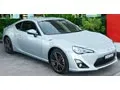
Toyota 86 II GR 2.4 D-4S (235 Hp) Automatic
Overall Rating
Toyota 86:
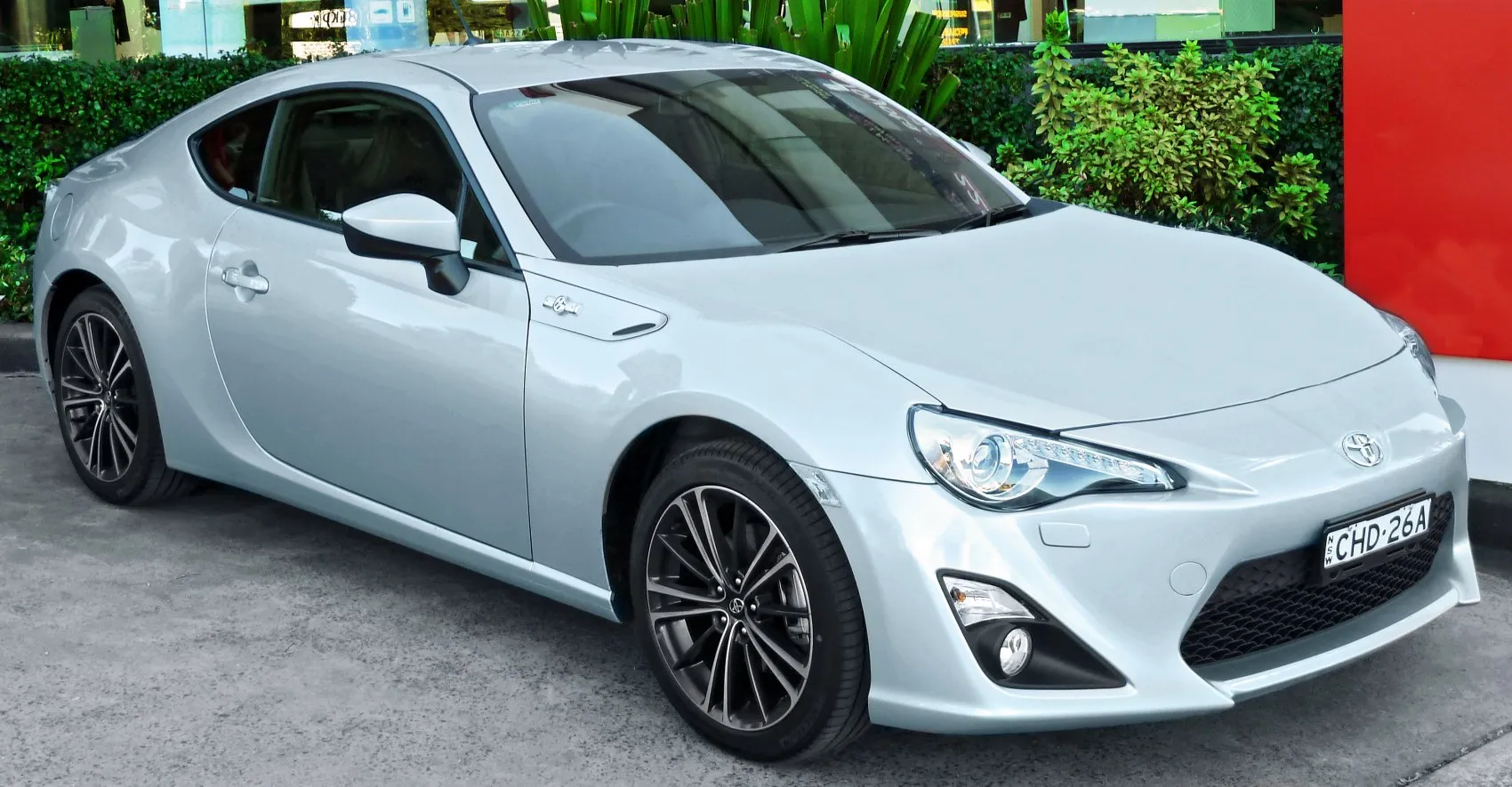
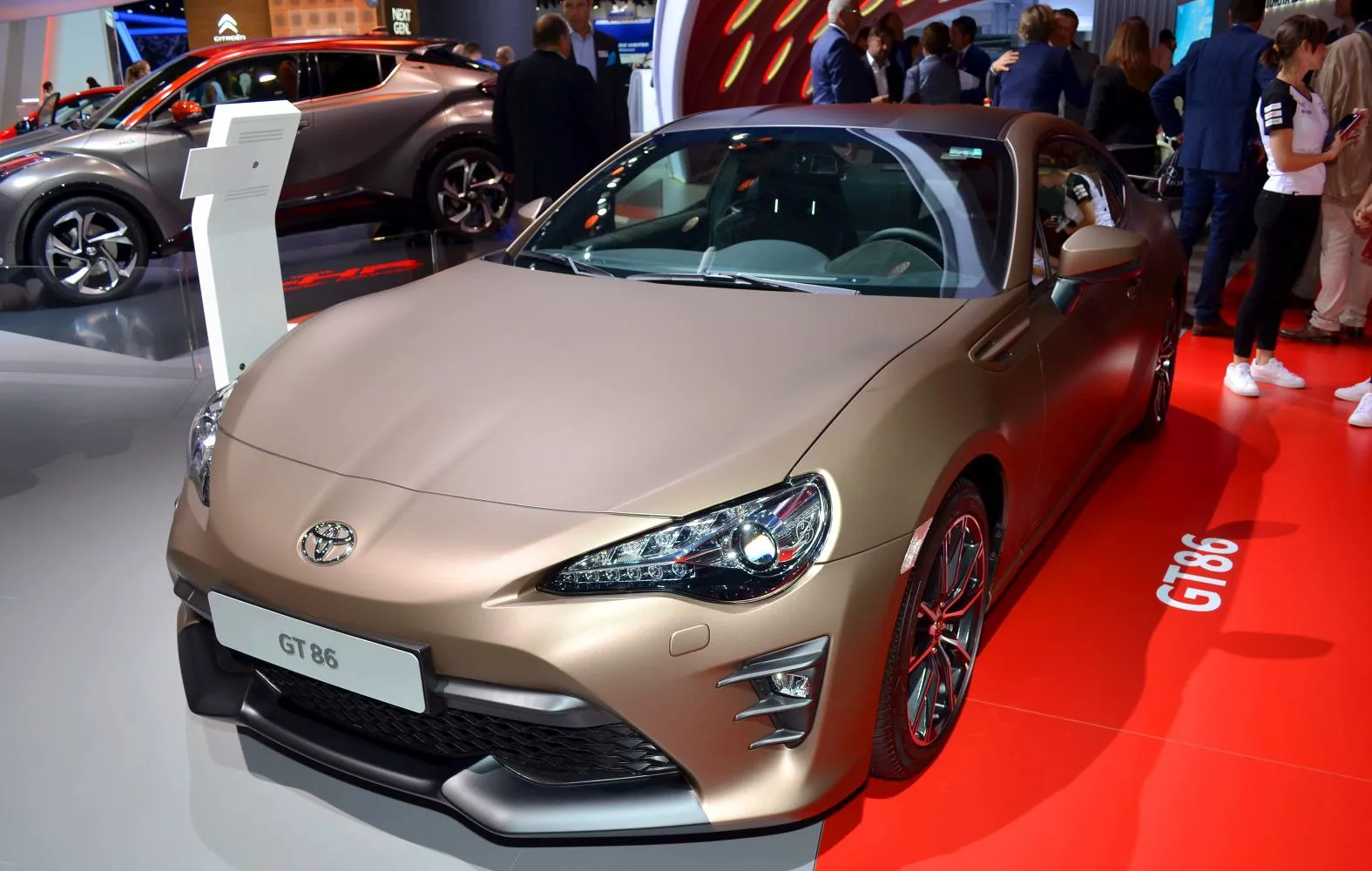
The Toyota 86 and the Subaru BRZ are 2+2 sports cars jointly developed by Toyota and Subaru, manufactured at Subaru's Gunma assembly plant.
The 2+2 fastback coupé has a naturally aspirated boxer engine, front-engined, rear-wheel-drive configuration, 53/47 front/rear weight balance and low centre of gravity; it was inspired by Toyota's earlier AE86, a small, light, front-engine/rear-drive Corolla variant widely popular for Showroom Stock, Group A, Group N, Rally, Club and drift racing.
For the first-generation model, Toyota marketed the sports car as the 86 in Asia, Australia, North America , South Africa, and South America; as the Toyota GT86 in Europe; as the 86 and GT86 in New Zealand; as the Toyota FT86 in Brunei, Nicaragua and Jamaica and as the Scion FR-S in the United States and Canada....(Read more on Wikipedia)
II Overview:
Toyota 86 (II). With 250 Nm of torque, it offers ample pulling power. It has moderate fuel consumption (~11.2 l/100km). Weighing only 1297 kg, it’s quite light. Rear‑wheel drive offers dynamic handling and sporty feedback. The top speed reaches 216 km/h. A two-door car with a fixed roof, known for its sporty design and dynamic performance. Seating for 4 makes it ideal for daily use.
The Toyota 86 II (GR86) has not been officially tested by Euro NCAP. However, its twin, the Subaru BRZ, received a 5-star ANCAP rating in Australia, suggesting a robust safety structure and features.
GR 2.4 D-4S (235 Hp) Automatic Verdict:

Performance Verdict
The automatic variant retains the strong 235 Hp output of the 2.4L FA24 engine, providing smooth and responsive power delivery. While slightly less engaging than the manual, it offers a more relaxed driving experience for daily commutes.
Fuel Economy
The automatic transmission improves fuel economy to 9.4 l/100 km combined, making it a more efficient option for those who prioritize convenience and lower running costs without sacrificing power.
Pros and Cons:
Pros:
- • Engaging naturally aspirated boxer engine
- • Exceptional handling and steering feel
- • Rear-wheel-drive purity
- • Improved power and torque over previous generation
- • Affordable sports car experience
Cons:
- • Limited rear seat space
- • Small trunk capacity
- • Interior materials can feel basic
- • Fuel economy is not class-leading for a compact car
- • Road noise can be noticeable at highway speeds
Specifications:
Specifications are compared to those of the previous generation(I (facelift 2016): 2016 - April, 2021).
| General: | |
|---|---|
| Brand: | Toyota |
| Model: | 86 |
| Generation: | II |
| Modification (Engine): | GR 2.4 D-4S (235 Hp) Automatic |
| Start of production: | April, 2021 |
| Powertrain Architecture: | Internal Combustion engine |
| Body type: | Coupe |
| Seats: | 4 |
| Doors: | 2 |
| Engine: | |
|---|---|
| Engine systems: | Start & Stop System |
| Power: | 235 Hp @ 7000 rpm. Same horsepower |
| Power per litre: | 98.4 Hp/l [31mm more] |
| Torque: | 250 Nm @ 3700 rpm. |
| Engine Model/Code: | FA24 More details about the engine FA24 |
| Engine displacement: | 2387 |
| Number of cylinders: | 4 |
| Engine configuration: | Boxer |
| Number of valves per cylinder: | 4 |
| Fuel injection system: | Direct injection |
| Engine aspiration: | Naturally aspirated engine |
| Valvetrain: | DOHC |
| Engine oil capacity: | 5 l |
| Coolant: | 7.7 l |
| Engine layout: | Front, Longitudinal |
| Cylinder Bore: | 94 mm mm |
| Piston Stroke: | 86 mm mm |
| Compression ratio: | 12.5:1 |
| Maximum engine speed: | 7400 rpm. |
| Performance: | |
|---|---|
| Fuel Type: | Petrol (Gasoline) |
| Fuel consumption (economy) - urban: | 11.2 l/100 km |
| Fuel consumption (economy) - extra urban: | 7.6 l/100 km |
| Fuel consumption (economy) - combined: | 9.4 l/100 km |
| Maximum speed: | 216 km/h |
| Weight-to-power ratio: | 5.5 kg/Hp, 181.7 Hp/tonne |
| Weight-to-torque ratio: | 5.2 kg/Nm, 193.3 Nm/tonne |
| Acceleration 0 - 60 mph: | 6.6 sec |
| Space: | |
|---|---|
| Kerb Weight: | 1293-1301 |
| Max. weight: | 1700 |
| Max load: | 399-407 |
| Trunk (boot) space - minimum: | 177 l |
| Fuel tank capacity: | 50 l |
| Size: | |
|---|---|
| Length: | 4265 mm mm [31mm more] |
| Width: | 1775 mm mm [Same width.] |
| Height: | 1310 mm mm [25mm more] |
| Wheelbase: | 2575 mm mm [5mm more] |
| Front track: | 1520 mm |
| Rear (Back) track: | 1550 mm |
| Ride height (ground clearance): | 130 mm |
| Minimum turning circle (turning diameter): | 10.8 m [above average] |
| Powertrain: | |
|---|---|
| Drivetrain Architecture | The Internal combustion engine (ICE) drives the rear wheels of the vehicle. |
| Drive wheel | Rear wheel drive |
| Number of gears | 6 |
| Transmission type | Automatic |
| Front brakes | Ventilated discs, 294 mm [Best for performance and cooling.] |
| Rear brakes | Disc, 290 mm [above average] |
| Assisting systems | ABS (Anti-lock braking system) |
| Steering type | Steering rack and pinion |
| Power steering | Electric Steering |
| Tires size | 215/40 R18 |
| Wheel rims size | 7.5J x 18 |
| Front suspension | Independent type McPherson, Transverse stabilizer |
| Rear suspension | Double wishbone, Transverse stabilizer |






Does the Toyota 86 live up to the hype? Give us your verdict!