
Click on image to view the full photo gallery
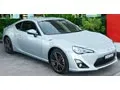
Toyota 86 II GR 2.4 D-4S (235 Hp)
Overall Rating
Toyota 86:
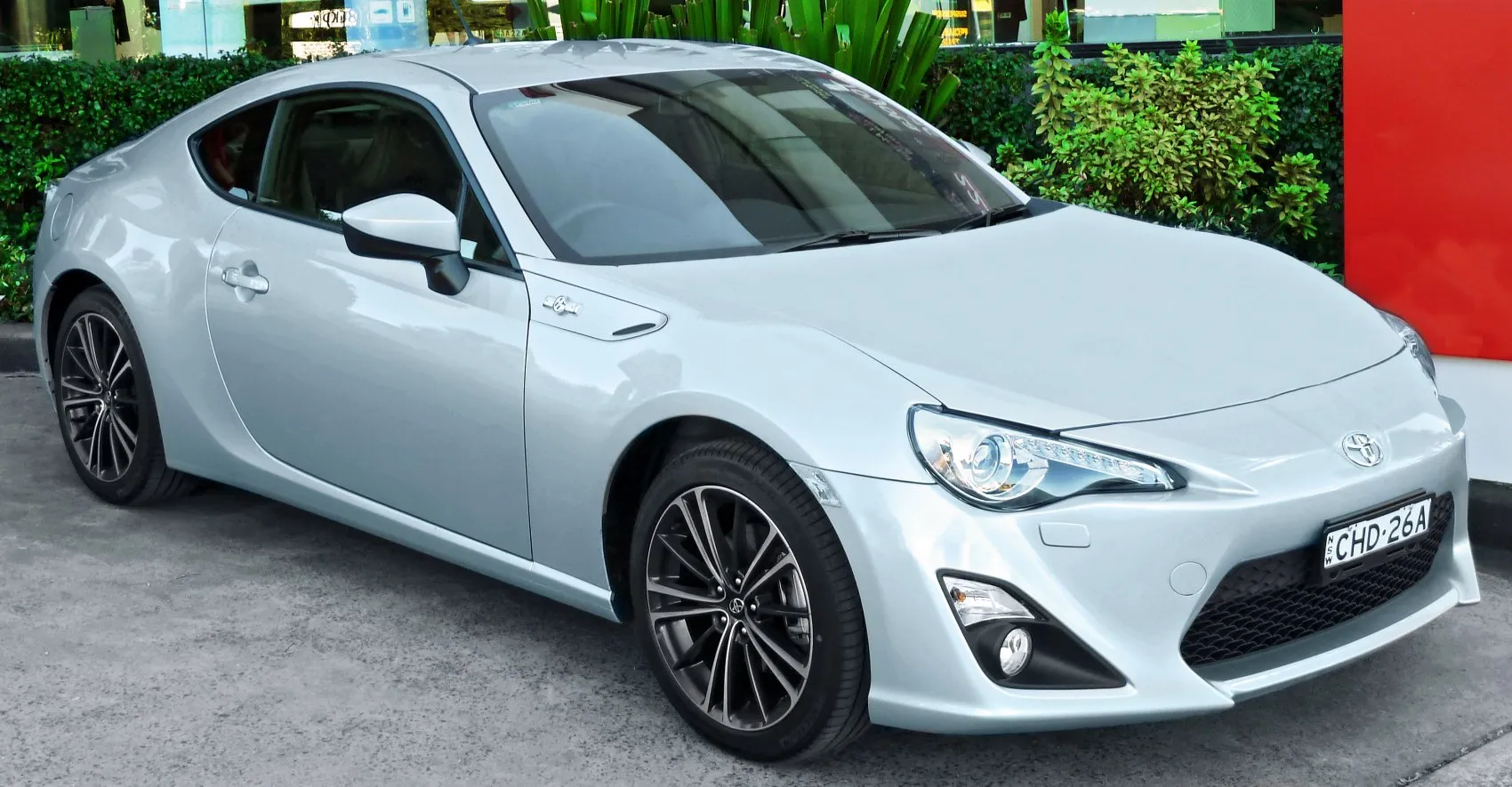
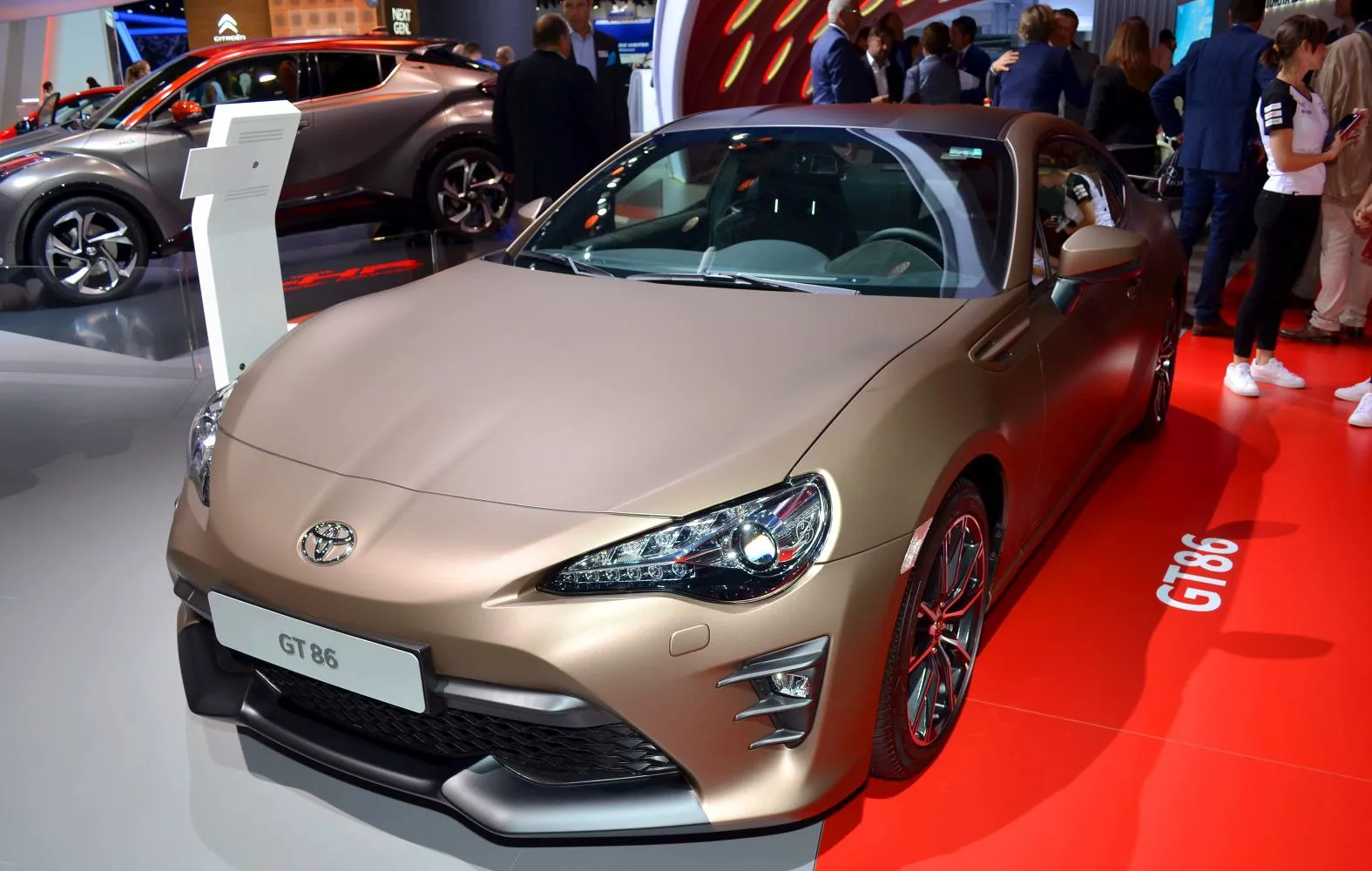
The Toyota 86 and the Subaru BRZ are 2+2 sports cars jointly developed by Toyota and Subaru, manufactured at Subaru's Gunma assembly plant.
The 2+2 fastback coupé has a naturally aspirated boxer engine, front-engined, rear-wheel-drive configuration, 53/47 front/rear weight balance and low centre of gravity; it was inspired by Toyota's earlier AE86, a small, light, front-engine/rear-drive Corolla variant widely popular for Showroom Stock, Group A, Group N, Rally, Club and drift racing.
For the first-generation model, Toyota marketed the sports car as the 86 in Asia, Australia, North America , South Africa, and South America; as the Toyota GT86 in Europe; as the 86 and GT86 in New Zealand; as the Toyota FT86 in Brunei, Nicaragua and Jamaica and as the Scion FR-S in the United States and Canada....(Read more on Wikipedia)
II Overview:
Toyota 86 (II). With 250 Nm of torque, it offers ample pulling power. It has moderate fuel consumption (~11.8 l/100km). Weighing only 1277 kg, it’s quite light. Rear‑wheel drive offers dynamic handling and sporty feedback. The top speed reaches 225 km/h. A two-door car with a fixed roof, known for its sporty design and dynamic performance. Seating for 4 makes it ideal for daily use.
The Toyota 86 II (GR86) has not been officially tested by Euro NCAP. However, its twin, the Subaru BRZ, received a 5-star ANCAP rating in Australia, suggesting a robust safety structure and features.
GR 2.4 D-4S (235 Hp) Verdict:

Performance Verdict
The 2.4L FA24 boxer engine delivers a significant power bump over its predecessor, offering a more linear and satisfying acceleration with 235 Hp. The manual transmission enhances driver engagement, making it a joy on winding roads.
Fuel Economy
With a combined fuel consumption of 10.7 l/100 km, the manual GR 2.4 D-4S is typical for a naturally aspirated sports car. It prioritizes performance and driver feel over outright fuel efficiency.
Pros and Cons:
Pros:
- • Engaging naturally aspirated boxer engine
- • Exceptional handling and steering feel
- • Rear-wheel-drive purity
- • Improved power and torque over previous generation
- • Affordable sports car experience
Cons:
- • Limited rear seat space
- • Small trunk capacity
- • Interior materials can feel basic
- • Fuel economy is not class-leading for a compact car
- • Road noise can be noticeable at highway speeds
Specifications:
Specifications are compared to those of the previous generation(I (facelift 2016): 2016 - April, 2021).
| General: | |
|---|---|
| Brand: | Toyota |
| Model: | 86 |
| Generation: | II |
| Modification (Engine): | GR 2.4 D-4S (235 Hp) |
| Start of production: | April, 2021 |
| Powertrain Architecture: | Internal Combustion engine |
| Body type: | Coupe |
| Seats: | 4 |
| Doors: | 2 |
| Engine: | |
|---|---|
| Engine systems: | Start & Stop System |
| Power: | 235 Hp @ 7000 rpm. Same horsepower |
| Power per litre: | 98.4 Hp/l [31mm more] |
| Torque: | 250 Nm @ 3700 rpm. |
| Engine Model/Code: | FA24 More details about the engine FA24 |
| Engine displacement: | 2387 |
| Number of cylinders: | 4 |
| Engine configuration: | Boxer |
| Number of valves per cylinder: | 4 |
| Fuel injection system: | Direct injection and Multi-port manifold injection |
| Engine aspiration: | Naturally aspirated engine |
| Valvetrain: | DOHC |
| Engine oil capacity: | 5 l |
| Coolant: | 7.4 l |
| Engine layout: | Front, Longitudinal |
| Cylinder Bore: | 94 mm mm |
| Piston Stroke: | 86 mm mm |
| Compression ratio: | 12.5:1 |
| Maximum engine speed: | 7400 rpm. |
| Performance: | |
|---|---|
| Fuel Type: | Petrol (Gasoline) |
| Fuel consumption (economy) - urban: | 11.8 l/100 km |
| Fuel consumption (economy) - extra urban: | 8.7 l/100 km |
| Fuel consumption (economy) - combined: | 10.7 l/100 km |
| Maximum speed: | 225 km/h |
| Weight-to-power ratio: | 5.4 kg/Hp, 185 Hp/tonne |
| Weight-to-torque ratio: | 5.1 kg/Nm, 196.9 Nm/tonne |
| Acceleration 0 - 60 mph: | 6.1 sec |
| Space: | |
|---|---|
| Kerb Weight: | 1270-1285 |
| Max. weight: | 1670 |
| Max load: | 385-400 |
| Trunk (boot) space - minimum: | 177 l |
| Fuel tank capacity: | 50 l |
| Size: | |
|---|---|
| Length: | 4265 mm mm [31mm more] |
| Width: | 1775 mm mm [Same width.] |
| Height: | 1310 mm mm [25mm more] |
| Wheelbase: | 2575 mm mm [5mm more] |
| Front track: | 1520 mm |
| Rear (Back) track: | 1550 mm |
| Ride height (ground clearance): | 130 mm |
| Minimum turning circle (turning diameter): | 10.8 m [above average] |
| Powertrain: | |
|---|---|
| Drivetrain Architecture | The Internal combustion engine (ICE) drives the rear wheels of the vehicle. |
| Drive wheel | Rear wheel drive |
| Number of gears | 6 |
| Transmission type | Manual |
| Front brakes | Ventilated discs, 294 mm [Best for performance and cooling.] |
| Rear brakes | Disc, 290 mm [above average] |
| Assisting systems | ABS (Anti-lock braking system) |
| Steering type | Steering rack and pinion |
| Power steering | Electric Steering |
| Tires size | 215/40 R18 |
| Wheel rims size | 7.5J x 18 |
| Front suspension | Independent type McPherson, Transverse stabilizer |
| Rear suspension | Double wishbone, Transverse stabilizer |






How many miles have you covered in your Toyota 86? Share your journey!