
Click on image to view the full photo gallery
Peugeot 309 10C,10A 1.6 (80 Hp) Automatic
Overall Rating
Peugeot 309:
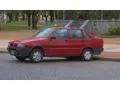
The Peugeot 309 is a small family car that was manufactured between 1985 and 1994 in France, England and Spain by PSA Peugeot Citroën. It was originally intended to be badged as a Talbot and, as development progressed, to be called the Talbot Arizona.
It was the replacement for the Talbot Horizon, which had started life as a Chrysler in Britain and a Simca in France, and was also being built in several guises for the market in America. In 1985, the PSA Group decided to discontinue the Talbot brand, with the last passenger vehicle branded as a Talbot to be launched being the Samba of 1981, and to market the car as a Peugeot instead....(Read more on Wikipedia)
10C,10A Overview:
Peugeot 309 (10C,10A). With 132 Nm of torque, it offers ample pulling power. It has moderate fuel consumption (~8.5 l/100km). Weighing only 901 kg, it’s quite light. Front‑wheel drive delivers efficiency and easy handling. Acceleration is relatively slow (0–100 km/h in 16 s). The top speed reaches 165 km/h. A compact car with a rear door that swings upward to provide access to the cargo area. Seating for 5 makes it ideal for daily use.
1.6 (80 Hp) Automatic Verdict:

Performance Verdict
Offers a relaxed driving experience with the automatic transmission, though performance is slightly dulled compared to manual versions.
Fuel Economy
Fuel economy is generally worse than the manual counterpart due to the older automatic transmission technology, especially in city driving.
Pros and Cons:
Pros:
- • Practical hatchback design with good boot space.
- • Wide range of engines, including economical diesels and a potent GTI.
- • Comfortable ride quality for its class.
- • Generally robust mechanicals (especially XU engines).
- • Good value for money on the used market.
Cons:
- • Dated interior design and materials by modern standards.
- • Basic safety features compared to contemporary vehicles.
- • Some models can suffer from electrical gremlins.
- • Rust can be an issue on older, unmaintained examples.
- • Entry-level engines are underpowered for highway use.
Specifications:
Specifications are compared to those of the previous generation(10C,10A: 1986 - 1989).
| General: | |
|---|---|
| Brand: | Peugeot |
| Model: | 309 |
| Generation: | 10C,10A |
| Modification (Engine): | 1.6 (80 Hp) Automatic |
| Start of production: | 1987 |
| End of production: | 1989 |
| Powertrain Architecture: | Internal Combustion engine |
| Body type: | Hatchback |
| Seats: | 5 |
| Doors: | 5 |
| Engine: | |
|---|---|
| Power: | 80 Hp @ 5600 rpm. Same horsepower |
| Power per litre: | 50.6 Hp/l [worst than previous generation] |
| Torque: | 132 Nm @ 2800 rpm. |
| Engine Model/Code: | XU51C More details about the engine XU51C |
| Engine displacement: | 1580 |
| Number of cylinders: | 4 |
| Engine configuration: | Inline |
| Number of valves per cylinder: | 2 |
| Fuel injection system: | Carburettor |
| Engine aspiration: | Naturally aspirated engine |
| Valvetrain: | OHC |
| Engine oil capacity: | 5 l |
| Coolant: | 7.5 l |
| Engine layout: | Front, Transverse |
| Cylinder Bore: | 83 mm mm |
| Piston Stroke: | 73 mm mm |
| Compression ratio: | 9.4:1 |
| Performance: | |
|---|---|
| Fuel Type: | Petrol (Gasoline) |
| Fuel consumption (economy) - urban: | 8.5 l/100 km |
| Fuel consumption (economy) - extra urban: | 5.8 l/100 km |
| Acceleration 0 - 100 km/h: | 16 sec |
| Acceleration 0 - 62 mph: | 16 sec |
| Maximum speed: | 165 km/h |
| Weight-to-power ratio: | 11.3 kg/Hp, 88.8 Hp/tonne |
| Weight-to-torque ratio: | 6.8 kg/Nm, 146.5 Nm/tonne |
| Acceleration 0 - 60 mph: | 15.2 sec |
| Space: | |
|---|---|
| Kerb Weight: | 901 |
| Max. weight: | 1330 |
| Max load: | 429 |
| Trunk (boot) space - maximum: | 1279 l |
| Trunk (boot) space - minimum: | 397 l |
| Permitted trailer load with brakes (12%): | 800 kg |
| Fuel tank capacity: | 55 l |
| Size: | |
|---|---|
| Length: | 4051 mm mm |
| Width: | 1628 mm mm |
| Height: | 1380 mm mm |
| Wheelbase: | 2469 mm mm |
| Front track: | 1408 mm |
| Rear (Back) track: | 1376 mm |
| Front overhang: | 753 mm |
| Rear overhang: | 829 mm |
| Powertrain: | |
|---|---|
| Drivetrain Architecture | The Internal combustion engine (ICE) drives the front wheels of the vehicle. |
| Drive wheel | Front wheel drive |
| Number of gears | 4 |
| Transmission type | Automatic |
| Front brakes | Disc [bad for performance and cooling.] |
| Rear brakes | Drum [bad for performance and cooling.] |
| Steering type | Steering rack and pinion |
| Tires size | 165/70 R13 |
| Wheel rims size | 13 |
| Front suspension | Independent, type McPherson with coil spring and anti-roll bar |
| Rear suspension | Torsion |





Show off your Peugeot 309 knowledge – drop a review below!