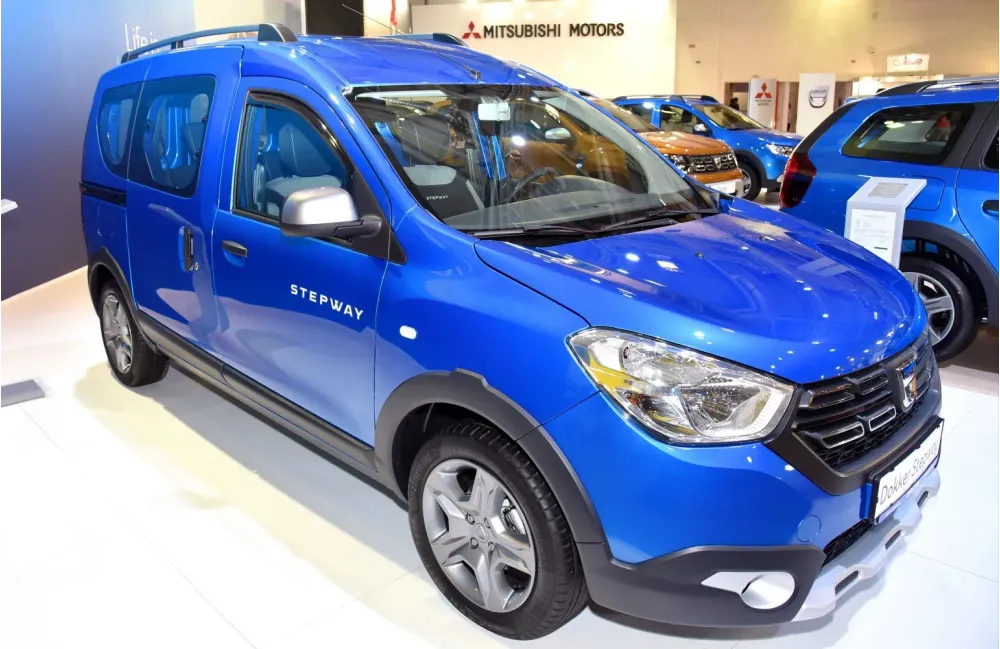
Click on image to view the full photo gallery
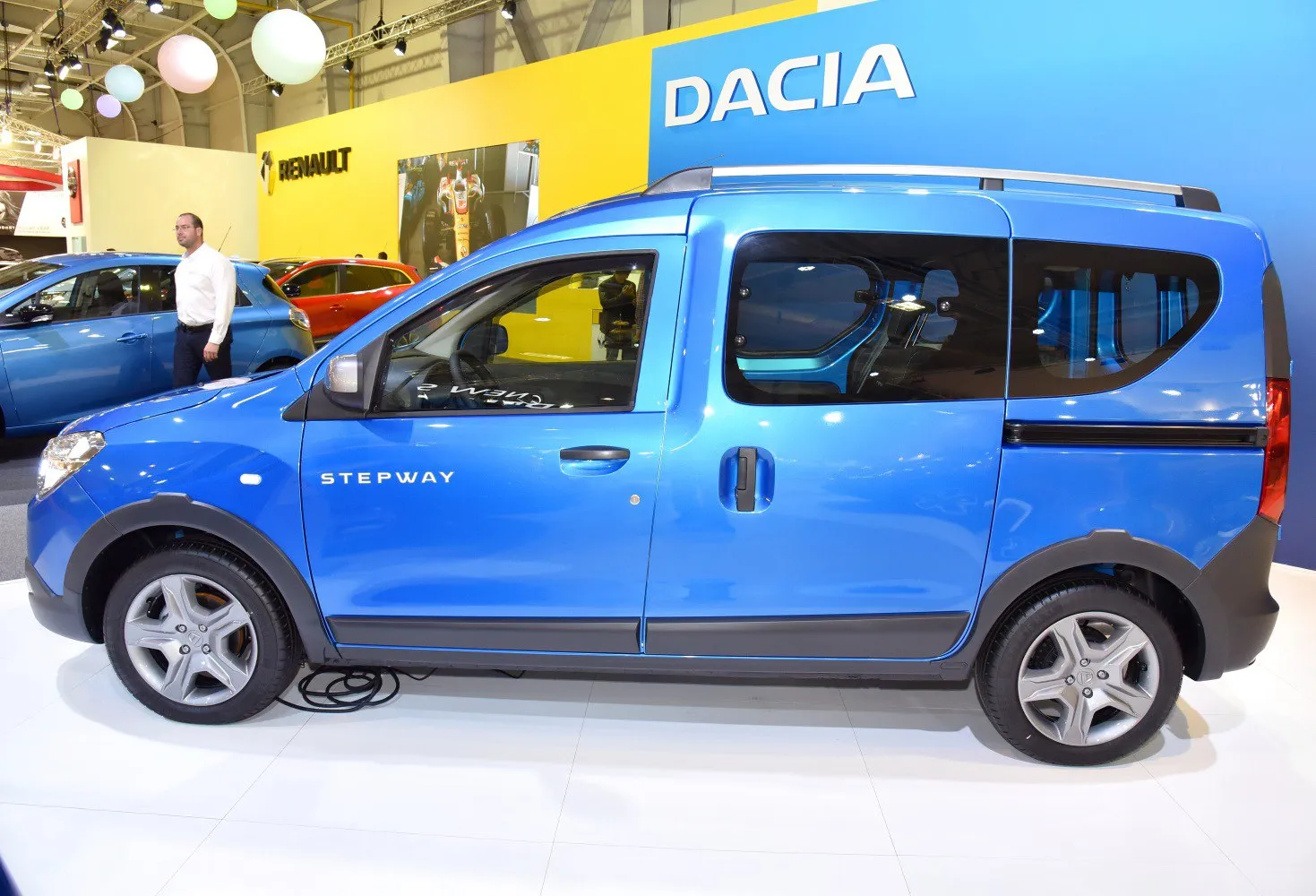
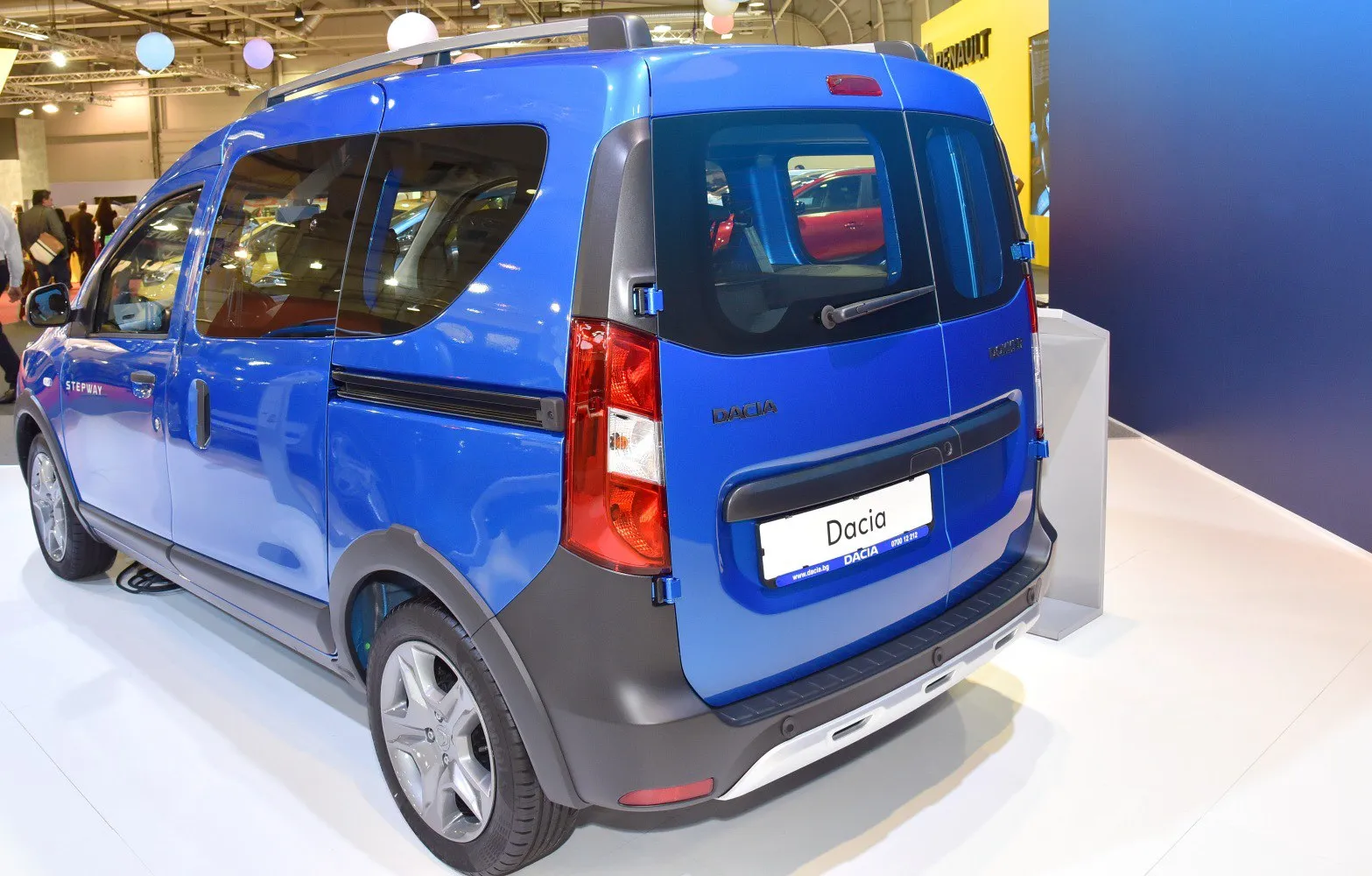
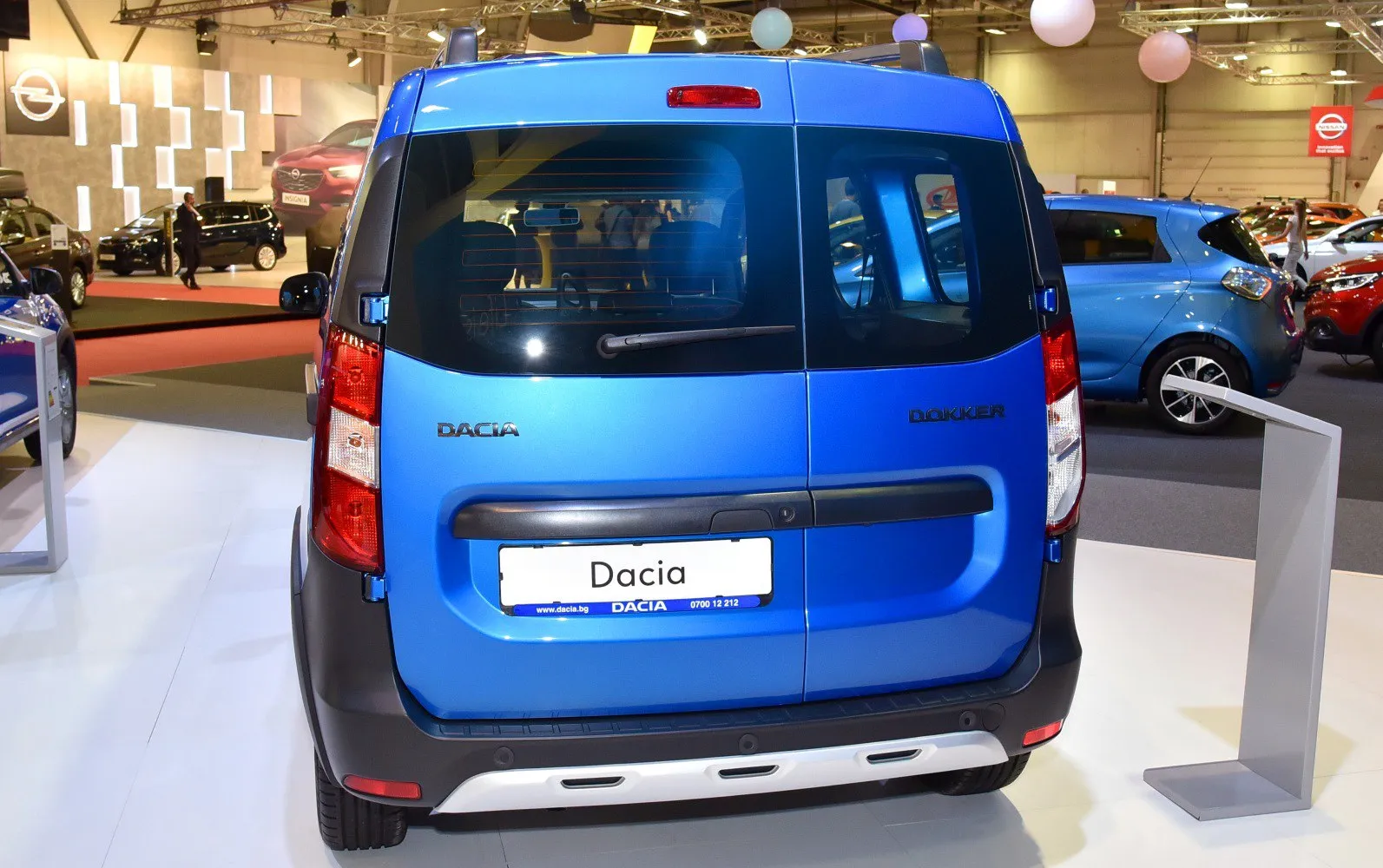
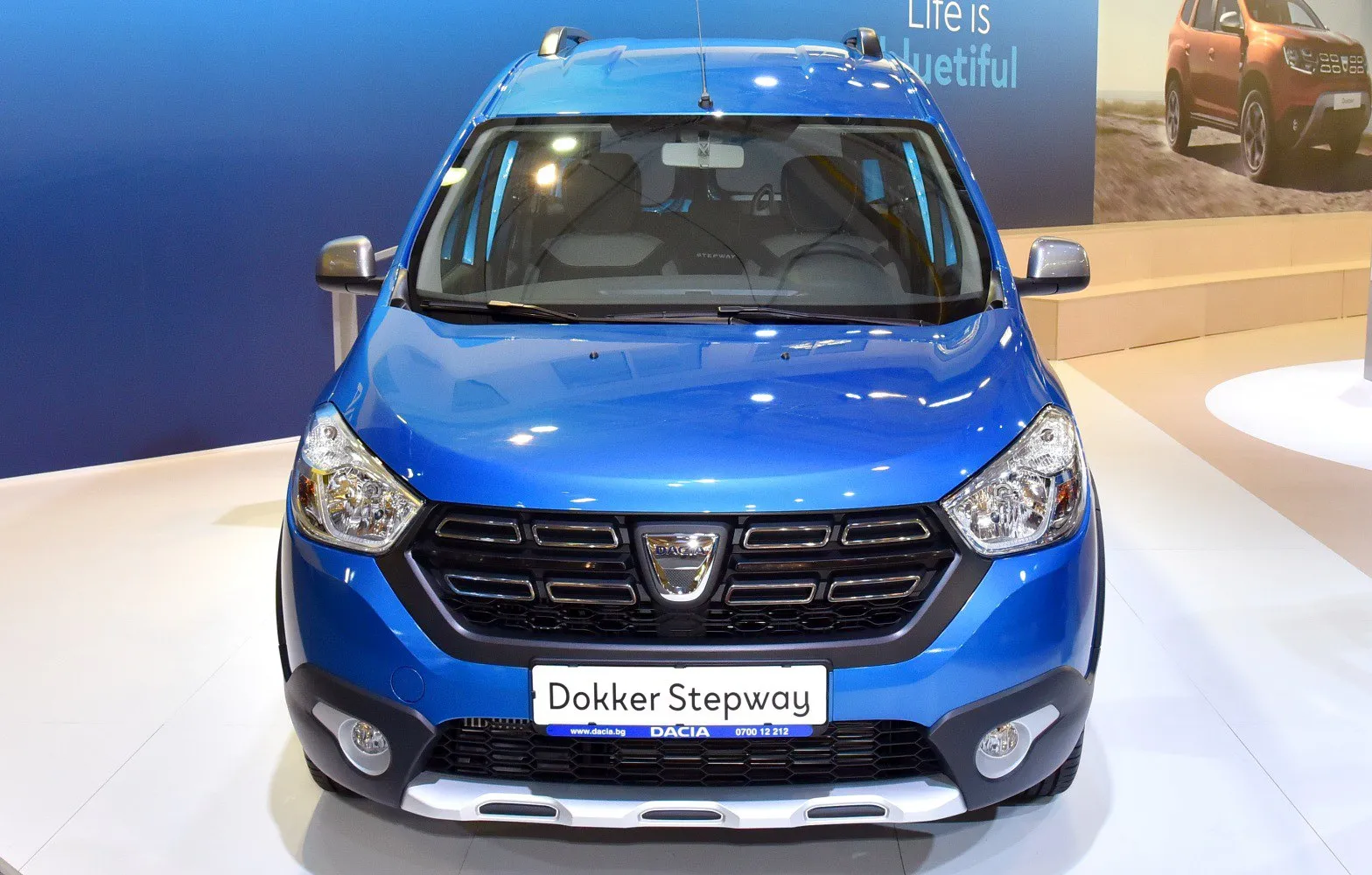
Dacia Dokker Stepway (facelift 2017) 1.2 TCe (116 Hp)
Overall Rating
Dacia Dokker:
The Dacia Dokker is a panel van and leisure activity vehicle built at the Renault factory in Tangier, Morocco. It was officially launched at the 2012 Casablanca Auto Show, and initially went on sale in Morocco in June 2012. It has been available in Romania since September 2012, and is marketed in Europe, North Africa, Turkey, Israel and French overseas territories.
It is manufactured in passenger and panel van variants, as well as a crossover version, the Dokker Stepway, introduced at the 2012 Istanbul Motor Show, featuring body elements similar to the Sandero Stepway. It is marketed in the CIS countries and in the Middle East under the name Renault Dokker and Renault Kangoo in South America, but not in other parts of the world, as it would cannibalize the sales of its French sourced brother, the Renault Kangoo. In 2018, Dacia Italia together with Focaccia Group created a pick-up variant for the Italian market....(Read more on Wikipedia)
Stepway (facelift 2017) Overview:
Dacia Dokker (Stepway (facelift 2017)). With 190 Nm of torque, it offers ample pulling power. It has moderate fuel consumption (~6.8 l/100km). Weighing only 1205 kg, it’s quite light. Front‑wheel drive delivers efficiency and easy handling. Acceleration is relatively slow (0–100 km/h in 10.8 s). The top speed reaches 175 km/h. A multi-purpose vehicle designed to transport passengers with ample interior space. Seating for 5 makes it ideal for daily use.
1.2 TCe (116 Hp) Verdict:

Performance Verdict
Offers a decent balance of power and responsiveness for a compact MPV, making it suitable for mixed driving conditions.
Fuel Economy
Reasonable fuel consumption for a petrol engine of its output, though not class-leading in efficiency.
Pros and Cons:
Pros:
- • Exceptional interior space and cargo capacity
- • Highly practical and versatile for families or work
- • Very affordable purchase price and low running costs (especially diesel)
- • Robust and simple mechanics, leading to good reliability
- • High ride height and Stepway styling adds rugged appeal
Cons:
- • Basic interior materials and design
- • Limited advanced safety features and a 3-star NCAP rating
- • Unrefined ride quality and noticeable road noise
- • Modest performance from most engine options
- • Lacks modern infotainment and driver assistance technologies
Specifications:
Specifications are compared to those of the previous generation(Van: March, 2013 - March, 2017).
| General: | |
|---|---|
| Brand: | Dacia |
| Model: | Dokker |
| Generation: | Stepway (facelift 2017) |
| Modification (Engine): | 1.2 TCe (116 Hp) |
| Start of production: | March, 2017 |
| End of production: | August, 2018 |
| Powertrain Architecture: | Internal Combustion engine |
| Body type: | MPV |
| Seats: | 5 |
| Doors: | 5 |
| Engine: | |
|---|---|
| Engine systems: | Start & Stop System |
| Power: | 116 Hp @ 4500 rpm. Same horsepower |
| Power per litre: | 96.9 Hp/l [25mm more] |
| Torque: | 190 Nm @ 1750 rpm. |
| Engine Model/Code: | H5Ft 402 More details about the engine H5Ft 402 |
| Engine displacement: | 1197 |
| Number of cylinders: | 4 |
| Engine configuration: | Inline |
| Number of valves per cylinder: | 4 |
| Fuel injection system: | Direct injection |
| Engine aspiration: | Turbocharger, Intercooler |
| Engine oil capacity: | 4.7 l |
| Coolant: | 4.5 l |
| Engine layout: | Front, Transverse |
| Cylinder Bore: | 72.2 mm mm |
| Piston Stroke: | 73.2 mm mm |
| Performance: | |
|---|---|
| Fuel Type: | Petrol (Gasoline) |
| Fuel consumption (economy) - urban: | 6.8 l/100 km |
| Fuel consumption (economy) - extra urban: | 5.1 l/100 km |
| Fuel consumption (economy) - combined: | 5.7 l/100 km |
| Emission standard: | Euro 6 |
| Acceleration 0 - 100 km/h: | 10.8 sec |
| Acceleration 0 - 62 mph: | 10.8 sec |
| Maximum speed: | 175 km/h |
| Weight-to-power ratio: | 10.4 kg/Hp, 96.3 Hp/tonne |
| Weight-to-torque ratio: | 6.3 kg/Nm, 157.7 Nm/tonne |
| Acceleration 0 - 60 mph: | 10.3 sec |
| Space: | |
|---|---|
| Kerb Weight: | 1205 |
| Max. weight: | 1839 |
| Max load: | 634 |
| Trunk (boot) space - maximum: | 3000 l |
| Trunk (boot) space - minimum: | 800 l |
| Permitted trailer load with brakes (12%): | 1200 kg |
| Fuel tank capacity: | 50 l |
| Permitted trailer load without brakes: | 640 kg |
| Size: | |
|---|---|
| Length: | 4388 mm mm [25mm more] |
| Width: | 1767 mm mm [16mm more] |
| Height: | 1852 mm mm [43mm more] |
| Wheelbase: | 2810 mm mm [Same wheelbase.] |
| Width including mirrors: | 2004 mm |
| Front track: | 1490 mm |
| Rear (Back) track: | 1478 mm |
| Front overhang: | 834 mm |
| Rear overhang: | 744 mm |
| Ride height (ground clearance): | 153-190 mm |
| Minimum turning circle (turning diameter): | 11.1 m [above average] |
| Powertrain: | |
|---|---|
| Drivetrain Architecture | The Internal combustion engine (ICE) drives the front wheels of the vehicle. |
| Drive wheel | Front wheel drive |
| Number of gears | 5 |
| Transmission type | Manual |
| Front brakes | Ventilated discs, 280x24 mm [Best for performance and cooling.] |
| Rear brakes | Drum [bad for performance and cooling.] |
| Assisting systems | ABS (Anti-lock braking system) |
| Steering type | Steering rack and pinion |
| Power steering | Hydraulic Steering |
| Tires size | 185/65 R15; 195/55 R16 |
| Wheel rims size | 15; 16 |
| Front suspension | Independent type McPherson |
| Rear suspension | Coil spring, Elastic beam |








Help others decide – share your experience!