
Click on image to view the full photo gallery
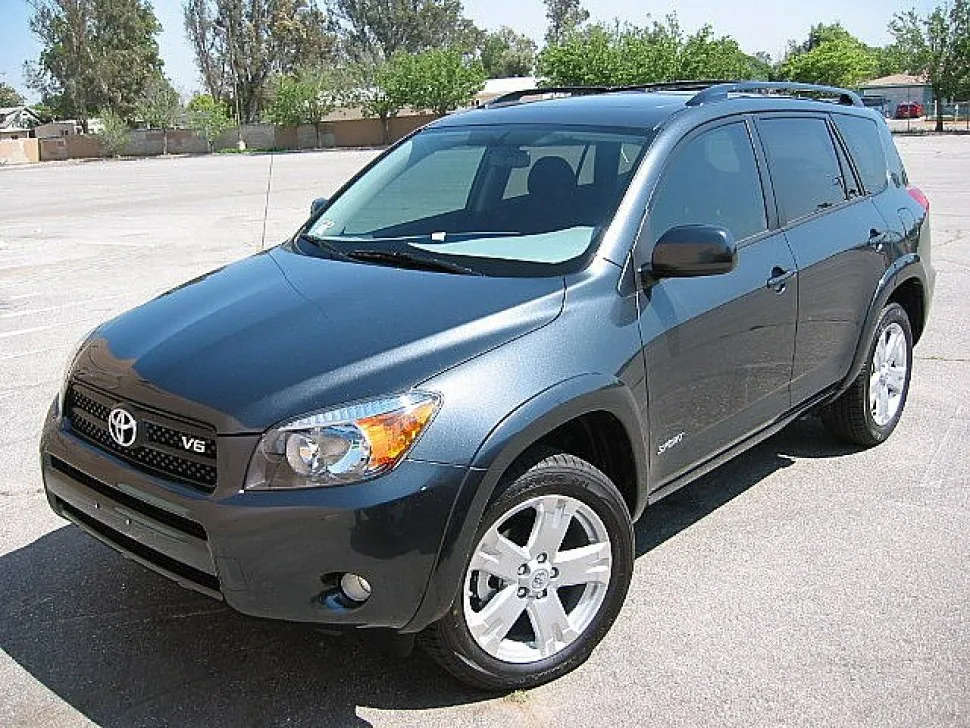
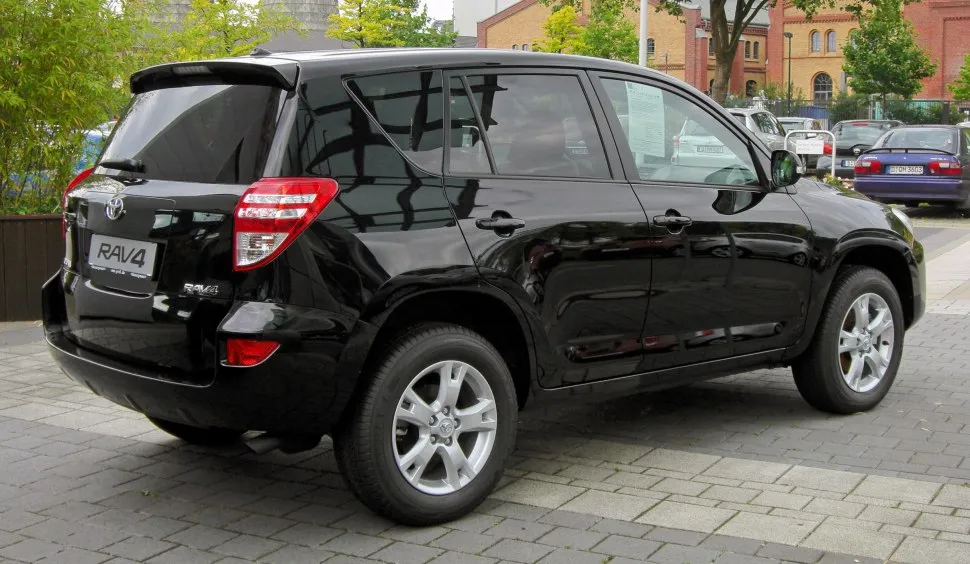
Toyota RAV4 III (XA30, facelift 2008) 2.2 D-4D (150 Hp)
Overall Rating
Toyota RAV4:
The Toyota RAV4 is a compact crossover SUV produced by the Japanese automobile manufacturer Toyota. It is known for starting the wave of compact crossovers. The RAV4 is the best-selling sport utility vehicle of all time, having sold over 10 million units by February 2020. In February 2025, the RAV4 replaced the Ford F-150 as the top selling car in the United States, after nearly four decades of the F-150's reign.
It made its debut in Japan and Europe in 1994, and in North America in 1995, being launched in January 1996. The vehicle was designed for consumers wanting a vehicle that had most of the benefits of SUVs, such as increased cargo room, higher visibility, and the option of full-time four-wheel drive, along with the maneuverability of a mid-size car. The vehicle's name is an abbreviation of "Recreational Active Vehicle with 4-wheel drive", or "Robust Accurate Vehicle with 4-wheel drive", although not all models come equipped with the four-wheel drive system....(Read more on Wikipedia)
III (XA30, facelift 2008) Overview:
Toyota RAV4 (III (XA30, facelift 2008)). With 340 Nm of torque, it offers ample pulling power. It has moderate fuel consumption (~7.4 l/100km). With a weight of 1620 kg, it falls in the mid‑range. Front‑wheel drive delivers efficiency and easy handling. Acceleration is relatively slow (0–100 km/h in 10.2 s). The top speed reaches 190 km/h. A sport utility vehicle offering higher ground clearance and versatile cargo space. Seating for 5 makes it ideal for daily use.
2.2 D-4D (150 Hp) Verdict:

Performance Verdict
Offers a good balance of power and responsiveness for daily driving, feeling capable without being overly aggressive.
Fuel Economy
Excellent fuel economy, making it a very cost-effective option for those prioritizing efficiency.
Pros and Cons:
Pros:
- • Exceptional Toyota reliability and durability
- • Practical and spacious interior with good cargo capacity
- • Strong fuel economy from diesel engines
- • Capable 4WD system for light off-road and adverse weather
- • Comfortable ride quality for daily commuting
Cons:
- • Driving dynamics are uninspiring compared to some rivals
- • Petrol engines can feel underpowered, especially with 4WD and automatic
- • Interior materials, while durable, lack a premium feel
- • CVT transmission (Multidrive S) might not suit all drivers
- • Road noise can be noticeable at higher speeds
Specifications:
Specifications are compared to those of the previous generation(EV I (BEA11) 5-door: October, 1997 - September, 2003).
| General: | |
|---|---|
| Brand: | Toyota |
| Model: | RAV4 |
| Generation: | III (XA30, facelift 2008) |
| Modification (Engine): | 2.2 D-4D (150 Hp) |
| Start of production: | October, 2008 |
| End of production: | May, 2009 |
| Powertrain Architecture: | Internal Combustion engine |
| Body type: | SUV |
| Seats: | 5 |
| Doors: | 5 |
| Engine: | |
|---|---|
| Engine systems: | Particulate filter |
| Power: | 150 Hp @ 3600 rpm. [0hp less] |
| Power per litre: | 67.2 Hp/l [worst than previous generation] |
| Torque: | 340 Nm @ 2000 rpm. |
| Engine Model/Code: | 2AD-FTV More details about the engine 2AD-FTV |
| Engine displacement: | 2231 |
| Number of cylinders: | 4 |
| Engine configuration: | Inline |
| Number of valves per cylinder: | 4 |
| Fuel injection system: | Diesel Commonrail |
| Engine aspiration: | Turbocharger, Intercooler |
| Valvetrain: | DOHC |
| Engine oil capacity: | 5.9 l |
| Coolant: | 7.3 l |
| Engine layout: | Front, Transverse |
| Cylinder Bore: | 86 mm mm |
| Piston Stroke: | 96 mm mm |
| Compression ratio: | 15.7:1 |
| Performance: | |
|---|---|
| Fuel Type: | Diesel |
| Fuel consumption (economy) - urban: | 7.4 l/100 km |
| Fuel consumption (economy) - extra urban: | 5.2 l/100 km |
| Fuel consumption (economy) - combined: | 6 l/100 km |
| Emission standard: | Euro 5 |
| Acceleration 0 - 100 km/h: | 10.2 sec |
| Acceleration 0 - 62 mph: | 10.2 sec |
| Maximum speed: | 190 km/h |
| Weight-to-power ratio: | 10.8 kg/Hp, 92.6 Hp/tonne |
| Weight-to-torque ratio: | 4.8 kg/Nm, 209.9 Nm/tonne |
| Acceleration 0 - 60 mph: | 9.7 sec |
| Space: | |
|---|---|
| Kerb Weight: | 1620 |
| Max. weight: | 2140 |
| Max. roof load: | 100 kg |
| Max load: | 520 |
| Trunk (boot) space - maximum: | 1752 l |
| Trunk (boot) space - minimum: | 586 l |
| Permitted trailer load with brakes (12%): | 2000 kg |
| Fuel tank capacity: | 60 l |
| Permitted trailer load without brakes: | 750 kg |
| Permitted towbar download: | 80 kg |
| Size: | |
|---|---|
| Ramp-over (brakeover) angle: | 20.0° |
| Wading depth: | 300 mm |
| Length: | 4415 mm mm [435mm more] |
| Width: | 1815 mm mm [120mm more] |
| Height: | 1720 mm mm [45mm more] |
| Wheelbase: | 2560 mm mm [150mm more] |
| Minimum turning circle (turning diameter): | 11.0 m [above average] |
| Approach angle: | 28.0° |
| Departure angle: | 24.0° |
| Powertrain: | |
|---|---|
| Drivetrain Architecture | The Internal combustion engine (ICE) drives the front wheels of the vehicle. |
| Drive wheel | Front wheel drive |
| Number of gears | 6 |
| Transmission type | Manual |
| Front brakes | Ventilated discs [Best for performance and cooling.] |
| Rear brakes | Disc [above average] |
| Assisting systems | ABS (Anti-lock braking system) |
| Steering type | Steering rack and pinion |
| Tires size | 225/65 R17 |
| Wheel rims size | 6.5J x 17 |
| Front suspension | Independent, type McPherson with coil spring and anti-roll bar |
| Rear suspension | Double wishbone |










Fuel, speed, and comfort: How does the Toyota RAV4 rank in your book?