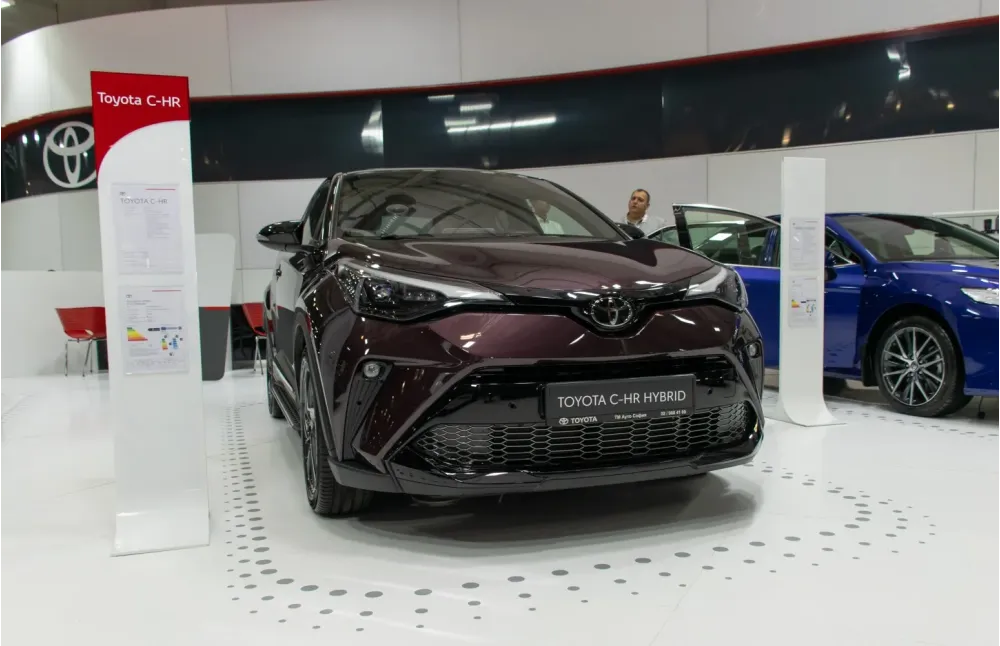
Click on image to view the full photo gallery
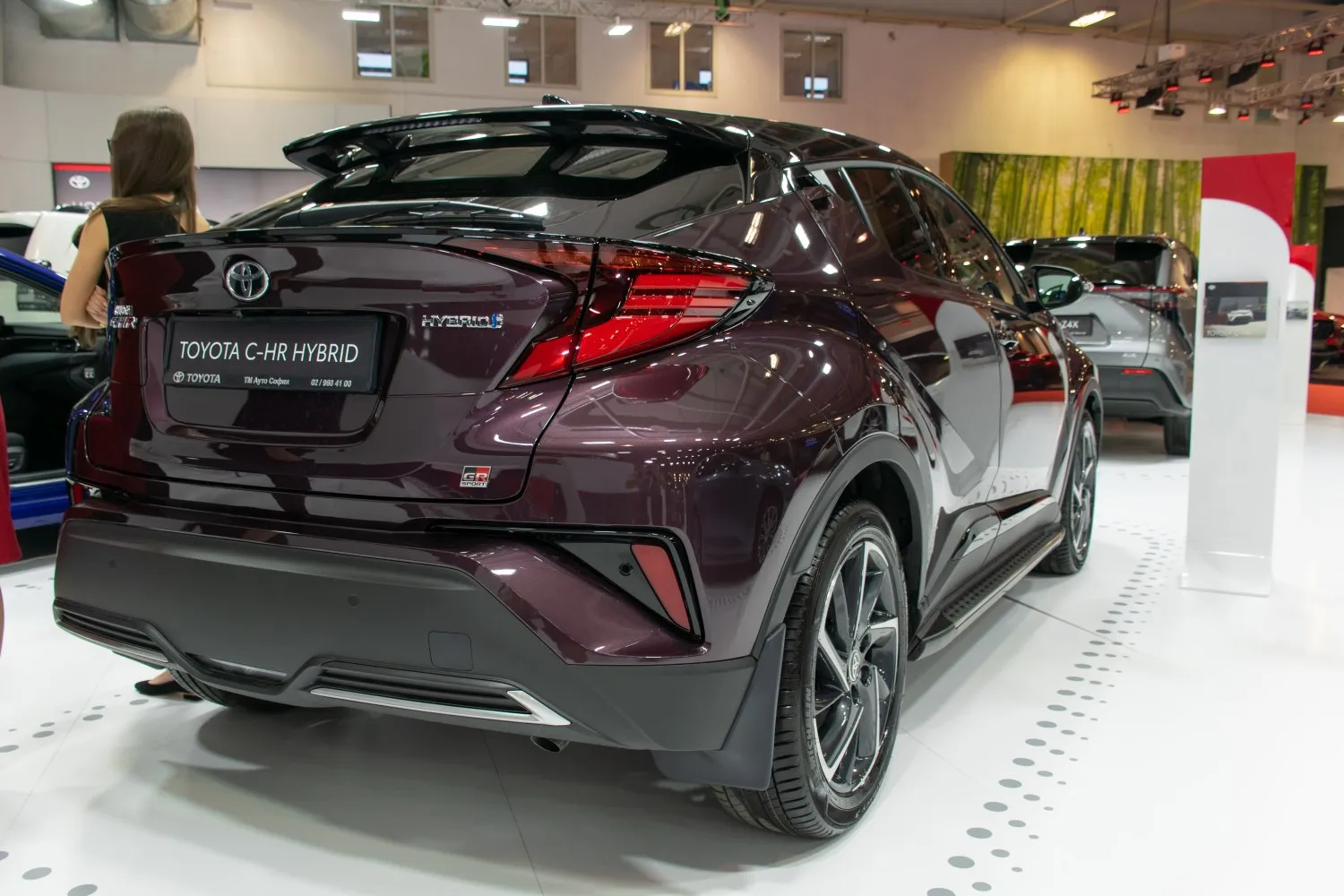
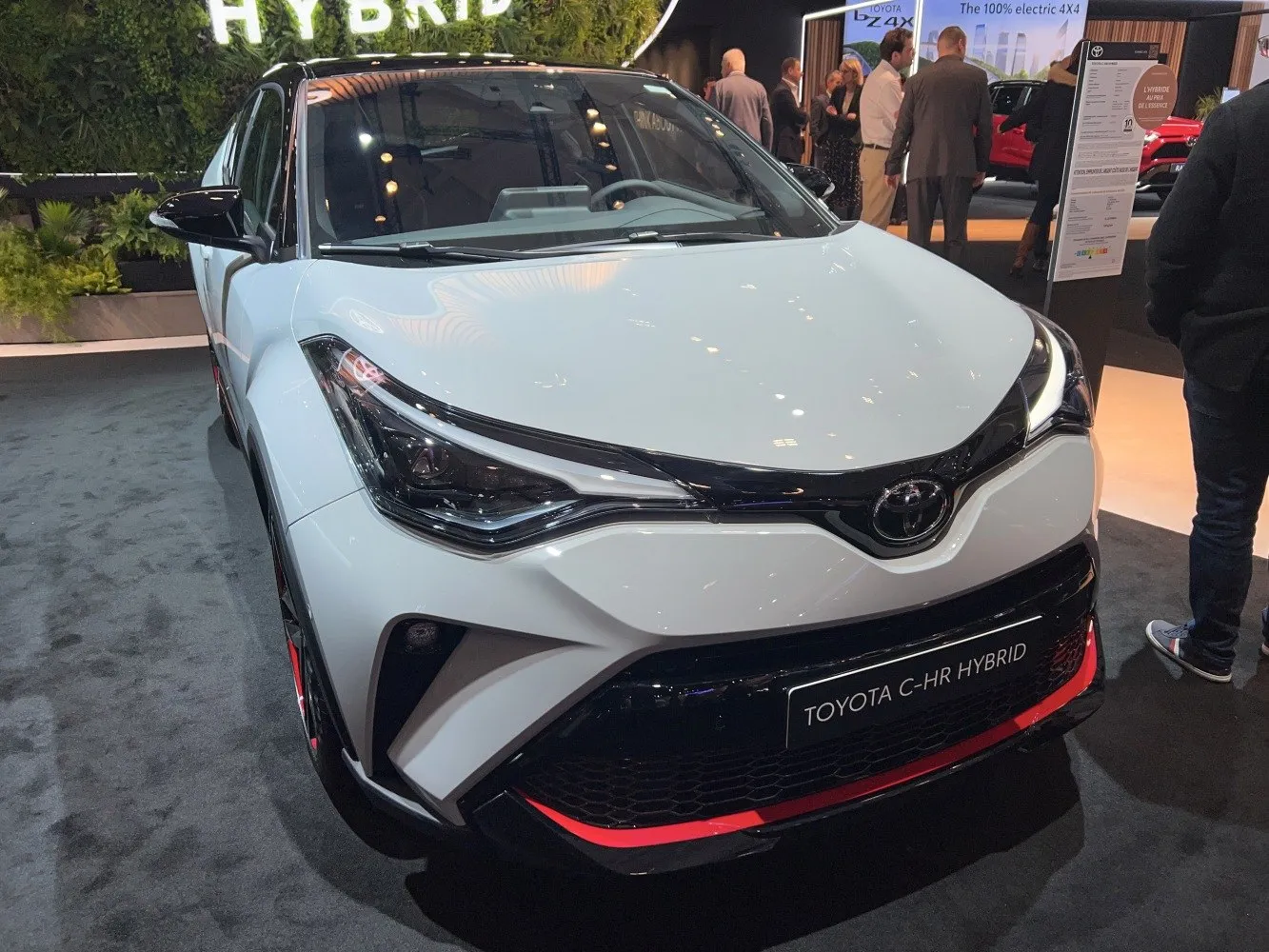
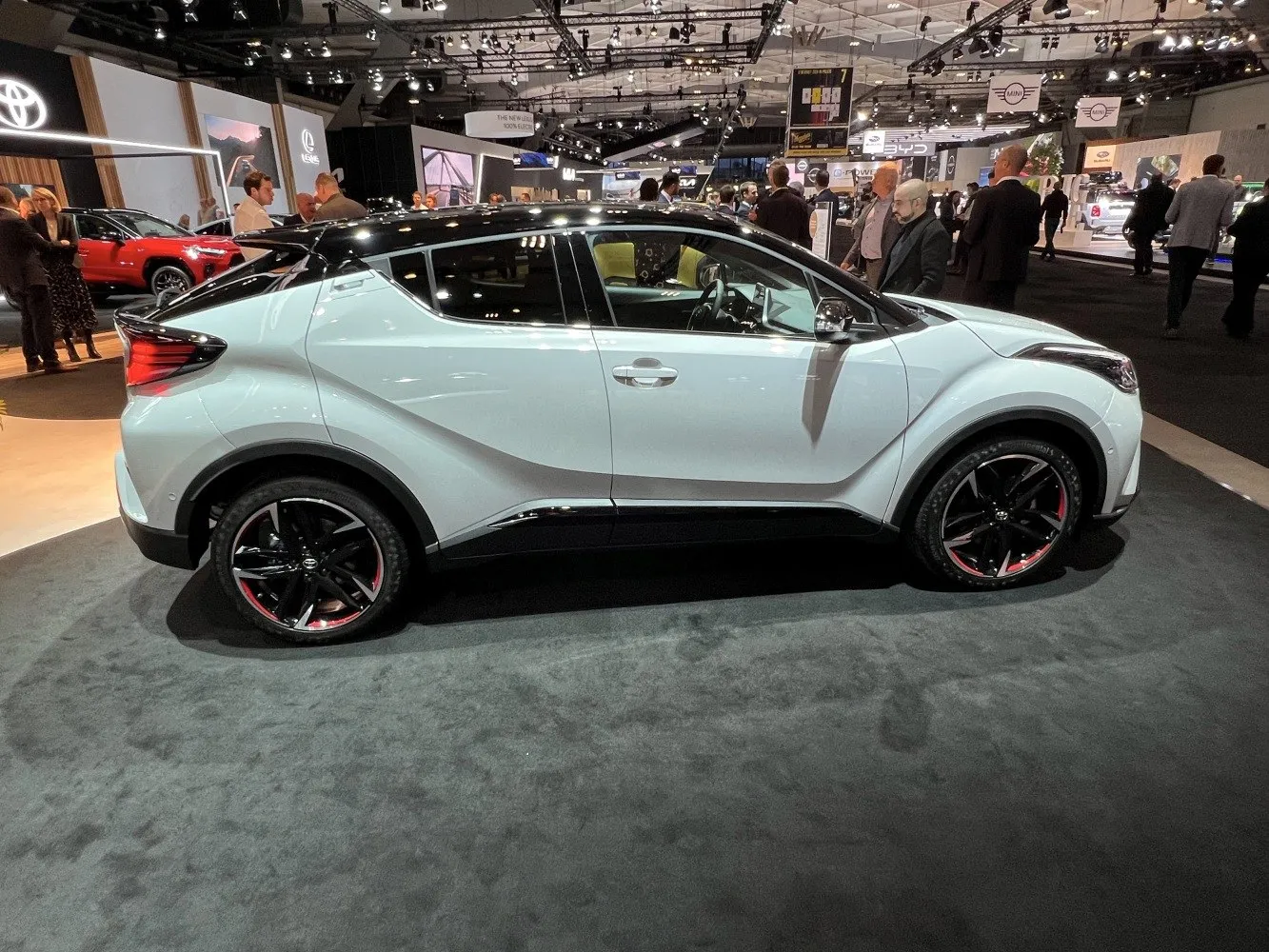
Toyota C-HR I (facelift 2020) 1.2 (116 Hp)
Overall Rating
Toyota C-HR:
The Toyota C-HR is a subcompact crossover SUV manufactured and marketed by Japanese automaker Toyota since 2016. Since 2020, it is positioned between the Yaris Cross and Corolla Cross in Toyota's crossover SUV range.
The first-generation C-HR was available in many regions, including Japan, China, North America, Europe, Southeast Asia, and Australasia, and was produced in four countries. Since the release of the second-generation C-HR in 2023, availability of the C-HR has been limited to Europe and Australia, with production centralised in Turkey. The Corolla Cross, released in 2020, has largely taken over the model's positioning outside Europe....(Read more on Wikipedia)
I (facelift 2020) Overview:
Toyota C-HR (I (facelift 2020)). With 185 Nm of torque, it offers ample pulling power. It has moderate fuel consumption (~7.45 l/100km). With a weight of 1405 kg, it falls in the mid‑range. Front‑wheel drive delivers efficiency and easy handling. Acceleration is relatively slow (0–100 km/h in 10.9 s). The top speed reaches 190 km/h. A sport utility vehicle offering higher ground clearance and versatile cargo space. Seating for 5 makes it ideal for daily use.
1.2 (116 Hp) Verdict:

Performance Verdict
Provides sufficient power for general driving, but lacks the immediate response and refinement of the hybrid options, particularly at higher speeds.
Fuel Economy
Decent fuel economy for a non-hybrid petrol engine, though it cannot match the impressive efficiency of the hybrid variants.
Pros and Cons:
Pros:
- • Distinctive and stylish exterior design
- • Excellent fuel economy from hybrid powertrains
- • Renowned Toyota reliability and build quality
- • Comfortable ride quality for its class
- • Comprehensive standard safety features
Cons:
- • Limited rear visibility due to design
- • Rear seats can feel cramped for adults
- • e-CVT transmission can be noisy under hard acceleration
- • Boot space is smaller than some rivals
- • Interior design can feel less practical than competitors
Specifications:
Specifications are compared to those of the previous generation(I: 2017 - 2020).
| General: | |
|---|---|
| Brand: | Toyota |
| Model: | C-HR |
| Generation: | I (facelift 2020) |
| Modification (Engine): | 1.2 (116 Hp) |
| Start of production: | 2020 |
| End of production: | June, 2023 |
| Powertrain Architecture: | Internal Combustion engine |
| Body type: | SUV |
| Seats: | 5 |
| Doors: | 5 |
| Engine: | |
|---|---|
| Engine systems: | Particulate filter |
| Power: | 116 Hp @ 5200-5600 rpm. Same horsepower |
| Power per litre: | 96.9 Hp/l [42mm more] |
| Torque: | 185 Nm @ 1500-4000 rpm. |
| Engine Model/Code: | 8NR-FTS More details about the engine 8NR-FTS |
| Engine displacement: | 1197 |
| Number of cylinders: | 4 |
| Engine configuration: | Inline |
| Number of valves per cylinder: | 4 |
| Fuel injection system: | Direct injection |
| Engine aspiration: | Turbocharger, Intercooler |
| Valvetrain: | DOHC, Dual VVT-iW |
| Engine oil capacity: | 4 l |
| Coolant: | 6.4 l |
| Engine layout: | Front, Transverse |
| Cylinder Bore: | 71.5 mm |
| Piston Stroke: | 74.5 mm |
| Compression ratio: | 10:1 |
| Performance: | |
|---|---|
| Fuel Type: | Petrol (Gasoline) |
| Fuel consumption (economy) - urban: | 7.3-7.6 l/100 km |
| Fuel consumption (economy) - extra urban: | 5.3 l/100 km |
| Fuel consumption (economy) - combined: | 6.1-6.2 l/100 km |
| Emission standard: | Euro 6 |
| Acceleration 0 - 100 km/h: | 10.9 sec |
| Acceleration 0 - 62 mph: | 10.9 sec |
| Maximum speed: | 190 km/h |
| Weight-to-power ratio: | 11.9 kg/Hp, 84.4 Hp/tonne |
| Weight-to-torque ratio: | 7.4 kg/Nm, 134.5 Nm/tonne |
| Acceleration 0 - 60 mph: | 10.4 sec |
| Space: | |
|---|---|
| Kerb Weight: | 1375-1435 |
| Max. weight: | 1845 |
| Max load: | 410-470 |
| Trunk (boot) space - minimum: | 377 l |
| Permitted trailer load with brakes (12%): | 1300 kg |
| Fuel tank capacity: | 50 l |
| Permitted trailer load without brakes: | 730 kg |
| Size: | |
|---|---|
| Length: | 4390 mm [42mm more] |
| Width: | 1795 mm [1mm less] |
| Height: | 1565 mm [Same height.] |
| Wheelbase: | 2640 mm [1mm more] |
| Front track: | 1540-1550 mm |
| Rear (Back) track: | 1550-1560 mm |
| Front overhang: | 935 mm |
| Rear overhang: | 815 mm |
| Minimum turning circle (turning diameter): | 11.0 m [above average] |
| Powertrain: | |
|---|---|
| Drivetrain Architecture | The Internal combustion engine (ICE) drives the front wheels of the vehicle. |
| Drive wheel | Front wheel drive |
| Number of gears | 6 |
| Transmission type | Manual |
| Front brakes | Ventilated discs, 298 mm [Best for performance and cooling.] |
| Rear brakes | Disc, 281 mm [above average] |
| Assisting systems | ABS (Anti-lock braking system) |
| Steering type | Steering rack and pinion |
| Power steering | Electric Steering |
| Tires size | 215/60 R17 96H; 225/50 R18 95H |
| Wheel rims size | 17; 18 |
| Front suspension | Independent type McPherson |
| Rear suspension | Double wishbone |











Is the Toyota C-HR your dream ride or just a daily drive? Let's talk!