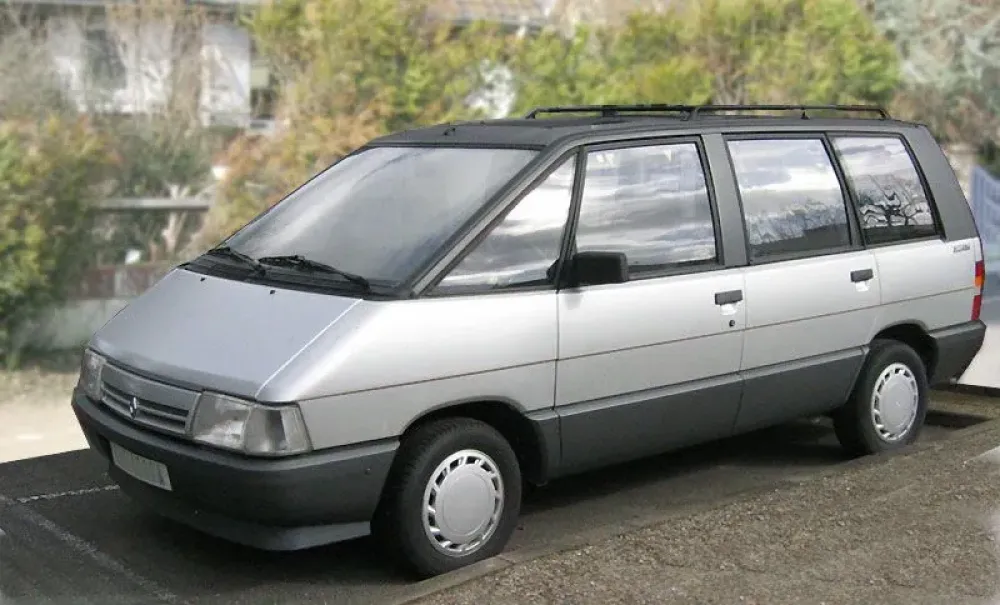
Click on image to view the full photo gallery
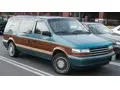
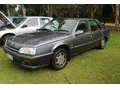
Renault Espace I (J11/13, Phase II 1988) 2.0i TXE (120 Hp)
Overall Rating
Renault Espace:
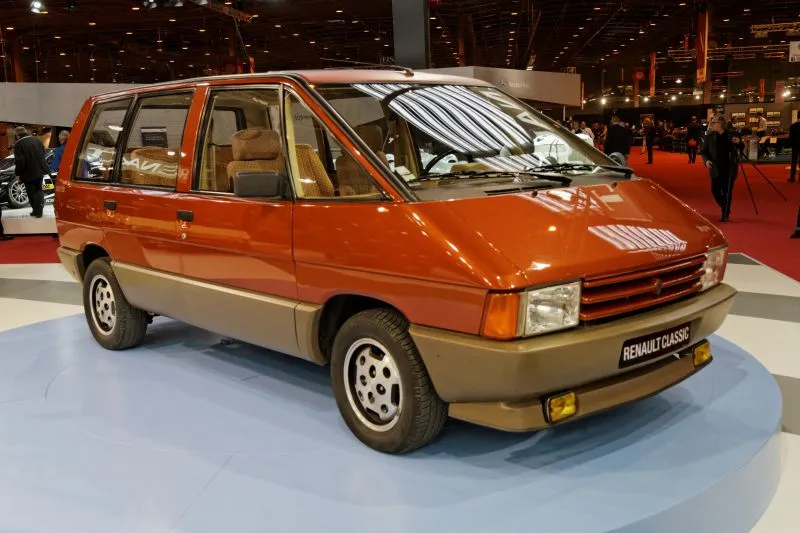
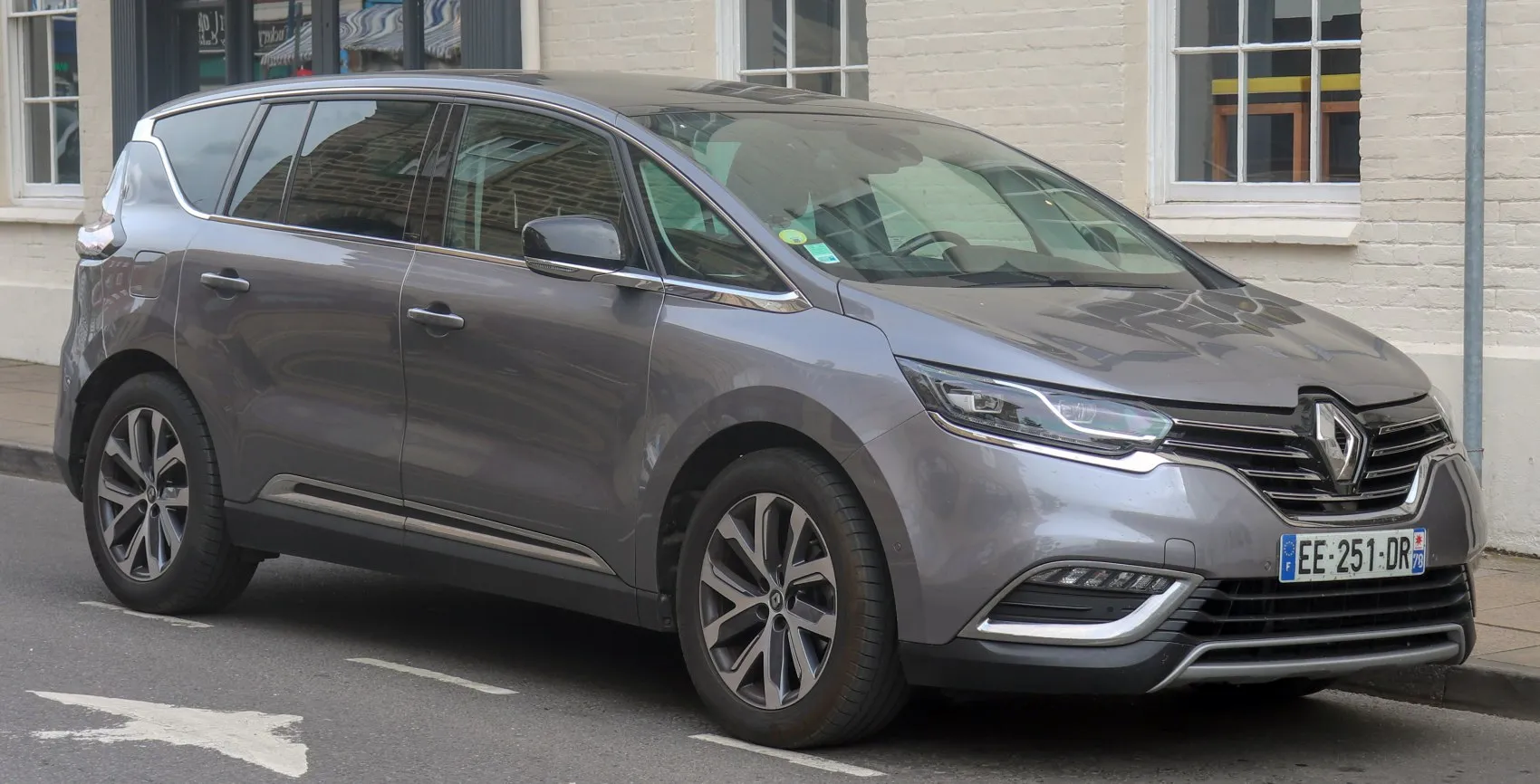
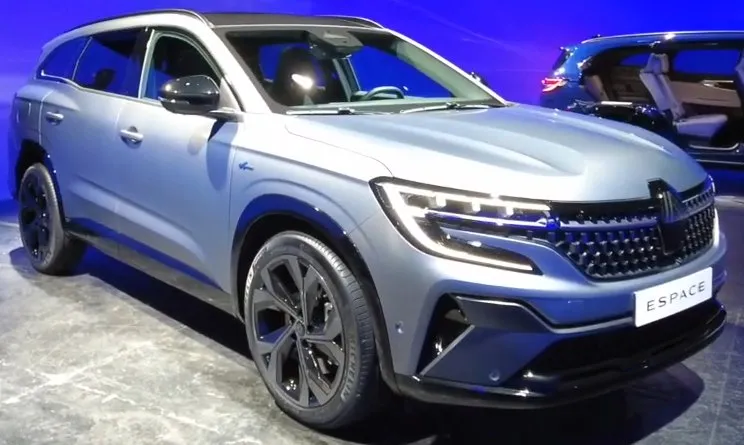
The Renault Espace is a series of automobiles manufactured by Renault since 1984. For its first five generations, the Espace was a multi-purpose vehicle/MPV , but it has been redesigned as a mid-size crossover SUV for its sixth generation.
The first three generations of the Espace were amongst the first contemporary minivans or MPVs, and were manufactured by Matra for Renault. The fourth generation, also an MPV, was manufactured by Renault. The Renault Grand Espace is a long wheelbase version with increased rear leg room and boot size. The fifth generation is introduced with a crossover SUV-styled while keeping its MPV classification and body style. Renault described the fifth generation Espace as a 'crossover-style MPV' which combines elements of saloon, SUV and MPV, while retaining interior space and practicality of the latter. The sixth generation debuted in 2023 as a 7-seater SUV based on the Austral....(Read more on Wikipedia)
I (J11/13, Phase II 1988) Overview:
Renault Espace (I (J11/13, Phase II 1988)). With 168 Nm of torque, it offers ample pulling power. It has moderate fuel consumption (~11.7 l/100km). Weighing only 1290 kg, it’s quite light. Front‑wheel drive delivers efficiency and easy handling. Acceleration is relatively slow (0–100 km/h in 11.4 s). The top speed reaches 175 km/h. A spacious vehicle designed to transport passengers comfortably, often with sliding doors. A multi-purpose vehicle designed to transport passengers with ample interior space. With seating for 7, it’s perfect for larger families.
2.0i TXE (120 Hp) Verdict:

Performance Verdict
A well-balanced petrol engine providing respectable acceleration and sufficient power for most driving scenarios.
Fuel Economy
Acceptable fuel economy for a petrol engine of its displacement and the vehicle's weight from this era.
Pros and Cons:
Pros:
- • Pioneering MPV design offering exceptional space and versatility
- • Comfortable ride quality, ideal for long journeys
- • Flexible seating arrangements for family needs
- • Good visibility from the driver's seat
- • Efficient diesel option for its era
Cons:
- • Safety standards are dated compared to modern vehicles
- • Some petrol engines can feel underpowered for a fully loaded vehicle
- • Older Renault reliability can be a concern for some components
- • Driving dynamics are more focused on comfort than sportiness
- • Lack of modern amenities and safety features
Specifications:
Specifications are compared to those of the previous generation(I (J11/13): 1985 - 1988).
| General: | |
|---|---|
| Brand: | Renault |
| Model: | Espace |
| Generation: | I (J11/13, Phase II 1988) |
| Modification (Engine): | 2.0i TXE (120 Hp) |
| Start of production: | 1988 |
| End of production: | 1991 |
| Powertrain Architecture: | Internal Combustion engine |
| Body type: | Minivan, MPV |
| Seats: | 7 |
| Doors: | 5 |
| Engine: | |
|---|---|
| Power: | 120 Hp @ 5500 rpm. Same horsepower |
| Power per litre: | 60.2 Hp/l [115mm more] |
| Torque: | 168 Nm @ 4500 rpm. |
| Engine Model/Code: | J7R More details about the engine J7R |
| Engine displacement: | 1995 |
| Number of cylinders: | 4 |
| Engine configuration: | Inline |
| Number of valves per cylinder: | 2 |
| Fuel injection system: | Multi-port manifold injection |
| Engine aspiration: | Naturally aspirated engine |
| Engine oil capacity: | 6.2 l |
| Coolant: | 7.2 l |
| Engine layout: | Front, Longitudinal |
| Cylinder Bore: | 88 mm mm |
| Piston Stroke: | 82 mm mm |
| Compression ratio: | 10:1 |
| Performance: | |
|---|---|
| Fuel Type: | Petrol (Gasoline) |
| Fuel consumption (economy) - urban: | 11.7 l/100 km |
| Fuel consumption (economy) - extra urban: | 7.6 l/100 km |
| Fuel consumption (economy) - combined: | 9.7 l/100 km |
| Acceleration 0 - 100 km/h: | 11.4 sec |
| Acceleration 0 - 62 mph: | 11.4 sec |
| Maximum speed: | 175 km/h |
| Weight-to-power ratio: | 10.8 kg/Hp, 93 Hp/tonne |
| Weight-to-torque ratio: | 7.7 kg/Nm, 130.2 Nm/tonne |
| Acceleration 0 - 60 mph: | 10.8 sec |
| Space: | |
|---|---|
| Kerb Weight: | 1290 |
| Max. weight: | 1960 |
| Max. roof load: | 70 kg |
| Max load: | 670 |
| Trunk (boot) space - maximum: | 3060 l |
| Trunk (boot) space - minimum: | 580 l |
| Fuel tank capacity: | 63 l |
| Size: | |
|---|---|
| Length: | 4365 mm mm [115mm more] |
| Width: | 1777 mm mm [Same width.] |
| Height: | 1660 mm mm [Same height.] |
| Wheelbase: | 2580 mm mm [Same wheelbase.] |
| Front track: | 1467 mm |
| Rear (Back) track: | 1489 mm |
| Front overhang: | 920 mm |
| Rear overhang: | 865 mm |
| Ride height (ground clearance): | 150-125 mm |
| Minimum turning circle (turning diameter): | 12.4 m [above average] |
| Powertrain: | |
|---|---|
| Drivetrain Architecture | The Internal combustion engine (ICE) drives the front wheels of the vehicle. |
| Drive wheel | Front wheel drive |
| Number of gears | 5 |
| Transmission type | Manual |
| Front brakes | Ventilated discs [Best for performance and cooling.] |
| Rear brakes | Drum [bad for performance and cooling.] |
| Steering type | Steering rack and pinion |
| Tires size | 195/70 R14 |
| Wheel rims size | 14 |
| Front suspension | Independent type McPherson |










The hidden gems or the annoying flaws? Expose the truth about the Renault Espace!