
Click on image to view the full photo gallery
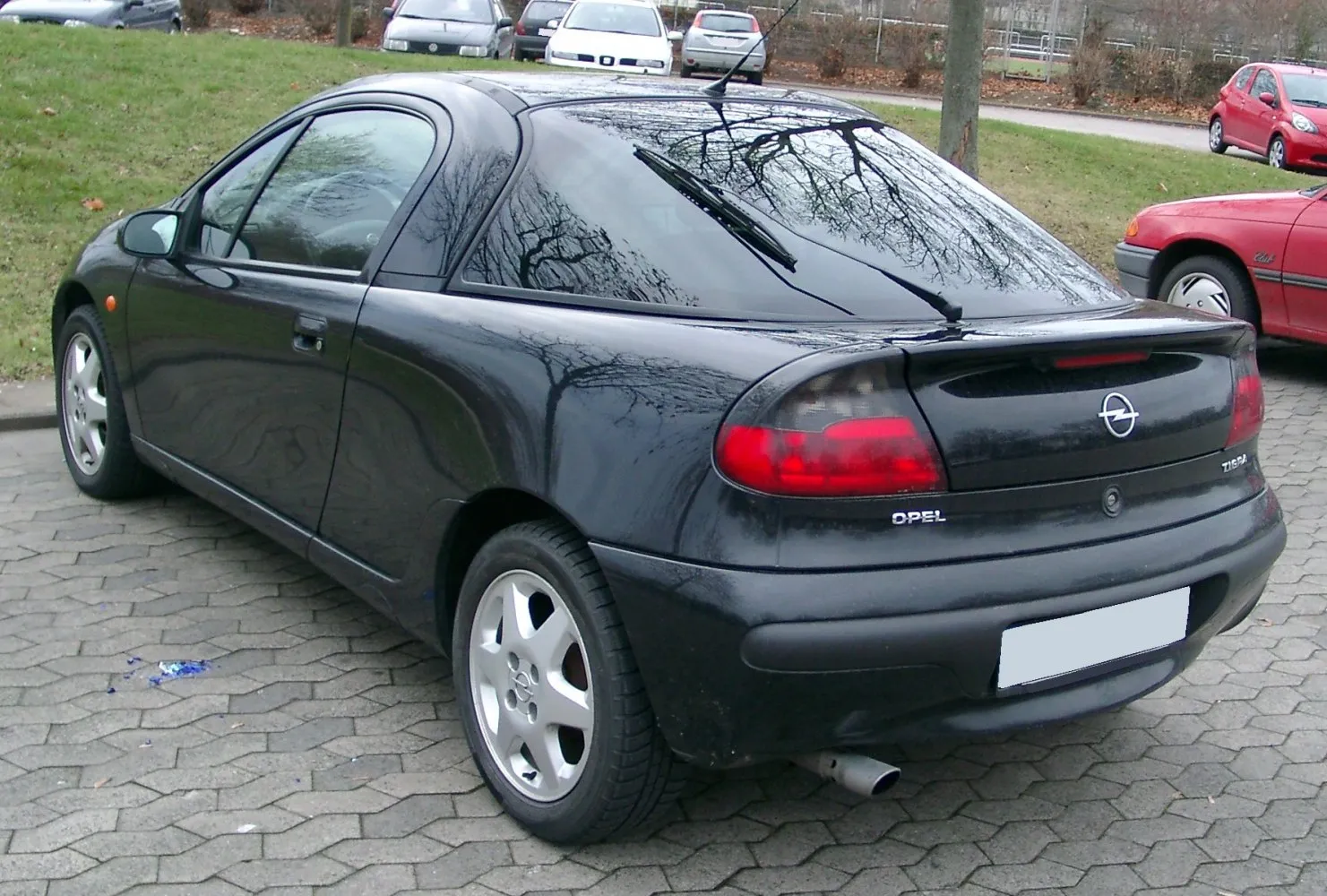
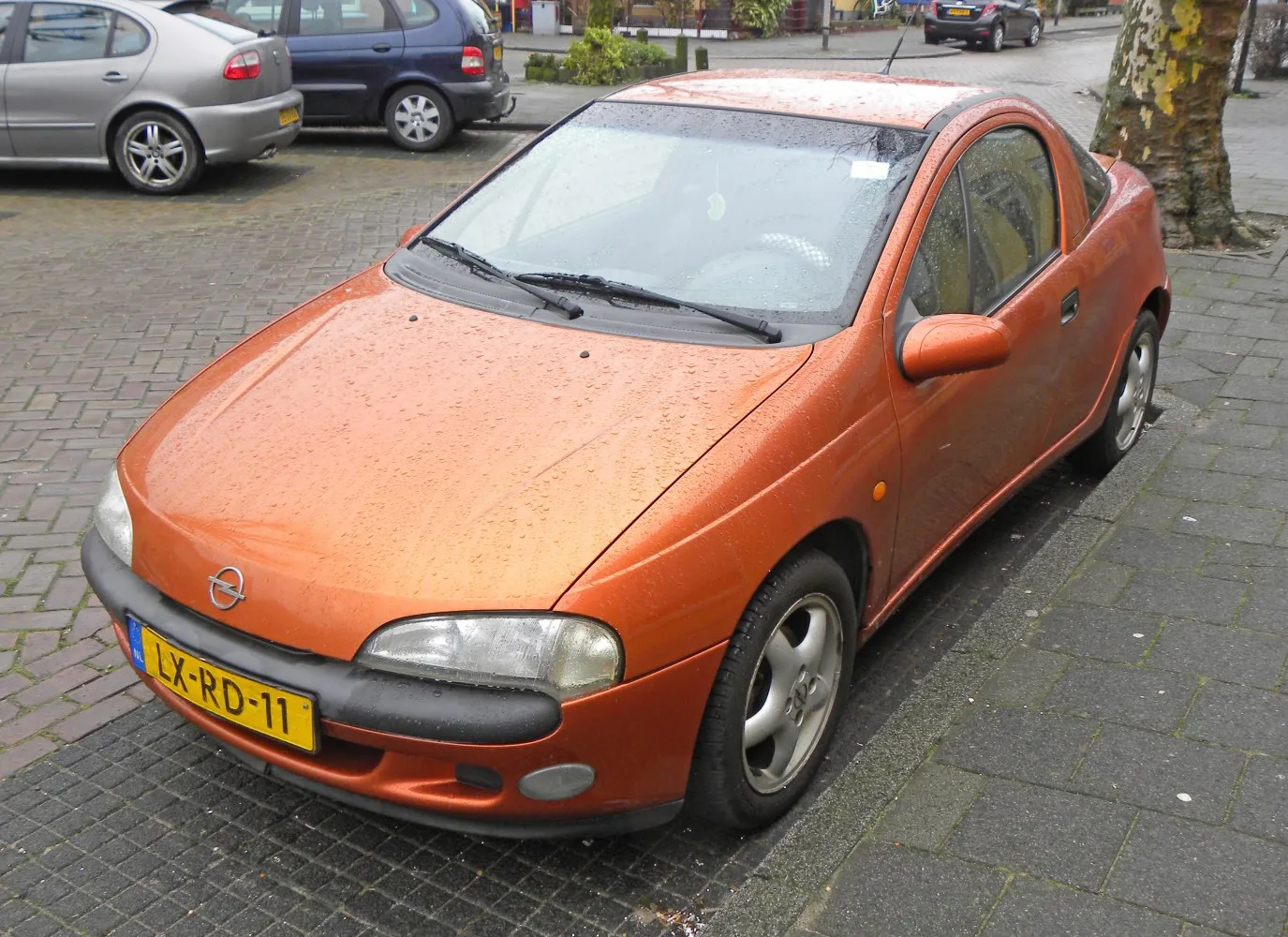
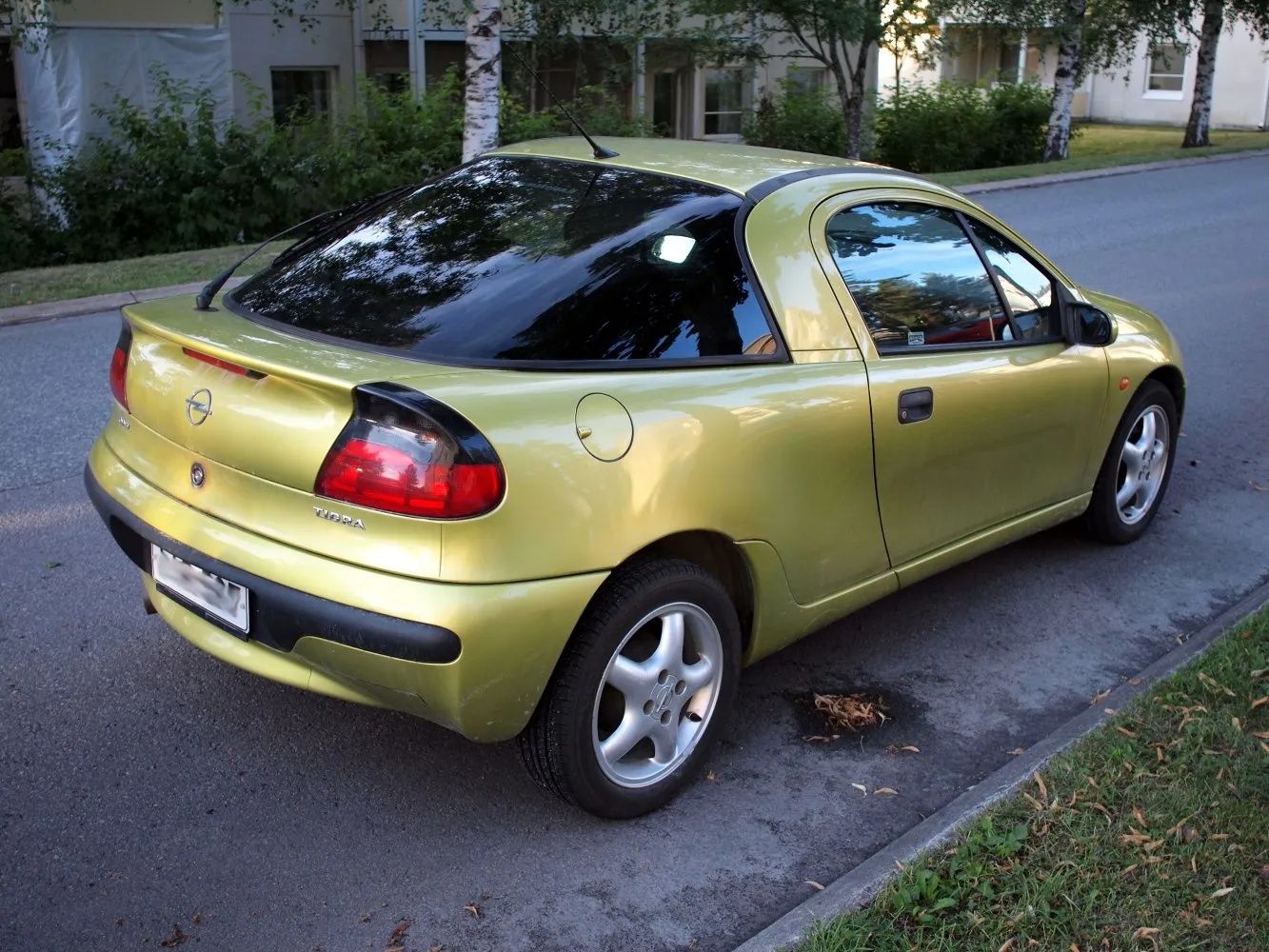
Opel Tigra A 1.4 16V (90 Hp)
Overall Rating
Opel Tigra:
The Opel Tigra name has been applied to two different cars engineered and produced by the German automaker Opel, both based on different iterations of the Corsa supermini, the first built in Spain, the second in France. The first Tigra was a small 2+2 coupé, produced from 1994 to 2000. The later compact hard topped convertible roadster model was introduced in May 2004.
The Tigra was sold in the United Kingdom as the Vauxhall Tigra, in Australia as the Holden Tigra, and in Brazil, Argentina, and Mexico as the Chevrolet Tigra. @media all and }@media all and body. skin-vector-2022. mw-parser-output. tocleft. mw-parser-output. tocleft-clear-both. mw-parser-output. tocleft-clear-none}....(Read more on Wikipedia)
A Overview:
Opel Tigra (A). With 125 Nm of torque, it offers ample pulling power. It has moderate fuel consumption (~10.5 l/100km). Weighing only 980 kg, it’s quite light. Front‑wheel drive delivers efficiency and easy handling. Acceleration is relatively slow (0–100 km/h in 11 s). The top speed reaches 190 km/h. A two-door car with a fixed roof, known for its sporty design and dynamic performance. Seating for 4 makes it ideal for daily use.
The Opel Tigra A was not tested by Euro NCAP during its production run. As a vehicle from the mid-90s, its passive safety features would be basic compared to modern standards, though it did offer ABS as an assisting system.
1.4 16V (90 Hp) Verdict:

Performance Verdict
This engine provides adequate performance for daily driving, feeling sprightly enough in the lightweight Tigra A, though not overtly sporty.
Fuel Economy
Offers decent combined fuel economy for its era, making it a relatively economical choice for mixed driving conditions.
Pros and Cons:
Pros:
- • Distinctive and attractive styling for its era
- • Agile and fun-to-drive handling characteristics
- • Economical manual engines (1.4 and 1.6)
- • Affordable to buy and maintain
- • Compact size makes it easy to maneuver and park
Cons:
- • Limited rear passenger space (2+2 configuration)
- • Small boot capacity, even with rear seats folded
- • Interior design can feel dated by modern standards
- • Automatic transmission significantly compromises performance and economy
- • Potential for rust issues on older models
Specifications:
| General: | |
|---|---|
| Brand: | Opel |
| Model: | Tigra |
| Generation: | A |
| Modification (Engine): | 1.4 16V (90 Hp) |
| Start of production: | November, 1994 |
| End of production: | June, 2000 |
| Powertrain Architecture: | Internal Combustion engine |
| Body type: | Coupe |
| Seats: | 4 |
| Doors: | 2 |
| Engine: | |
|---|---|
| Power: | 90 Hp @ 6000 rpm. |
| Power per litre: | 64.8 Hp/l |
| Torque: | 125 Nm @ 4000 rpm. |
| Engine Model/Code: | X14XE |
| Engine displacement: | 1389 |
| Number of cylinders: | 4 |
| Engine configuration: | Inline |
| Number of valves per cylinder: | 4 |
| Fuel injection system: | Multi-port manifold injection |
| Engine aspiration: | Naturally aspirated engine |
| Valvetrain: | DOHC |
| Engine oil capacity: | 3.5 l |
| Coolant: | 5.6 l |
| Engine layout: | Front, Transverse |
| Cylinder Bore: | 77.6 mm mm |
| Piston Stroke: | 73.4 mm mm |
| Compression ratio: | 10:1 |
| Performance: | |
|---|---|
| Fuel Type: | Petrol (Gasoline) |
| Fuel consumption (economy) - urban: | 10.5 l/100 km |
| Fuel consumption (economy) - extra urban: | 5.5 l/100 km |
| Fuel consumption (economy) - combined: | 7.5 l/100 km |
| Acceleration 0 - 100 km/h: | 11 sec |
| Acceleration 0 - 62 mph: | 11 sec |
| Maximum speed: | 190 km/h |
| Weight-to-power ratio: | 10.9 kg/Hp, 91.8 Hp/tonne |
| Weight-to-torque ratio: | 7.8 kg/Nm, 127.6 Nm/tonne |
| Acceleration 0 - 60 mph: | 10.5 sec |
| Space: | |
|---|---|
| Kerb Weight: | 980 |
| Max. weight: | 1330 |
| Max load: | 350 |
| Trunk (boot) space - maximum: | 425 l |
| Trunk (boot) space - minimum: | 215 l |
| Fuel tank capacity: | 46 l |
| Size: | |
|---|---|
| Length: | 3922 mm mm |
| Width: | 1604 mm mm |
| Height: | 1340 mm mm |
| Wheelbase: | 2429 mm mm |
| Front track: | 1387 mm |
| Rear (Back) track: | 1388 mm |
| Powertrain: | |
|---|---|
| Drivetrain Architecture | The Internal combustion engine (ICE) drives the front wheels of the vehicle. |
| Drive wheel | Front wheel drive |
| Number of gears | 5 |
| Transmission type | Manual |
| Front brakes | Disc |
| Rear brakes | Drum |
| Assisting systems | ABS (Anti-lock braking system) |
| Steering type | Steering rack and pinion |
| Power steering | Hydraulic Steering |
| Tires size | 185/55 R15 |
| Wheel rims size | 15 |
| Front suspension | Coil spring |
| Rear suspension | Trailing arm |






Behind the wheel of the Opel Tigra. How does it handle on the road?