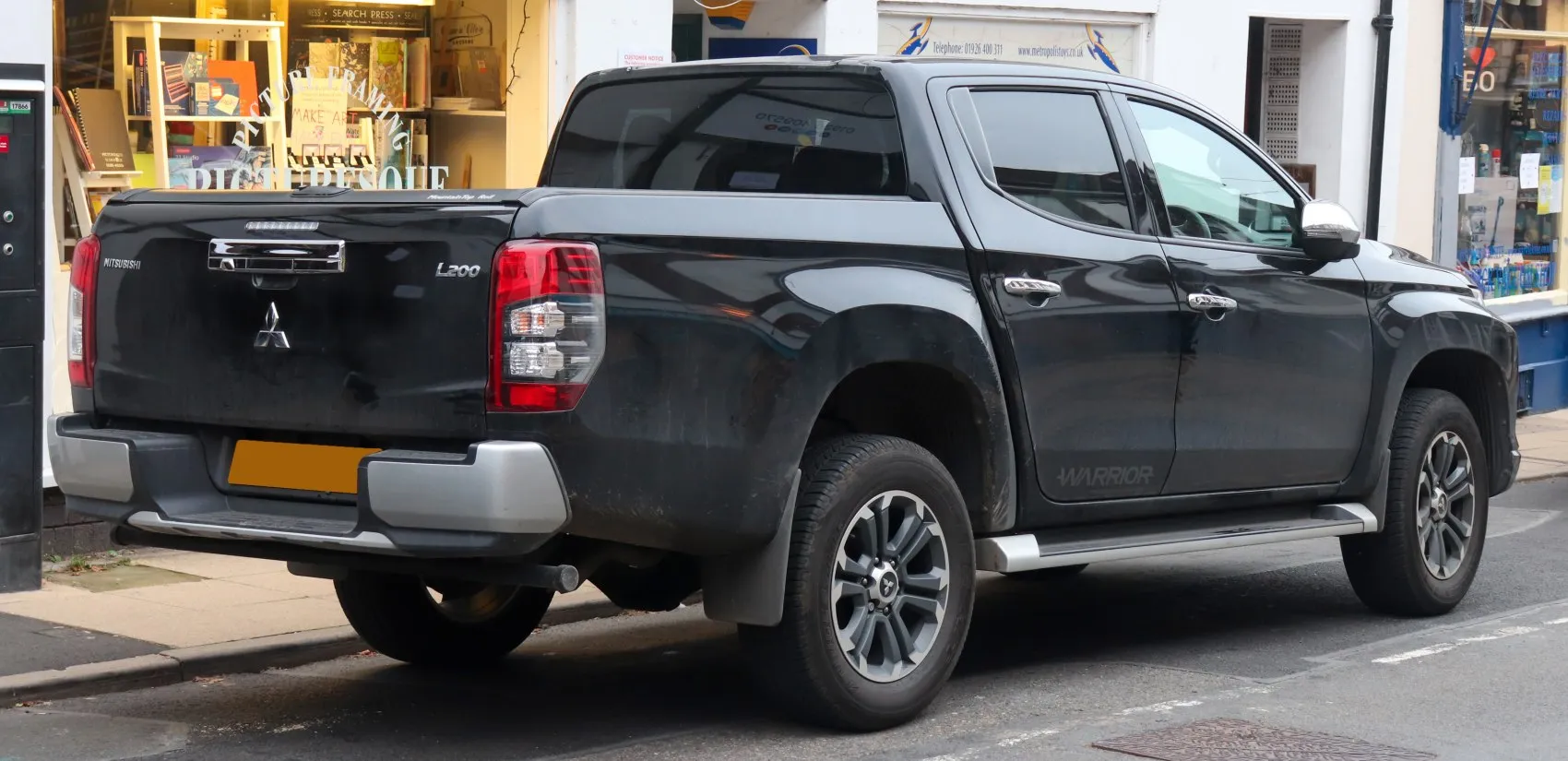
Mitsubishi L200 V Double Cab (facelift 2019) 2.3d (150 Hp) 4WD Automatic
People\'s Opinion
N/A / 5
V Double Cab (facelift 2019) Overview:
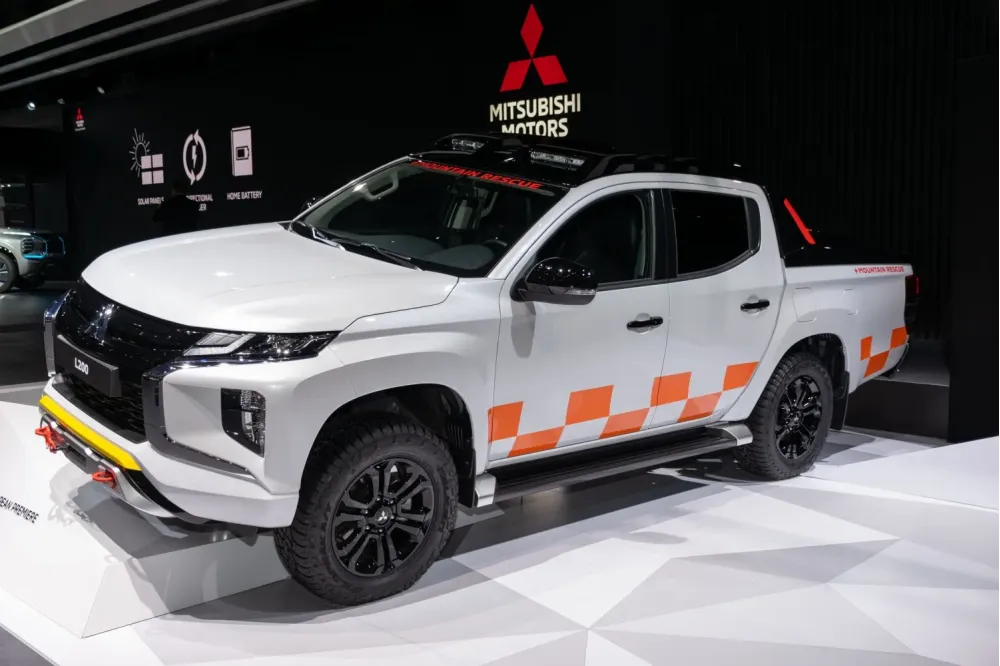
Mitsubishi L200 (V Double Cab (facelift 2019)). With 400 Nm of torque, it offers ample pulling power. At around 2002 kg, it’s on the heavier side. All‑wheel drive provides excellent grip, ideal for off‑road use. The top speed reaches 171 km/h. A vehicle with an open cargo bed at the back, suitable for transporting goods. Seating for 5 makes it ideal for daily use.
Performance Verdict
A practical choice, offering a good balance of power and convenience with the automatic gearbox, suitable for various tasks.
Fuel Economy
Slightly higher consumption than the manual at 7.8 l/100 km, but still very respectable for an automatic 4WD pickup.
Best Use Case:
Balanced use across city, highway, and light off-road, prioritizing ease of driving and fuel efficiency.
Pros and Cons:
Pros:
- • Robust build quality and strong reliability reputation
- • Excellent 4WD capability and off-road prowess
- • Good towing capacity, especially with the 2.4 MIVEC engine
- • Improved interior and styling with the 2019 facelift
- • Competitive pricing for its segment
Cons:
- • Ride can be firm and bouncy when unladen, typical for a leaf-sprung pickup
- • 2.3d engine might feel underpowered for very heavy loads or high-speed cruising
- • Interior, while improved, remains utilitarian compared to some rivals
- • Fuel economy for the 2.4 MIVEC, while competitive, isn't class-leading
Specifications:
Specifications are compared to those of the previous generation(V Single Cab (facelift 2019): 2019 - ).
| General: |
| Brand: | Mitsubishi |
|---|
| Model: | L200 |
|---|
| Generation: | V Double Cab (facelift 2019) |
|---|
| Modification (Engine): | 2.3d (150 Hp) 4WD Automatic |
|---|
| Start of production: | September, 2019 |
|---|
| Powertrain Architecture: | Internal Combustion engine |
|---|
| Body type: | Pick-up |
|---|
| Seats: | 5 |
|---|
| Doors: | 4 |
|---|
| Engine: |
| Engine systems: | Start & Stop System |
|---|
| Power: | 150 Hp @ 3500 rpm. Same horsepower |
|---|
| Power per litre: | 66.1 Hp/l [130mm more] |
|---|
| Torque: | 400 Nm @ 2000 rpm. |
|---|
| Engine Model/Code: | 4N14 More details about the engine 4N14 |
|---|
| Engine displacement: | 2268 |
|---|
| Number of cylinders: | 4 |
|---|
| Engine configuration: | Inline |
|---|
| Number of valves per cylinder: | 4 |
|---|
| Fuel injection system: | Diesel Commonrail |
|---|
| Engine aspiration: | Turbocharger, Intercooler |
|---|
| Valvetrain: | DOHC |
|---|
| Engine oil capacity: | 6.6 l |
|---|
| Coolant: | 7.7 l |
|---|
| Engine layout: | Front, Longitudinal |
|---|
| Cylinder Bore: | 86 mm mm |
|---|
| Piston Stroke: | 97.6 mm mm |
|---|
| Compression ratio: | 14.4:1 |
|---|
| Performance: |
| Fuel Type: | Diesel |
|---|
| Combined fuel consumption (WLTP): | 9.7 l/100 km |
|---|
| Fuel consumption (economy) - combined (NEDC, WLTP equivalent): | 7.8 l/100 km |
|---|
| Fuel consumption (economy) - combined: | 7.8 l/100 km |
|---|
| Emission standard: | Euro 6d-Temp |
|---|
| Maximum speed: | 171 km/h |
|---|
| Weight-to-power ratio: | 13.1 kg/Hp, 76.1 Hp/tonne |
|---|
| Weight-to-torque ratio: | 4.9 kg/Nm, 203 Nm/tonne |
|---|
| Space: |
| Kerb Weight: | 1970-2035 |
|---|
| Permitted trailer load with brakes (12%): | 3500 kg |
|---|
| Size: |
| Ramp-over (brakeover) angle: | 22° |
|---|
| Wading depth: | 850 mm |
|---|
| Length: | 5305 mm mm [130mm more] |
|---|
| Width: | 1815 mm mm [Same width.] |
|---|
| Height: | 1780 mm mm [Same height.] |
|---|
| Wheelbase: | 3000 mm mm [Same wheelbase.] |
|---|
| Front track: | 1520 mm |
|---|
| Rear (Back) track: | 1515 mm |
|---|
| Ride height (ground clearance): | 205 mm |
|---|
| Minimum turning circle (turning diameter): | 11.8 m [above average] |
|---|
| Approach angle: | 30° |
|---|
| Departure angle: | 24° |
|---|
| Climb angle: | 45° |
|---|
| Powertrain: |
| Drivetrain Architecture | The Internal combustion engine (ICE) drives the rear wheels permanently, and the front wheels are driven through an electrically or mechanically operated clutch if necessary. |
|---|
| Drive wheel | All wheel drive (4x4) |
|---|
| Number of gears | 6 |
|---|
| Transmission type | Automatic |
|---|
| Front brakes | Ventilated discs, 320 mm [Best for performance and cooling.] |
|---|
| Rear brakes | Drum, 295 mm [bad for performance and cooling.] |
|---|
| Assisting systems | ABS (Anti-lock braking system) |
|---|
| Steering type | Steering rack and pinion |
|---|
| Power steering | Hydraulic Steering |
|---|
| Tires size | 265/60 R18 |
|---|
| Wheel rims size | 18 |
|---|
| Front suspension | Double wishbone |
|---|
| Rear suspension | Dependent suspension of two longitudinal semi-elliptic leaf springs |
|---|

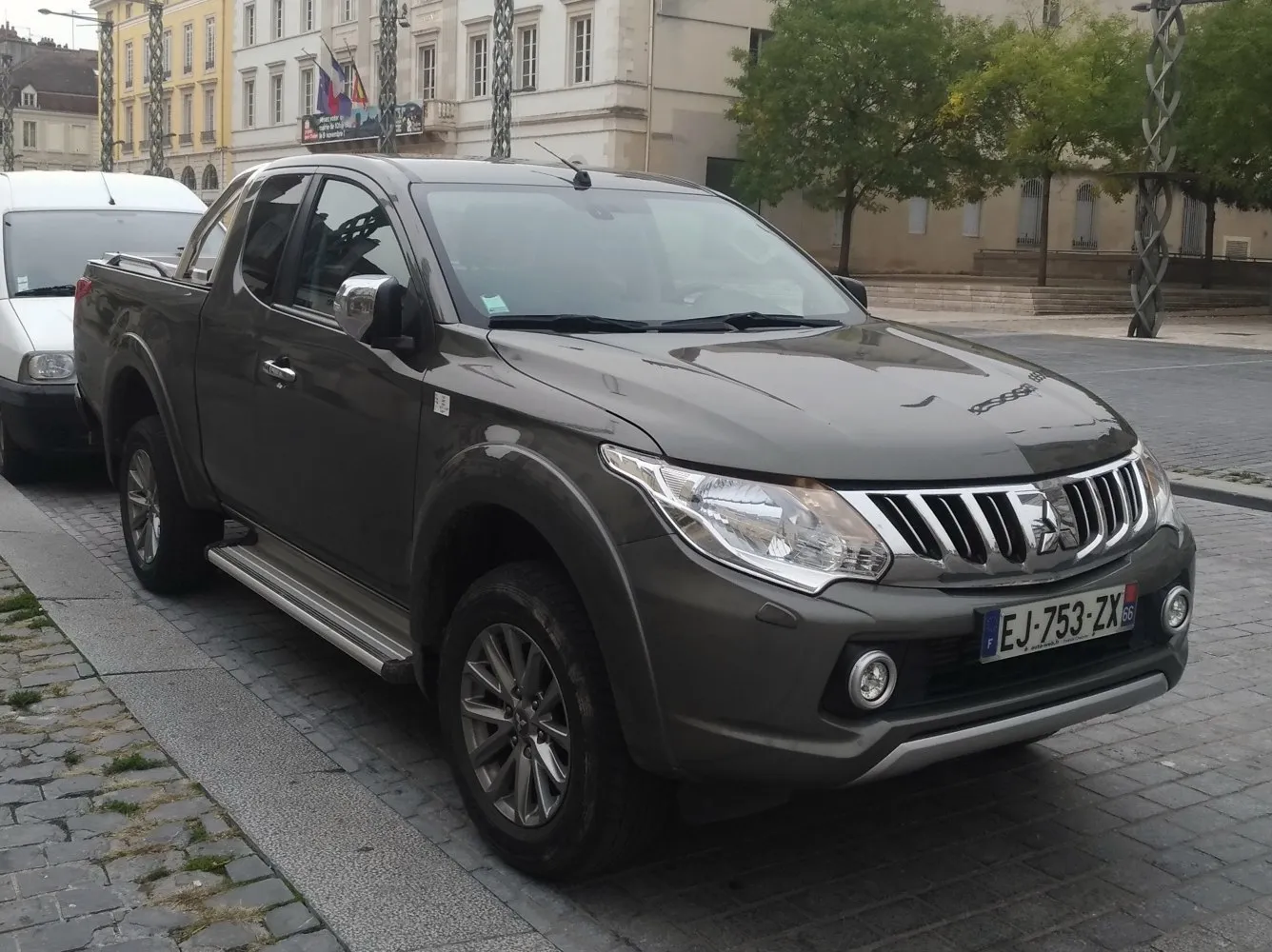

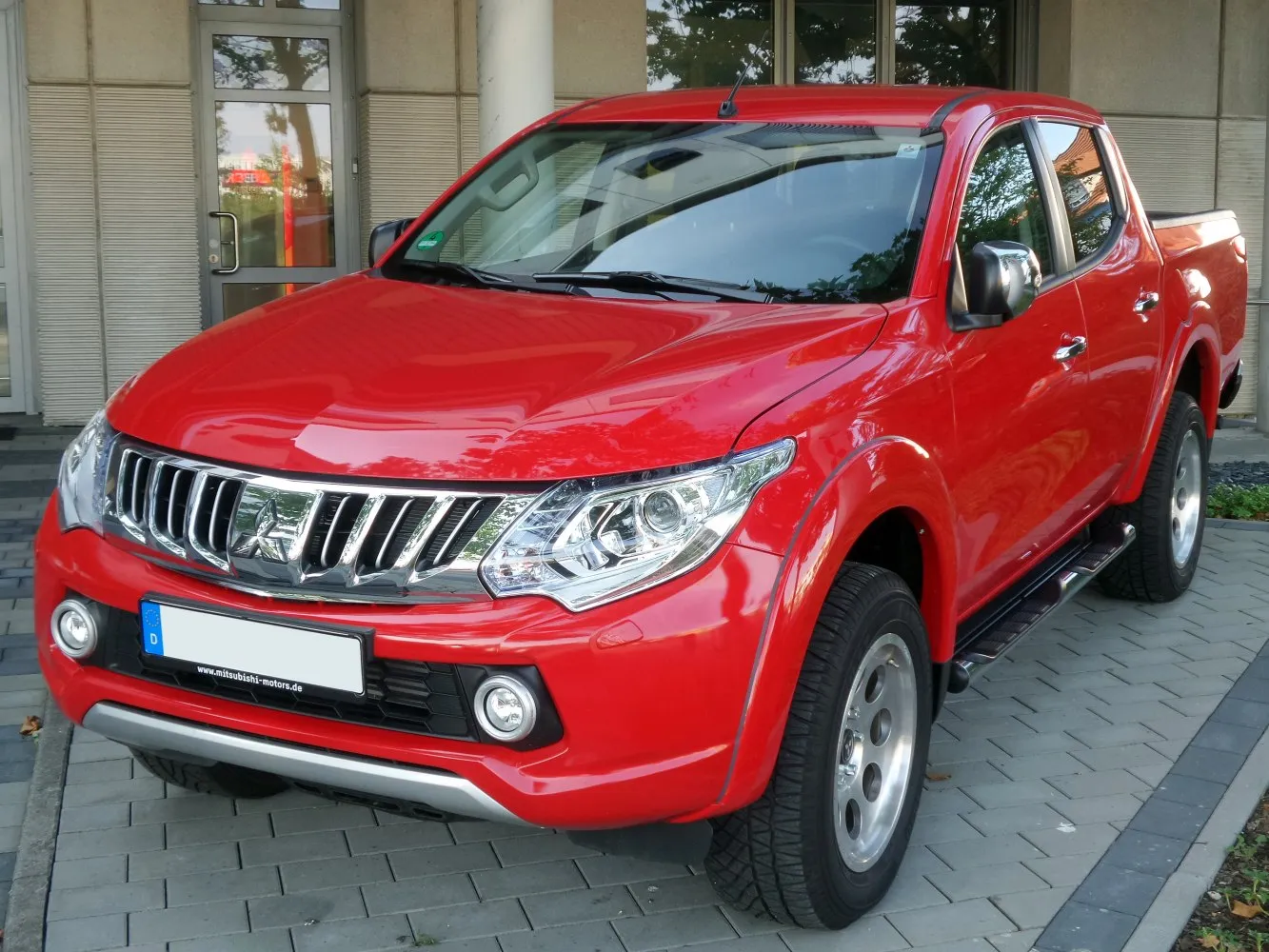











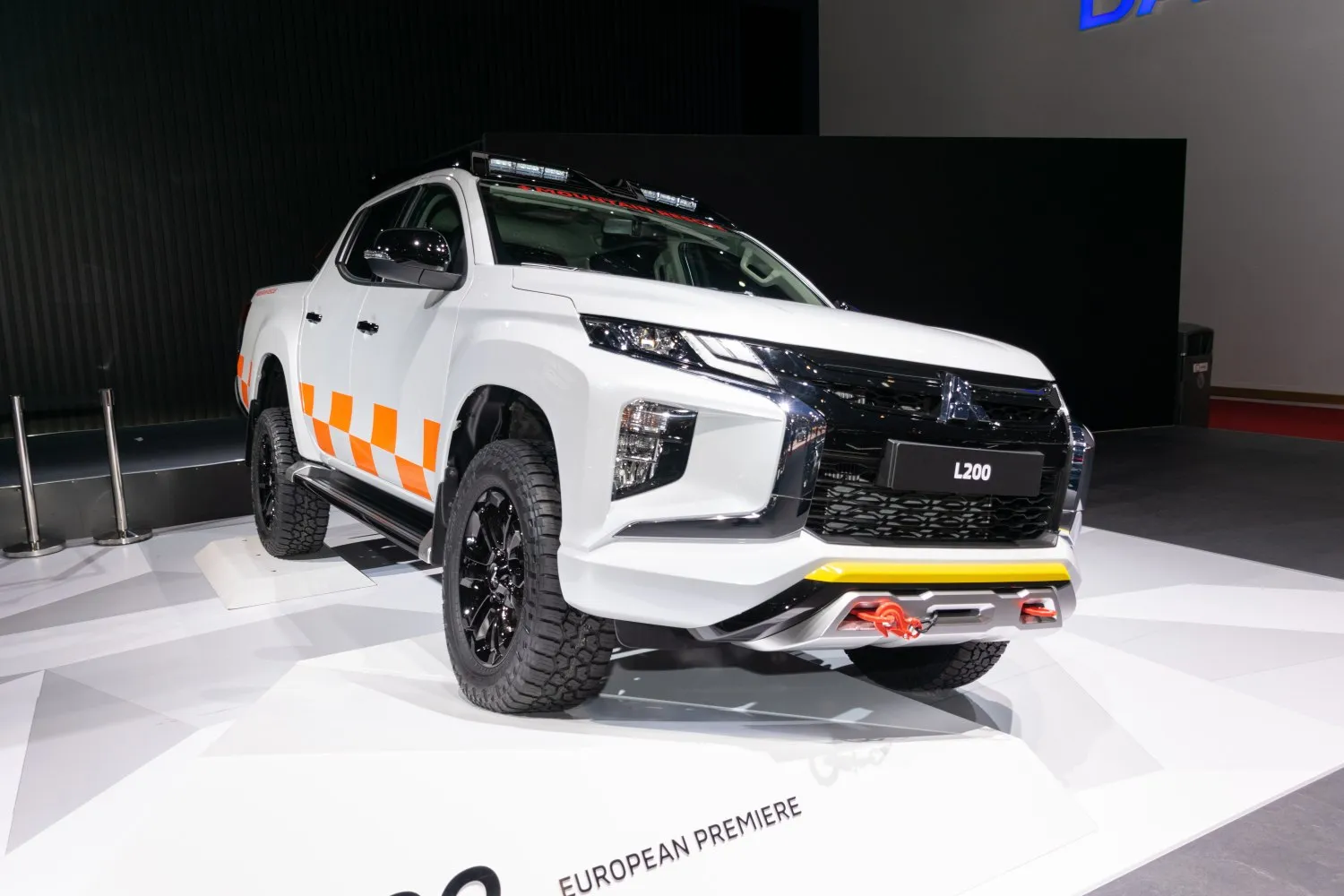
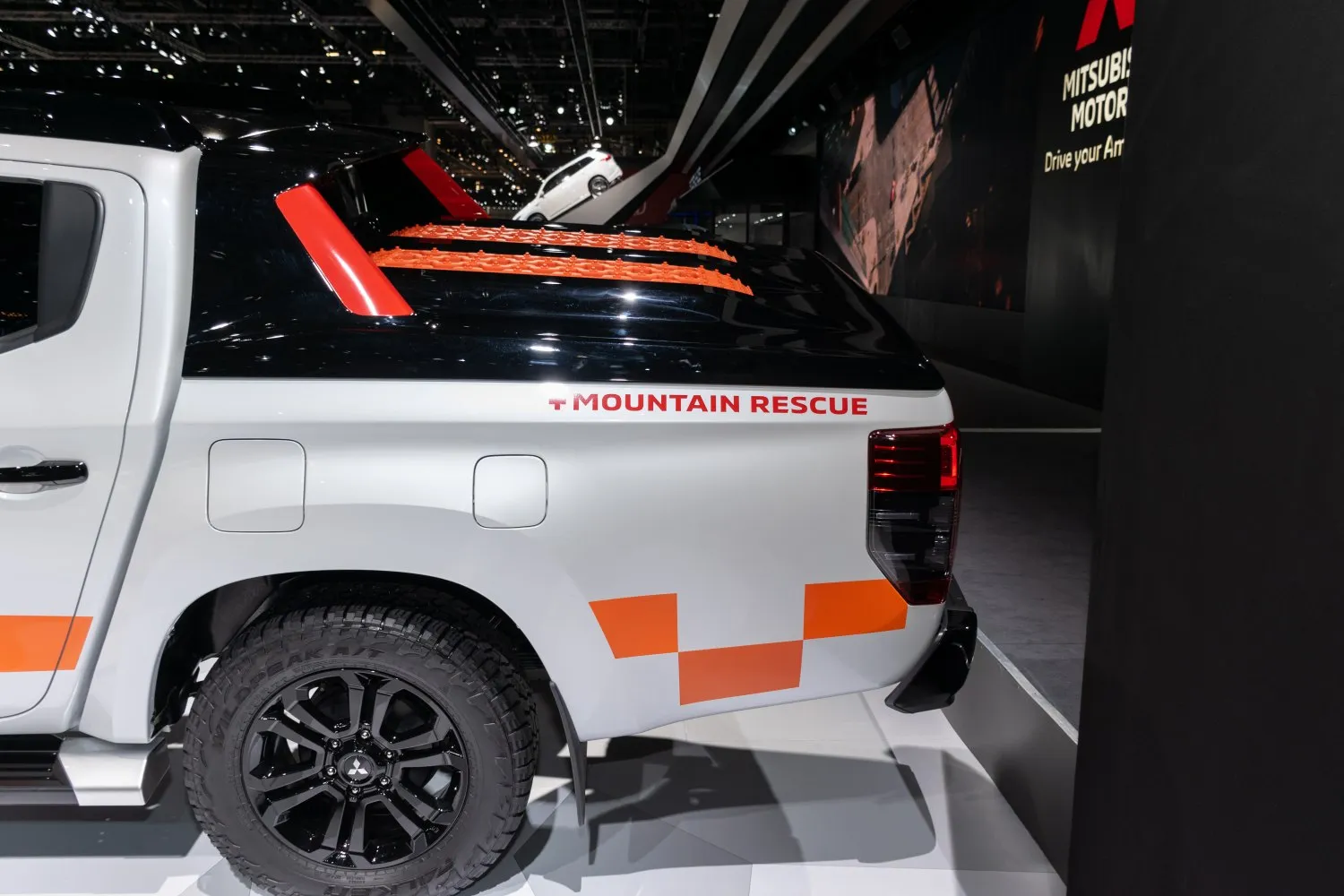
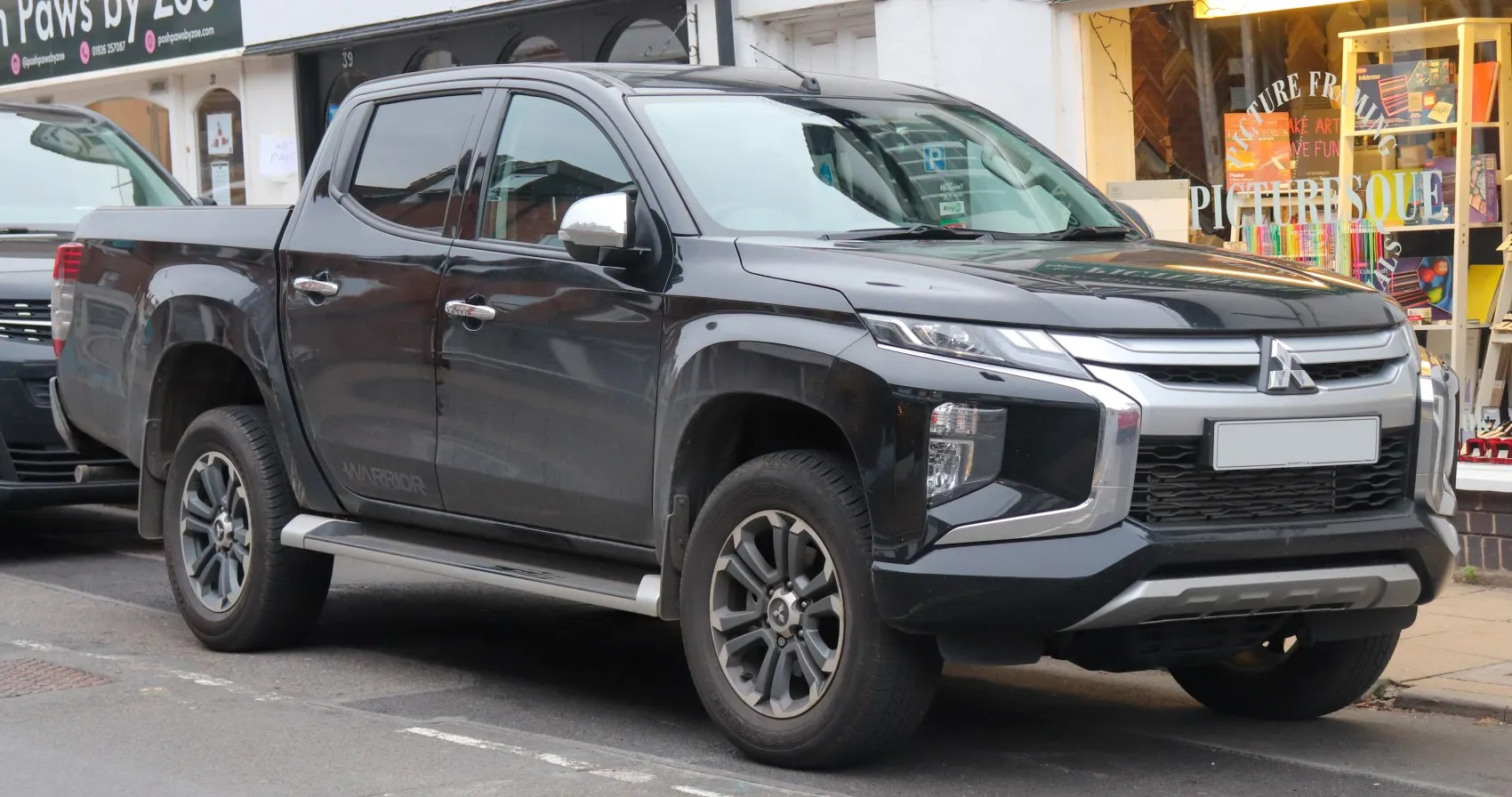
Behind the wheel of the Mitsubishi L200. How does it handle on the road?