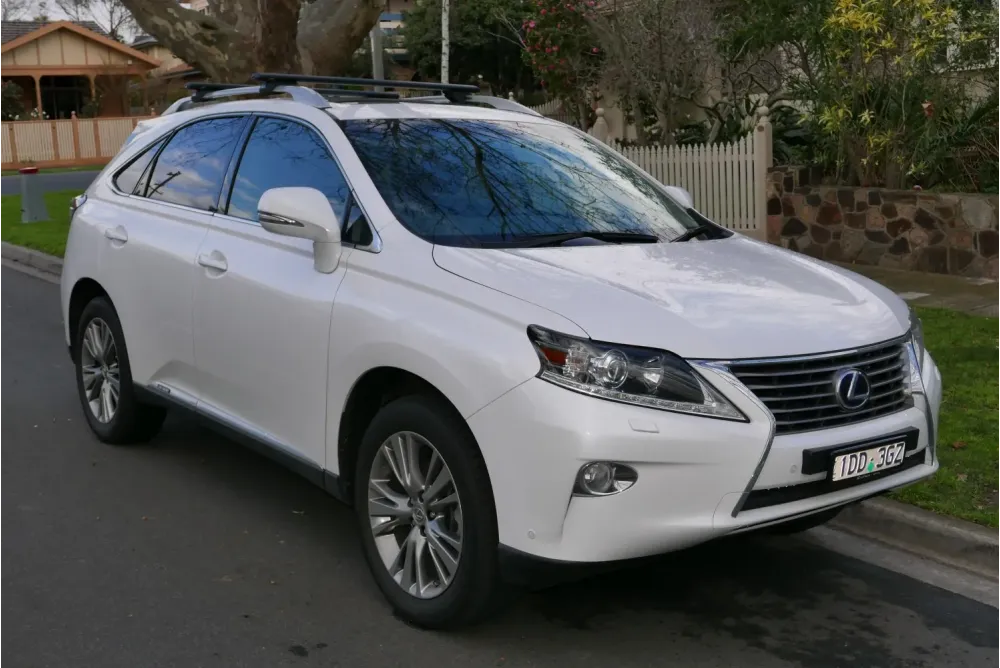
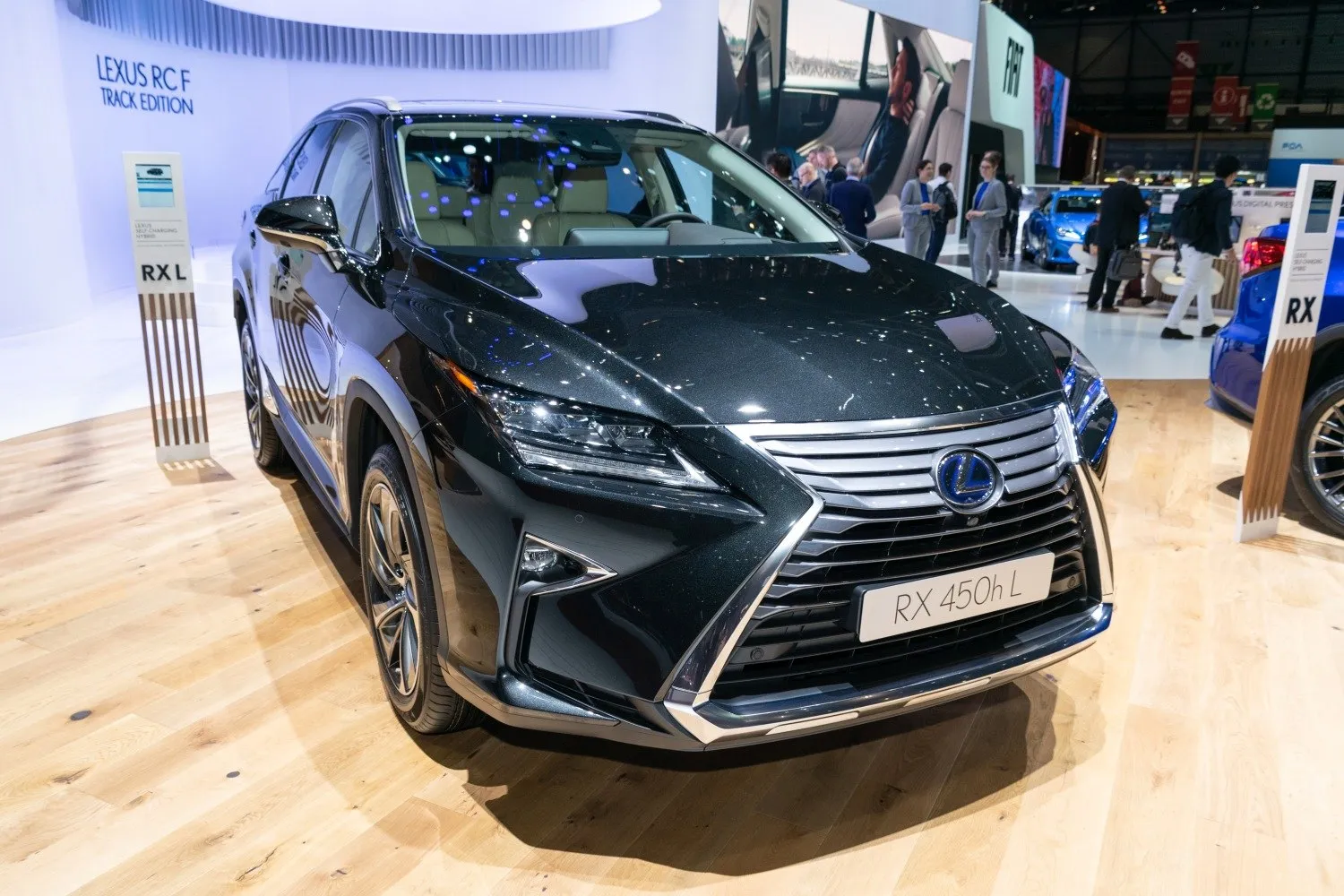
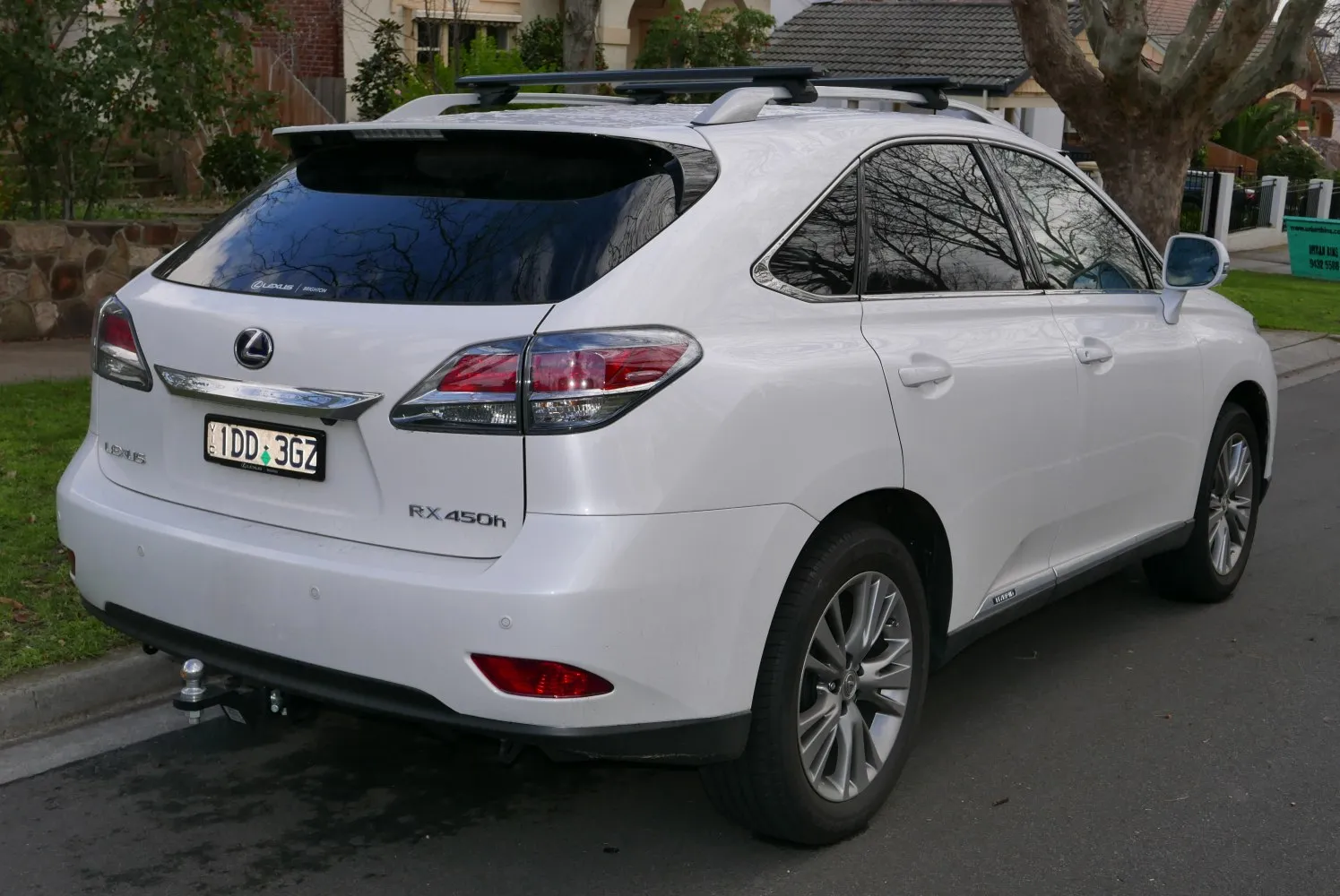
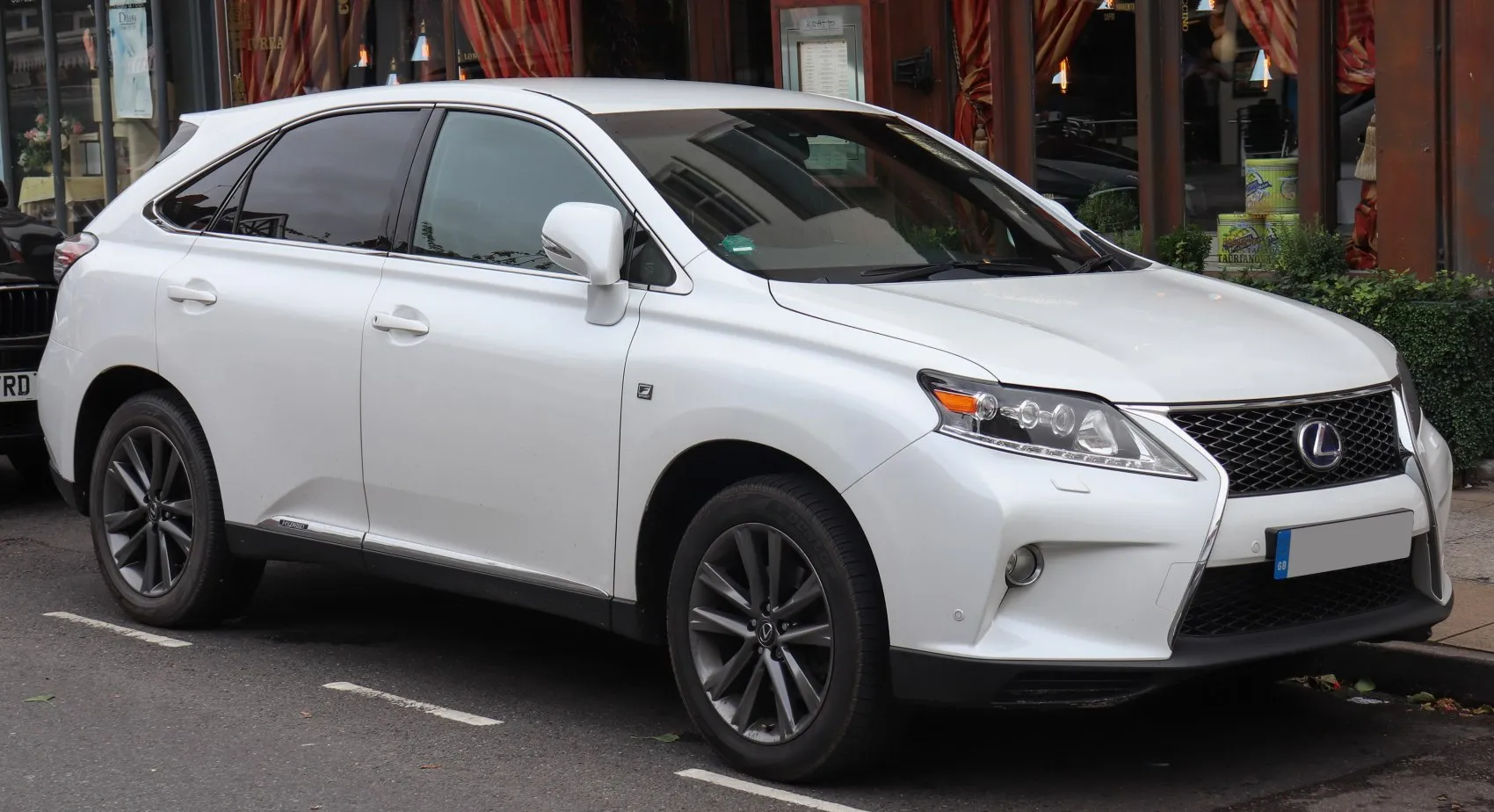
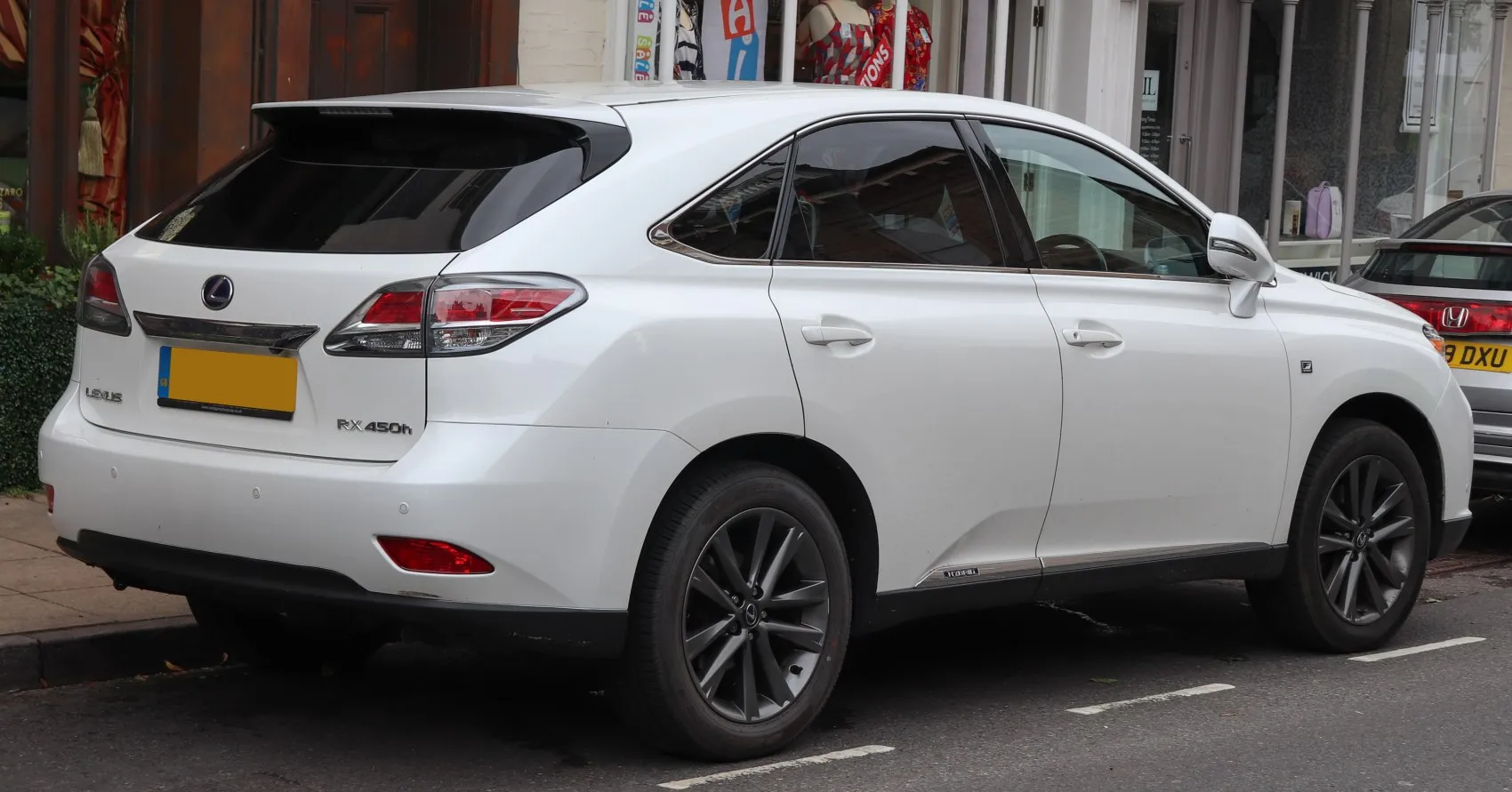
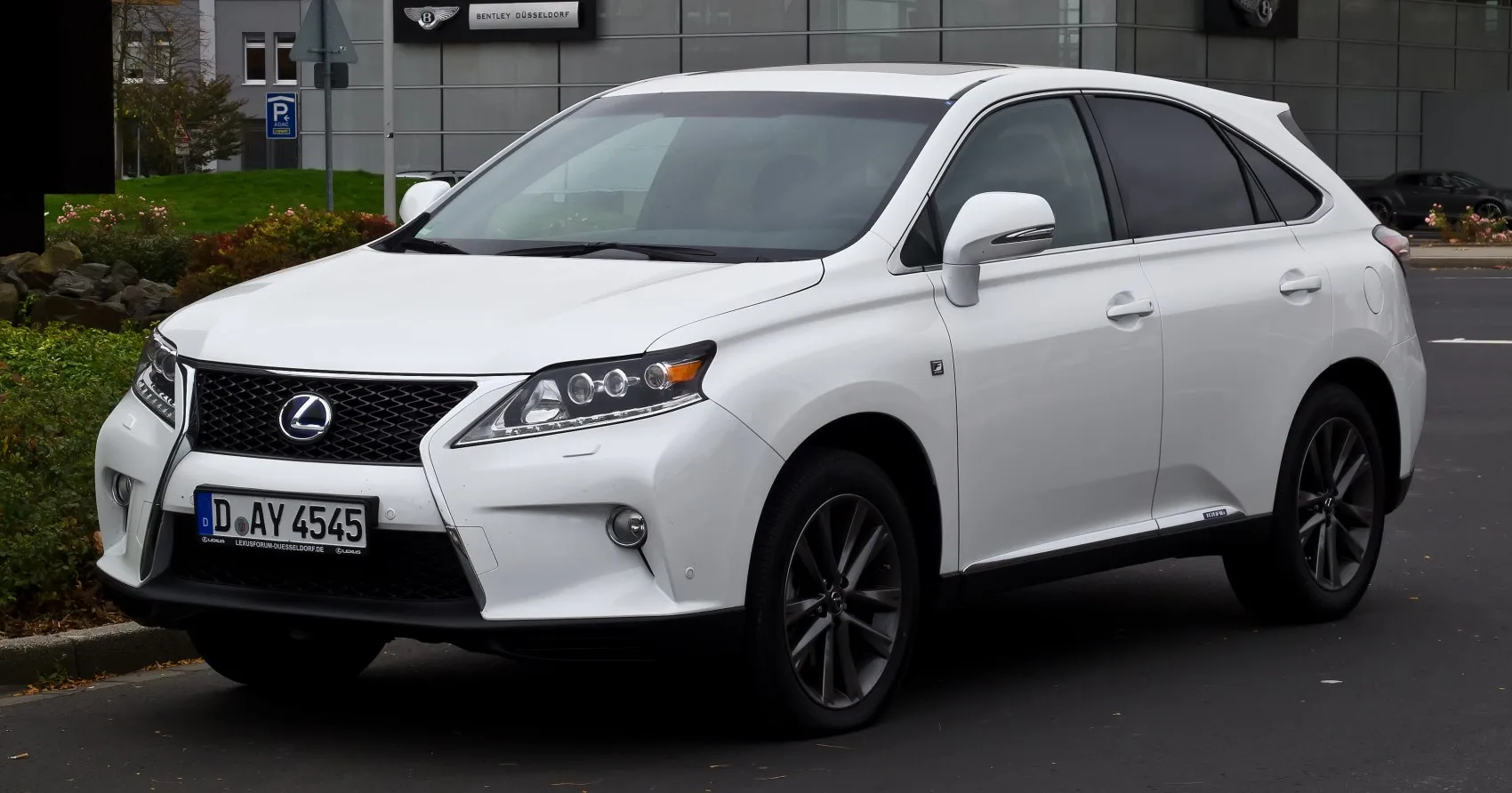
Lexus RX III (facelift 2012) 450h (299 Hp) Hybrid e-Four e-CVT
People\'s Opinion
N/A / 5
Lexus RX:
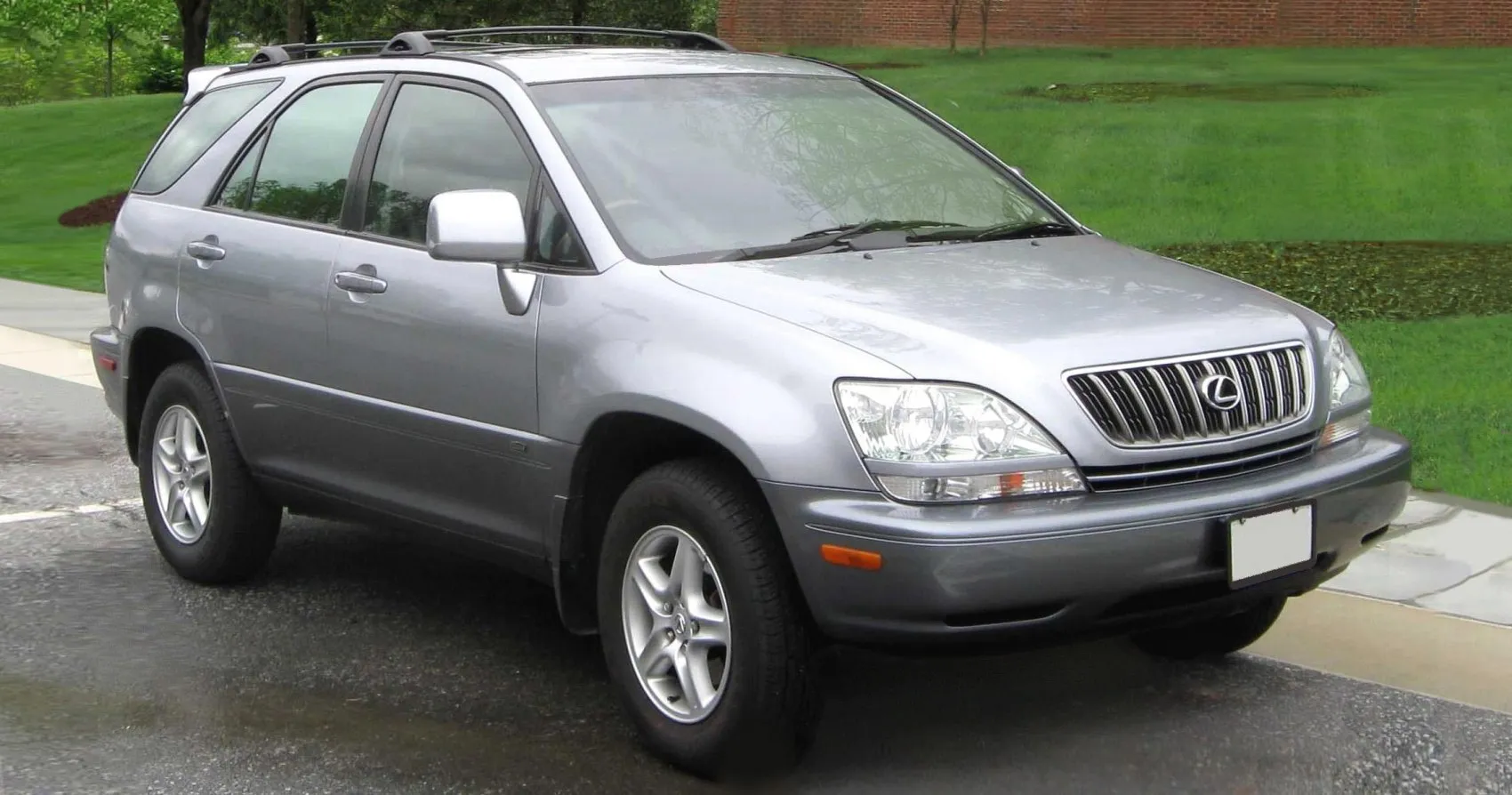
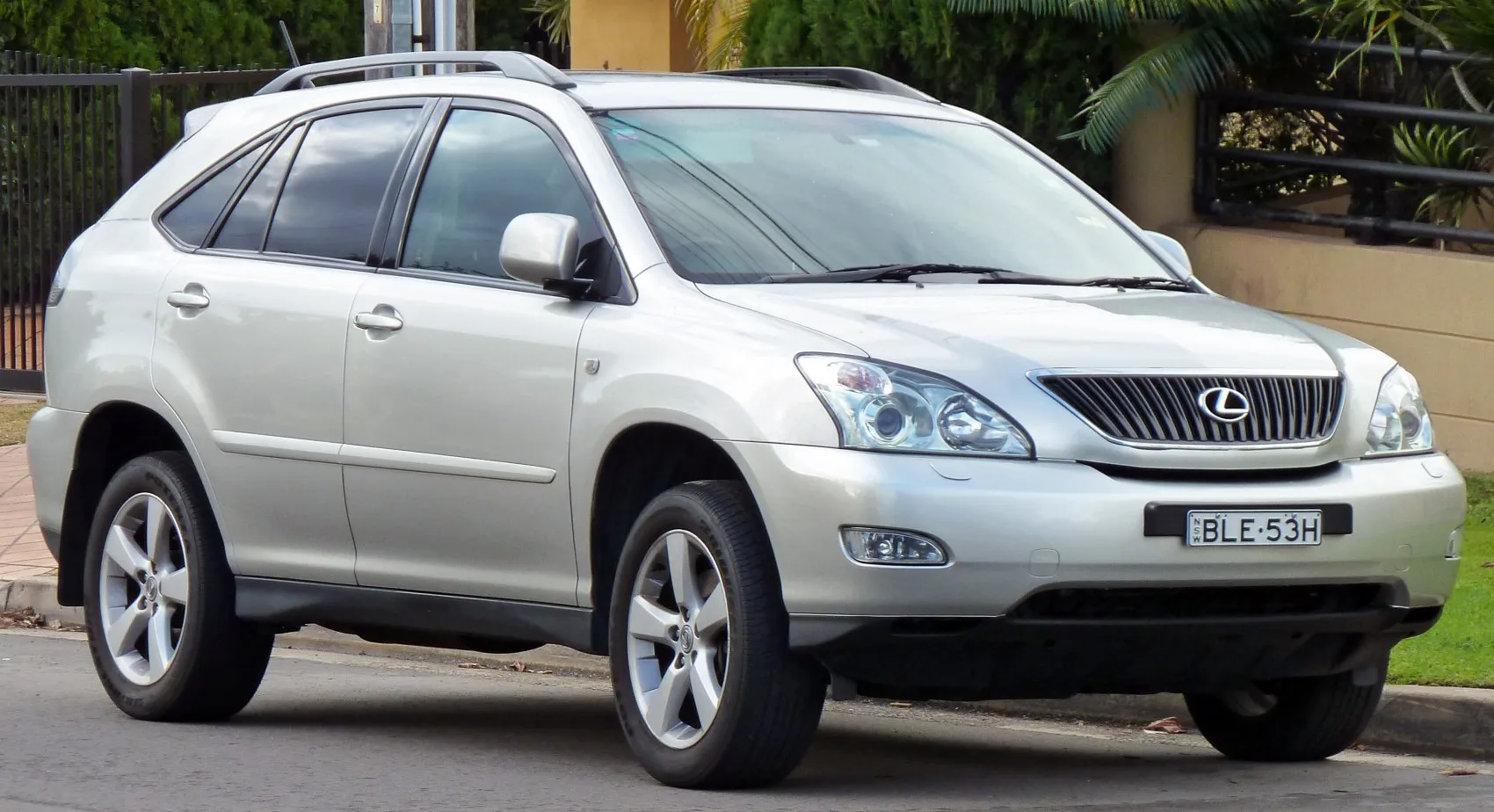
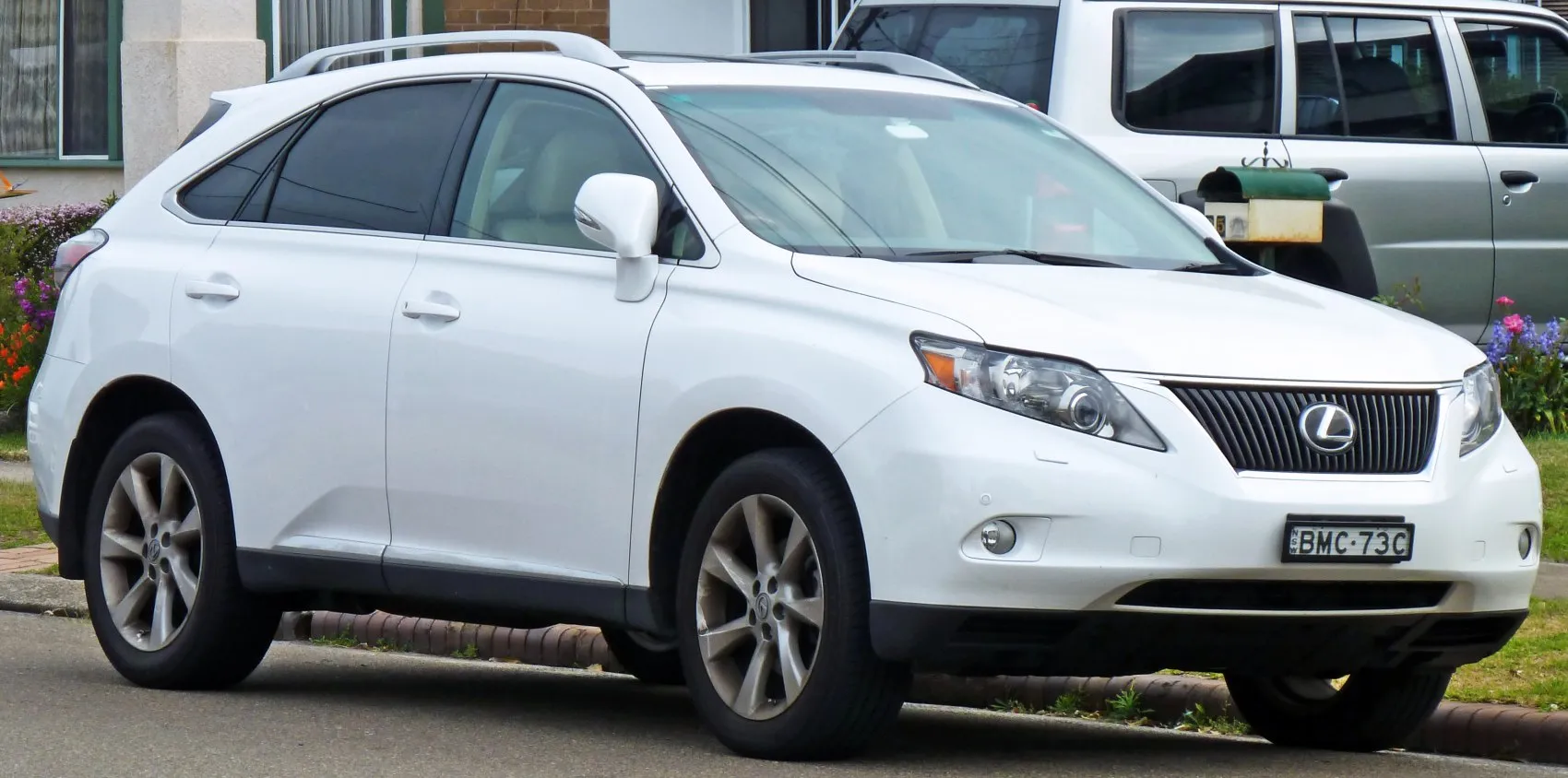
The Lexus RX is a luxury crossover SUV sold since 1998 by Lexus, a luxury division of Toyota. Originally released in its home market of Japan in late 1997 as the Toyota Harrier, export sales began in March 1998 as the Lexus RX.
Considered as the first luxury crossover SUV by many sources, five generations of the RX have been produced to date, the first being compact in size, and the latter classified as mid-size. Both front- and four-wheel drive configurations have been used on the RX series, and several gasoline powertrain options, including V6 engines and hybrid systems, have been offered. In the Lexus model lineup, the RX sits below the larger Lexus LX , and below the body-on-frame, but also mid-size GX SUV. The name "RX" stands for "Radiant Crossover". It has also been labelled as "Recreational Cross Country" in some markets. The RX's current Toyota counterpart is the Highlander/Kluger; past counterparts included the Harrier and Venza....(Read more on Wikipedia)
III (facelift 2012) Overview:
Lexus RX (III (facelift 2012)). With 317 Nm of torque, it offers ample pulling power. It has moderate fuel consumption (~6.5 l/100km). At around 2157 kg, it’s on the heavier side. All‑wheel drive provides excellent grip, ideal for off‑road use. Acceleration is good (0–100 km/h in 7.8 s). The top speed reaches 200 km/h. A sport utility vehicle offering higher ground clearance and versatile cargo space. Seating for 5 makes it ideal for daily use.
Performance Verdict
Delivers impressive hybrid performance with the added traction of e-Four AWD, providing confident acceleration and handling.
Fuel Economy
Remarkably efficient for an AWD hybrid SUV, offering excellent fuel savings without sacrificing capability.
Best Use Case:
All-weather driving, long commutes, premium eco-friendly option.
Pros and Cons:
Pros:
- • Exceptional reliability and build quality
- • Smooth and refined ride comfort
- • Spacious and luxurious interior
- • Excellent fuel economy with hybrid variants
- • Strong safety ratings
Cons:
- • Base 270 engine can feel underpowered
- • V6 petrol models have higher fuel consumption
- • Infotainment system can be dated compared to rivals
- • Driving dynamics are more comfort-oriented than sporty (except F Sport)
Specifications:
Specifications are compared to those of the previous generation(III: 2009 - 2012).
| General: |
| Brand: | Lexus |
|---|
| Model: | RX |
|---|
| Generation: | III (facelift 2012) |
|---|
| Modification (Engine): | 450h (299 Hp) Hybrid e-Four e-CVT |
|---|
| Start of production: | 2012 |
|---|
| End of production: | 2015 |
|---|
| Powertrain Architecture: | FHEV (Full Hybrid Electric Vehicle) |
|---|
| Body type: | SUV |
|---|
| Seats: | 5 |
|---|
| Doors: | 5 |
|---|
| Engine: |
| Engine systems: | Start & Stop System |
|---|
| Power: | 249 Hp @ 6000 rpm. Same horsepower |
|---|
| Power per litre: | 72 Hp/l [30mm more] |
|---|
| Torque: | 317 Nm @ 4800 rpm. |
|---|
| Engine Model/Code: | 2GR-FXE More details about the engine 2GR-FXE |
|---|
| Engine displacement: | 3456 |
|---|
| Number of cylinders: | 6 |
|---|
| Engine configuration: | V-engine |
|---|
| Number of valves per cylinder: | 4 |
|---|
| Fuel injection system: | Multi-port manifold injection |
|---|
| Engine aspiration: | Naturally aspirated engine |
|---|
| Valvetrain: | DOHC, VVT-i |
|---|
| Engine oil capacity: | 6.1 l |
|---|
| Coolant: | 11.4 l |
|---|
| Engine layout: | Front, Transverse |
|---|
| Cylinder Bore: | 94 mm |
|---|
| Piston Stroke: | 83 mm |
|---|
| Compression ratio: | 12.5:1 |
|---|
| Performance: |
| Fuel Type: | Petrol (Gasoline) |
|---|
| Fuel consumption (economy) - urban: | 6.5 l/100 km |
|---|
| Fuel consumption (economy) - extra urban: | 6 l/100 km |
|---|
| Fuel consumption (economy) - combined: | 6.3 l/100 km |
|---|
| Emission standard: | Euro 5 |
|---|
| Acceleration 0 - 100 km/h: | 7.8 sec |
|---|
| Acceleration 0 - 62 mph: | 7.8 sec |
|---|
| Maximum speed: | 200 km/h |
|---|
| Weight-to-power ratio: | 7.1 kg/Hp, 141.7 Hp/tonne |
|---|
| Weight-to-torque ratio: | 6.7 kg/Nm, 150.2 Nm/tonne |
|---|
| Acceleration 0 - 60 mph: | 7.4 sec |
|---|
| Space: |
| Kerb Weight: | 2110-2205 |
|---|
| Max. weight: | 2700 |
|---|
| Max load: | 495-590 |
|---|
| Trunk (boot) space - maximum: | 1570 l |
|---|
| Trunk (boot) space - minimum: | 446 l |
|---|
| Permitted trailer load with brakes (12%): | 2000 kg |
|---|
| Fuel tank capacity: | 65 l |
|---|
| Permitted trailer load without brakes: | 750 kg |
|---|
| Size: |
| Length: | 4770 mm [30mm more] |
|---|
| Width: | 1885 mm [Same width.] |
|---|
| Height: | 1685 mm [40mm less] |
|---|
| Wheelbase: | 2740 mm [Same wheelbase.] |
|---|
| Width including mirrors: | 2120 mm |
|---|
| Front track: | 1630 mm |
|---|
| Rear (Back) track: | 1620 mm |
|---|
| Front overhang: | 1000 mm |
|---|
| Rear overhang: | 1030 mm |
|---|
| Minimum turning circle (turning diameter): | 12.2 m [above average] |
|---|
| Powertrain: |
| Drivetrain Architecture | An Internal combustion engine (ICE) drives the front wheels, one electric motor drives the front wheels, one electric motor drives the rear wheels. There is an ability for running in full electric or mixed mode. |
|---|
| Drive wheel | All wheel drive (4x4) |
|---|
| Transmission type | Automatic |
|---|
| Gearbox type | e-CVT |
|---|
| Front brakes | Ventilated discs [Best for performance and cooling.] |
|---|
| Rear brakes | Ventilated discs [Best for performance and cooling.] |
|---|
| Assisting systems | ABS (Anti-lock braking system) |
|---|
| Steering type | Steering rack and pinion |
|---|
| Power steering | Electric Steering |
|---|
| Tires size | 235/60 R18; 235/55 R19 |
|---|
| Wheel rims size | 7.5J x 18; 7.5J x 19 |
|---|
| Front suspension | Independent, type McPherson with coil spring and anti-roll bar |
|---|
| Rear suspension | Double wishbone |
|---|
| Electric: |
| Gross battery capacity: | 1.9 kWh |
|---|
| Battery technology: | Nickel-metal hydride (NiMH) |
|---|
| Battery location: | Under the rear seats |
|---|
| System power: | 299 Hp |
|---|
| Electric motor power: | 167 Hp |
|---|
| Electric motor Torque: | 355 Nm |
|---|
| Electric motor location: | Integrated into the transmission |
|---|
| Electric motor type: | Synchronous |
|---|
| Battery weight: | 69 kg |
|---|
| Battery voltage: | 288 V |
|---|






Have you ever driven an Lexus RX?
How was your experience with it? Share with us: