
Click on image to view the full photo gallery
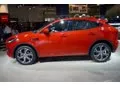
Land Rover Range Rover Sport II (facelift 2017) 2.0 P300 (301 Hp) AWD Automatic 5+2 Seating
Overall Rating
Land Rover Range Rover Sport:
The Land Rover Range Rover Sport is a mid-size luxury SUV produced by the British manufacturer Land Rover, part of Jaguar Land Rover. Introduced in 2005 with the first-generation L320 model, it was succeeded by the second-generation L494 in 2013, and the third-generation L461 in 2022.
The Range Rover Sport was prefigured by the Range Stormer concept car, and it was introduced at the 2004 North American International Auto Show.
This was a low-slung, short wheelbase, 3-door coupé that was unusually "sporty" in the context of Land Rover's history. Designed by Richard Woolley, the marque's first complete concept car sported split-folding gullwing doors, one-piece skeletal seats, a "clamshell" bonnet, 22 inch alloys, a 289 km/h top speed, 4WD and a 2,500 kg weight. The Range Rover Sport was comparably of much more conservative design featuring five doors and a wheelbase hardly shorter than that of the Range Rover Vogue....(Read more on Wikipedia)
II (facelift 2017) Overview:
Land Rover Range Rover Sport (II (facelift 2017)). With 400 Nm of torque, it offers ample pulling power. It has moderate fuel consumption (~11.95 l/100km). At around 2076 kg, it’s on the heavier side. All‑wheel drive provides excellent grip, ideal for off‑road use. Acceleration is good (0–100 km/h in 7.3 s). The top speed reaches 201 km/h. A sport utility vehicle offering higher ground clearance and versatile cargo space. With seating for 7, it’s perfect for larger families.
2.0 P300 (301 Hp) AWD Automatic 5+2 Seating Verdict:

Performance Verdict
Surprisingly capable for a 2.0L engine in a large SUV, delivering decent acceleration, though it can feel strained under heavy load compared to larger powerplants.
Fuel Economy
One of the more fuel-efficient petrol options, offering a good balance for its power output, especially for urban and mixed driving.
Pros and Cons:
Pros:
- • Luxurious and high-quality interior materials and design
- • Exceptional off-road capability for a luxury SUV
- • Wide range of powerful and efficient engine options, including hybrids
- • Comfortable and refined ride quality, especially with air suspension
- • Prestigious brand image and strong resale value
- • High towing capacity suitable for large trailers
Cons:
- • High purchase price and expensive optional extras
- • Significant running costs (fuel, maintenance, insurance)
- • Large size can be challenging in tight urban environments and parking
- • Complex infotainment system can be slow or unintuitive for some users
- • Potential for electronic and minor reliability issues common in complex luxury vehicles
Specifications:
Specifications are compared to those of the previous generation(III: May, 2023 - ).
| General: | |
|---|---|
| Brand: | Land Rover |
| Model: | Range Rover Sport |
| Generation: | II (facelift 2017) |
| Modification (Engine): | 2.0 P300 (301 Hp) AWD Automatic 5+2 Seating |
| Start of production: | September, 2019 |
| End of production: | May, 2022 |
| Powertrain Architecture: | Internal Combustion engine |
| Body type: | SUV |
| Seats: | 7 |
| Doors: | 5 |
| Engine: | |
|---|---|
| Engine systems: | Start & Stop System |
| Power: | 301 Hp @ 5500 rpm. [0hp less] |
| Power per litre: | 150.7 Hp/l [worst than previous generation] |
| Torque: | 400 Nm @ 1500-4000 rpm. |
| Engine Model/Code: | Ingenium / PT204 More details about the engine Ingenium / PT204 |
| Engine displacement: | 1997 |
| Number of cylinders: | 4 |
| Engine configuration: | Inline |
| Number of valves per cylinder: | 4 |
| Fuel injection system: | Direct injection |
| Engine aspiration: | Turbocharger, Intercooler |
| Engine oil capacity: | 7 l |
| Coolant: | 11.2 l |
| Engine layout: | Front, Longitudinal |
| Cylinder Bore: | 83 mm mm |
| Piston Stroke: | 92 mm mm |
| Compression ratio: | 9.5:1 |
| Performance: | |
|---|---|
| Fuel Type: | Petrol (Gasoline) |
| Fuel consumption (economy) - urban: | 11.9-12.0 l/100 km |
| Fuel consumption (economy) - extra urban: | 8.1-8.2 l/100 km |
| Combined fuel consumption (WLTP): | 10.8-11.8 l/100 km |
| Fuel consumption at Low speed (WLTP): | 15.3-15.9 l/100 km |
| Fuel consumption at Medium speed (WLTP): | 10.4-11.5 l/100 km |
| Fuel consumption at high speed (WLTP): | 9.1-10.0 l/100 km |
| Fuel consumption at very high speed (WLTP): | 10.9-12.0 l/100 km |
| Fuel consumption (economy) - urban (NEDC, WLTP equivalent): | 11.9-12.0 l/100 km |
| Fuel consumption (economy) - extra urban (NEDC, WLTP equivalent): | 8.1-8.2 l/100 km |
| Fuel consumption (economy) - combined (NEDC, WLTP equivalent): | 9.5-9.6 l/100 km |
| Fuel consumption (economy) - combined: | 9.5-9.6 l/100 km |
| Emission standard: | Euro 6d-TEMP-EVAP-ISC |
| Acceleration 0 - 100 km/h: | 7.3 sec |
| Acceleration 0 - 62 mph: | 7.3 sec |
| Maximum speed: | 201 km/h |
| Weight-to-power ratio: | 6.9 kg/Hp, 145 Hp/tonne |
| Weight-to-torque ratio: | 5.2 kg/Nm, 192.7 Nm/tonne |
| Acceleration 0 - 60 mph: | 7.0 sec |
| Space: | |
|---|---|
| Kerb Weight: | 2076 |
| Max. weight: | 3000 |
| Max. roof load: | 100 kg |
| Max load: | 924 |
| Trunk (boot) space - maximum: | 1686 l |
| Trunk (boot) space - minimum: | 221 l |
| Permitted trailer load with brakes (12%): | 3000 kg |
| Fuel tank capacity: | 104 l |
| Permitted trailer load without brakes: | 750 kg |
| Permitted towbar download: | 120 kg |
| Size: | |
|---|---|
| Ramp-over (brakeover) angle: | 21.2-25.7° |
| Wading depth: | 850 mm |
| Length: | 4879 mm mm [67mm less] |
| Width: | 2073 mm mm [26mm more] |
| Height: | 1803 mm mm [17mm less] |
| Wheelbase: | 2923 mm mm [74mm less] |
| Width with mirrors folded: | 2073 mm |
| Width including mirrors: | 2220 mm |
| Front track: | 1692 mm |
| Rear (Back) track: | 1686 mm |
| Ride height (ground clearance): | 213-278 mm |
| Minimum turning circle (turning diameter): | 12.5 m [above average] |
| Approach angle: | 26.0-33.0° |
| Departure angle: | 26.2-30.0° |
| Powertrain: | |
|---|---|
| Drivetrain Architecture | The Internal combustion engine (ICE) drives permanently the four wheels of the vehicle. |
| Drive wheel | All wheel drive (4x4) |
| Number of gears | 8 |
| Transmission type | Automatic |
| Front brakes | Ventilated discs, 349 mm [Best for performance and cooling.] |
| Rear brakes | Ventilated discs, 325 mm [Best for performance and cooling.] |
| Assisting systems | ABS (Anti-lock braking system) |
| Steering type | Steering rack and pinion |
| Power steering | Electric Steering |
| Wheel rims size | 19; 20; 22 |












Have you ever driven an Land Rover Range Rover Sport?
How was your experience with it? Share with us: