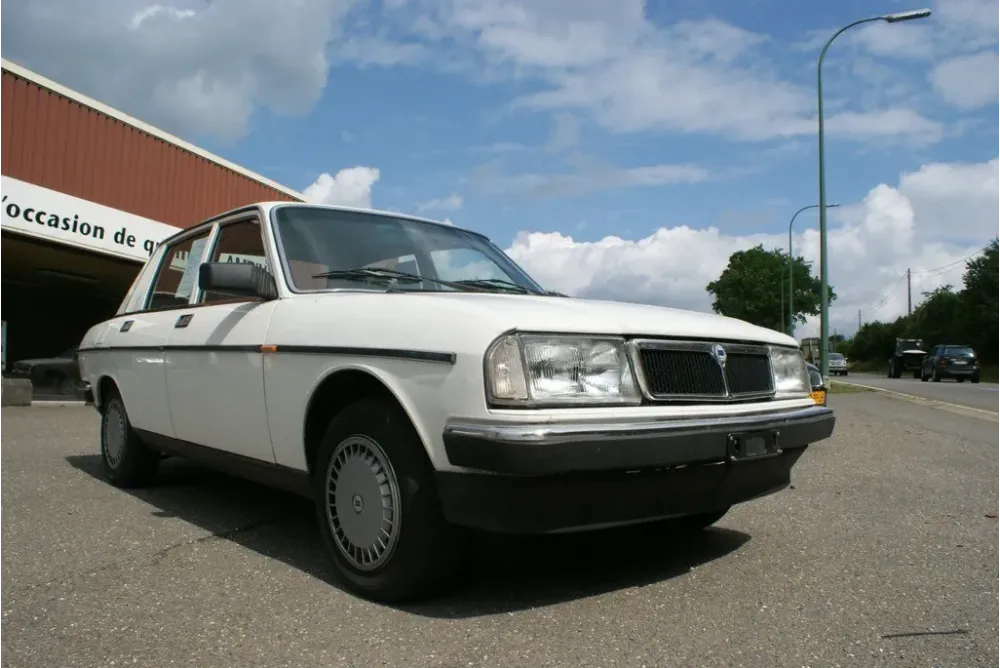
Click on image to view the full photo gallery
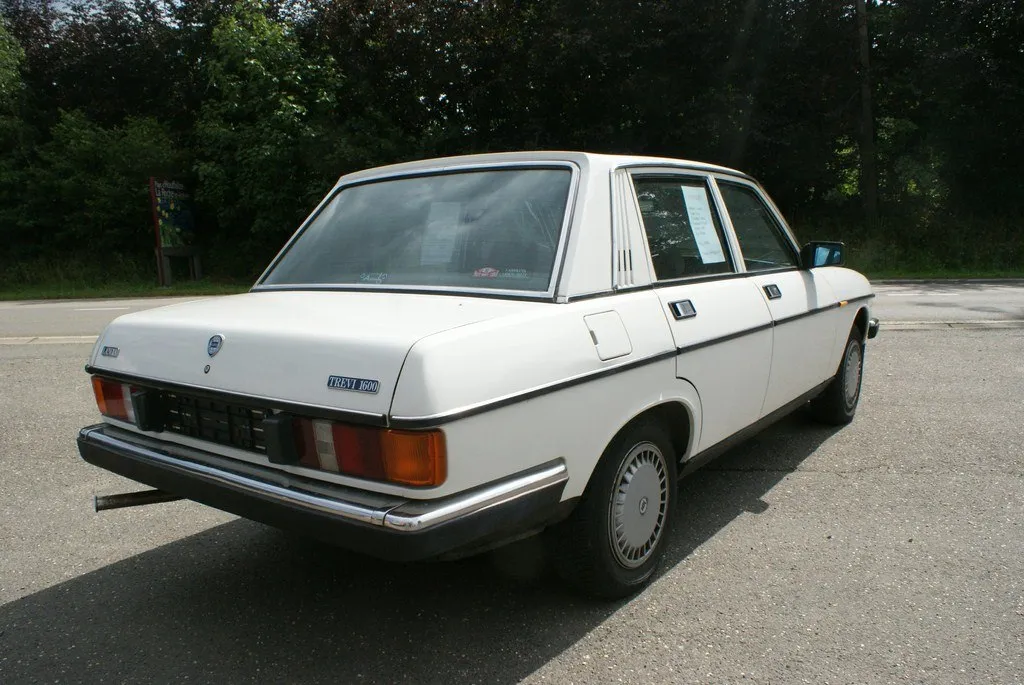
Lancia Trevi 828 2.0 i.e. (122 Hp)
Overall Rating
Lancia Trevi:
The Lancia Trevi , initially marketed as the Lancia Beta Trevi, is a saloon car that was produced between 1980 and 1984. It has transversely mounted in-line four-cylinder engines driving the front wheels. Its engines have twin overhead camshafts and electronic ignition. The clutch is a single dry plate with diaphragm and a five-speed gearbox was standard. The suspension consists of MacPherson struts all round with coil springs and anti-roll bar. The wheels are fitted with 185/65 14 inch tyres. Steering is rack and pinion. The manufacturer's estimated fuel consumption is 29. 4 mpg at 75 mph for the 1600 manual and 28 mpg at 75 mph for the 2000 manual. The 2000 fitted with an automatic transmission had an official fuel consumption of 25. 4 mpg at 75 mph....(Read more on Wikipedia)
828 Overview:
Lancia Trevi (828). With 176 Nm of torque, it offers ample pulling power. Weighing only 1165 kg, it’s quite light. Front‑wheel drive delivers efficiency and easy handling. Acceleration is relatively slow (0–100 km/h in 10.2 s). The top speed reaches 180 km/h. A four-door car with a separate trunk, ideal for families and daily commuting. Seating for 5 makes it ideal for daily use.
The Lancia Trevi (828) was produced before modern crash testing standards like Euro NCAP were established. Safety features were rudimentary by today's standards, typical for vehicles of the early 1980s.
2.0 i.e. (122 Hp) Verdict:

Performance Verdict
The most potent engine in the lineup, offering spirited performance for its time thanks to fuel injection and a healthy 122 Hp, making it enjoyable on open roads.
Fuel Economy
Improved fuel efficiency over carbureted models due to electronic fuel injection, offering a better balance of power and economy for the era.
Pros and Cons:
Pros:
- • Distinctive Italian styling
- • Comfortable ride quality
- • Advanced DOHC engines for the era
- • Unique interior design (e.g., 'Swiss cheese' dashboard)
- • Good handling for a sedan of its size
Cons:
- • Historical reputation for rust (though improved)
- • Dated safety features by modern standards
- • Fuel economy can be high on carbureted models
- • Potential for electrical issues common in 80s Italian cars
- • Limited parts availability for some components
Specifications:
Specifications are compared to those of the previous generation(828: 1983 - 1984).
| General: | |
|---|---|
| Brand: | Lancia |
| Model: | Trevi |
| Generation: | 828 |
| Modification (Engine): | 2.0 i.e. (122 Hp) |
| Start of production: | April, 1982 |
| End of production: | September, 1984 |
| Powertrain Architecture: | Internal Combustion engine |
| Body type: | Sedan |
| Seats: | 5 |
| Doors: | 4 |
| Engine: | |
|---|---|
| Power: | 122 Hp @ 5500 rpm. Same horsepower |
| Power per litre: | 61.2 Hp/l [Same length.] |
| Torque: | 176 Nm @ 3800 rpm. |
| Engine Model/Code: | 828B4.000 More details about the engine 828B4.000 |
| Engine displacement: | 1995 |
| Number of cylinders: | 4 |
| Engine configuration: | Inline |
| Number of valves per cylinder: | 2 |
| Fuel injection system: | Multi-port manifold injection |
| Engine aspiration: | Naturally aspirated engine |
| Valvetrain: | DOHC |
| Engine layout: | Front, Transverse |
| Cylinder Bore: | 84 mm mm |
| Piston Stroke: | 90 mm mm |
| Maximum engine speed: | 6400 rpm. |
| Performance: | |
|---|---|
| Fuel Type: | Petrol (Gasoline) |
| Fuel consumption (economy) - urban: | 12.7 l/100 km |
| Fuel consumption (economy) - extra urban: | 7.1 l/100 km |
| Acceleration 0 - 100 km/h: | 10.2 sec |
| Acceleration 0 - 62 mph: | 10.2 sec |
| Maximum speed: | 180 km/h |
| Weight-to-power ratio: | 9.5 kg/Hp, 104.7 Hp/tonne |
| Weight-to-torque ratio: | 6.6 kg/Nm, 151.1 Nm/tonne |
| Acceleration 0 - 60 mph: | 9.7 sec |
| Space: | |
|---|---|
| Kerb Weight: | 1165 |
| Max. weight: | 1665 |
| Max load: | 500 |
| Trunk (boot) space - minimum: | 440 l |
| Permitted trailer load with brakes (12%): | 1235 kg |
| Size: | |
|---|---|
| Length: | 4355 mm mm [Same length.] |
| Width: | 1706 mm mm [Same width.] |
| Height: | 1400 mm mm [Same height.] |
| Wheelbase: | 2540 mm mm [Same wheelbase.] |
| Front track: | 1406 mm |
| Rear (Back) track: | 1392 mm |
| Minimum turning circle (turning diameter): | 10.9 m [above average] |
| Powertrain: | |
|---|---|
| Drivetrain Architecture | The Internal combustion engine (ICE) drives the front wheels of the vehicle. |
| Drive wheel | Front wheel drive |
| Number of gears | 5 |
| Transmission type | Manual |
| Front brakes | Disc [above average] |
| Rear brakes | Disc [above average] |
| Steering type | Steering rack and pinion |
| Power steering | Hydraulic Steering |
| Tires size | 175/70 R14 |
| Wheel rims size | 5.5J x 14 |
| Front suspension | Independent, type McPherson with coil spring and anti-roll bar |
| Rear suspension | McPherson, Transverse stabilizer |





Driven it? Loved it? Hated it? Share your honest review!