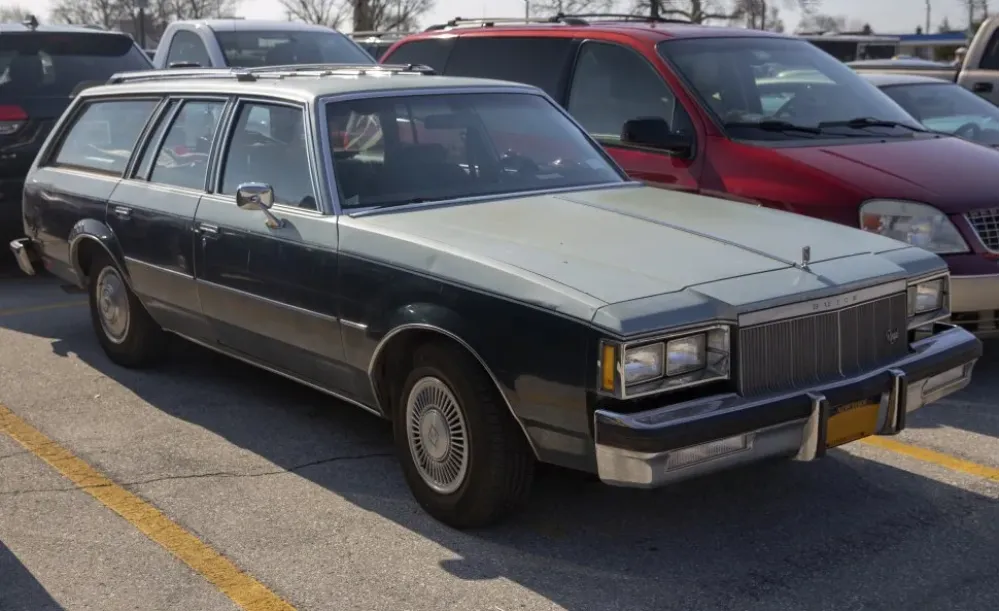
Click on image to view the full photo gallery
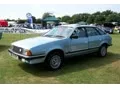
Buick Regal II Station Wagon 4.1 V6 (127 Hp) Automatic
Overall Rating
Buick Regal:
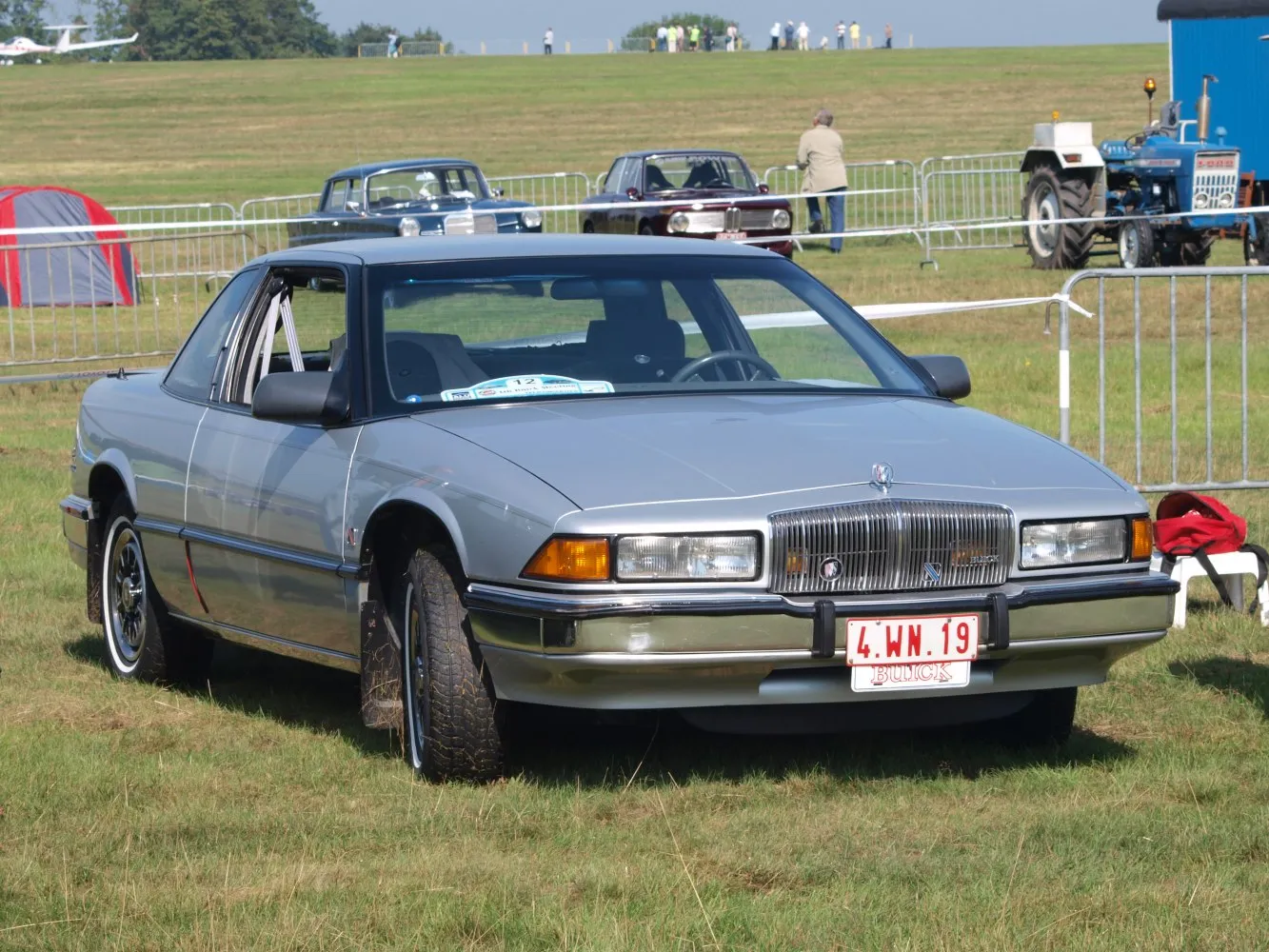
The Buick Regal is a line of mid-size cars marketed by Buick since 1973. Serving as the premium mid-size/intermediate car of the Buick product range for nearly its entire production, the Regal initially served as the divisional counterpart of the Pontiac Grand Prix and Oldsmobile Cutlass Supreme; since the late 2000s, the model line has been derived from the Opel Insignia. The Regal also serves as the basis of the high-performance Grand National, Gran Sport , and Buick GNX coupes.
Through its production, the Regal has been marketed under a wide variety of body styles, including two-door coupes and four-door sedans , along with a 5-door liftback sedan and a 5-door station wagon; the latter was the first Buick station wagon marketed since the retirement of both the Century and Roadmaster Estates after 1996. The turbocharged LD5 3. 8L V6 used in the second generation was used to showcase the motorsports presence of the brand; though offered with other vehicles , the turbocharged engine is most commonly associated with the Regal. During the 1990s, the V6 regained forced induction, with a supercharger replacing the turbocharger....(Read more on Wikipedia)
II Station Wagon Overview:
Buick Regal (II Station Wagon). With 278 Nm of torque, it offers ample pulling power. With a weight of 1605 kg, it falls in the mid‑range. Rear‑wheel drive offers dynamic handling and sporty feedback. A car with an extended rear cargo area, combining passenger comfort with increased storage. Seating for 5 makes it ideal for daily use.
4.1 V6 (127 Hp) Automatic Verdict:

Performance Verdict
Offers adequate power for daily driving and highway cruising, typical for a large American V6 of its era, providing a smooth but not exhilarating experience.
Fuel Economy
Combined fuel consumption of 10.7 l/100 km is reasonable for a large V6 from the early 80s, but not class-leading by modern standards.
Pros and Cons:
Pros:
- • Spacious interior and cargo capacity
- • Comfortable, soft ride quality
- • Classic American styling
- • Relatively simple mechanics (petrol engines)
- • Good highway cruiser
Cons:
- • Sluggish performance, especially with diesel
- • Poor fuel economy for petrol engines by modern standards
- • Outdated safety features
- • Reliability concerns with the 5.7d V8
- • Handling is soft and unengaging
Specifications:
Specifications are compared to those of the previous generation(II Coupe (facelift 1981): 1981 - 1987).
| General: | |
|---|---|
| Brand: | Buick |
| Model: | Regal |
| Generation: | II Station Wagon |
| Modification (Engine): | 4.1 V6 (127 Hp) Automatic |
| Start of production: | 1982 |
| End of production: | 1983 |
| Powertrain Architecture: | Internal Combustion engine |
| Body type: | Station wagon (estate) |
| Seats: | 5 |
| Doors: | 5 |
| Engine: | |
|---|---|
| Power: | 127 Hp @ 4000 rpm. Same horsepower |
| Power per litre: | 30.8 Hp/l [99mm less] |
| Torque: | 278 Nm @ 2000 rpm. |
| Engine Model/Code: | LC4 More details about the engine LC4 |
| Engine displacement: | 4128 |
| Number of cylinders: | 6 |
| Engine configuration: | V-engine |
| Number of valves per cylinder: | 2 |
| Fuel injection system: | Carburettor |
| Engine aspiration: | Naturally aspirated engine |
| Engine oil capacity: | 4.7 l |
| Coolant: | 12.5 l |
| Engine layout: | Front, Longitudinal |
| Cylinder Bore: | 100.71 mm mm |
| Piston Stroke: | 86.36 mm mm |
| Compression ratio: | 8:1 |
| Performance: | |
|---|---|
| Fuel Type: | Petrol (Gasoline) |
| Fuel consumption (economy) - urban: | 12.4 l/100 km |
| Fuel consumption (economy) - extra urban: | 8.1 l/100 km |
| Fuel consumption (economy) - combined: | 10.7 l/100 km |
| Weight-to-power ratio: | 12.6 kg/Hp, 79.1 Hp/tonne |
| Weight-to-torque ratio: | 5.8 kg/Nm, 173.2 Nm/tonne |
| Space: | |
|---|---|
| Kerb Weight: | 1605 |
| Fuel tank capacity: | 68 l |
| Size: | |
|---|---|
| Length: | 4996 mm mm [99mm less] |
| Width: | 1808 mm mm [11mm less] |
| Height: | 1435 mm mm [61mm more] |
| Wheelbase: | 2746 mm mm [Same wheelbase.] |
| Front track: | 1486 mm |
| Rear (Back) track: | 1466 mm |
| Minimum turning circle (turning diameter): | 12.8 m [above average] |
| Powertrain: | |
|---|---|
| Drivetrain Architecture | The Internal combustion engine (ICE) drives the rear wheels of the vehicle. |
| Drive wheel | Rear wheel drive |
| Number of gears | 3 |
| Transmission type | Automatic |
| Gearbox type | Hydramatic |
| Front brakes | Ventilated discs [Best for performance and cooling.] |
| Rear brakes | Drum [bad for performance and cooling.] |
| Steering type | Cone worm with recirculation balls |
| Tires size | 195/75 R14 |
| Wheel rims size | 14 |
| Front suspension | Independent coil spring |
| Rear suspension | Suspension De-Dion |











Help others decide – share your experience!