
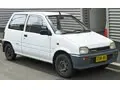
Click on image to view the full photo gallery
Lada 2107 2 1.3 (64 Hp)
Overall Rating
Lada 2107:
The Lada / VAZ-2105, 2104 and 2107, collectively marketed as Lada Riva for right-hand drive models , the Lada Nova in Germany, and by multiple other names and markets, are a series of compact sedans of the Zhiguli line-up , built by Russian car manufacturer AvtoVAZ. Introduced in 1979 in the Soviet Union, and progressively introduced to Western European and global markets from the early 1980s, under the Lada brand, they were sold as saloons , and station wagon versions....(Read more on Wikipedia)
2 Overview:
Lada 2107 (2). With 93 Nm of torque, it offers ample pulling power. It has moderate fuel consumption (~10 l/100km). Weighing only 1030 kg, it’s quite light. Rear‑wheel drive offers dynamic handling and sporty feedback. Acceleration is relatively slow (0–100 km/h in 18 s). The top speed reaches 143 km/h. A four-door car with a separate trunk, ideal for families and daily commuting. Seating for 5 makes it ideal for daily use.
The Lada 2107 generation 2 was produced before Euro NCAP testing began and lacks modern safety features, reflecting the standards of its era. Expect minimal passive safety.
1.3 (64 Hp) Verdict:

Performance Verdict
Delivers extremely modest performance, struggling with acceleration (18 sec 0-100 km/h) and a low top speed, making it suitable only for undemanding city or rural driving.
Fuel Economy
Despite its low power output, the carburettor-fed 1.3L engine exhibits poor fuel economy, especially in urban conditions (10 l/100 km), reflecting outdated technology.
Pros and Cons:
Pros:
- • Simple, robust mechanicals
- • Easy and inexpensive to repair
- • Low initial purchase cost (historically)
- • Good ground clearance for rough roads
Cons:
- • Very poor acceleration and top speed
- • High fuel consumption for its power
- • Outdated safety features (or lack thereof)
- • Basic interior comfort and features
- • Prone to rust
- • Carburettor issues
Specifications:
| General: | |
|---|---|
| Brand: | Lada |
| Model: | 2107 |
| Generation: | 2 |
| Modification (Engine): | 1.3 (64 Hp) |
| Start of production: | 1982 |
| End of production: | 1990 |
| Powertrain Architecture: | Internal Combustion engine |
| Body type: | Sedan |
| Seats: | 5 |
| Doors: | 4 |
| Engine: | |
|---|---|
| Power: | 64 Hp @ 5400 rpm. |
| Power per litre: | 49.5 Hp/l |
| Torque: | 93 Nm @ 3400 rpm. |
| Engine displacement: | 1294 |
| Number of cylinders: | 4 |
| Engine configuration: | Inline |
| Number of valves per cylinder: | 2 |
| Fuel injection system: | Carburettor |
| Engine aspiration: | Naturally aspirated engine |
| Valvetrain: | OHC |
| Engine layout: | Front, Longitudinal |
| Compression ratio: | 8.5:1 |
| Performance: | |
|---|---|
| Fuel Type: | Petrol (Gasoline) |
| Fuel consumption (economy) - urban: | 10 l/100 km |
| Acceleration 0 - 100 km/h: | 18 sec |
| Acceleration 0 - 62 mph: | 18 sec |
| Maximum speed: | 143 km/h |
| Weight-to-power ratio: | 16.1 kg/Hp, 62.1 Hp/tonne |
| Weight-to-torque ratio: | 11.1 kg/Nm, 90.3 Nm/tonne |
| Acceleration 0 - 60 mph: | 17.1 sec |
| Space: | |
|---|---|
| Kerb Weight: | 1030 |
| Max. weight: | 1430 |
| Max load: | 400 |
| Trunk (boot) space - maximum: | 325 l |
| Fuel tank capacity: | 39 l |
| Size: | |
|---|---|
| Length: | 4128 mm mm |
| Width: | 1620 mm mm |
| Height: | 1435 mm mm |
| Wheelbase: | 2424 mm mm |
| Front track: | 1365 mm |
| Rear (Back) track: | 1321 mm |
| Powertrain: | |
|---|---|
| Drivetrain Architecture | The Internal combustion engine (ICE) drives the rear wheels of the vehicle. |
| Drive wheel | Rear wheel drive |
| Number of gears | 4 |
| Transmission type | Manual |
| Front brakes | Disc |
| Rear brakes | Drum |
| Steering type | Worm-reduction unit |
| Tires size | 175/70 SR13 |
| Front suspension | Double wishbone |
| Rear suspension | Coil spring |




What’s the best feature of the Lada 2107? Tell us in the comments!