
Click on image to view the full photo gallery
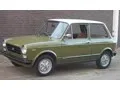
Lada 2103 3 1.3 (70 Hp)
Overall Rating
Lada 2103:
The VAZ-2103 Zhiguli is a deluxe compact sedan car , produced by VAZ, introduced in 1972 and produced until 1984. Better known by its export name Lada 1500 outside of its native Soviet Union and popularly nicknamed the Troika in its domestic market. The car was developed jointly by VAZ and FIAT at the same time as Fiat 124 Special, and the two models had the same basis and influenced each other. The 2103 was built under license and tailored to the Soviet and Eastern European markets. The 2103 externally differs from its predecessor, the VAZ-2101. Firstly, by its four, that is, double sets of headlights, different grille and direction pointers, moldings on the sides of the body and larger taillights. Its main difference - the more powerful 75 hp 1,452 cc straight-four petrol engine. In addition, this model is distinguished by the presence of a vacuum brake booster as well as self-adjusting rear brakes and internally on the new Fiat 125 based front panel. The interior was also more upmarket with a different steering wheel, cloth interior trim on export versions and an improved dashboard featuring wood imitation, tachometer, oil pressure gauge and front panel clock....(Read more on Wikipedia)
3 Overview:
Lada 2103 (3). With 96 Nm of torque, it offers ample pulling power. Weighing only 965 kg, it’s quite light. Rear‑wheel drive offers dynamic handling and sporty feedback. Acceleration is relatively slow (0–100 km/h in 21 s). The top speed reaches 143 km/h. A four-door car with a separate trunk, ideal for families and daily commuting. Seating for 5 makes it ideal for daily use.
Produced before modern safety standards and Euro NCAP testing, the Lada 2103 lacks contemporary safety features like airbags or advanced crumple zones. While ABS is listed, its effectiveness and widespread availability on a 1977 model are questionable. Overall safety performance would be considered very poor by today's standards.
1.3 (70 Hp) Verdict:

Performance Verdict
The 1.3-liter carburettor engine provides modest performance, suitable for city driving and leisurely rural journeys. Its 70 Hp delivers adequate, but uninspiring, acceleration for its era, with a 0-100 km/h time of 21 seconds.
Fuel Economy
Fuel consumption of 8.3 l/100 km (extra-urban) is relatively high for a 1.3-liter engine by modern standards, but was acceptable for a carburettor-fed unit of its time. It's not a fuel-efficient choice today.
Pros and Cons:
Pros:
- • Robust and simple mechanicals, easy to maintain
- • Affordable purchase price and running costs (historically)
- • Spacious interior for its class
- • Classic rear-wheel-drive driving experience
- • Good ground clearance for varied road conditions
Cons:
- • Outdated safety features by modern standards
- • Modest performance and slow acceleration
- • High fuel consumption for its engine size
- • Basic interior comfort and refinement
- • Prone to rust if not maintained
Specifications:
Specifications are compared to those of the previous generation(5: 1972 - 1983).
| General: | |
|---|---|
| Brand: | Lada |
| Model: | 2103 |
| Generation: | 3 |
| Modification (Engine): | 1.3 (70 Hp) |
| Start of production: | 1977 |
| End of production: | 1983 |
| Powertrain Architecture: | Internal Combustion engine |
| Body type: | Sedan |
| Seats: | 5 |
| Doors: | 4 |
| Engine: | |
|---|---|
| Power: | 70 Hp @ 5600 rpm. |
| Power per litre: | 54.1 Hp/l |
| Torque: | 96 Nm @ 3400 rpm. |
| Engine displacement: | 1295 |
| Number of cylinders: | 4 |
| Engine configuration: | Inline |
| Number of valves per cylinder: | 2 |
| Fuel injection system: | Carburettor |
| Engine aspiration: | Naturally aspirated engine |
| Valvetrain: | OHC |
| Engine layout: | Front, Longitudinal |
| Cylinder Bore: | 79 mm mm |
| Piston Stroke: | 66 mm mm |
| Compression ratio: | 8.5:1 |
| Performance: | |
|---|---|
| Fuel Type: | Petrol (Gasoline) |
| Fuel consumption (economy) - extra urban: | 8.3 l/100 km |
| Acceleration 0 - 100 km/h: | 21 sec |
| Acceleration 0 - 62 mph: | 21 sec |
| Maximum speed: | 143 km/h |
| Weight-to-power ratio: | 13.8 kg/Hp, 72.5 Hp/tonne |
| Weight-to-torque ratio: | 10.1 kg/Nm, 99.5 Nm/tonne |
| Acceleration 0 - 60 mph: | 20 sec |
| Space: | |
|---|---|
| Kerb Weight: | 965 |
| Max. weight: | 1430 |
| Max load: | 465 |
| Trunk (boot) space - maximum: | 400 l |
| Fuel tank capacity: | 39 l |
| Size: | |
|---|---|
| Length: | 4116 mm mm [Same length.] |
| Width: | 1611 mm mm [Same width.] |
| Height: | 1440 mm mm [Same height.] |
| Wheelbase: | 2424 mm mm [Same wheelbase.] |
| Front track: | 1365 mm |
| Rear (Back) track: | 1321 mm |
| Powertrain: | |
|---|---|
| Drivetrain Architecture | The Internal combustion engine (ICE) drives the rear wheels of the vehicle. |
| Drive wheel | Rear wheel drive |
| Number of gears | 4 |
| Transmission type | Manual |
| Front brakes | Disc [bad for performance and cooling.] |
| Rear brakes | Drum [bad for performance and cooling.] |
| Assisting systems | ABS (Anti-lock braking system) |
| Steering type | Worm-reduction unit |
| Tires size | 175/70 SR13 |
| Front suspension | Double wishbone |
| Rear suspension | Coil spring |







Is the Lada 2103 your dream ride or just a daily drive? Let's talk!