
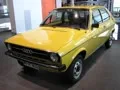
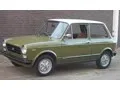
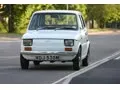
Click on image to view the full photo gallery
Lada 2101 3 1.2 (64 Hp)
Overall Rating
Lada 2101:
The VAZ-2101 "Zhiguli", commonly nicknamed "Kopeyka" , is a compact 4-door sedan or wagon, called small class, passenger car, model 1 in Soviet classification, and produced by the Soviet manufacturer AvtoVAZ, introduced in 1970 as the company's first product.
The car is a licence-built version of the Fiat 124, that was heavily modified and tailored for the rough climate and road conditions across the Soviet Union and much of the Eastern Bloc countries. Subsequently, it was widely, and successfully exported to the West under the Lada brand, for over two decades. The station wagon version was known as the VAZ-2102....(Read more on Wikipedia)
3 Overview:
Lada 2101 (3). With 89 Nm of torque, it offers ample pulling power. It has moderate fuel consumption (~9.4 l/100km). Weighing only 955 kg, it’s quite light. Rear‑wheel drive offers dynamic handling and sporty feedback. Acceleration is relatively slow (0–100 km/h in 20 s). The top speed reaches 142 km/h. A four-door car with a separate trunk, ideal for families and daily commuting. Seating for 5 makes it ideal for daily use.
The Lada 2101 was produced long before modern safety standards and Euro NCAP testing began. Consequently, it lacks contemporary safety features and has no official safety rating, reflecting the automotive safety priorities of its era.
1.2 (64 Hp) Verdict:

Performance Verdict
This 1.2-liter carburetted engine delivers modest performance, suitable for urban and rural driving. Its 64 Hp provides sufficient power for basic transportation, though acceleration is leisurely by modern standards.
Fuel Economy
With a combined fuel consumption of 9.2 l/100 km, the 1.2L engine is not particularly fuel-efficient, even for its time. Its carburettor system contributes to higher consumption compared to later fuel-injected units.
Pros and Cons:
Pros:
- • Extremely simple and robust mechanicals
- • Easy and inexpensive to repair
- • High ground clearance suitable for varied road conditions
- • Durable and long-lasting when maintained
- • Classic appeal and historical significance
Cons:
- • Very poor passive safety by modern standards
- • Low performance and slow acceleration
- • High fuel consumption for its engine size
- • Basic comfort and interior amenities
- • Outdated technology (carburettor, steering, brakes)
Specifications:
Specifications are compared to those of the previous generation(1: 1974 - 1983).
| General: | |
|---|---|
| Brand: | Lada |
| Model: | 2101 |
| Generation: | 3 |
| Modification (Engine): | 1.2 (64 Hp) |
| Start of production: | 1977 |
| End of production: | 1988 |
| Powertrain Architecture: | Internal Combustion engine |
| Body type: | Sedan |
| Seats: | 5 |
| Doors: | 4 |
| Engine: | |
|---|---|
| Power: | 64 Hp @ 5600 rpm. |
| Power per litre: | 53.4 Hp/l |
| Torque: | 89 Nm @ 3400 rpm. |
| Engine displacement: | 1198 |
| Number of cylinders: | 4 |
| Engine configuration: | Inline |
| Number of valves per cylinder: | 2 |
| Fuel injection system: | Carburettor |
| Engine aspiration: | Naturally aspirated engine |
| Valvetrain: | OHC |
| Engine layout: | Front, Longitudinal |
| Cylinder Bore: | 76 mm mm |
| Piston Stroke: | 66 mm mm |
| Compression ratio: | 8.5:1 |
| Performance: | |
|---|---|
| Fuel Type: | Petrol (Gasoline) |
| Fuel consumption (economy) - urban: | 9.4 l/100 km |
| Fuel consumption (economy) - extra urban: | 6.9 l/100 km |
| Fuel consumption (economy) - combined: | 9.2 l/100 km |
| Acceleration 0 - 100 km/h: | 20 sec |
| Acceleration 0 - 62 mph: | 20 sec |
| Maximum speed: | 142 km/h |
| Weight-to-power ratio: | 14.9 kg/Hp, 67 Hp/tonne |
| Weight-to-torque ratio: | 10.7 kg/Nm, 93.2 Nm/tonne |
| Acceleration 0 - 60 mph: | 19 sec |
| Space: | |
|---|---|
| Kerb Weight: | 955 |
| Max. weight: | 1355 |
| Max load: | 400 |
| Trunk (boot) space - minimum: | 325 l |
| Fuel tank capacity: | 39 l |
| Size: | |
|---|---|
| Length: | 4043 mm mm [Same length.] |
| Width: | 1611 mm mm [Same width.] |
| Height: | 1440 mm mm [Same height.] |
| Wheelbase: | 2424 mm mm [Same wheelbase.] |
| Front track: | 1349 mm |
| Rear (Back) track: | 1305 mm |
| Powertrain: | |
|---|---|
| Drivetrain Architecture | The Internal combustion engine (ICE) drives the rear wheels of the vehicle. |
| Drive wheel | Rear wheel drive |
| Number of gears | 4 |
| Transmission type | Manual |
| Front brakes | Disc [bad for performance and cooling.] |
| Rear brakes | Drum [bad for performance and cooling.] |
| Steering type | Worm-reduction unit |
| Tires size | 155/80 SR13 |
| Front suspension | Double wishbone |
| Rear suspension | Coil spring |






Fuel, speed, and comfort: How does the Lada 2101 rank in your book?