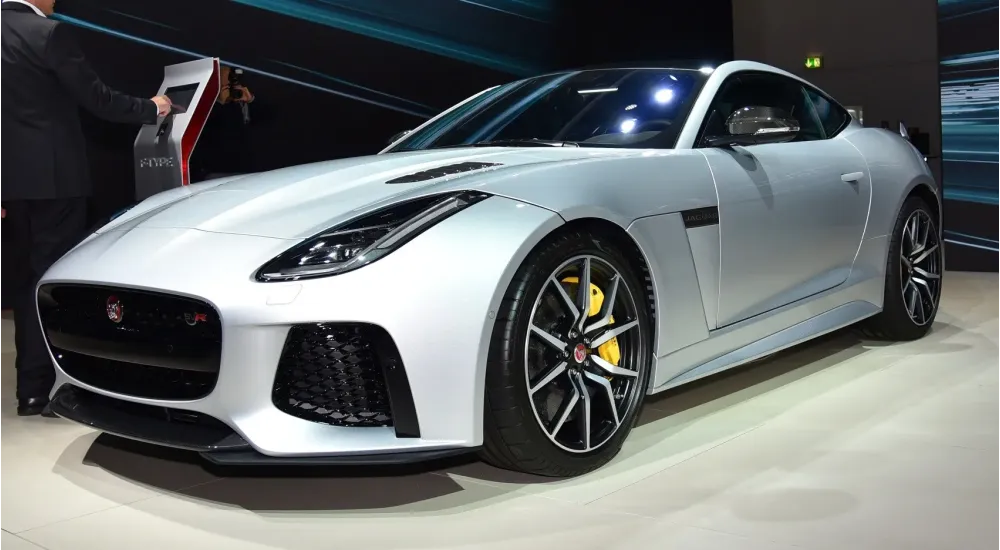
Click on image to view the full photo gallery
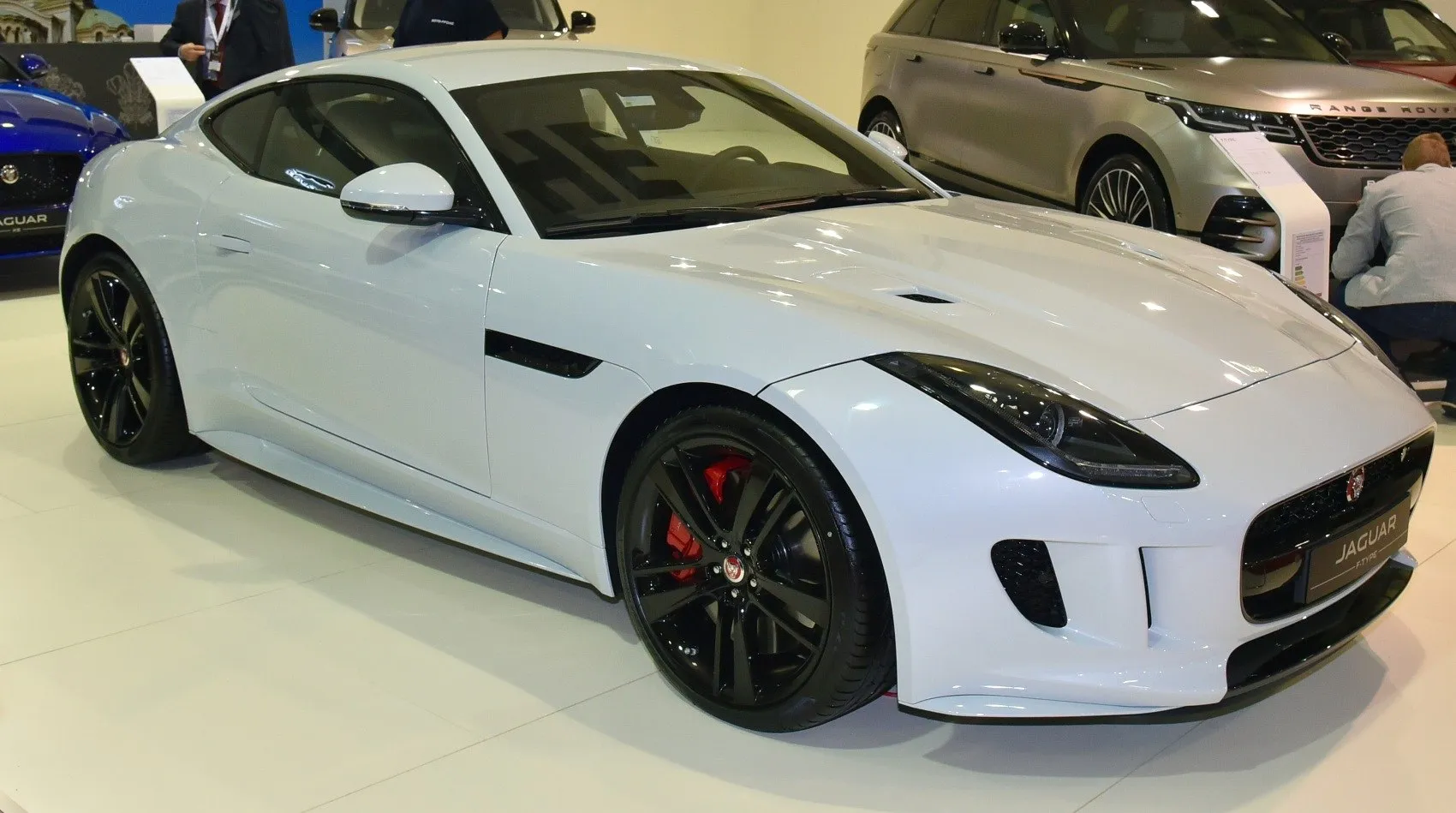
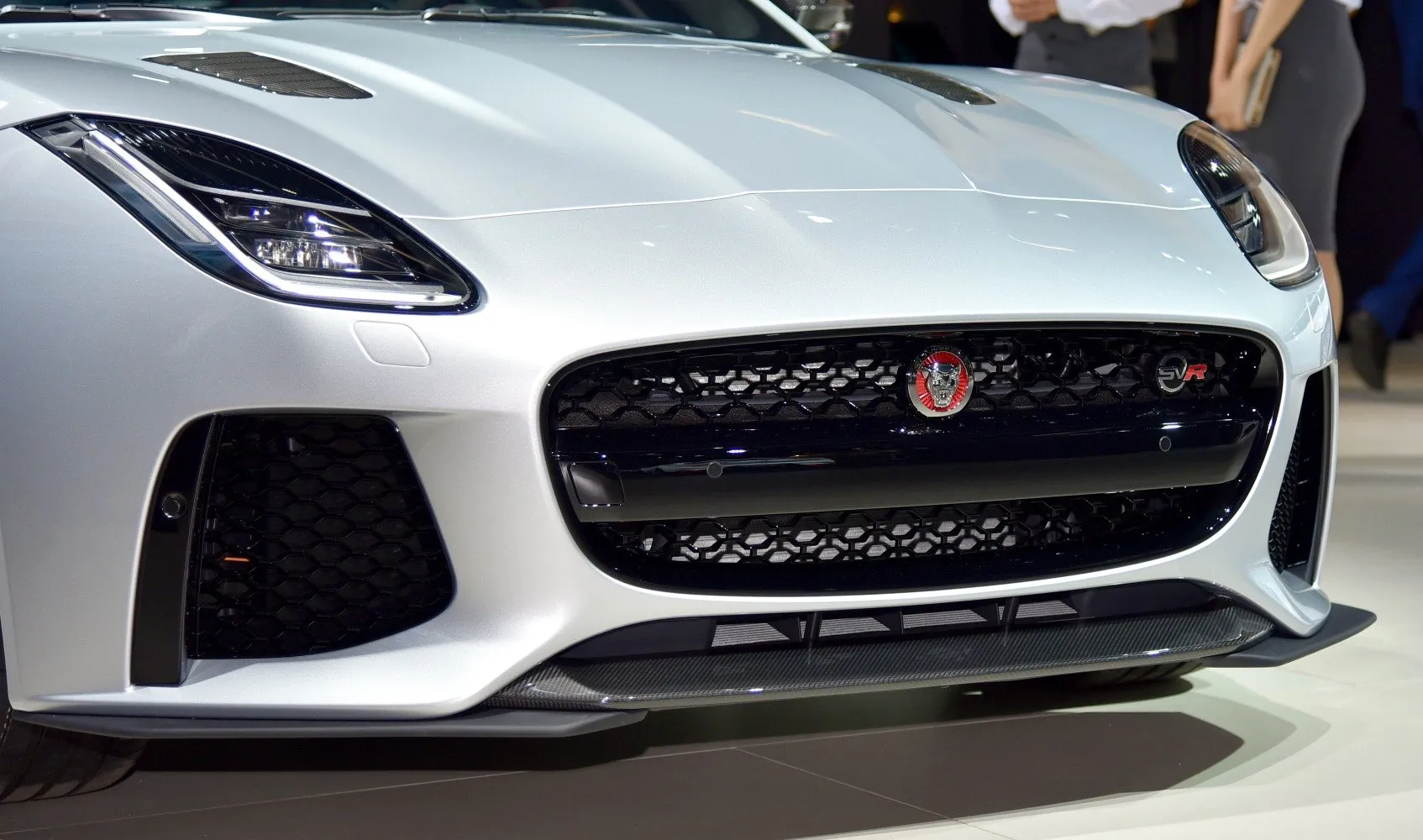
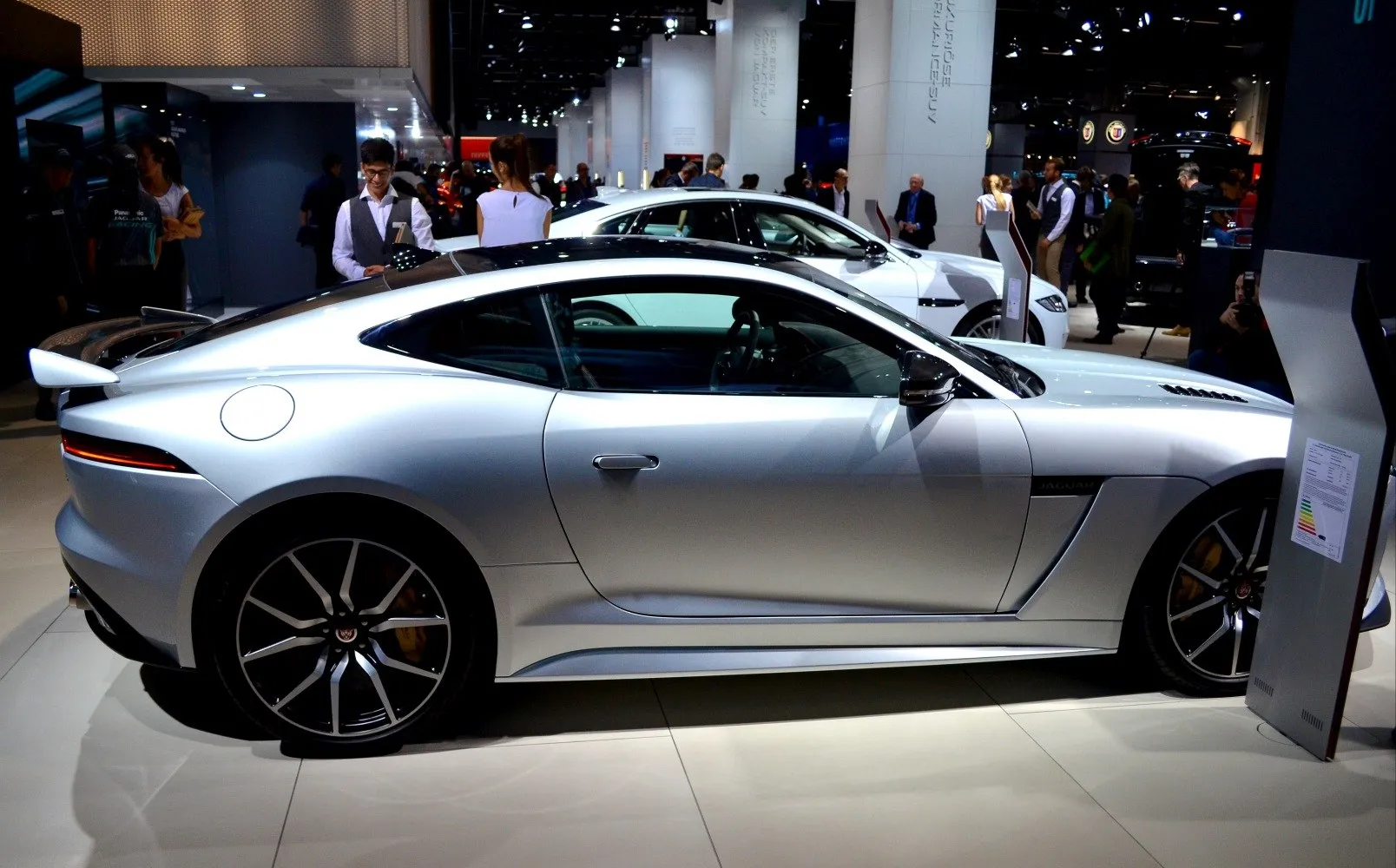
Jaguar F-type Coupe (facelift 2017) P340 V6 (340 Hp)
Overall Rating
Jaguar F-type:
The Jaguar F-Type is a series of two-door, two-seater sports cars manufactured by British car manufacturer Jaguar Land Rover under their Jaguar Cars marque from 2013 to 2024. The car's JLR D6a platform is based on a shortened version of the XK's platform. It is the so-called "spiritual successor" to the E-Type.
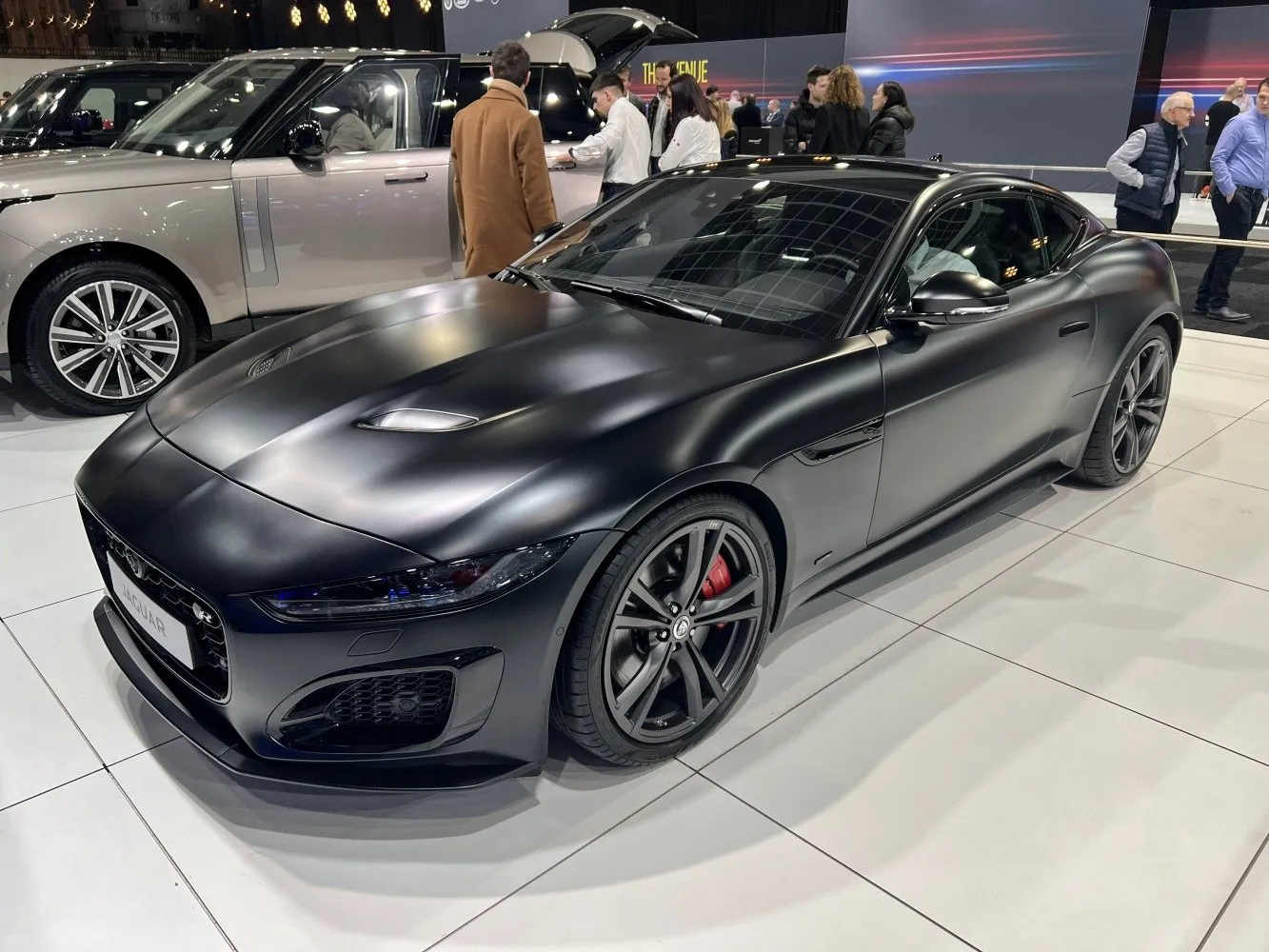
The car was launched initially as a 2-door soft-top convertible, with a 2-door fastback coupé version launched in 2013. The F-Type underwent a facelift for the 2021 model year. It was unveiled in December 2019, featuring a significantly restyled front end and dashboard, and simplified drivetrain options. Jaguar announced that the F-Type will be discontinued after the 2024 model year. Production ended in June 2024, by which time 87,731 examples had been built....(Read more on Wikipedia)
Coupe (facelift 2017) Overview:
Jaguar F-type (Coupe (facelift 2017)). With 450 Nm of torque, it offers ample pulling power. With a weight of 1492 kg, it falls in the mid‑range. Rear‑wheel drive offers dynamic handling and sporty feedback. Acceleration is excellent (0–100 km/h in 5.7 s). The top speed reaches 260 km/h. A two-door car with a fixed roof, known for its sporty design and dynamic performance. Seating for 2 makes it ideal for daily use.
P340 V6 (340 Hp) Verdict:

Performance Verdict
Offers adequate power for an entry-level sports car, but it's not the most thrilling option in the range.
Fuel Economy
Fuel efficiency is on the lower side for its power output, making it less economical than some other V6s.
Pros and Cons:
Pros:
- • Stunning and timeless design aesthetic
- • Wide range of powerful and characterful engines (V6, V8)
- • Engaging and dynamic driving experience
- • Luxurious and well-appointed interior for a sports car
- • Distinctive and exhilarating exhaust notes, especially from V8s
- • Available AWD for enhanced traction and all-weather capability
Cons:
- • Limited practicality with only two seats and modest trunk space
- • Firm ride quality, especially on R and SVR models
- • Higher fuel consumption for V8 and some V6 models
- • Historically, Jaguar reliability can be a concern for some buyers
- • Lack of an official Euro NCAP safety rating
- • Potentially high running and maintenance costs
Specifications:
Specifications are compared to those of the previous generation(Convertible (facelift 2017): 2017 - 2018).
| General: | |
|---|---|
| Brand: | Jaguar |
| Model: | F-type |
| Generation: | Coupe (facelift 2017) |
| Modification (Engine): | P340 V6 (340 Hp) |
| Start of production: | 2019 |
| End of production: | 2020 |
| Powertrain Architecture: | Internal Combustion engine |
| Body type: | Coupe |
| Seats: | 2 |
| Doors: | 2 |
| Engine: | |
|---|---|
| Power: | 340 Hp @ 6500 rpm. |
| Power per litre: | 113.5 Hp/l |
| Torque: | 450 Nm @ 3500-5000 rpm. |
| Engine Model/Code: | 306PS [Same engine] More details about the engine 306PS |
| Engine displacement: | 2995 |
| Number of cylinders: | 6 |
| Engine configuration: | Inline |
| Number of valves per cylinder: | 4 |
| Fuel injection system: | Direct injection |
| Engine aspiration: | Supercharger, Intercooler |
| Engine oil capacity: | 7.25 l |
| Coolant: | 9.6 l |
| Engine layout: | Front, Longitudinal |
| Cylinder Bore: | 84.5 mm |
| Piston Stroke: | 89 mm |
| Compression ratio: | 10.5:1 |
| Performance: | |
|---|---|
| Fuel Type: | Petrol (Gasoline) |
| Fuel consumption (economy) - urban: | 14 l/100 km |
| Fuel consumption (economy) - extra urban: | 8.1 l/100 km |
| Fuel consumption (economy) - combined: | 10.3 l/100 km |
| Emission standard: | Euro 6d-Temp |
| Acceleration 0 - 100 km/h: | 5.7 sec |
| Acceleration 0 - 62 mph: | 5.7 sec |
| Maximum speed: | 260 km/h |
| Weight-to-power ratio: | 4.4 kg/Hp, 227.9 Hp/tonne |
| Weight-to-torque ratio: | 3.3 kg/Nm, 301.6 Nm/tonne |
| Acceleration 0 - 60 mph: | 5.4 sec |
| Space: | |
|---|---|
| Kerb Weight: | 1492 |
| Max. weight: | 2000 |
| Max load: | 508 |
| Trunk (boot) space - maximum: | 408 l |
| Trunk (boot) space - minimum: | 310 l |
| Fuel tank capacity: | 70 l |
| Size: | |
|---|---|
| Length: | 4482 mm [Same length.] |
| Width: | 1923 mm [Same width.] |
| Height: | 1311 mm [3mm more] |
| Wheelbase: | 2622 mm [Same wheelbase.] |
| Width including mirrors: | 2042 mm |
| Front track: | 1597 mm |
| Rear (Back) track: | 1649 mm |
| Ride height (ground clearance): | 100 mm |
| Minimum turning circle (turning diameter): | 11.2 m [above average] |
| Powertrain: | |
|---|---|
| Drivetrain Architecture | The Internal combustion engine (ICE) drives the rear wheels of the vehicle. |
| Drive wheel | Rear wheel drive |
| Number of gears | 6 |
| Transmission type | Manual |
| Front brakes | Disc, 355 mm [above average] |
| Rear brakes | Disc, 325 mm [above average] |
| Assisting systems | ABS (Anti-lock braking system) |
| Tires size | 245/45 R18; 275/40 R18; 245/40 R19; 275/35 R19; 255/35 R20; 295/30 R20 |
| Wheel rims size | 8.5J x 18; 9.5J x 18; 8.5J x 19; 9.0J x 19; 9.0J x 20; 10.5J x 20 |









The hidden gems or the annoying flaws? Expose the truth about the Jaguar F-type!