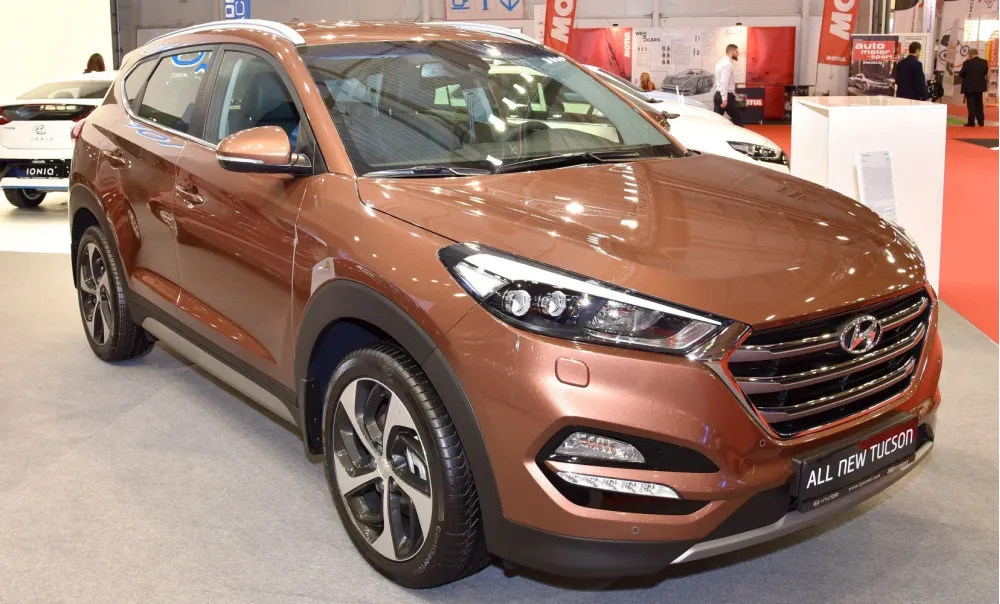
Click on image to view the full photo gallery
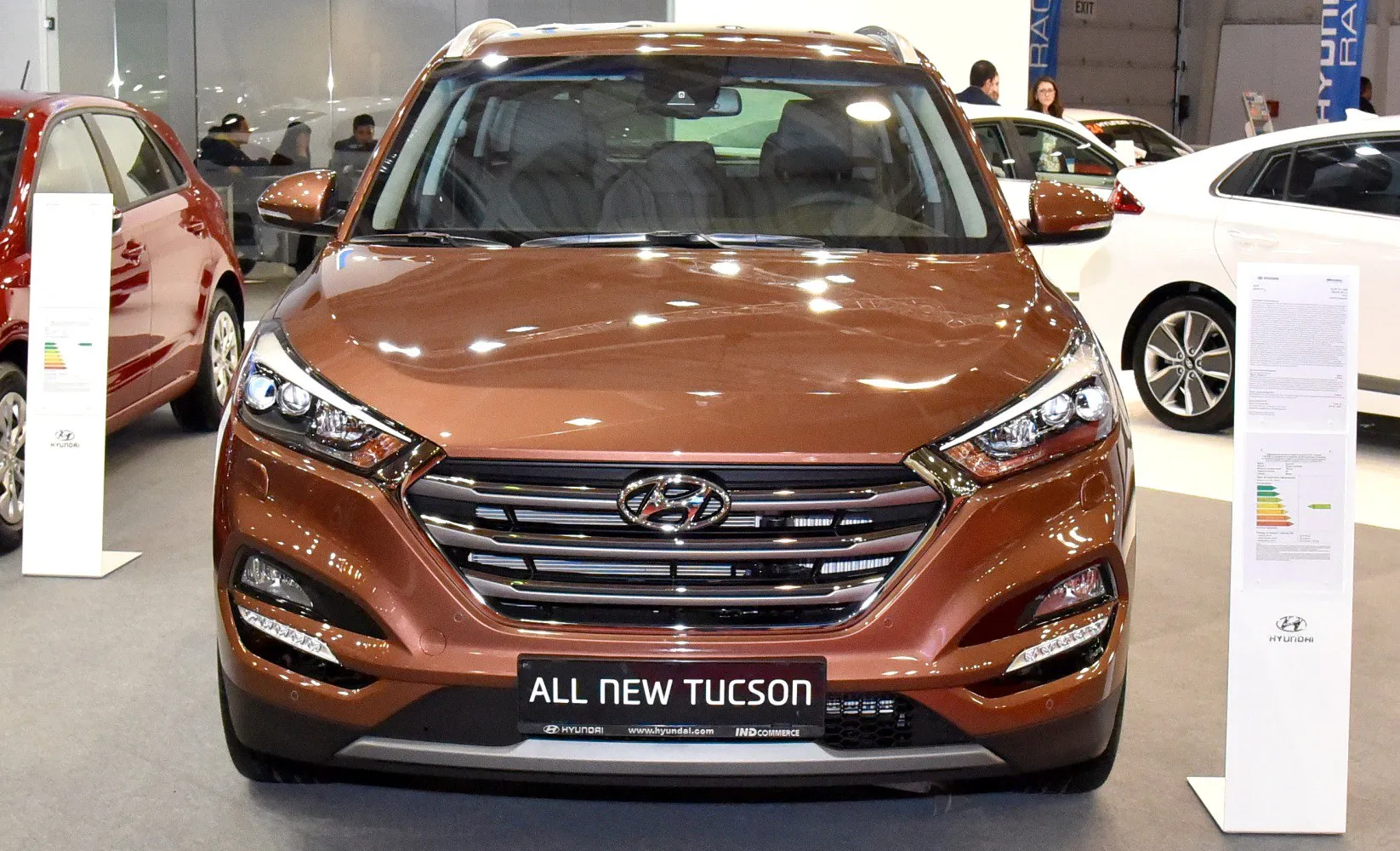
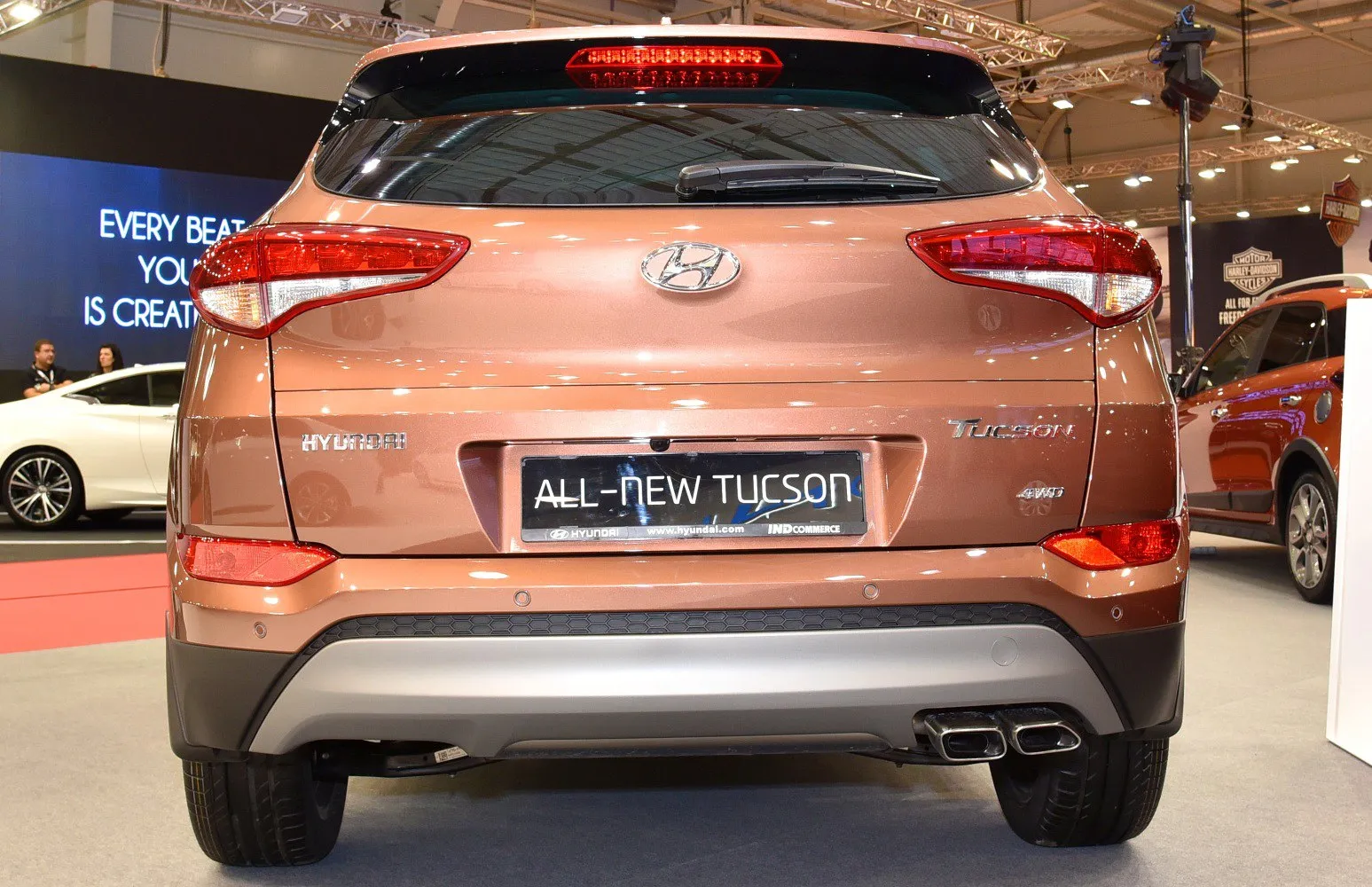
Hyundai Tucson III 2.0 CRDI (185 Hp) 4WD Automatic
Overall Rating
Hyundai Tucson:
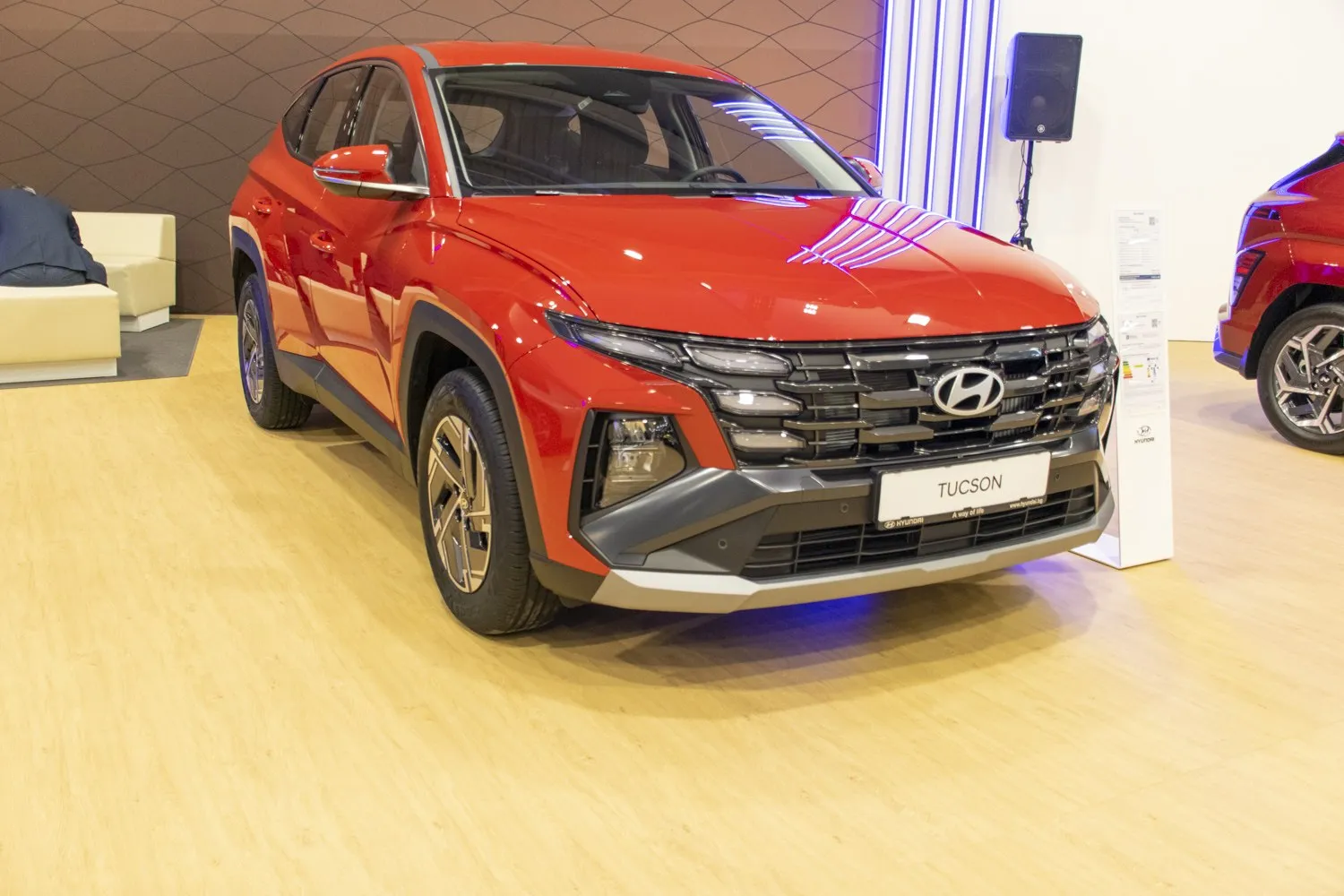
The Hyundai Tucson is a compact crossover SUV produced by the South Korean manufacturer Hyundai. It is named after the city of Tucson, Arizona, U. S.
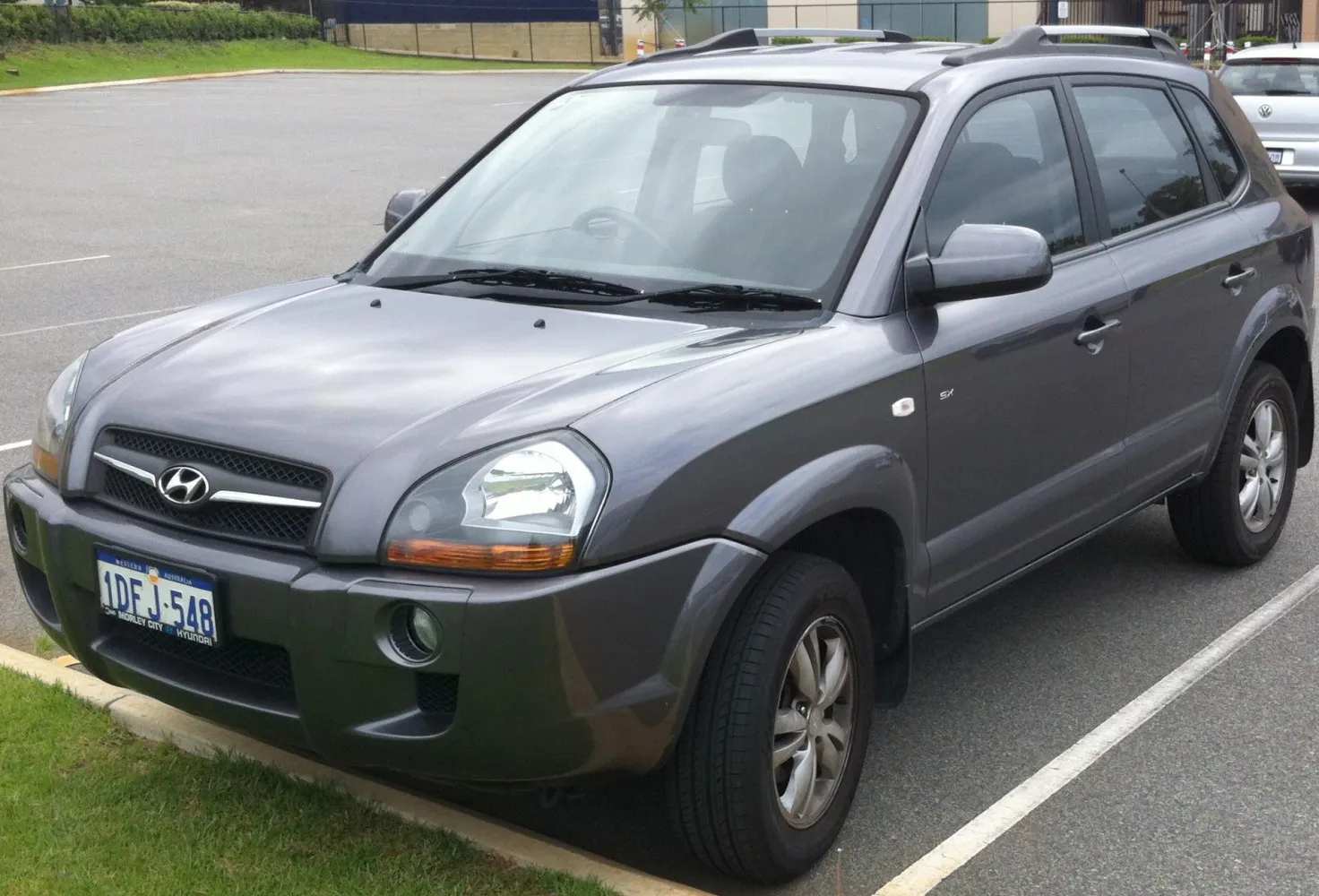
The second-generation model was marketed as the Hyundai ix35 in several markets, including Europe, Australia and China, before reverting to Tucson for the third-generation. Since its first-generation, the Tucson has been developed alongside the Kia Sportage, sharing platforms and engines.
The Tucson is the best-selling Hyundai model, with more than 7 million units sold globally since it launched in 2004. Of these, 1. 4 million units have been sold in Europe....(Read more on Wikipedia)
III Overview:
Hyundai Tucson (III). With 400 Nm of torque, it offers ample pulling power. It has moderate fuel consumption (~8 l/100km). With a weight of 1615 kg, it falls in the mid‑range. All‑wheel drive provides excellent grip, ideal for off‑road use. Acceleration is relatively slow (0–100 km/h in 9.5 s). The top speed reaches 201 km/h. A sport utility vehicle offering higher ground clearance and versatile cargo space. Seating for 5 makes it ideal for daily use.
The Hyundai Tucson III achieved an excellent 5-star Euro NCAP rating in 2015, demonstrating strong performance in adult and child occupant protection, making it a safe choice for families.
2.0 CRDI (185 Hp) 4WD Automatic Verdict:

Performance Verdict
Combines the robust power of the 185 Hp diesel with the smooth operation of an automatic, providing effortless performance.
Fuel Economy
Good fuel economy for a powerful automatic 4WD diesel, making it a strong all-rounder for performance and efficiency.
Pros and Cons:
Pros:
- • Stylish and modern exterior design
- • Comfortable and spacious interior with good ergonomics
- • Wide range of efficient and capable engines (especially diesels)
- • Excellent Euro NCAP safety rating
- • Good ride quality and handling balance
- • Generous standard equipment levels
Cons:
- • Some petrol engines can be thirsty, especially with AWD
- • Base petrol engines can feel underpowered on highways
- • Infotainment system can feel dated compared to newer rivals
- • Rear visibility can be somewhat restricted
- • Higher trims can get expensive
Specifications:
Specifications are compared to those of the previous generation(II: 2009 - 2013).
| General: | |
|---|---|
| Brand: | Hyundai |
| Model: | Tucson |
| Generation: | III |
| Modification (Engine): | 2.0 CRDI (185 Hp) 4WD Automatic |
| Start of production: | 2015 |
| End of production: | 2018 |
| Powertrain Architecture: | Internal Combustion engine |
| Body type: | SUV |
| Seats: | 5 |
| Doors: | 5 |
| Engine: | |
|---|---|
| Engine systems: | Particulate filter |
| Power: | 185 Hp @ 4000 rpm. Same horsepower |
| Power per litre: | 92.7 Hp/l [76mm more] |
| Torque: | 400 Nm @ 1750-2750 rpm. |
| Engine Model/Code: | D4HA More details about the engine D4HA |
| Engine displacement: | 1995 |
| Number of cylinders: | 4 |
| Engine configuration: | Inline |
| Number of valves per cylinder: | 4 |
| Fuel injection system: | Diesel Commonrail |
| Engine aspiration: | Turbocharger, Intercooler |
| Valvetrain: | DOHC |
| Engine oil capacity: | 7.6 l |
| Coolant: | 8.8 l |
| Engine layout: | Front, Transverse |
| Cylinder Bore: | 84 mm |
| Piston Stroke: | 90 mm |
| Compression ratio: | 16:1 |
| Performance: | |
|---|---|
| Fuel Type: | Diesel |
| Fuel consumption (economy) - urban: | 8 l/100 km |
| Fuel consumption (economy) - extra urban: | 5.6 l/100 km |
| Fuel consumption (economy) - combined: | 6.5 l/100 km |
| Emission standard: | Euro 6 |
| Acceleration 0 - 100 km/h: | 9.5 sec |
| Acceleration 0 - 62 mph: | 9.5 sec |
| Maximum speed: | 201 km/h |
| Weight-to-power ratio: | 8.7 kg/Hp, 114.6 Hp/tonne |
| Weight-to-torque ratio: | 4 kg/Nm, 247.7 Nm/tonne |
| Acceleration 0 - 60 mph: | 9 sec |
| Space: | |
|---|---|
| Kerb Weight: | 1615 |
| Max. weight: | 2250 |
| Max. roof load: | 100 kg |
| Max load: | 635 |
| Trunk (boot) space - maximum: | 1503 l |
| Trunk (boot) space - minimum: | 513 l |
| Permitted trailer load with brakes (12%): | 1900 kg |
| Fuel tank capacity: | 62 l |
| Permitted trailer load without brakes: | 750 kg |
| Size: | |
|---|---|
| Length: | 4475 mm [76mm more] |
| Width: | 1850 mm [29mm more] |
| Height: | 1655 mm [1mm less] |
| Wheelbase: | 2670 mm [31mm more] |
| Front track: | 1604-1608 mm |
| Rear (Back) track: | 1615-1620 mm |
| Ride height (ground clearance): | 172 mm |
| Minimum turning circle (turning diameter): | 10.6 m [above average] |
| Powertrain: | |
|---|---|
| Drive wheel | All wheel drive (4x4) |
| Number of gears | 6 |
| Transmission type | Automatic |
| Front brakes | Ventilated discs [Best for performance and cooling.] |
| Rear brakes | Disc [above average] |
| Assisting systems | ABS (Anti-lock braking system) |
| Steering type | Steering rack and pinion |
| Tires size | 215/70 R16; 225/60 R17; 245/45 R19 |
| Wheel rims size | 6.5J x 16; 7.0J x 17; 7.5J x 19 |
| Front suspension | Independent type McPherson |
| Rear suspension | Independent multi-link suspension |







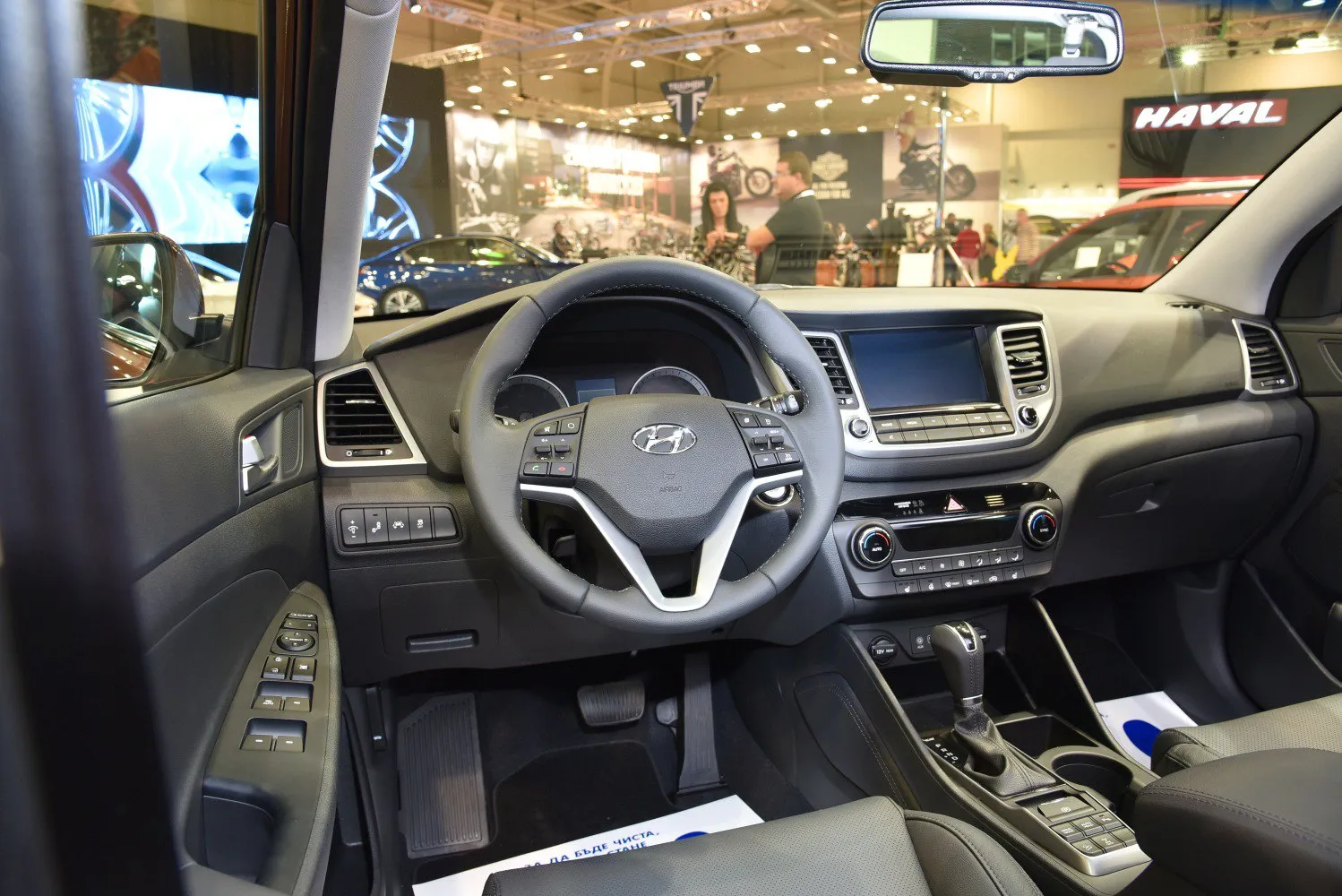
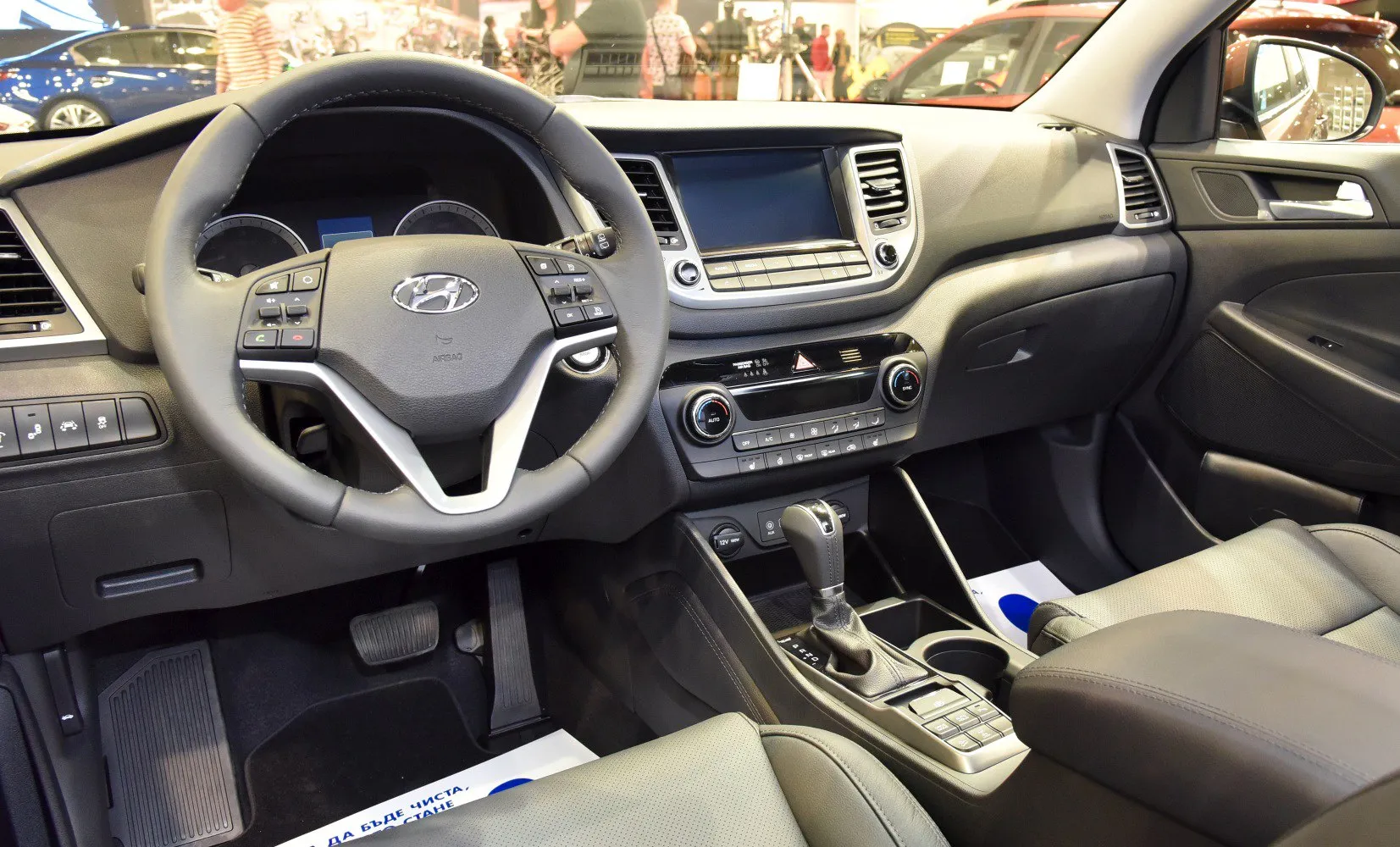
Behind the wheel of the Hyundai Tucson. How does it handle on the road?