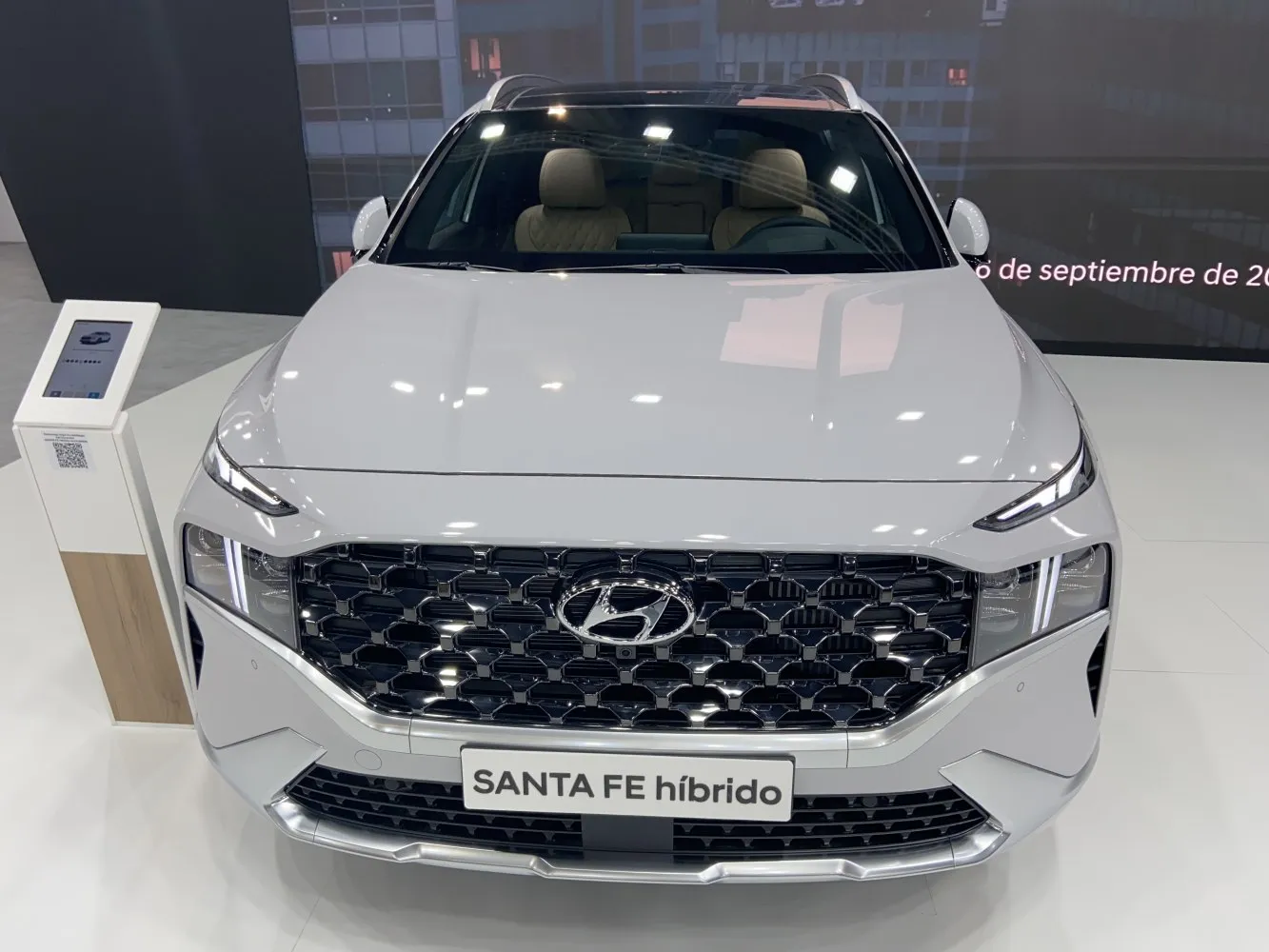
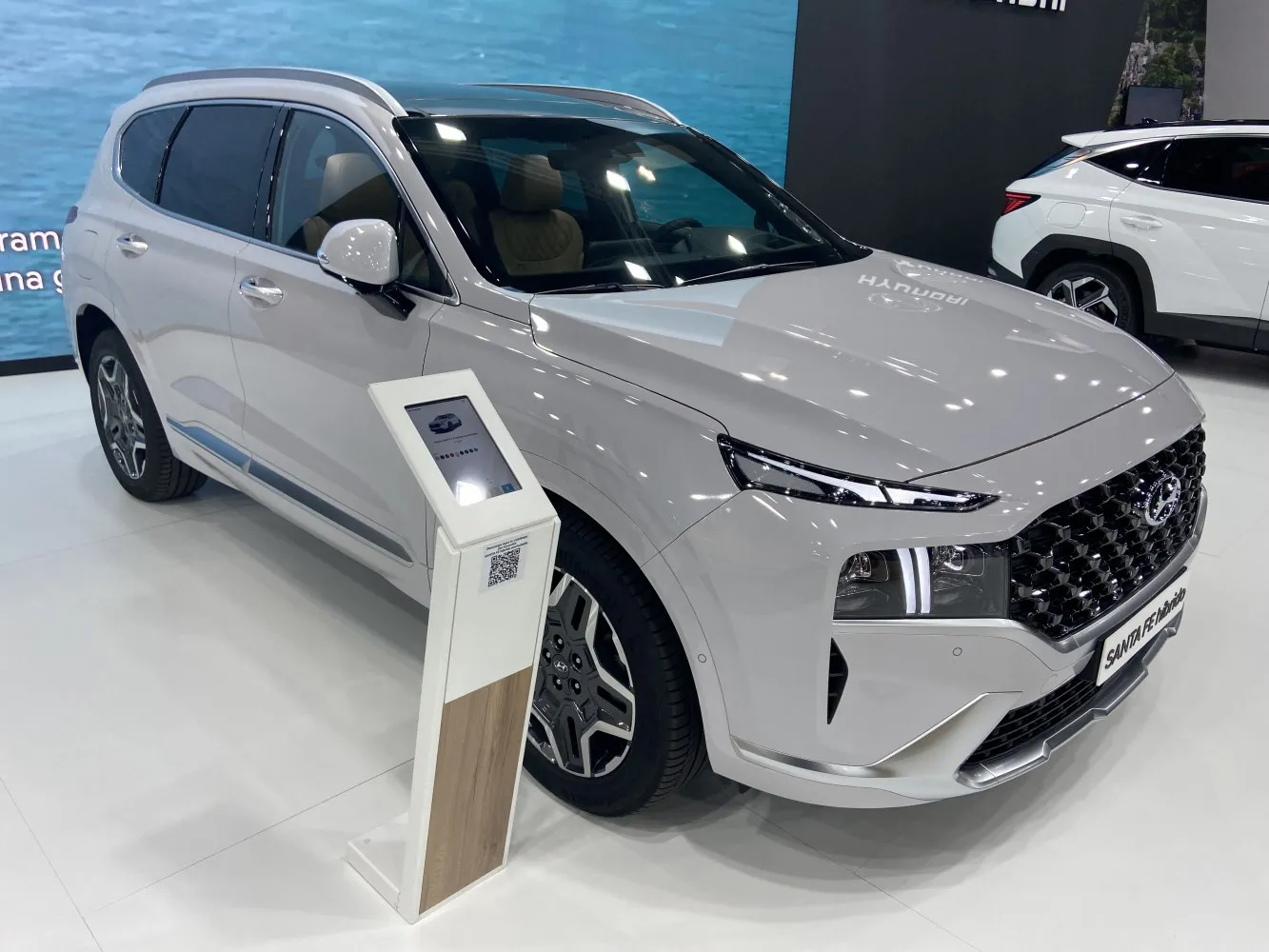
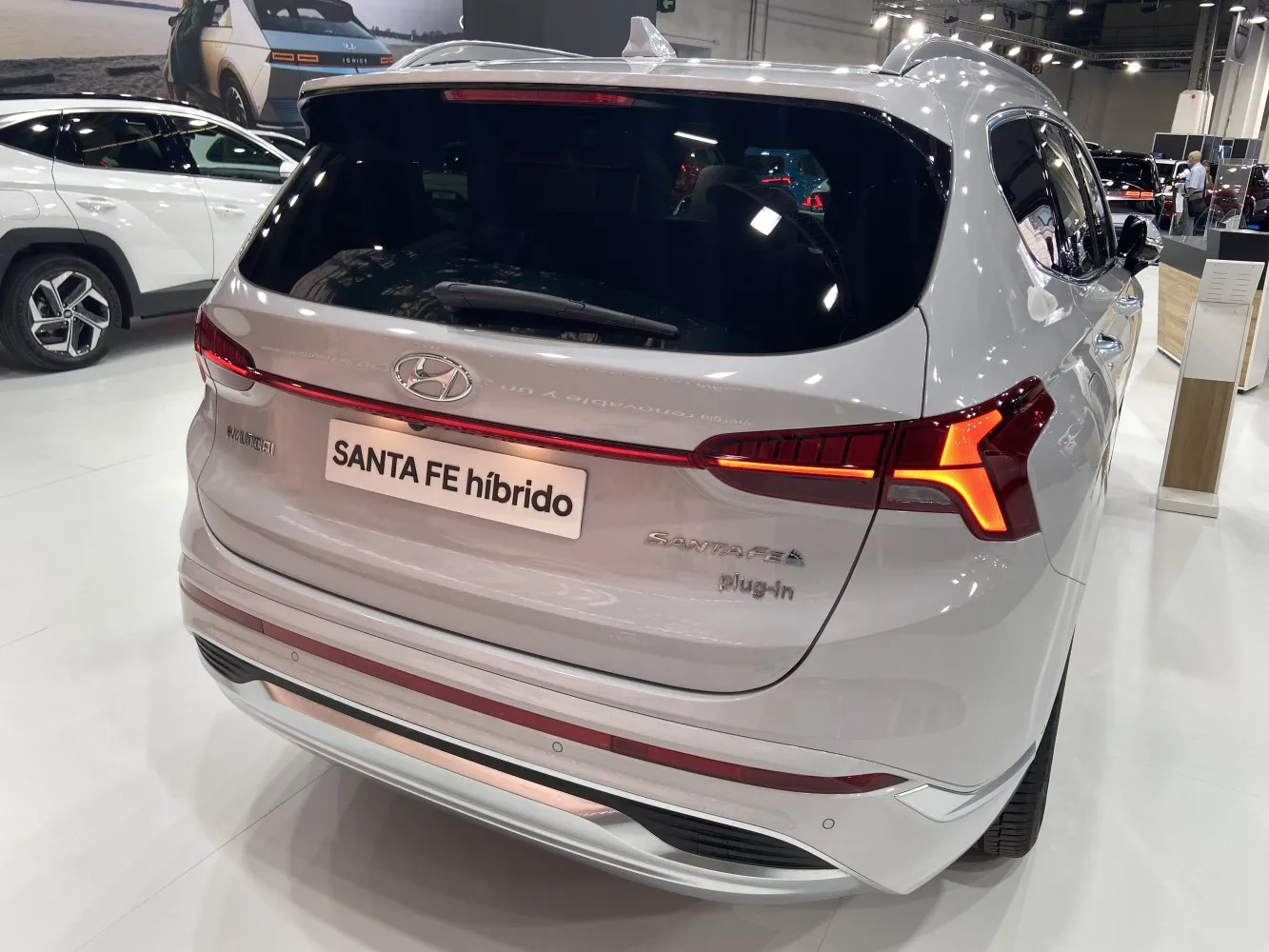
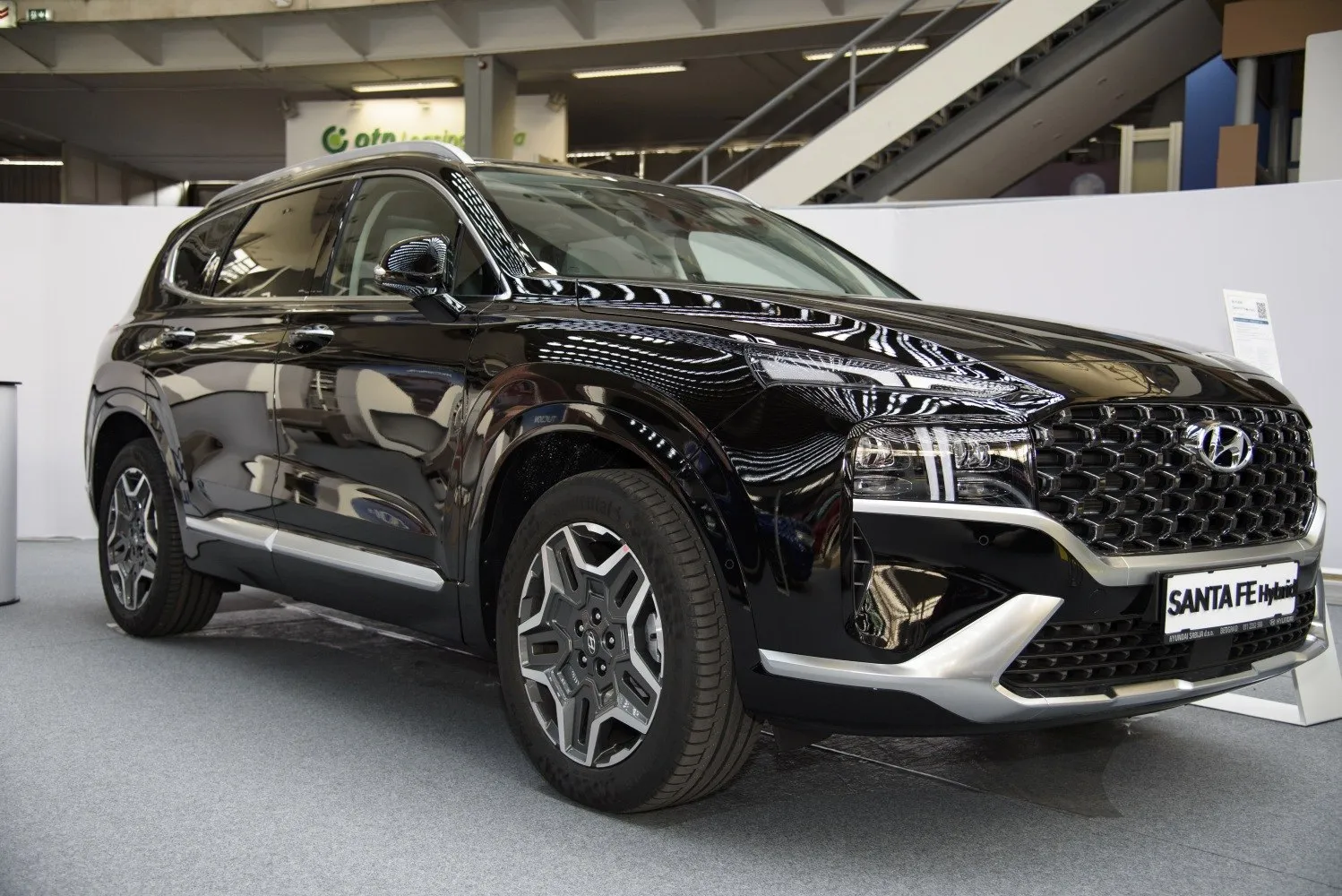
Hyundai Santa Fe IV (TM, facelift 2020) 1.6 T-GDI (230 Hp) Hybrid 4WD Automatic 7 Seat
People\'s Opinion
N/A / 5
Hyundai Santa Fe:
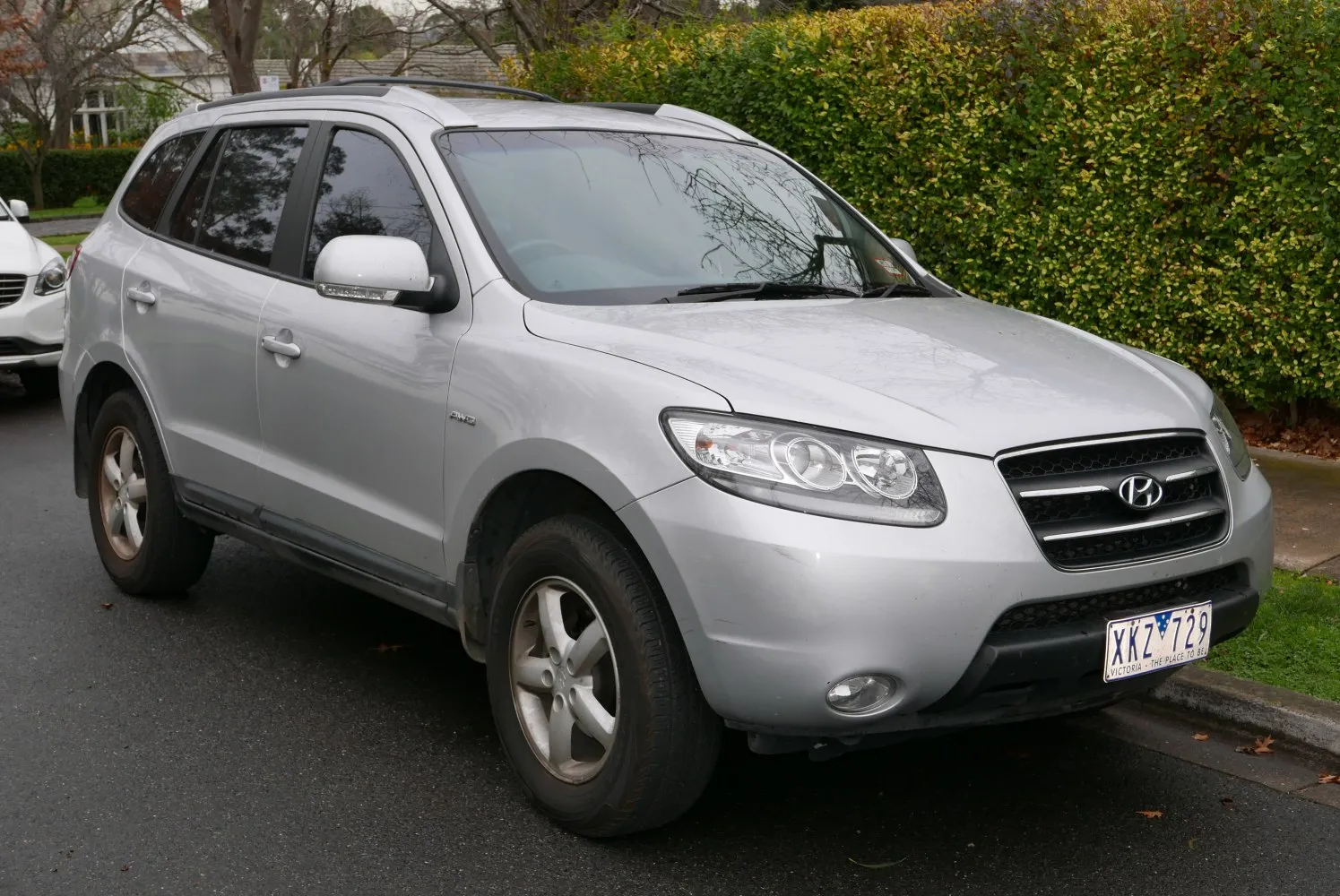
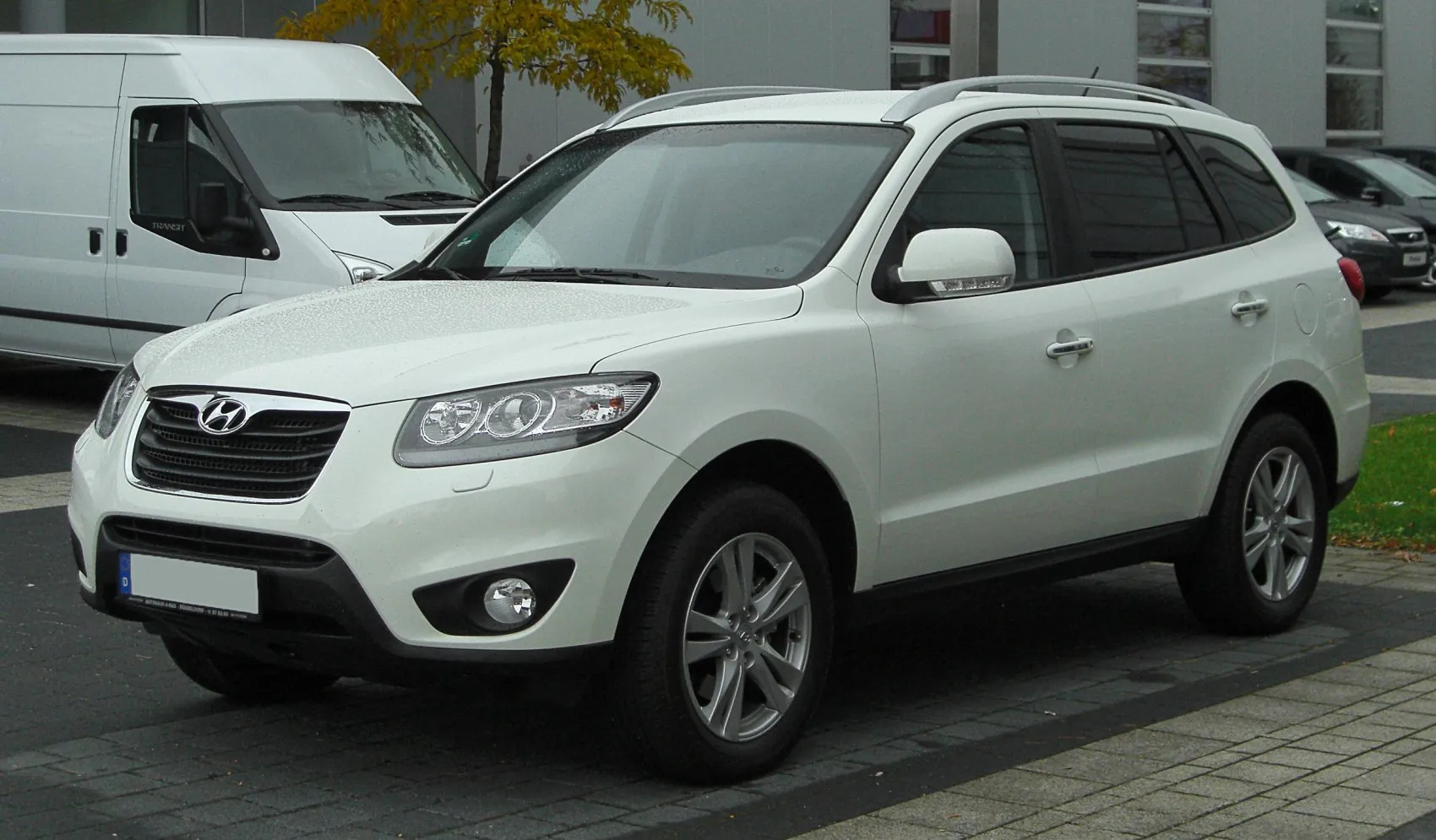
The Hyundai Santa Fe is a series of crossover SUVs produced across five generations by the South Korean manufacturer Hyundai since 2000. It is named after the city of Santa Fe, New Mexico, and was introduced for the 2001 model year as Hyundai's first SUV. The Santa Fe was a milestone in the company's restructuring program of the late 1990s because the SUV was a hit with American buyers.
The Santa Fe was initially marketed as a compact crossover SUV in its first-generation. After the Tucson was introduced in 2004, marketed under that same class, the Santa Fe was later repositioned into the mid-size crossover SUV class since its second-generation launched in 2005. Through all generations, the Santa Fe has been offered in either front-wheel drive or all-wheel drive....(Read more on Wikipedia)
IV (TM, facelift 2020) Overview:
Hyundai Santa Fe (IV (TM, facelift 2020)). With 265 Nm of torque, it offers ample pulling power. It has moderate fuel consumption (~6.2 l/100km). With a weight of 1911 kg, it falls in the mid‑range. All‑wheel drive provides excellent grip, ideal for off‑road use. Acceleration is relatively slow (0–100 km/h in 9.1 s). The top speed reaches 187 km/h. A sport utility vehicle offering higher ground clearance and versatile cargo space. With seating for 7, it’s perfect for larger families.
Performance Verdict
A highly versatile powertrain, offering a great balance of power, efficiency, and all-weather capability for a 7-seater.
Fuel Economy
Very good fuel economy for an AWD 7-seat hybrid, making it a strong contender for families needing both space and efficiency.
Best Use Case:
Families requiring 7 seats, AWD capability, and excellent fuel economy for a wide range of driving conditions.
Pros and Cons:
Pros:
- • Spacious and comfortable interior, especially for long journeys
- • Diverse and efficient powertrain options, including strong hybrids and diesels
- • Extensive suite of advanced safety features and driver assistance systems
- • Modern infotainment system with large screens and connectivity options
- • Refined ride quality and good noise insulation
Cons:
- • Some lower trims might feel less premium in interior materials
- • Third-row seating can be cramped for adults on longer trips
- • V6 petrol engine options can be thirsty compared to hybrids
- • DCT gearbox can sometimes be hesitant at low speeds (on specific trims)
- • Exterior styling, while refreshed, might not appeal to everyone
Specifications:
Specifications are compared to those of the previous generation(IV (TM, facelift 2020): March, 2021 - August, 2023).
| General: |
| Brand: | Hyundai |
|---|
| Model: | Santa Fe |
|---|
| Generation: | IV (TM, facelift 2020) |
|---|
| Modification (Engine): | 1.6 T-GDI (230 Hp) Hybrid 4WD Automatic 7 Seat |
|---|
| Start of production: | November, 2020 |
|---|
| End of production: | August, 2023 |
|---|
| Powertrain Architecture: | FHEV (Full Hybrid Electric Vehicle) |
|---|
| Body type: | SUV |
|---|
| Seats: | 7 |
|---|
| Doors: | 5 |
|---|
| Engine: |
| Engine systems: | Start & Stop System |
|---|
| Power: | 180 Hp @ 5500 rpm. |
|---|
| Power per litre: | 112.6 Hp/l |
|---|
| Torque: | 265 Nm @ 1500-4500 rpm. |
|---|
| Engine Model/Code: | Smartstream / G4FP [Same engine] More details about the engine Smartstream / G4FP |
|---|
| Engine displacement: | 1598 |
|---|
| Number of cylinders: | 4 |
|---|
| Engine configuration: | Inline |
|---|
| Number of valves per cylinder: | 4 |
|---|
| Fuel injection system: | Direct injection |
|---|
| Engine aspiration: | Turbocharger, Intercooler |
|---|
| Engine oil capacity: | 4.8 l |
|---|
| Coolant: | 4.69 l |
|---|
| Engine layout: | Front, Transverse |
|---|
| Cylinder Bore: | 75.6 mm mm |
|---|
| Piston Stroke: | 89 mm mm |
|---|
| Performance: |
| Fuel Type: | Petrol (Gasoline) |
|---|
| Fuel consumption (economy) - urban: | 6.2 l/100 km |
|---|
| Fuel consumption (economy) - extra urban: | 6 l/100 km |
|---|
| Combined fuel consumption (WLTP): | 7.6 l/100 km |
|---|
| Fuel consumption (economy) - urban (NEDC, WLTP equivalent): | 6.2 l/100 km |
|---|
| Fuel consumption (economy) - extra urban (NEDC, WLTP equivalent): | 6 l/100 km |
|---|
| Fuel consumption (economy) - combined (NEDC, WLTP equivalent): | 6.1 l/100 km |
|---|
| Fuel consumption (economy) - combined: | 6.1 l/100 km |
|---|
| Emission standard: | Euro 6d |
|---|
| Acceleration 0 - 100 km/h: | 9.1 sec |
|---|
| Acceleration 0 - 62 mph: | 9.1 sec |
|---|
| Maximum speed: | 187 km/h |
|---|
| Weight-to-power ratio: | 8 kg/Hp, 124.9 Hp/tonne |
|---|
| Weight-to-torque ratio: | 5.3 kg/Nm, 190 Nm/tonne |
|---|
| Acceleration 0 - 60 mph: | 8.6 sec |
|---|
| Space: |
| Kerb Weight: | 1842-1980 |
|---|
| Max. weight: | 2630 |
|---|
| Max. roof load: | 100 kg |
|---|
| Max load: | 650-788 |
|---|
| Trunk (boot) space - maximum: | 1649 l |
|---|
| Trunk (boot) space - minimum: | 571-782 l |
|---|
| Permitted trailer load with brakes (12%): | 1650 kg |
|---|
| Fuel tank capacity: | 67 l |
|---|
| Permitted trailer load without brakes: | 750 kg |
|---|
| Permitted towbar download: | 100 kg |
|---|
| Size: |
| Length: | 4785 mm mm [Same length.] |
|---|
| Width: | 1900 mm mm [Same width.] |
|---|
| Height: | 1685 mm mm [Same height.] |
|---|
| Wheelbase: | 2765 mm mm [Same wheelbase.] |
|---|
| Front track: | 1646 mm |
|---|
| Rear (Back) track: | 1656 mm |
|---|
| Ride height (ground clearance): | 176 mm |
|---|
| Powertrain: |
| Drivetrain Architecture | The Internal combustion engine (ICE) and the electric motor permanently drive the front wheels of the vehicle, capable of running in full electric or mixed mode, and if necessary through the electrically or mechanically controlled clutch, the rear wheels |
|---|
| Drive wheel | All wheel drive (4x4) |
|---|
| Number of gears | 6 |
|---|
| Transmission type | Automatic |
|---|
| Front brakes | Ventilated discs [Best for performance and cooling.] |
|---|
| Rear brakes | Disc |
|---|
| Assisting systems | ABS (Anti-lock braking system) |
|---|
| Steering type | Steering rack and pinion |
|---|
| Power steering | Electric Steering |
|---|
| Tires size | 235/55 R19 |
|---|
| Wheel rims size | 7.5J x 19 |
|---|
| Electric: |
| Gross battery capacity: | 1.49 kWh |
|---|
| Battery technology: | Lithium-polymer (LiPo) |
|---|
| System power: | 230 Hp |
|---|
| System torque: | 350 Nm |
|---|
| Electric motor power: | 60 Hp |
|---|
| Electric motor Torque: | 264 Nm |
|---|
| Electric motor type: | Synchronous |
|---|








Driven it? Loved it? Hated it? Share your honest review!