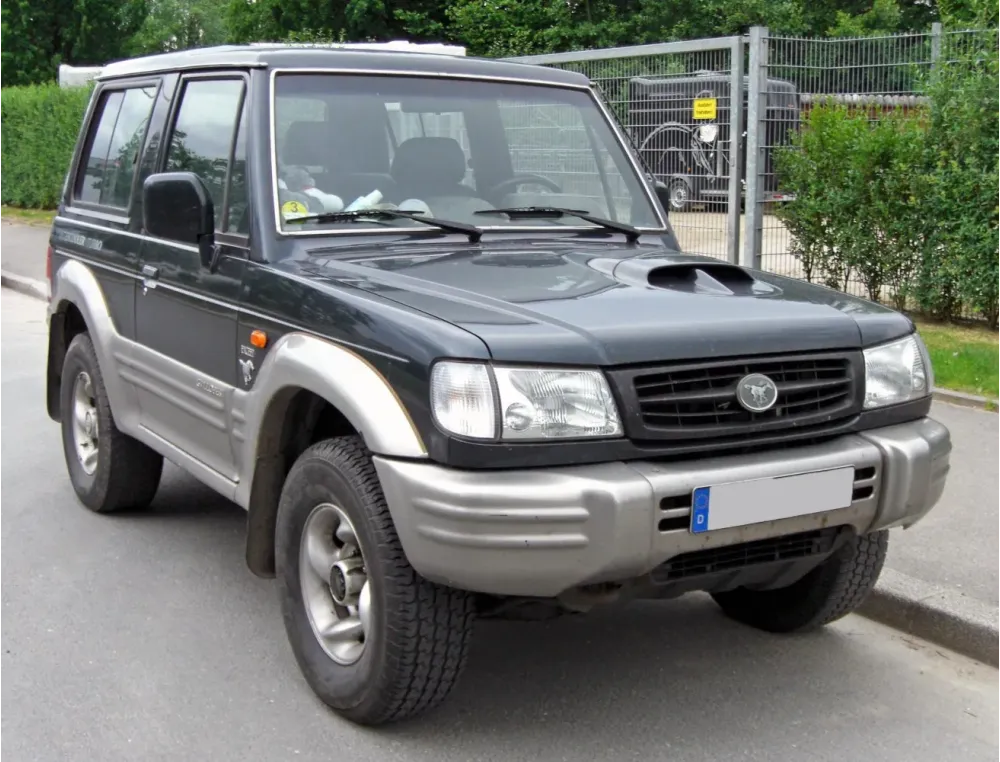
Click on image to view the full photo gallery
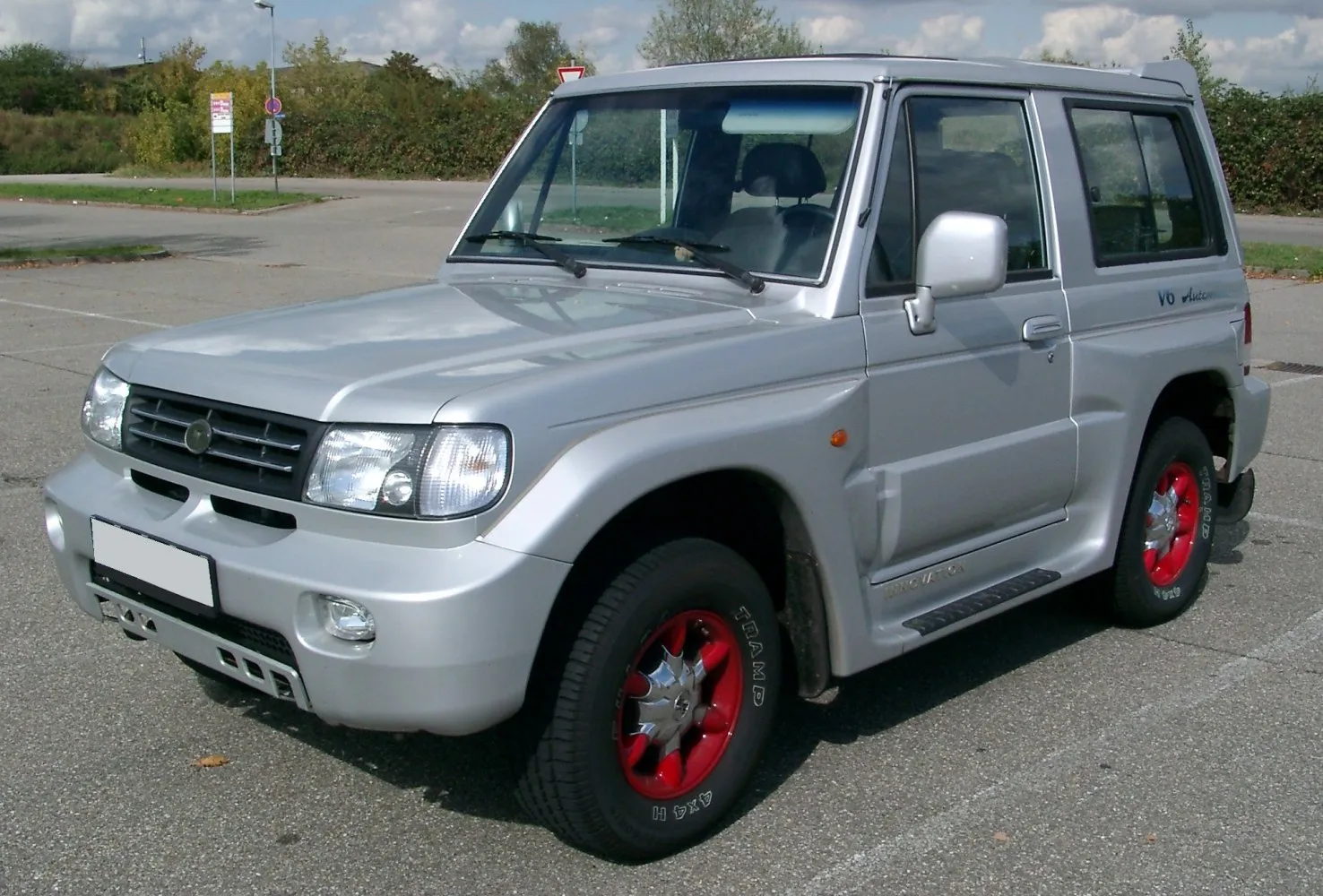
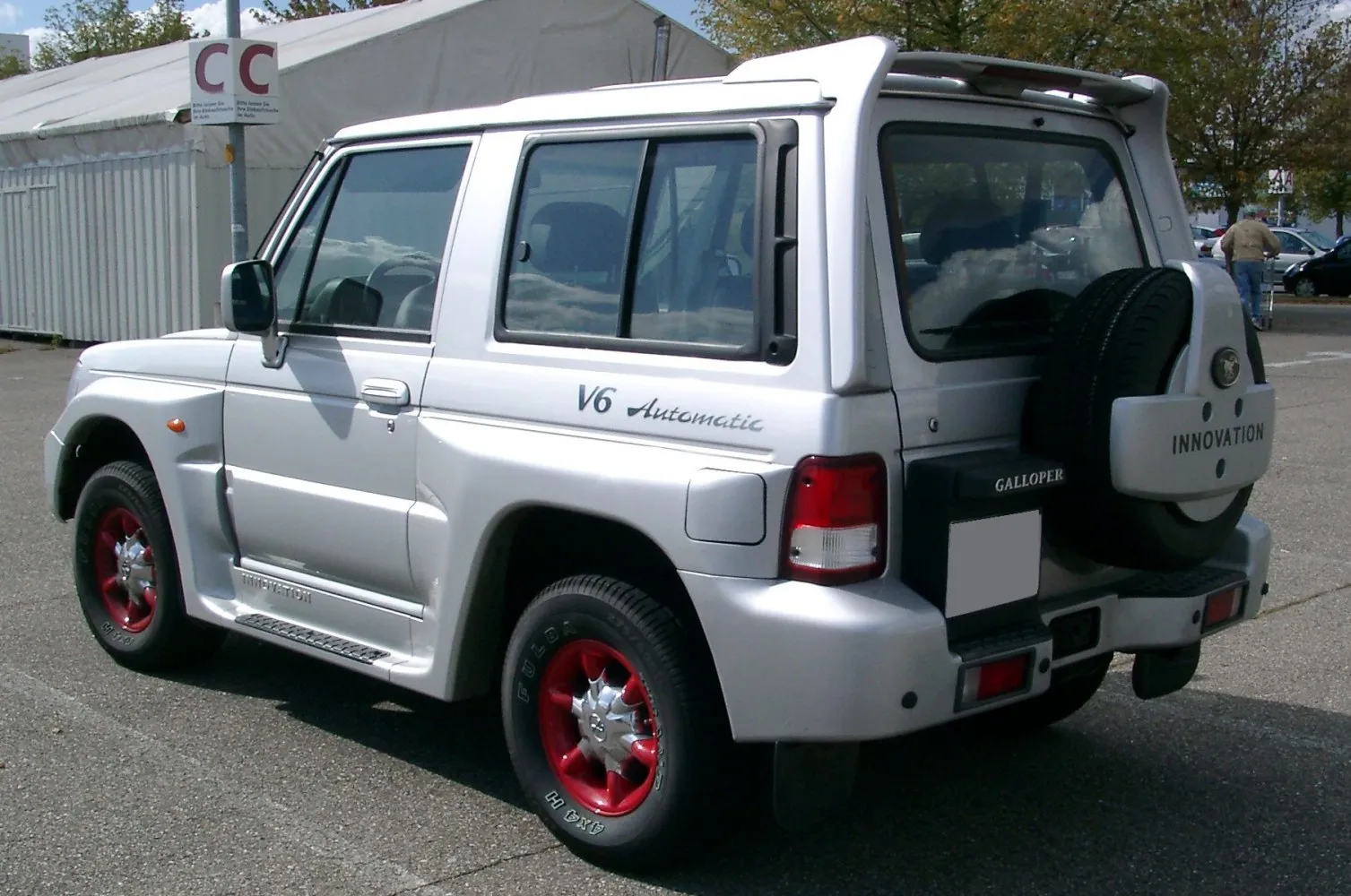
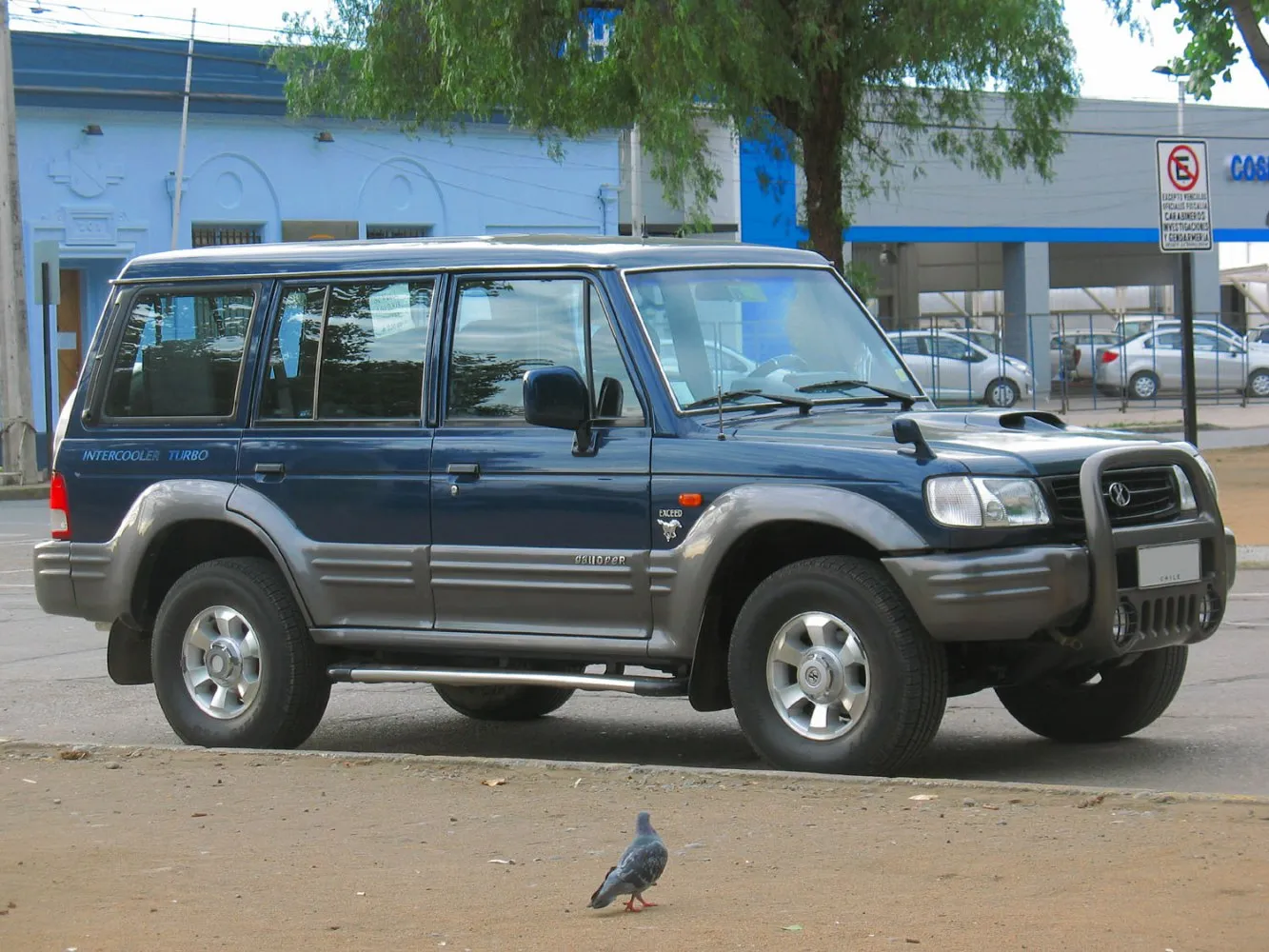
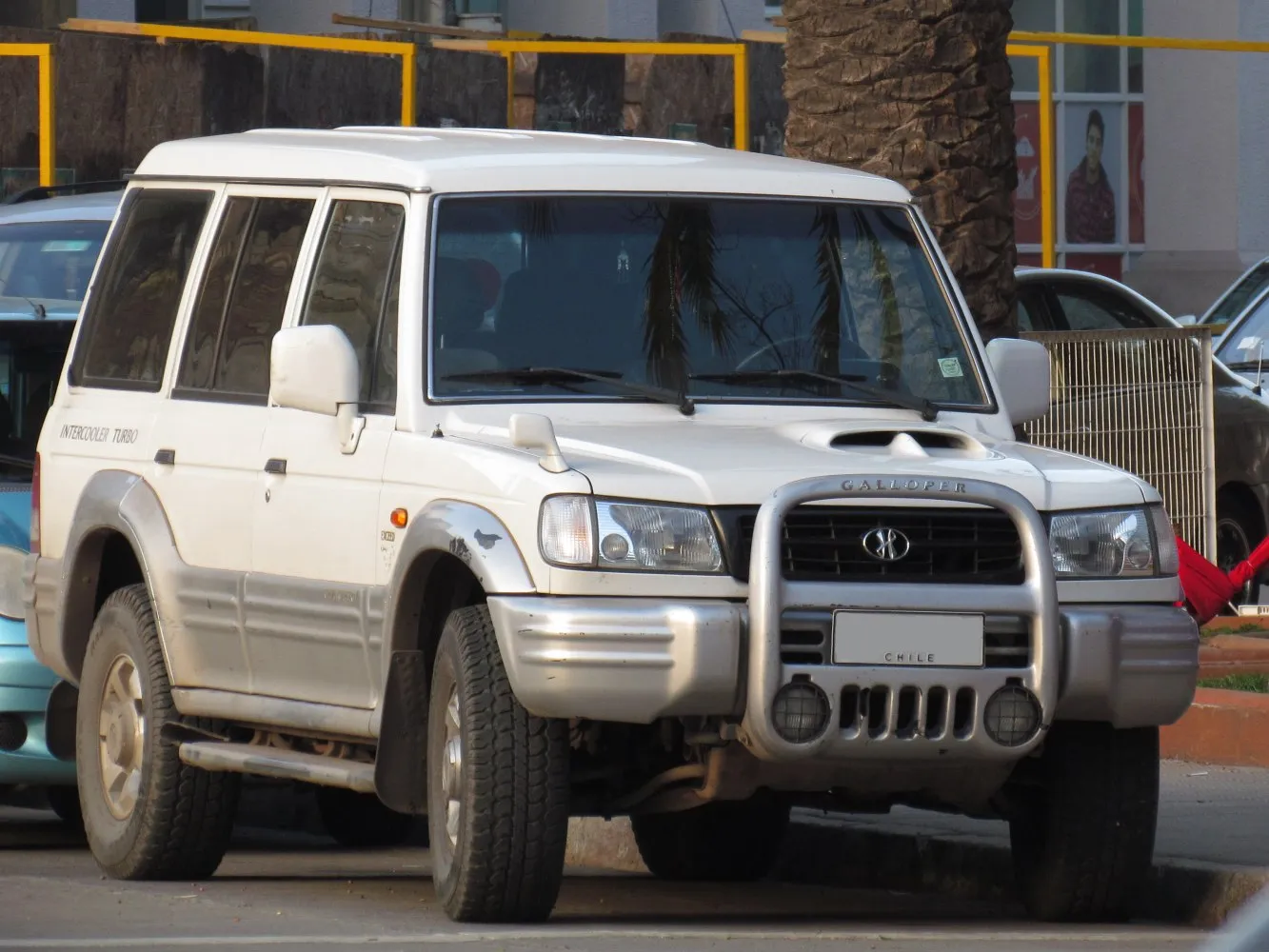
Hyundai Galloper II 3.0 i V6 Sport (161 Hp)
Overall Rating
Hyundai Galloper:
The Hyundai Galloper , also known as the Galloper Exceed, Galloper Innovation, Mitsubishi Galloper, Asia Galloper or Hawtai Jitian, is a full-size SUV manufactured by the South Korean manufacturer Hyundai from 1991 to 2004.
Chung Mong-koo spearheaded the localisation of the Galloper while leading the Hyundai Precision and Industry Co. , Ltd. division of the Hyundai Group. Reportedly, Chung Mong-koo had been asked by Chung Ju-young, his father and the chairman of the Hyundai Group, why he was leaving Hyundai Motor, which at the time was led by his uncle , to make a four wheel-drive vehicle. Chung Mong-koo replied that Hyundai Motor was a sedan-oriented company and resistant to developing a utility vehicle; by adding to the breadth of products offered by Hyundai, Chung Mong-koo saw benefits to the Group and the Korean market as a whole....(Read more on Wikipedia)
II Overview:
Hyundai Galloper (II). With 250 Nm of torque, it offers ample pulling power. With a weight of 1735 kg, it falls in the mid‑range. All‑wheel drive provides excellent grip, ideal for off‑road use. The top speed reaches 167 km/h. A sport utility vehicle offering higher ground clearance and versatile cargo space. Seating for 5 makes it ideal for daily use.
The Hyundai Galloper II was not tested by Euro NCAP. As a design from the late 90s based on an older platform, it would likely offer basic safety features common for SUVs of its era, such as ABS, but lack modern active and passive safety systems.
3.0 i V6 Sport (161 Hp) Verdict:

Performance Verdict
The most powerful petrol option, providing noticeably better acceleration and highway performance. Still a heavy vehicle, but more responsive.
Fuel Economy
Expect high running costs due to significant fuel consumption, especially under spirited driving conditions.
Pros and Cons:
Pros:
- • Excellent off-road capability due to robust construction and 4x4 system.
- • Spacious interior and large cargo capacity for utility and family use.
- • Generally reliable, benefiting from its Mitsubishi Pajero heritage.
- • Good value as a used vehicle for adventurers or those needing a workhorse.
- • Diesel engines offer better fuel economy than petrol variants.
Cons:
- • High fuel consumption for petrol models, leading to expensive running costs.
- • Dated interior design and lack of modern features/refinement.
- • Slow acceleration, especially with the lower-powered diesel engines.
- • Limited safety features compared to contemporary vehicles.
- • Ride comfort can be harsh on paved roads due to off-road suspension.
Specifications:
Specifications are compared to those of the previous generation(Galloper: 1991 - 1998).
| General: | |
|---|---|
| Brand: | Hyundai |
| Model: | Galloper |
| Generation: | II |
| Modification (Engine): | 3.0 i V6 Sport (161 Hp) |
| Start of production: | 1998 |
| End of production: | 2003 |
| Powertrain Architecture: | Internal Combustion engine |
| Body type: | SUV |
| Seats: | 5 |
| Doors: | 3 |
| Engine: | |
|---|---|
| Power: | 161 Hp @ 5000 rpm. |
| Power per litre: | 54.2 Hp/l [worst than previous generation] |
| Torque: | 250 Nm @ 4000 rpm. |
| Engine Model/Code: | Sigma / G6AT [Same engine] More details about the engine Sigma / G6AT |
| Engine displacement: | 2972 |
| Number of cylinders: | 6 |
| Engine configuration: | V-engine |
| Number of valves per cylinder: | 2 |
| Fuel injection system: | Multi-port manifold injection |
| Engine aspiration: | Naturally aspirated engine |
| Engine oil capacity: | 4.3 l |
| Engine layout: | Front, Longitudinal |
| Cylinder Bore: | 91.1 mm mm |
| Piston Stroke: | 76 mm mm |
| Compression ratio: | 8.9:1 |
| Performance: | |
|---|---|
| Fuel Type: | Petrol (Gasoline) |
| Maximum speed: | 167 km/h |
| Weight-to-power ratio: | 10.8 kg/Hp, 92.8 Hp/tonne |
| Weight-to-torque ratio: | 6.9 kg/Nm, 144.1 Nm/tonne |
| Space: | |
|---|---|
| Kerb Weight: | 1735 |
| Max. weight: | 2510 |
| Max load: | 775 |
| Trunk (boot) space - maximum: | 1386 l |
| Trunk (boot) space - minimum: | 663 l |
| Fuel tank capacity: | 75 l |
| Size: | |
|---|---|
| Length: | 4085 mm mm |
| Width: | 1770 mm mm |
| Height: | 1860 mm mm |
| Wheelbase: | 2350 mm mm |
| Front track: | 1435 mm |
| Rear (Back) track: | 1450 mm |
| Powertrain: | |
|---|---|
| Drive wheel | All wheel drive (4x4) |
| Number of gears | 5 |
| Transmission type | Manual |
| Front brakes | Ventilated discs [Best for performance and cooling.] |
| Rear brakes | Drum [bad for performance and cooling.] |
| Assisting systems | ABS (Anti-lock braking system) |
| Steering type | Cone worm with recirculation balls |
| Power steering | Hydraulic Steering |
| Tires size | 265/70 R15 |
| Front suspension | Torsion |
| Rear suspension | Coil spring |







Help others decide – share your experience!