
Click on image to view the full photo gallery
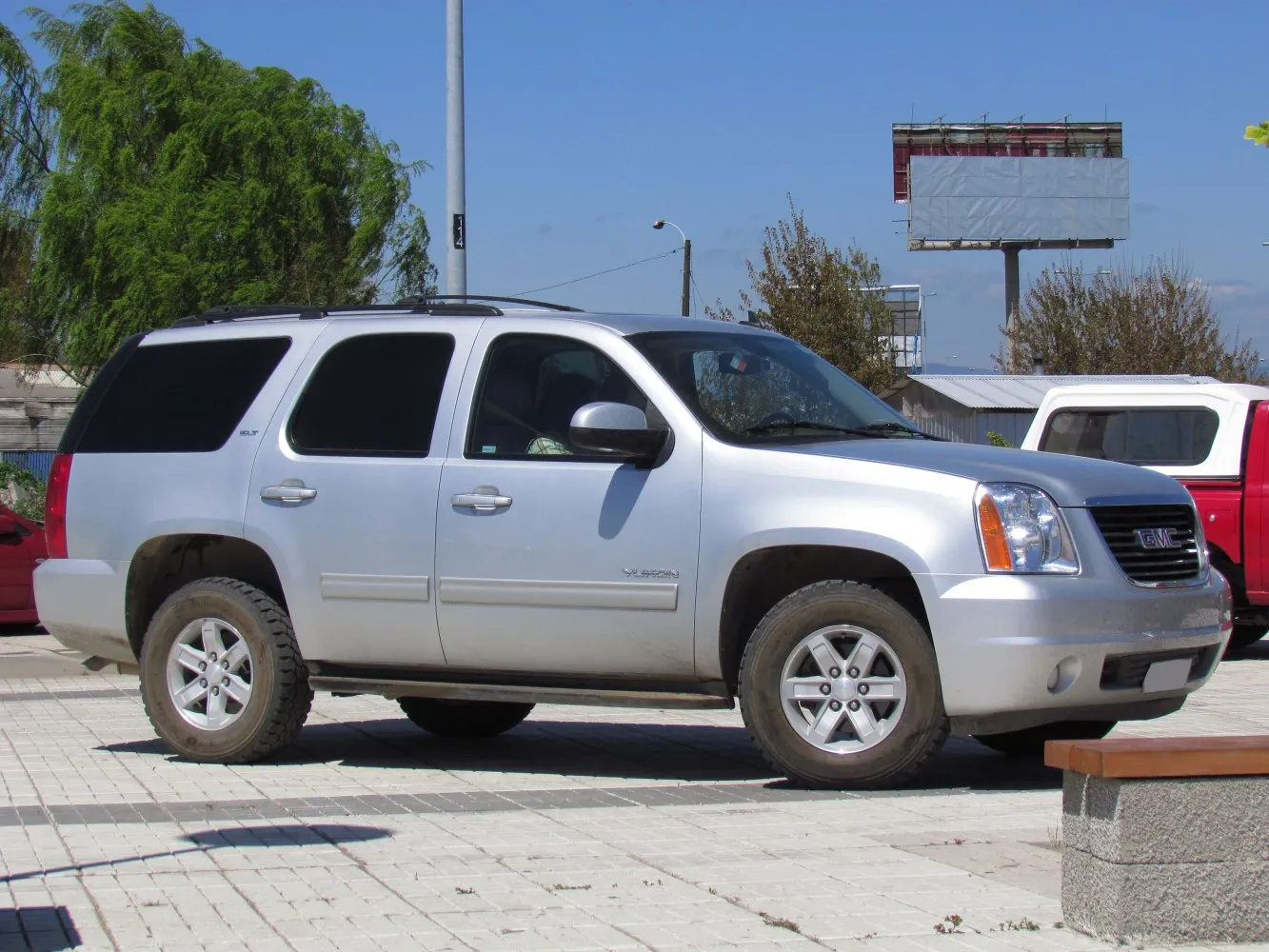
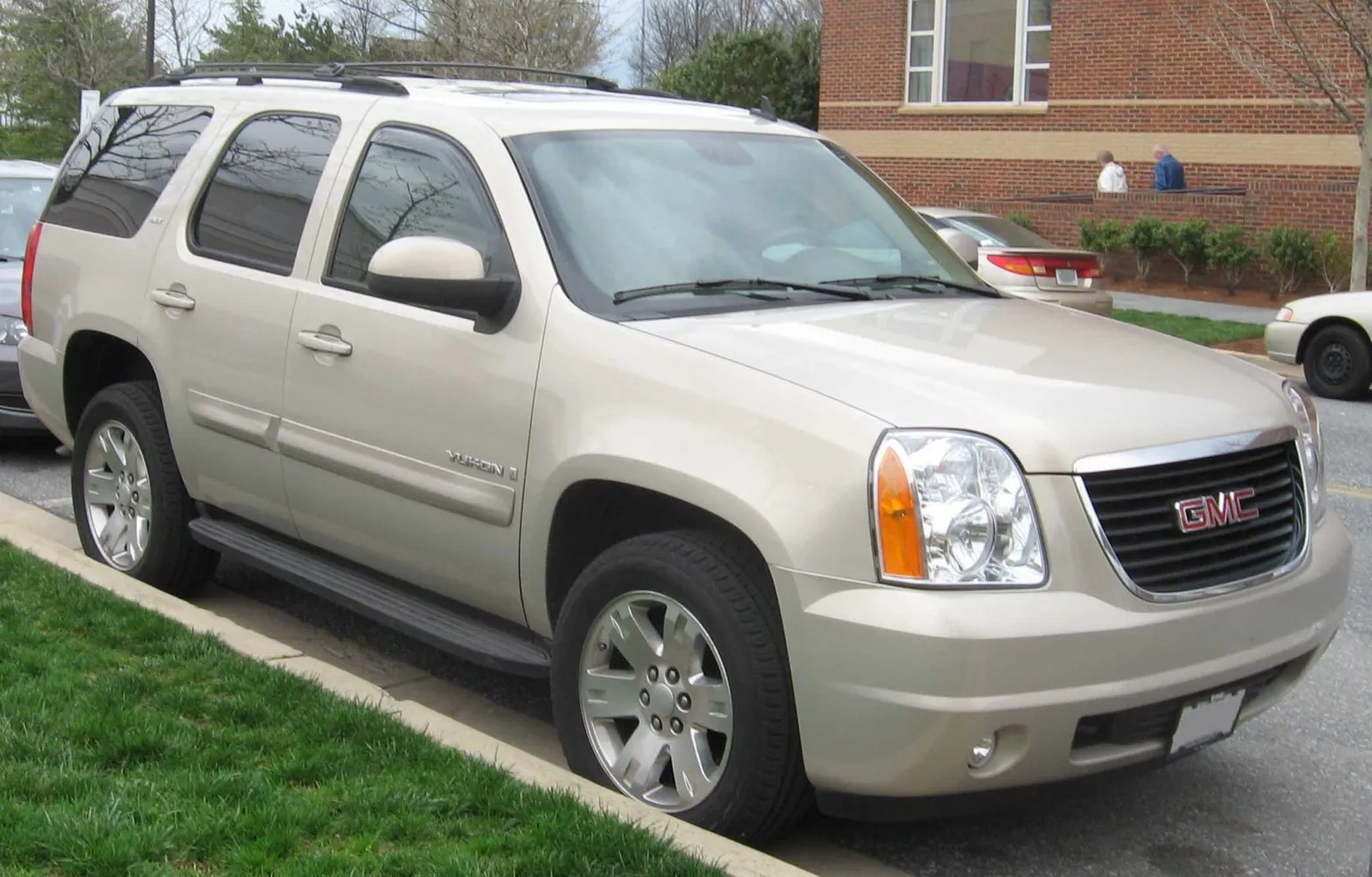
GMC Yukon III (GMT900) Denali 6.2 i V8 16V (403 Hp) FlexFuel Automatic
Overall Rating
GMC Yukon:
The Chevrolet Tahoe is a line of full-size SUVs from Chevrolet marketed since the 1995 model year. Marketed alongside the GMC Yukon for its entire production, the Tahoe is the successor of the Chevrolet K5 Blazer; the Yukon has replaced the full-sized GMC Jimmy. Both trucks derive their nameplates from western North America, with Chevrolet referring to Lake Tahoe; GMC, the Canadian Yukon.
Initially produced as a three-door SUV wagon, a five-door wagon body was introduced for 1995, ultimately replacing the three-door body entirely. The five-door wagon shares its body with the Chevrolet and GMC Suburban as a shorter-wheelbase variant. Since 1998, the Tahoe has served as the basis of the standard-wheelbase GMC Yukon Denali and Cadillac Escalade luxury SUVs. The Tahoe is sold in North America, parts of Asia such as the Philippines, and the Middle East, plus other countries including Bolivia, Chile, Peru, Colombia, Ecuador, and Angola as a left-hand-drive vehicle. The Yukon is only sold in North America and the Middle East....(Read more on Wikipedia)
III (GMT900) Overview:
GMC Yukon (III (GMT900)). With 565 Nm of torque, it offers ample pulling power. At around 2500 kg, it’s on the heavier side. Rear‑wheel drive offers dynamic handling and sporty feedback. A sport utility vehicle offering higher ground clearance and versatile cargo space. With seating for 8, it’s perfect for larger families.
Denali 6.2 i V8 16V (403 Hp) FlexFuel Automatic Verdict:

Performance Verdict
Top-tier performance with even more power than the standard 6.2L, offering exhilarating acceleration and immense towing capability. FlexFuel adds versatility.
Fuel Economy
Fuel economy remains a significant drawback, similar to other large V8s, though FlexFuel capability offers alternative fuel options.
Pros and Cons:
Pros:
- • Spacious and comfortable interior with seating for up to nine.
- • Powerful V8 engine options, excellent for towing and hauling.
- • Robust, truck-based platform for durability and capability.
- • Available hybrid model offers improved fuel efficiency.
- • Smooth highway ride and good road presence.
Cons:
- • Poor fuel economy for non-hybrid models.
- • Large size can make maneuvering in tight spaces challenging.
- • Some common issues with Active Fuel Management (AFM) on 5.3L engines.
- • Interior quality, while improved, still lags behind some luxury competitors.
- • Older 4-speed automatic transmission in early models can feel dated.
Specifications:
Specifications are compared to those of the previous generation(XL III (GMT900): 2007 - 2009).
| General: | |
|---|---|
| Brand: | GMC |
| Model: | Yukon |
| Generation: | III (GMT900) |
| Modification (Engine): | Denali 6.2 i V8 16V (403 Hp) FlexFuel Automatic |
| Start of production: | 2009 |
| End of production: | 2013 |
| Powertrain Architecture: | Internal Combustion engine |
| Body type: | SUV |
| Seats: | 8 |
| Doors: | 5 |
| Engine: | |
|---|---|
| Power: | 403 Hp @ 5700 rpm. Same horsepower |
| Power per litre: | 65.4 Hp/l [518mm less] |
| Torque: | 565 Nm @ 4300 rpm. |
| Engine Model/Code: | L9H More details about the engine L9H |
| Engine displacement: | 6162 |
| Number of cylinders: | 8 |
| Engine configuration: | V-engine |
| Number of valves per cylinder: | 2 |
| Fuel injection system: | Multi-port manifold injection |
| Engine aspiration: | Naturally aspirated engine |
| Valvetrain: | VVT |
| Engine oil capacity: | 5.7 l |
| Coolant: | 17.1 l |
| Engine layout: | Front, Longitudinal |
| Cylinder Bore: | 103.25 mm mm |
| Piston Stroke: | 92 mm mm |
| Compression ratio: | 10.5:1 |
| Maximum engine speed: | 6000 rpm. |
| Performance: | |
|---|---|
| Fuel Type: | Petrol / Ethanol - E85 |
| Fuel consumption (economy) - urban: | 19.6 l/100 km |
| Fuel consumption (economy) - extra urban: | 12.4 l/100 km |
| Fuel consumption (economy) - urban (Ethanol - E85): | 23.5 l/100 km |
| Fuel consumption (economy) - extra urban (Ethanol - E85): | 16.8 l/100 km |
| Weight-to-power ratio: | 6.2 kg/Hp, 161.2 Hp/tonne |
| Weight-to-torque ratio: | 4.4 kg/Nm, 226 Nm/tonne |
| Space: | |
|---|---|
| Kerb Weight: | 2500 |
| Max. weight: | 3220 |
| Max load: | 720 |
| Trunk (boot) space - maximum: | 3084 l |
| Trunk (boot) space - minimum: | 479 l |
| Permitted trailer load with brakes (12%): | 3447 kg |
| Fuel tank capacity: | 98 l |
| Size: | |
|---|---|
| Length: | 5130 mm mm [518mm less] |
| Width: | 2009 mm mm [1mm less] |
| Height: | 1956 mm mm [6mm more] |
| Wheelbase: | 2946 mm mm [356mm less] |
| Front track: | 1732 mm |
| Rear (Back) track: | 1702 mm |
| Ride height (ground clearance): | 227 mm |
| Minimum turning circle (turning diameter): | 11.9 m [above average] |
| Approach angle: | 16.02° |
| Departure angle: | 21.65° |
| Powertrain: | |
|---|---|
| Drivetrain Architecture | The Internal combustion engine (ICE) drives the rear wheels of the vehicle. |
| Drive wheel | Rear wheel drive |
| Number of gears | 6 |
| Transmission type | Automatic |
| Front brakes | Disc, 330x30 mm [above average] |
| Rear brakes | Disc, 345x20 mm [above average] |
| Assisting systems | ABS (Anti-lock braking system) |
| Steering type | Steering rack and pinion |
| Wheel rims size | 20 |
| Front suspension | Independent, type McPherson with coil spring and anti-roll bar |
| Rear suspension | Independent multi-link suspension, Coil spring |











The hidden gems or the annoying flaws? Expose the truth about the GMC Yukon!