
Click on image to view the full photo gallery
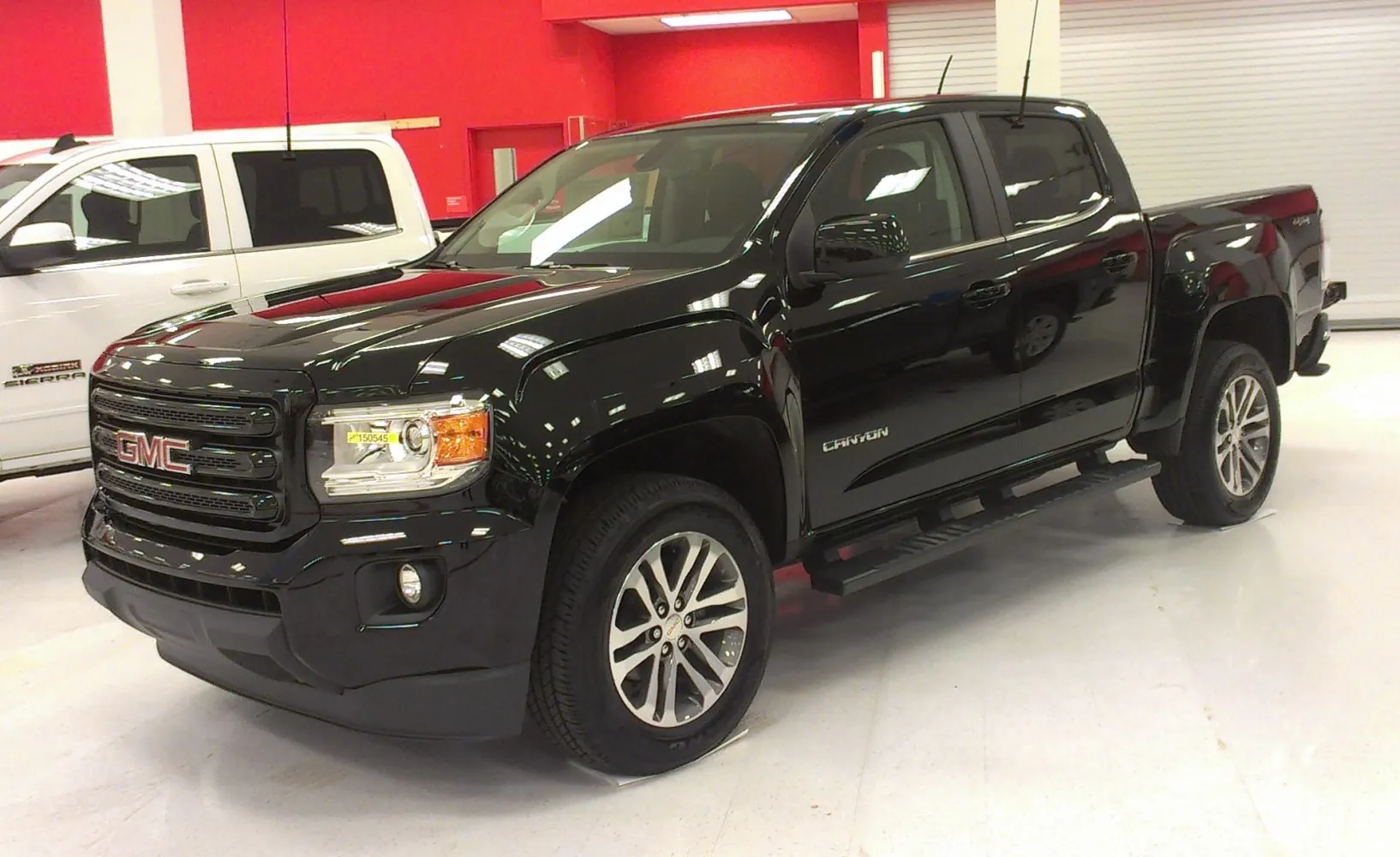
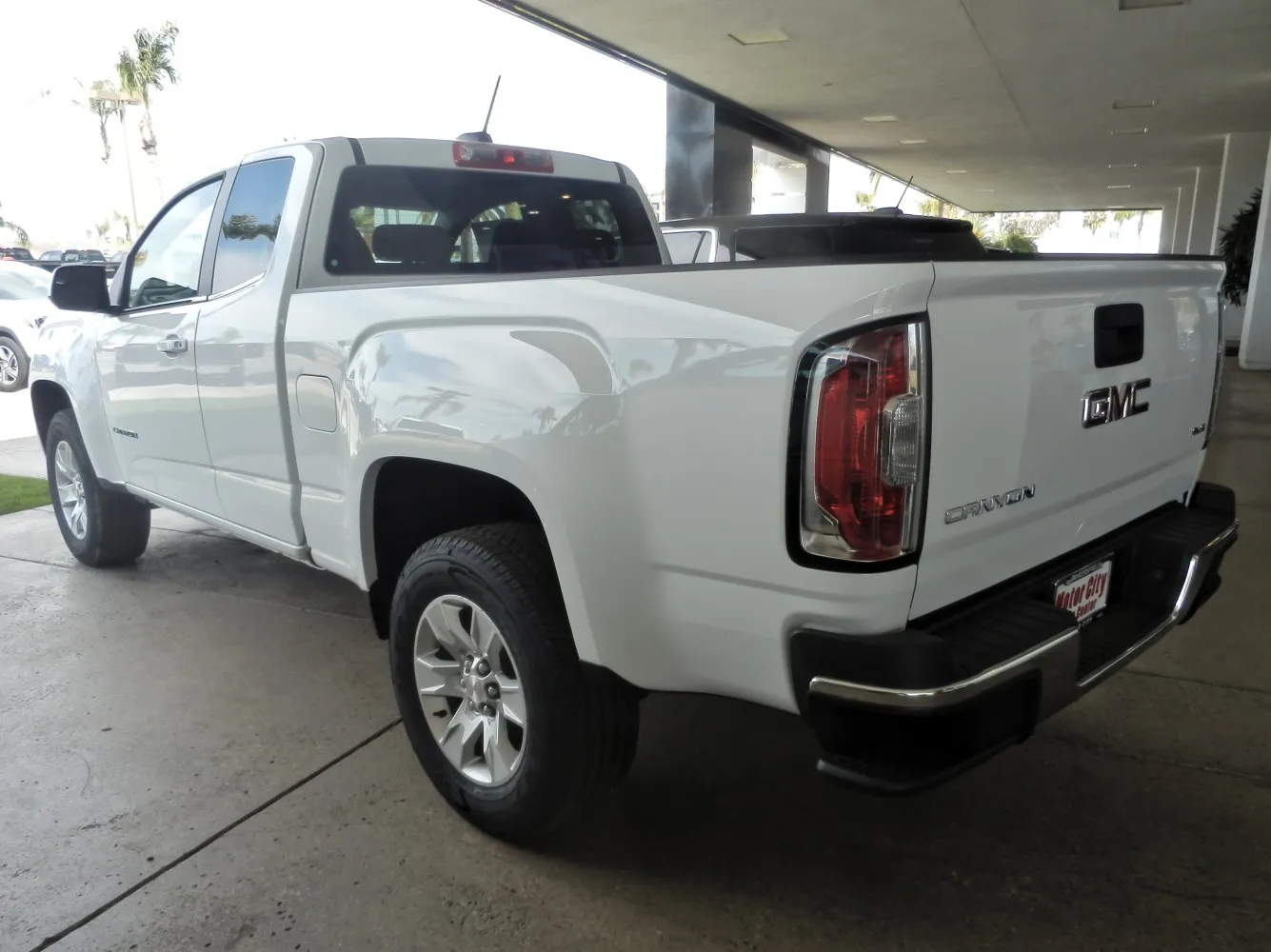
GMC Canyon II Extended cab Long box 2.5 (200 Hp) 4WD
Overall Rating
GMC Canyon:
The Chevrolet Colorado is a series of compact pickup trucks and mid-size pickup trucks marketed by American automaker General Motors. They were introduced in 2004 to replace the Chevrolet S-10 and GMC S-15/Sonoma compact pickups. The Colorado is named after the U. S. state of Colorado, while the Canyon took its name from the deep chasm between cliffs.
The Chevrolet Colorado and its twin, the GMC Canyon, were jointly designed by GM's North American operations, GM's Brazil operations, and Isuzu, which began selling its own version worldwide in 2002. Production began in October 2003. In late 2005, Isuzu offered a version in North America called the Isuzu i-series. This North American model Isuzu shared North American powertrains, styling, and equipment with the Colorado/Canyon twins and differed from Isuzu's worldwide offering. All Chevrolet, GMC, and Isuzu versions worldwide are based on the GMT355, itself the basis for the GMT 345-based Hummer H3. Most vehicles for markets outside North America are manufactured at a GM plant in Rayong, Thailand. All North American-market vehicles were manufactured by Shreveport Operations....(Read more on Wikipedia)
II Extended cab Long box Overview:
GMC Canyon (II Extended cab Long box). With 259 Nm of torque, it offers ample pulling power. With a weight of 1860 kg, it falls in the mid‑range. All‑wheel drive provides excellent grip, ideal for off‑road use. A vehicle with an open cargo bed at the back, suitable for transporting goods. Seating for 4 makes it ideal for daily use.
2.5 (200 Hp) 4WD Verdict:

Performance Verdict
Adequate performance for light duty and daily commuting, but can feel strained under heavy loads or at highway speeds, especially with 4WD. The 200 Hp 4-cylinder engine is best suited for those prioritizing efficiency over raw power.
Fuel Economy
Better fuel economy than the V6 options, making it a more economical choice for those who don't require maximum towing. Expect around 11.8 l/100 km (20 MPG) city and 9.0 l/100 km (26 MPG) highway for the 4WD automatic.
Pros and Cons:
Pros:
- • Strong V6 engine options with high towing capacity (up to 7,000 lbs)
- • Comfortable and refined ride for a mid-size truck
- • Premium interior materials compared to some rivals
- • Available extended cab long box configuration offers good cargo versatility
- • Good off-road capability with 4WD options
Cons:
- • Base 2.5L engine can feel underpowered for some tasks
- • Fuel economy, especially with the V6 4WD, is not class-leading
- • Rear seats in the extended cab are cramped for adults on long journeys
- • Higher starting price than some competitors
- • Limited advanced safety features on lower trims
Specifications:
Specifications are compared to those of the previous generation(I Extended cab: 2009 - 2012).
| General: | |
|---|---|
| Brand: | GMC |
| Model: | Canyon |
| Generation: | II Extended cab Long box |
| Modification (Engine): | 2.5 (200 Hp) 4WD |
| Start of production: | 2015 |
| End of production: | 2020 |
| Powertrain Architecture: | Internal Combustion engine |
| Body type: | Pick-up |
| Seats: | 4 |
| Doors: | 2 |
| Engine: | |
|---|---|
| Power: | 200 Hp @ 6300 rpm. Same horsepower |
| Power per litre: | 81.4 Hp/l [135mm more] |
| Torque: | 259 Nm @ 4400 rpm. |
| Engine Model/Code: | Ecotec LCV More details about the engine Ecotec LCV |
| Engine displacement: | 2457 |
| Number of cylinders: | 4 |
| Engine configuration: | Inline |
| Number of valves per cylinder: | 4 |
| Fuel injection system: | Direct injection |
| Engine aspiration: | Naturally aspirated engine |
| Valvetrain: | DOHC, CVVT |
| Engine oil capacity: | 4.7 l |
| Coolant: | 9.1 l |
| Engine layout: | Front, Longitudinal |
| Cylinder Bore: | 88 mm mm |
| Piston Stroke: | 101 mm mm |
| Compression ratio: | 11.3:1 |
| Performance: | |
|---|---|
| Fuel Type: | Petrol (Gasoline) |
| Fuel consumption (economy) - urban: | 12.3 l/100 km |
| Fuel consumption (economy) - extra urban: | 9.4 l/100 km |
| Weight-to-power ratio: | 9.3 kg/Hp, 107.5 Hp/tonne |
| Weight-to-torque ratio: | 7.2 kg/Nm, 139.2 Nm/tonne |
| Space: | |
|---|---|
| Kerb Weight: | 1860 |
| Max. weight: | 2540 |
| Max load: | 680 |
| Trunk (boot) space - maximum: | 1414 l |
| Permitted trailer load with brakes (12%): | 1588 kg |
| Fuel tank capacity: | 79.5 l |
| Size: | |
|---|---|
| Ramp-over (brakeover) angle: | 19.7° |
| Length: | 5395 mm mm [135mm more] |
| Width: | 1886 mm mm [169mm more] |
| Height: | 1785 mm mm [136mm more] |
| Wheelbase: | 3258 mm mm [58mm more] |
| Front track: | 1586 mm |
| Rear (Back) track: | 1586 mm |
| Ride height (ground clearance): | 214 mm |
| Minimum turning circle (turning diameter): | 12.6 m [above average] |
| Approach angle: | 17.6° |
| Departure angle: | 22.3° |
| Powertrain: | |
|---|---|
| Drivetrain Architecture | The Internal combustion engine (ICE) drives the rear wheels permanently, and the front wheels are driven through an electrically or mechanically operated clutch if necessary. |
| Drive wheel | All wheel drive (4x4) |
| Number of gears | 6 |
| Transmission type | Manual |
| Gearbox type | Eaton N8D |
| Front brakes | Disc, 310x27 mm [above average] |
| Rear brakes | Disc, 324x18 mm [above average] |
| Assisting systems | ABS (Anti-lock braking system) |
| Steering type | Steering rack and pinion |
| Power steering | Electric Steering |
| Tires size | 265/70 R16; 255/65 R17; 265/60 R18 |
| Wheel rims size | 7J x 16; 8J x 17; 8.5J x 18 |
| Front suspension | Independent coil spring |
| Rear suspension | Rigid axle suspension, Leaf spring |















What’s the best feature of the GMC Canyon? Tell us in the comments!