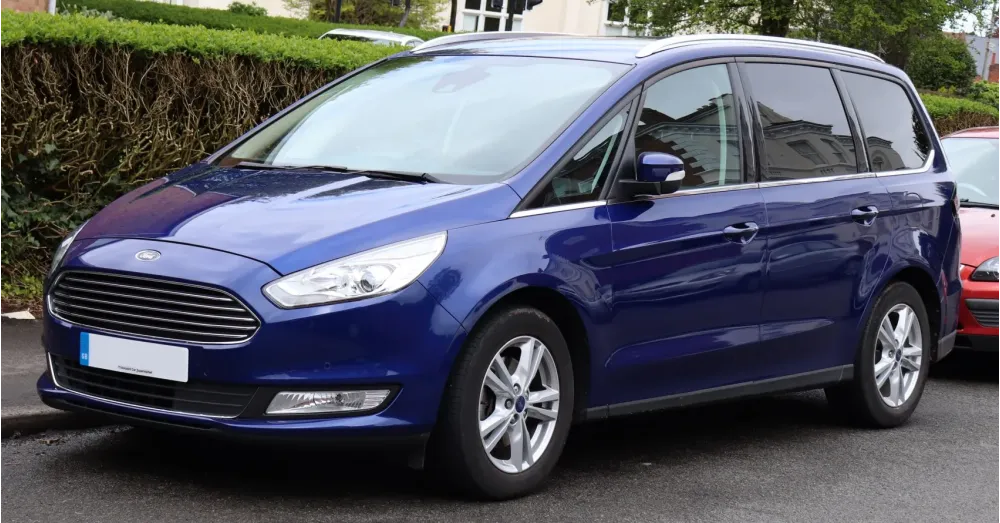
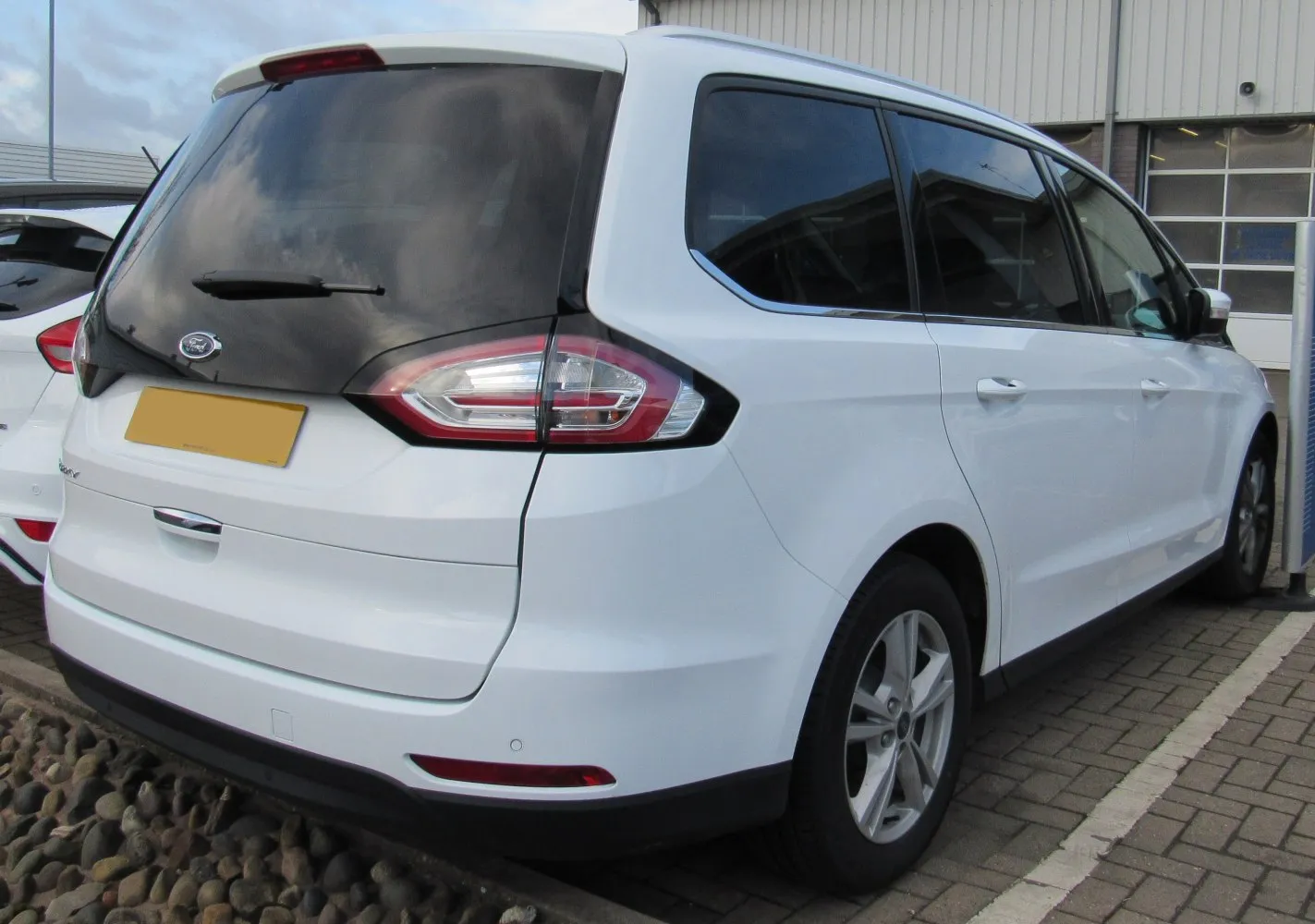
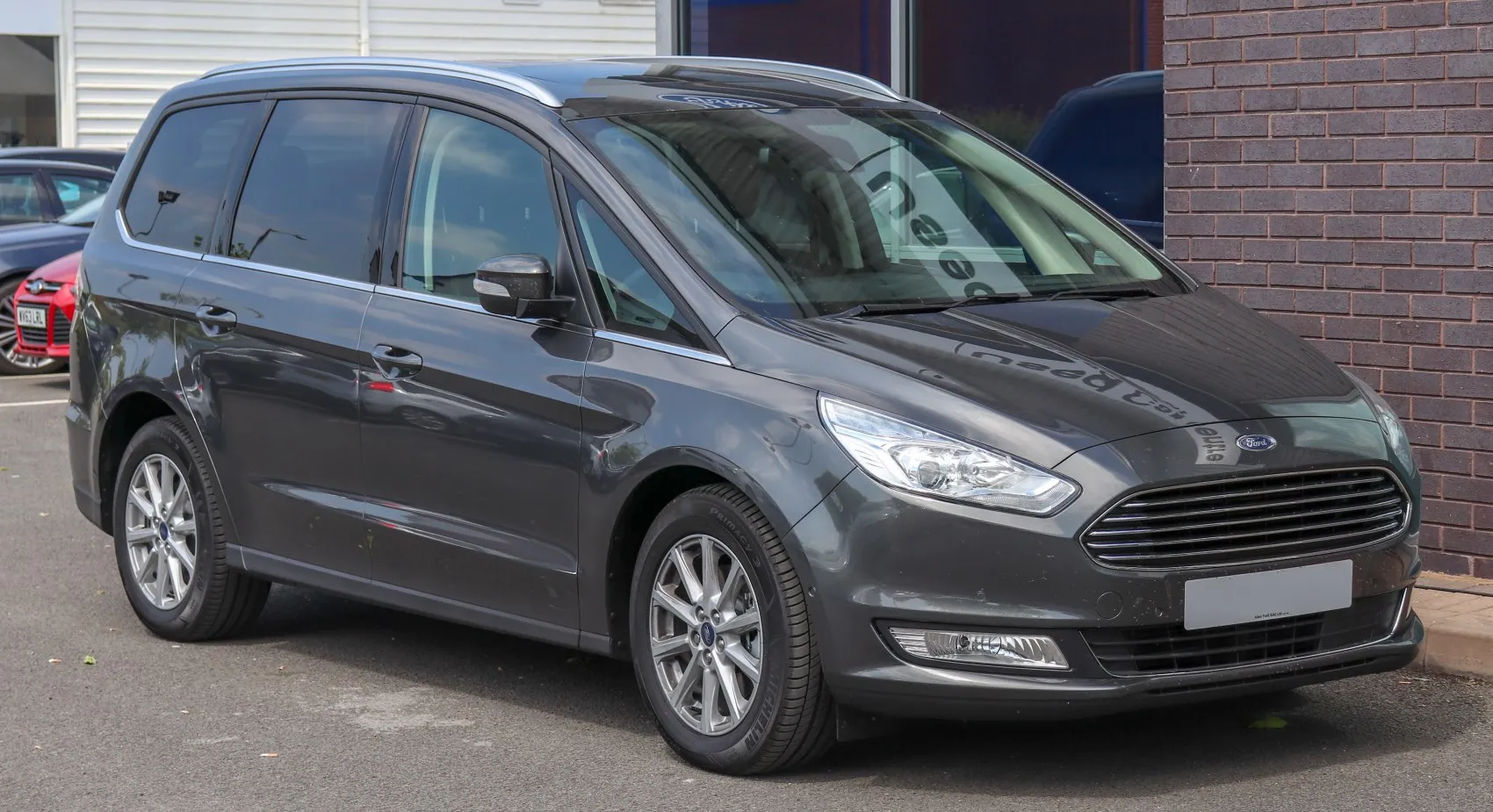
Click on image to view the full photo gallery
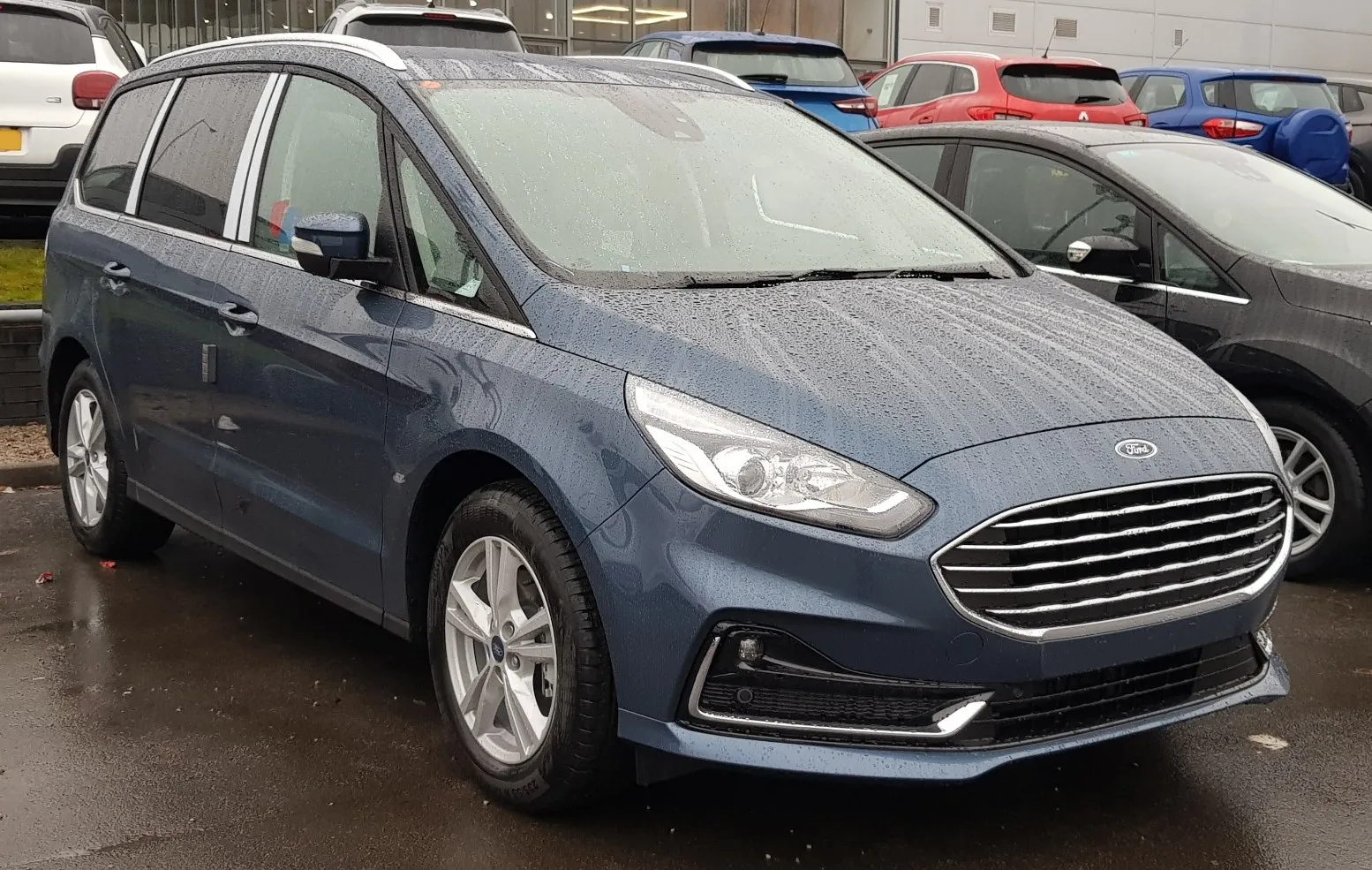
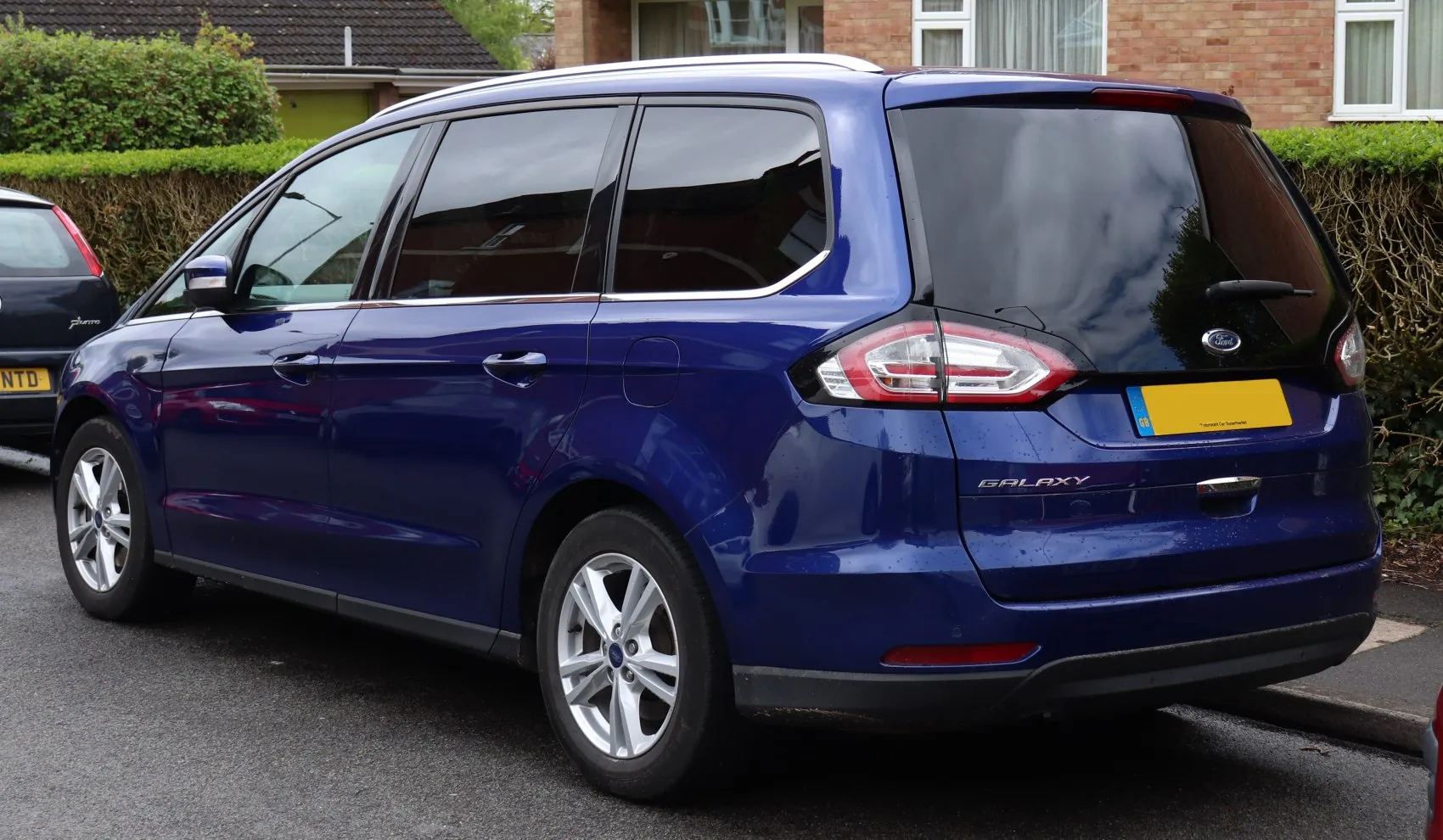
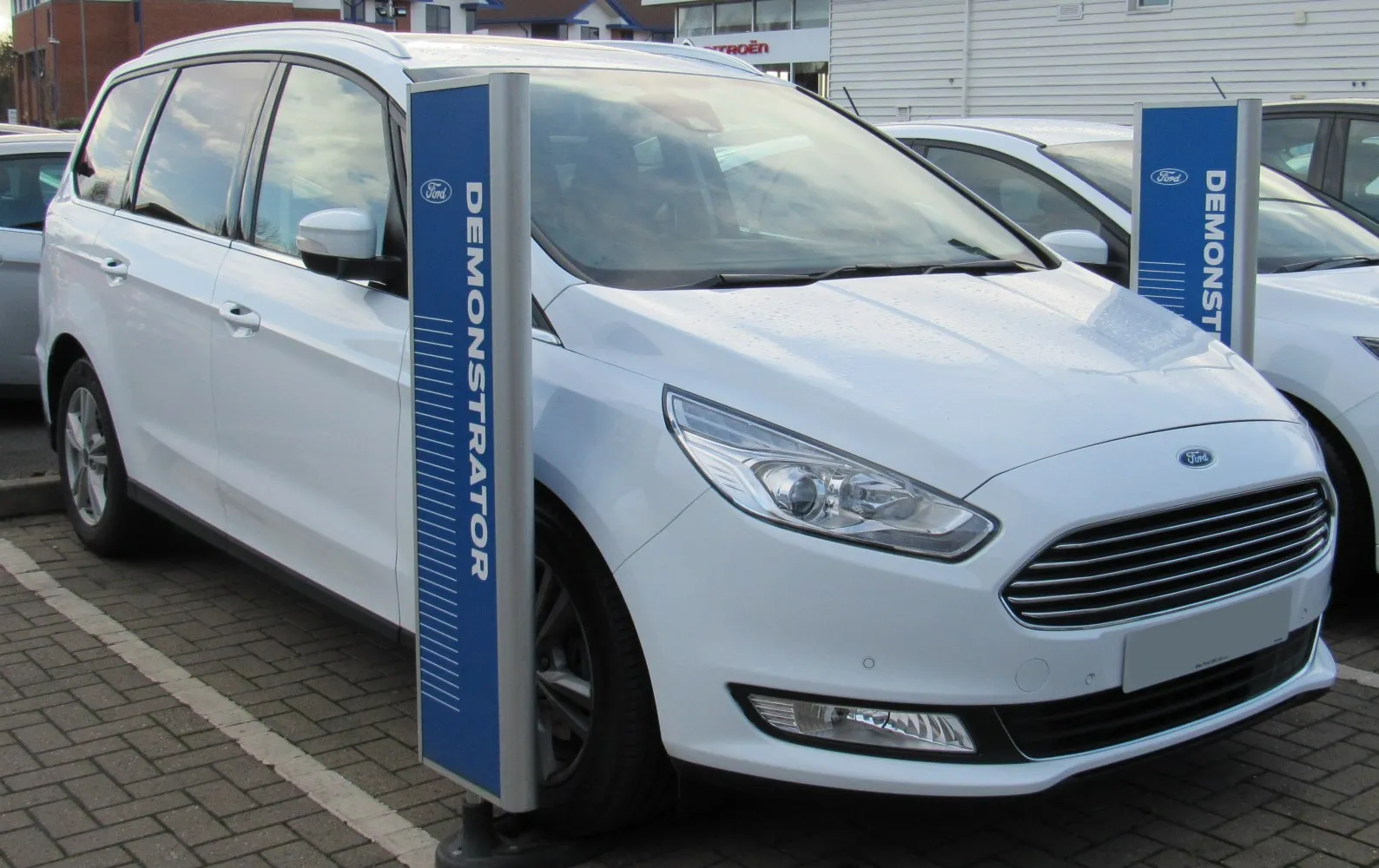
Ford Galaxy III 2.0 TDCi (150 Hp) Powershift S&S
Overall Rating
Ford Galaxy:
The Ford Galaxy is a seven-seater car produced by Ford of Europe from June 1995 to April 2023. Considered in the motor industry to be a large multi-purpose vehicle , it was the first Ford-brand MPV produced and marketed outside of North America. It was produced across three generations. Sharing its platform architecture with the Ford Mondeo, the Galaxy was developed alongside the Ford S-Max; the model line is slotted between the Connect and Custom variants of the Ford Tourneo/Transit model family....(Read more on Wikipedia)
III Overview:
Ford Galaxy (III). With 350 Nm of torque, it offers ample pulling power. It has moderate fuel consumption (~6.1 l/100km). With a weight of 1685 kg, it falls in the mid‑range. Front‑wheel drive delivers efficiency and easy handling. Acceleration is relatively slow (0–100 km/h in 10.9 s). The top speed reaches 192 km/h. A spacious vehicle designed to transport passengers comfortably, often with sliding doors. Seating for 5 makes it ideal for daily use.
The Ford Galaxy III achieved an excellent 5-star Euro NCAP rating, demonstrating strong adult and child occupant protection, making it a very safe choice for families.
2.0 TDCi (150 Hp) Powershift S&S Verdict:

Performance Verdict
Provides a good balance of power and convenience, with the automatic Powershift transmission ensuring smooth and effortless driving.
Fuel Economy
Achieves good fuel economy for an automatic diesel, offering a practical blend of performance and efficiency.
Pros and Cons:
Pros:
- • Extremely spacious and versatile interior with 5-7 seats
- • Comfortable ride quality, ideal for long journeys
- • Wide range of efficient and powerful diesel engines
- • Excellent Euro NCAP 5-star safety rating
- • High level of practicality for large families and cargo
Cons:
- • Minivan styling may not appeal to all buyers
- • Petrol engines are less fuel-efficient than the diesel options
- • Entry-level engines can feel underpowered when fully loaded
- • Not as agile or engaging to drive as smaller, sportier vehicles
Specifications:
Specifications are compared to those of the previous generation(II (facelift 2010): 2011 - 2015).
| General: | |
|---|---|
| Brand: | Ford |
| Model: | Galaxy |
| Generation: | III |
| Modification (Engine): | 2.0 TDCi (150 Hp) Powershift S&S |
| Start of production: | 2015 |
| End of production: | 2018 |
| Powertrain Architecture: | Internal Combustion engine |
| Body type: | Minivan |
| Seats: | 5-7 |
| Doors: | 5 |
| Engine: | |
|---|---|
| Engine systems: | Start & Stop System |
| Power: | 150 Hp @ 3500 rpm. Same horsepower |
| Power per litre: | 75.1 Hp/l [29mm more] |
| Torque: | 350 Nm @ 2000-2500 rpm. |
| Engine Model/Code: | T7CI, T7CJ, T7CK, T7CL More details about the engine T7CI, T7CJ, T7CK, T7CL |
| Engine displacement: | 1997 |
| Number of cylinders: | 4 |
| Engine configuration: | Inline |
| Number of valves per cylinder: | 4 |
| Fuel injection system: | Diesel Commonrail |
| Engine aspiration: | Turbocharger, Intercooler |
| Valvetrain: | DOHC |
| Engine oil capacity: | 6.1 l |
| Coolant: | 8.2 l |
| Engine layout: | Front, Transverse |
| Cylinder Bore: | 85 mm |
| Piston Stroke: | 88 mm |
| Compression ratio: | 17:1 |
| Performance: | |
|---|---|
| Fuel Type: | Diesel |
| Fuel consumption (economy) - urban: | 6.1 l/100 km |
| Fuel consumption (economy) - extra urban: | 4.9 l/100 km |
| Fuel consumption (economy) - combined: | 5.4 l/100 km |
| Emission standard: | Euro 6 |
| Acceleration 0 - 100 km/h: | 10.9 sec |
| Acceleration 0 - 62 mph: | 10.9 sec |
| Maximum speed: | 192 km/h |
| Weight-to-power ratio: | 11.2 kg/Hp, 89 Hp/tonne |
| Weight-to-torque ratio: | 4.8 kg/Nm, 207.7 Nm/tonne |
| Acceleration 0 - 60 mph: | 10.4 sec |
| Space: | |
|---|---|
| Kerb Weight: | 1685 |
| Max. weight: | 2600 |
| Max load: | 915 |
| Trunk (boot) space - maximum: | 2339 l |
| Trunk (boot) space - minimum: | 300 l |
| Permitted trailer load with brakes (12%): | 2000 kg |
| Fuel tank capacity: | 70 l |
| Permitted trailer load without brakes: | 750 kg |
| Permitted towbar download: | 90 kg |
| Permitted trailer load with brakes (8%): | 2000 kg |
| Size: | |
|---|---|
| Length: | 4848 mm [29mm more] |
| Width: | 1916 mm [32mm more] |
| Height: | 1747 mm [23mm less] |
| Wheelbase: | 2849 mm [1mm less] |
| Width with mirrors folded: | 1953 mm |
| Width including mirrors: | 2137 mm |
| Front track: | 1606 mm |
| Rear (Back) track: | 1606 mm |
| Ride height (ground clearance): | 124 mm |
| Minimum turning circle (turning diameter): | 12 m [above average] |
| Powertrain: | |
|---|---|
| Drivetrain Architecture | The Internal combustion engine (ICE) drives the front wheels of the vehicle. |
| Drive wheel | Front wheel drive |
| Number of gears | 6 |
| Transmission type | Automatic |
| Gearbox type | Powershift |
| Front brakes | Ventilated discs [Best for performance and cooling.] |
| Rear brakes | Disc [above average] |
| Assisting systems | ABS (Anti-lock braking system) |
| Steering type | Steering rack and pinion |
| Tires size | 235/55 R17; 235/50 R18; 245/45 R19 |
| Wheel rims size | 7.5J x 17; 7.5J x 18; 8J x 19 |
| Front suspension | Independent, type McPherson with coil spring and anti-roll bar |
| Rear suspension | Independent multi-link spring suspension with stabilizer |












Does the Ford Galaxy live up to the hype? Give us your verdict!