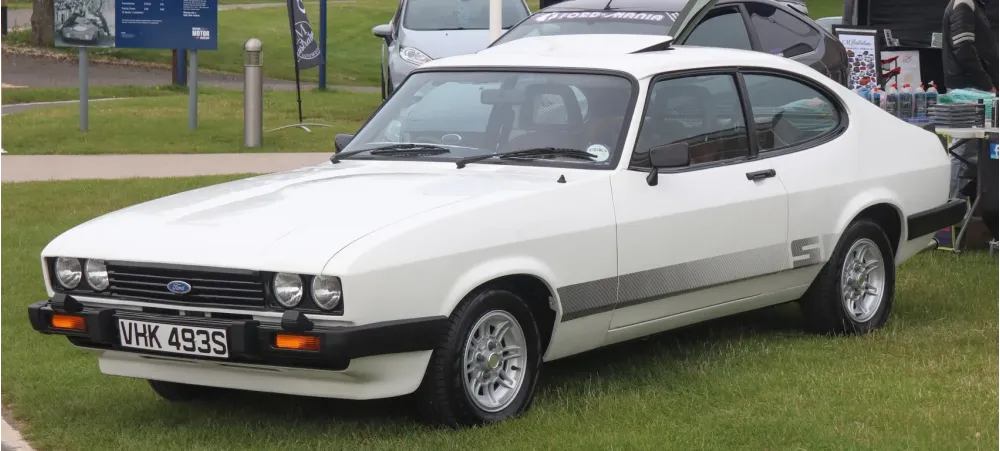
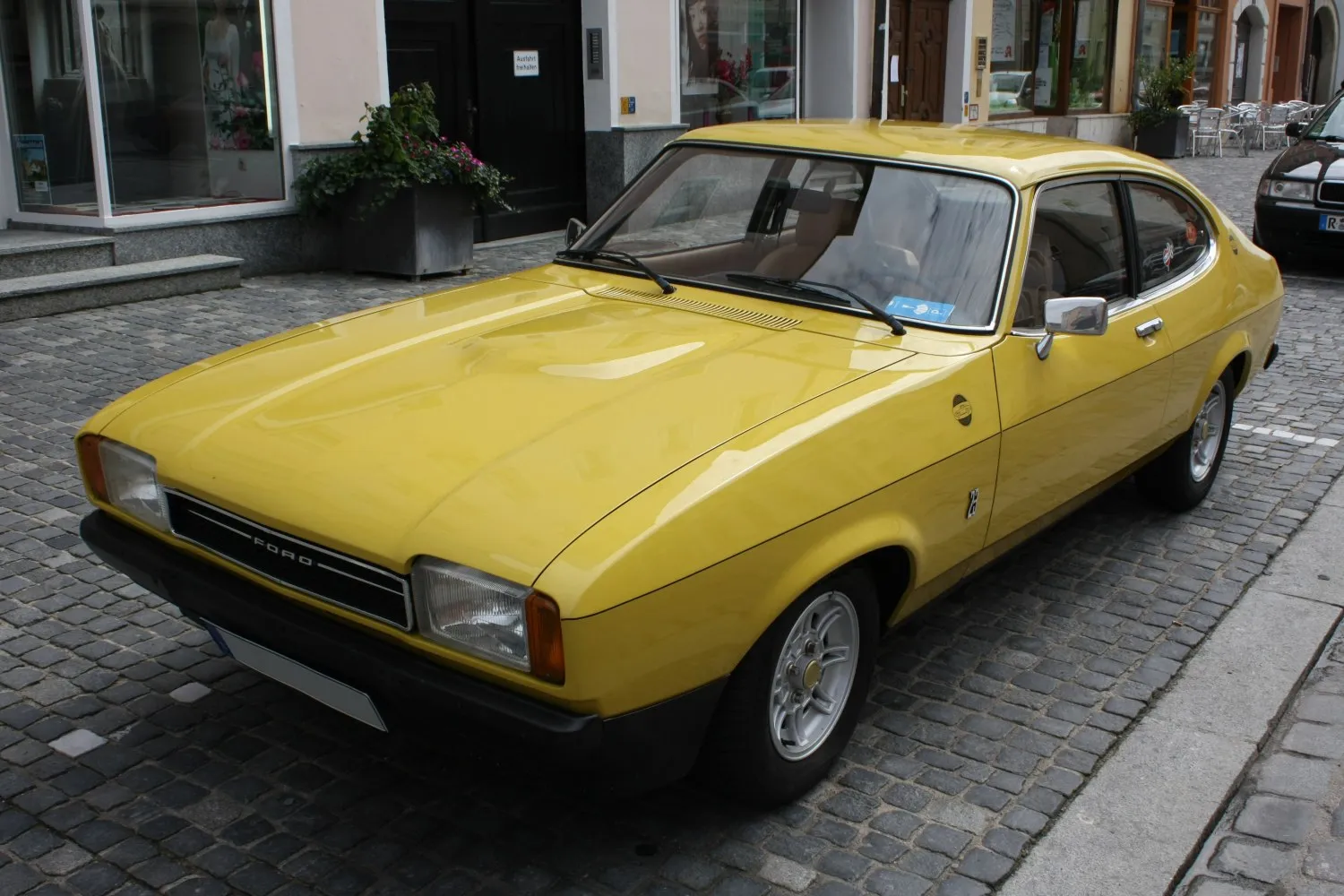
Click on image to view the full photo gallery
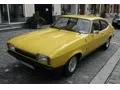
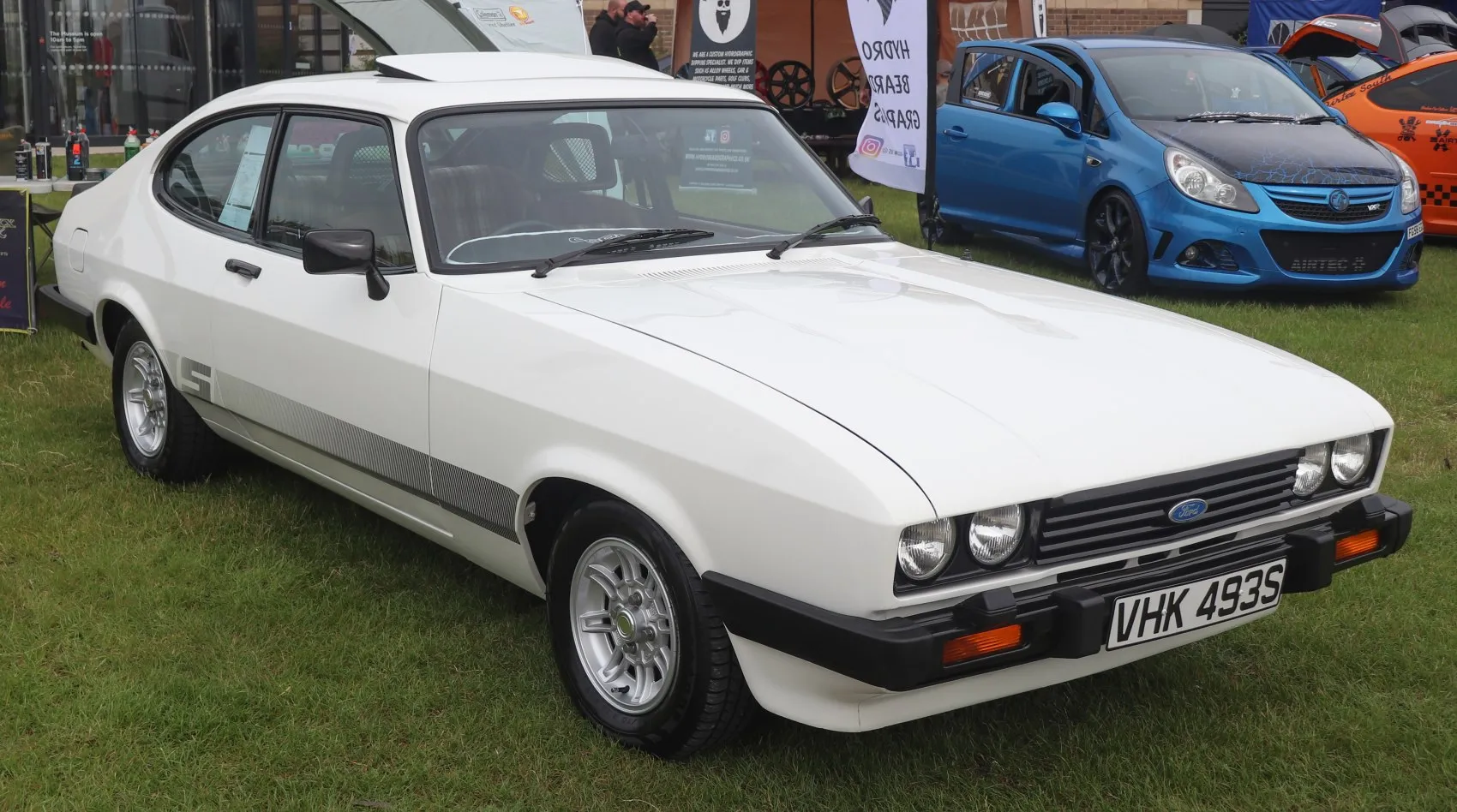
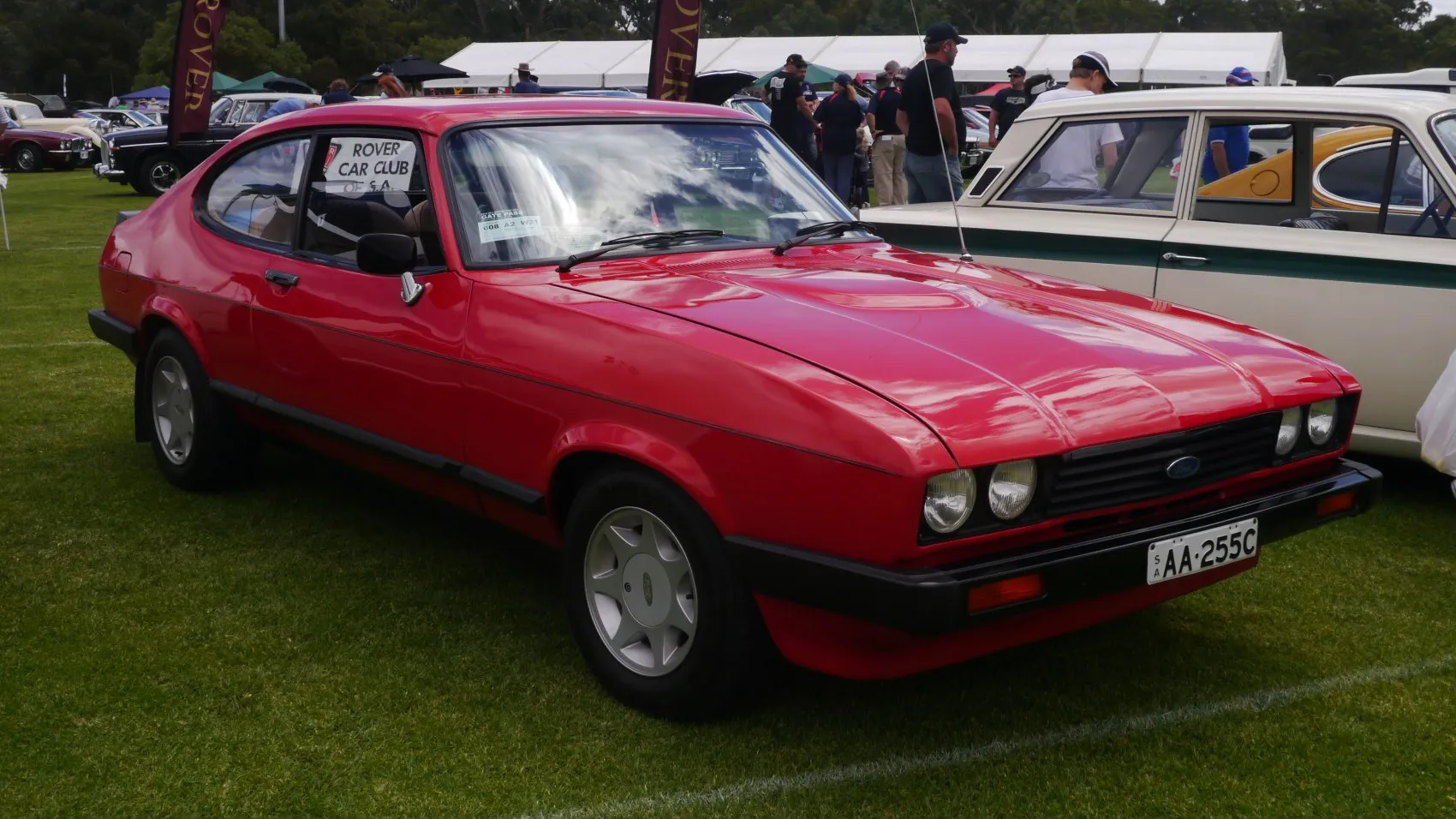
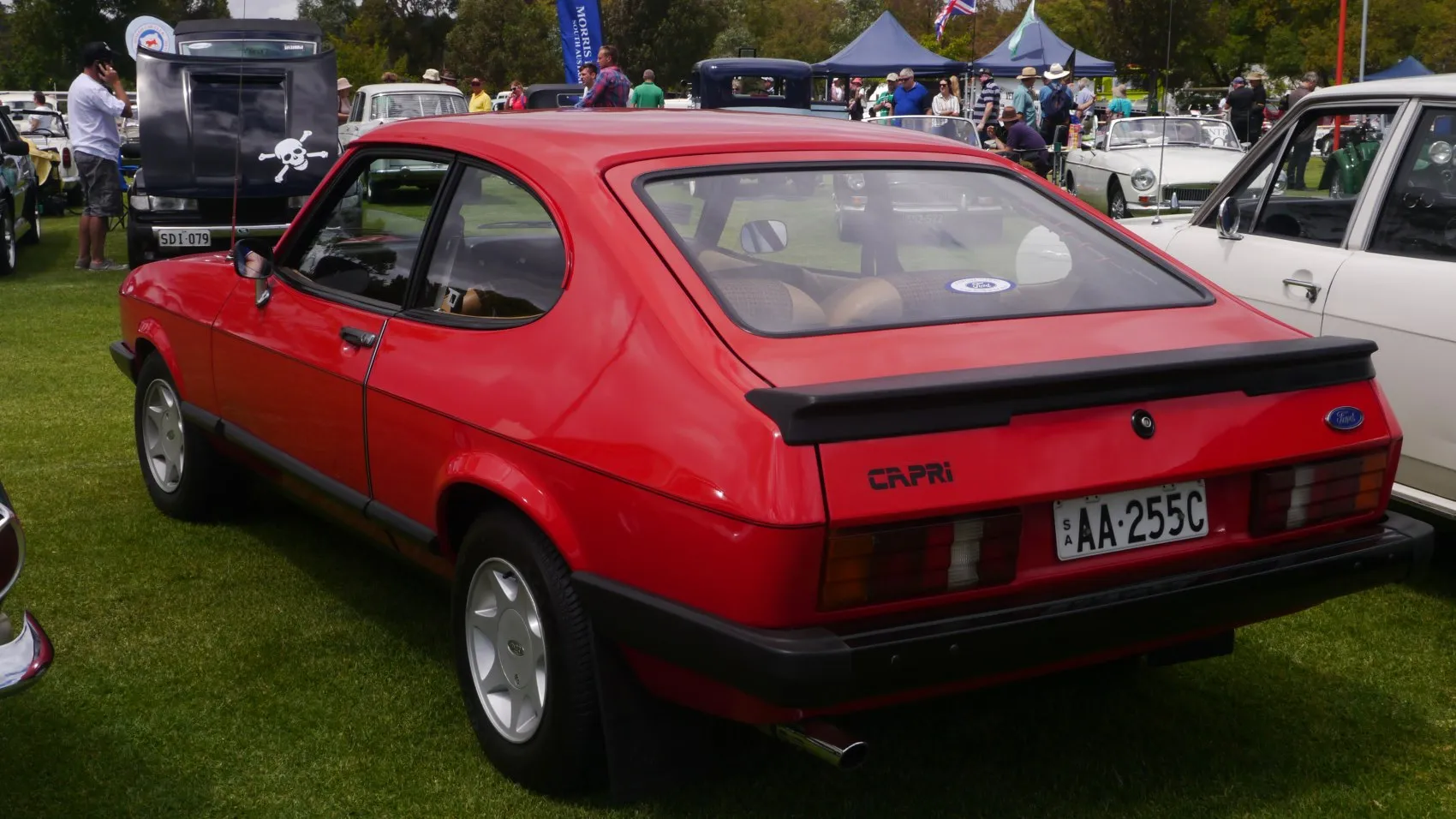
Ford Capri III (GECP) 2.3 Super V6 (114 Hp)
Overall Rating
Ford Capri:
The Ford Capri is a car which was built by Ford of Europe from 1968 to 1986. It is a fastback coupé and was designed by Philip T. Clark, who had been involved in the design of the Ford Mustang. It used the mechanical components from the Mk2 Ford Cortina and was intended as the European equivalent of the Ford Mustang. The Capri went on to be highly successful for Ford, selling nearly 1. 9 million units in its lifetime. A wide variety of engines were used in the car throughout its production lifespan, which included V6 engines named Essex and Cologne at the top of the range, while the straight-four and V4 engines were used in lower-specification models. Although the Capri was not officially replaced, the second-generation Probe was effectively its replacement after the later car's introduction to the European market in 1994....(Read more on Wikipedia)
III (GECP) Overview:
Ford Capri (III (GECP)). With 176 Nm of torque, it offers ample pulling power. Weighing only 1110 kg, it’s quite light. Rear‑wheel drive offers dynamic handling and sporty feedback. Acceleration is relatively slow (0–100 km/h in 10.1 s). The top speed reaches 186 km/h. A two-door car with a fixed roof, known for its sporty design and dynamic performance. Seating for 4 makes it ideal for daily use.
2.3 Super V6 (114 Hp) Verdict:

Performance Verdict
Offers a smooth V6 power delivery with respectable acceleration, making it a comfortable and capable cruiser. A good step up from the 4-cylinder engines.
Fuel Economy
Moderate fuel consumption for a V6 of its era, better than the 2.8i but less efficient than the smaller 4-cylinders.
Pros and Cons:
Pros:
- • Iconic classic styling with a sporty coupe silhouette.
- • Wide range of engines catering to various budgets and performance needs.
- • Engaging rear-wheel-drive handling characteristics.
- • Relatively affordable entry into classic car ownership.
- • Good parts availability due to shared Ford components.
Cons:
- • Lack of modern safety features (no Euro NCAP rating).
- • Fuel economy can be poor, especially with larger V6 engines.
- • Interior quality and refinement are basic by modern standards.
- • Rust can be a significant issue on unrestored examples.
- • Smaller engines can feel underpowered for a 'sports' coupe.
Specifications:
Specifications are compared to those of the previous generation(III (GECP): 1981 - 1985).
| General: | |
|---|---|
| Brand: | Ford |
| Model: | Capri |
| Generation: | III (GECP) |
| Modification (Engine): | 2.3 Super V6 (114 Hp) |
| Start of production: | March, 1978 |
| End of production: | June, 1985 |
| Powertrain Architecture: | Internal Combustion engine |
| Body type: | Coupe |
| Seats: | 4 |
| Doors: | 3 |
| Engine: | |
|---|---|
| Power: | 114 Hp @ 5300 rpm. |
| Power per litre: | 49.7 Hp/l [worst than previous generation] |
| Torque: | 176 Nm @ 3000 rpm. |
| Engine Model/Code: | Cologne [Same engine] More details about the engine Cologne |
| Engine displacement: | 2294 |
| Number of cylinders: | 6 |
| Engine configuration: | V-engine |
| Fuel injection system: | Carburettor |
| Engine aspiration: | Naturally aspirated engine |
| Engine oil capacity: | 4.25 l |
| Coolant: | 7.8 l |
| Engine layout: | Front, Longitudinal |
| Cylinder Bore: | 90 mm mm |
| Piston Stroke: | 60.14 mm mm |
| Compression ratio: | 8.75:1 |
| Performance: | |
|---|---|
| Fuel Type: | Petrol (Gasoline) |
| Acceleration 0 - 100 km/h: | 10.1 sec |
| Acceleration 0 - 62 mph: | 10.1 sec |
| Maximum speed: | 186 km/h |
| Weight-to-power ratio: | 9.7 kg/Hp, 102.7 Hp/tonne |
| Weight-to-torque ratio: | 6.3 kg/Nm, 158.6 Nm/tonne |
| Acceleration 0 - 60 mph: | 9.6 sec |
| Space: | |
|---|---|
| Kerb Weight: | 1110 |
| Max. weight: | 1460 |
| Max. roof load: | 75 kg |
| Max load: | 350 |
| Trunk (boot) space - minimum: | 640 l |
| Permitted trailer load with brakes (12%): | 1200 kg |
| Fuel tank capacity: | 58 l |
| Permitted trailer load without brakes: | 550 kg |
| Size: | |
|---|---|
| Length: | 4440 mm mm |
| Width: | 1700 mm mm |
| Height: | 1350 mm mm |
| Wheelbase: | 2560 mm mm |
| Front track: | 1350 mm |
| Rear (Back) track: | 1380 mm |
| Minimum turning circle (turning diameter): | 10 m [above average] |
| Powertrain: | |
|---|---|
| Drivetrain Architecture | The Internal combustion engine (ICE) drives the rear wheels of the vehicle. |
| Drive wheel | Rear wheel drive |
| Number of gears | 4 |
| Transmission type | Manual |
| Front brakes | Disc, 245 mm [bad for performance and cooling.] |
| Rear brakes | Drum, 229x43 mm [bad for performance and cooling.] |
| Steering type | Steering rack and pinion |
| Tires size | 185/70 R13 |
| Wheel rims size | 5.5J x 13 |
| Front suspension | Independent, type McPherson with coil spring and anti-roll bar |
| Rear suspension | Transverse stabilizer, Leaf spring |







Have you ever driven an Ford Capri?
How was your experience with it? Share with us: