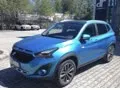
Click on image to view the full photo gallery
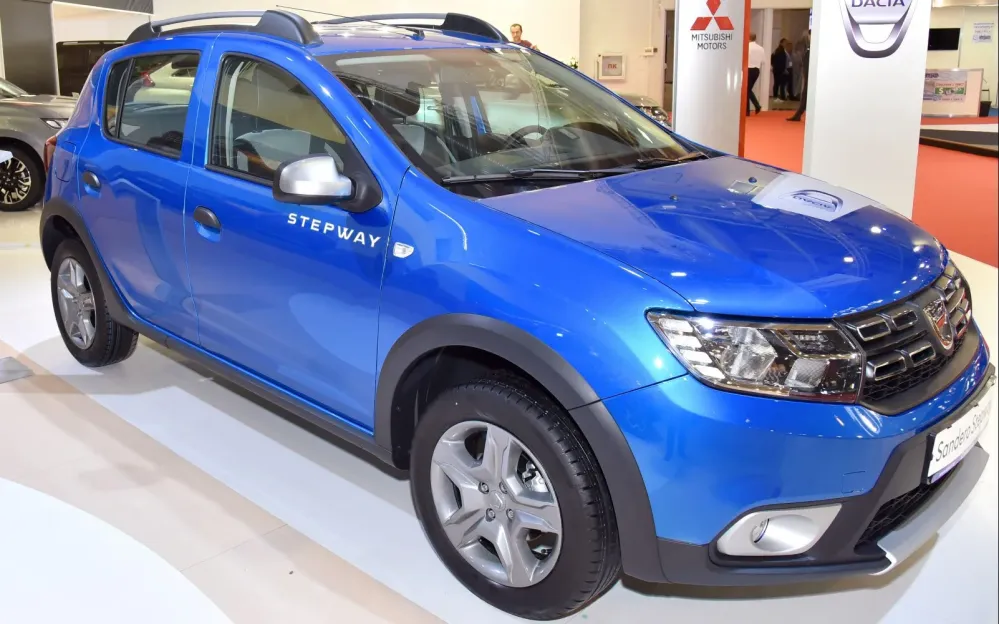
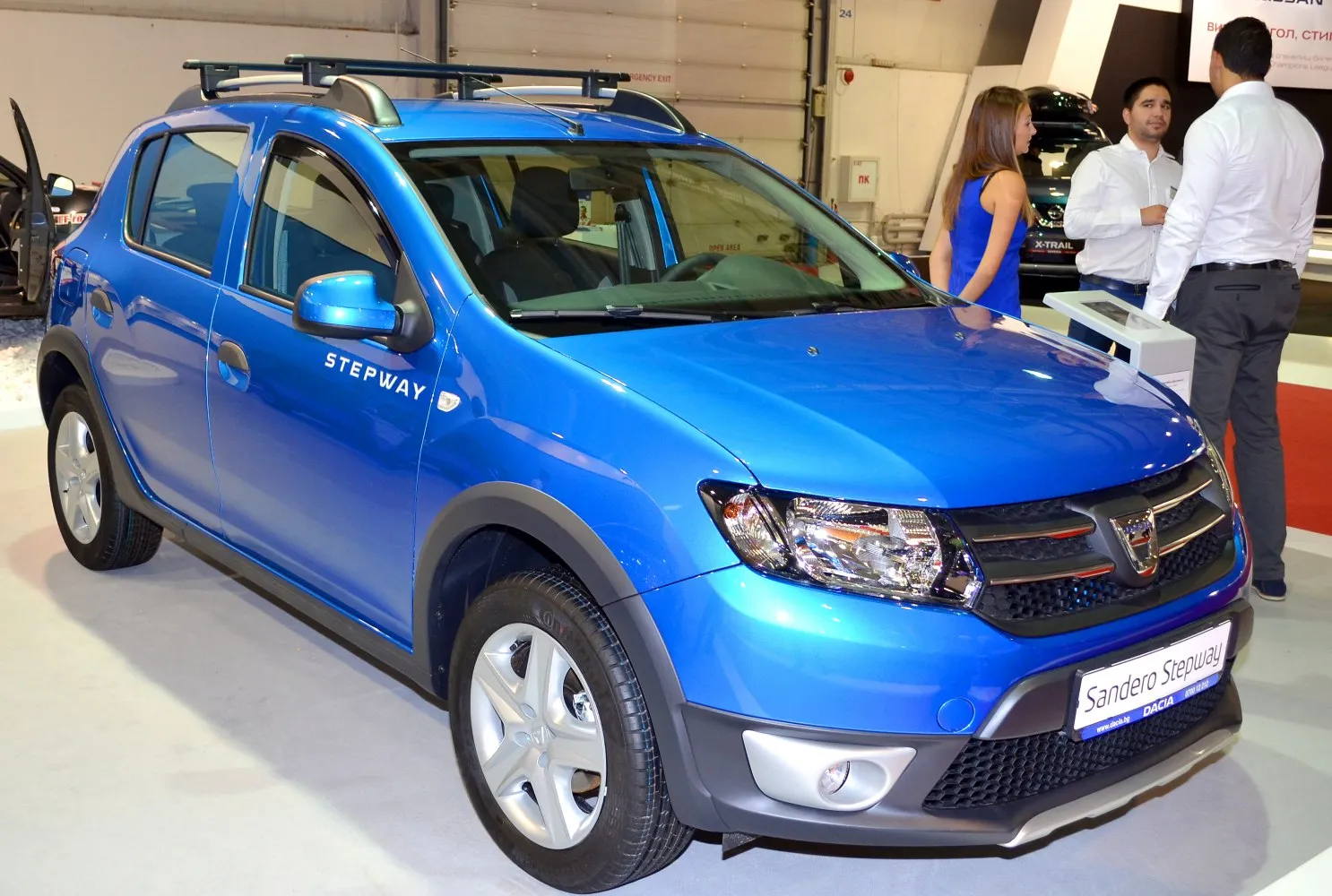
Dacia Sandero II Stepway (facelift 2016) 1.0 ECO-G (101 Hp) LPG
Overall Rating
Dacia Sandero:
The Dacia Sandero is a subcompact car/supermini car produced and marketed jointly by the French manufacturer Renault and its Romanian subsidiary Dacia since 2007, currently at its third generation. It has been also marketed as the Renault Sandero in certain markets, such as Russia, Latin America, Iran, Egypt, and Sub-Saharan Africa. Dacia Sandero has been Europe's best selling car several years in a row.
With a slightly shorter wheelbase than the Dacia Logan sedan from which it derives, the Sandero was developed at Renault's Technocentre near Paris, France, in conjunction with the regional engineering centres based in Brazil and Romania. It was revealed for the first time at the 2007 Frankfurt Motor Show, and made its formal market debut in Brazil, as a Renault model, in December 2007, being the first Renault model to debut outside Europe....(Read more on Wikipedia)
II Stepway (facelift 2016) Overview:
Dacia Sandero (II Stepway (facelift 2016)). With 170 Nm of torque, it offers ample pulling power. Weighing only 1187 kg, it’s quite light. Front‑wheel drive delivers efficiency and easy handling. Acceleration is relatively slow (0–100 km/h in 12.4 s). The top speed reaches 180 km/h. A vehicle that combines characteristics of SUVs and hatchbacks for versatility. Seating for 5 makes it ideal for daily use.
1.0 ECO-G (101 Hp) LPG Verdict:

Performance Verdict
Offers good power, with the added flexibility and cost savings of LPG, though acceleration might be slightly dulled on LPG.
Fuel Economy
Excellent running costs due to the cheaper price of LPG, making it ideal for high-mileage drivers.
Pros and Cons:
Pros:
- • Exceptional value for money in the compact crossover segment
- • Practical and spacious interior with good boot capacity
- • Robust and reliable engine options, especially the diesels
- • Elevated driving position offers good visibility
- • Low running costs, particularly with diesel and LPG variants
Cons:
- • Basic interior materials and limited refinement compared to rivals
- • Modest performance from entry-level petrol engines
- • Easy-R automated manual gearbox can be clunky
- • Some safety features might be less comprehensive than newer competitors
Specifications:
Specifications are compared to those of the previous generation(III Stepway (facelift 2022): 2022 - ).
| General: | |
|---|---|
| Brand: | Dacia |
| Model: | Sandero |
| Generation: | II Stepway (facelift 2016) |
| Modification (Engine): | 1.0 ECO-G (101 Hp) LPG |
| Start of production: | January, 2020 |
| End of production: | 2020 |
| Powertrain Architecture: | Internal Combustion engine |
| Body type: | Crossover |
| Seats: | 5 |
| Doors: | 5 |
| Engine: | |
|---|---|
| Engine systems: | Start & Stop System |
| Power: | 101 Hp @ 5000 rpm. |
| Power per litre: | 101.1 Hp/l |
| Torque: | 170 Nm @ 2000 rpm. |
| Engine Model/Code: | H4Dt [Same engine] More details about the engine H4Dt |
| Engine displacement: | 999 |
| Number of cylinders: | 3 |
| Engine configuration: | Inline |
| Number of valves per cylinder: | 4 |
| Fuel injection system: | Multi-port manifold injection |
| Engine aspiration: | Turbocharger |
| Valvetrain: | DOHC |
| Engine oil capacity: | 4.1 l |
| Coolant: | 4.5 l |
| Engine layout: | Front, Transverse |
| Cylinder Bore: | 72.2 mm mm |
| Piston Stroke: | 81.34 mm mm |
| Performance: | |
|---|---|
| Fuel Type: | Petrol / LPG |
| Combined fuel consumption (WLTP): | 6.0 l/100 km |
| Fuel consumption (economy) - combined (NEDC): | 4.4-4.8 l/100 km |
| Fuel consumption at Low speed (WLTP): | 7.5 l/100 km |
| Fuel consumption at Medium speed (WLTP): | 5.3 l/100 km |
| Fuel consumption at high speed (WLTP): | 5.1 l/100 km |
| Fuel consumption at very high speed (WLTP): | 6.4 l/100 km |
| Fuel consumption at Low speed (WLTP) (LPG): | 9.4 l/100 km |
| Fuel consumption at Medium speed (WLTP) (LPG): | 6.8 l/100 km |
| Fuel consumption at high speed (WLTP) (LPG): | 6.4 l/100 km |
| Fuel consumption at very high speed (WLTP) (LPG): | 7.9 l/100 km |
| Fuel consumption (economy) - combined: | 4.4-4.8 l/100 km |
| Emission standard: | Euro 6d-TEMP |
| Acceleration 0 - 100 km/h: | 12.4 sec |
| Acceleration 0 - 62 mph: | 12.4 sec |
| Maximum speed: | 180 km/h |
| Weight-to-power ratio: | 11.5 kg/Hp, 86.7 Hp/tonne |
| Weight-to-torque ratio: | 6.9 kg/Nm, 145.9 Nm/tonne |
| Acceleration 0 - 60 mph: | 11.8 sec |
| Combined fuel consumption (WLTP) (LPG): | 7.4 l/100 km |
| Space: | |
|---|---|
| Kerb Weight: | 1165-1210 |
| Max. weight: | 1578 |
| Max load: | 368-413 |
| Trunk (boot) space - maximum: | 1200 l |
| Trunk (boot) space - minimum: | 320 l |
| Permitted trailer load with brakes (12%): | 1110 kg |
| Fuel tank capacity: | 50 l |
| Fuel tank capacity (LPG): | 32 l |
| Permitted trailer load without brakes: | 620 kg |
| Size: | |
|---|---|
| Length: | 4089 mm mm [10mm less] |
| Width: | 1757 mm mm [91mm less] |
| Height: | 1618 mm mm [31mm more] |
| Wheelbase: | 2589 mm mm [15mm less] |
| Width including mirrors: | 1994 mm |
| Front track: | 1489 mm |
| Rear (Back) track: | 1492 mm |
| Front overhang: | 846 mm |
| Rear overhang: | 654 mm |
| Ride height (ground clearance): | 173 mm |
| Minimum turning circle (turning diameter): | 10.5 m [above average] |
| Powertrain: | |
|---|---|
| Drivetrain Architecture | The Internal combustion engine (ICE) drives the front wheels of the vehicle. |
| Drive wheel | Front wheel drive |
| Number of gears | 5 |
| Transmission type | Manual |
| Front brakes | Ventilated discs, 258x22 mm [Best for performance and cooling.] |
| Rear brakes | Drum [bad for performance and cooling.] |
| Assisting systems | ABS (Anti-lock braking system) |
| Steering type | Steering rack and pinion |
| Power steering | Electric Steering |
| Tires size | 205/55 R16 |
| Wheel rims size | 6J x 16 |
| Front suspension | Independent type McPherson |
| Rear suspension | Semi-independent, coil spring |










Driven it? Loved it? Hated it? Share your honest review!