
Click on image to view the full photo gallery
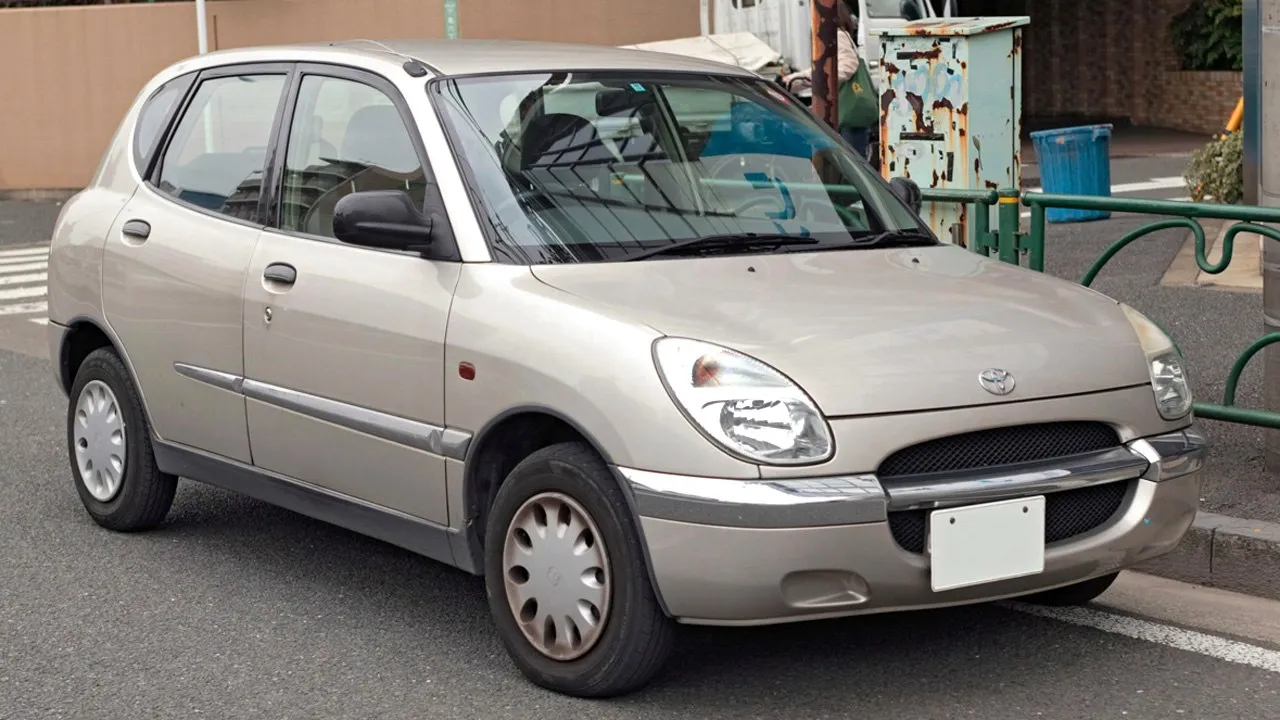
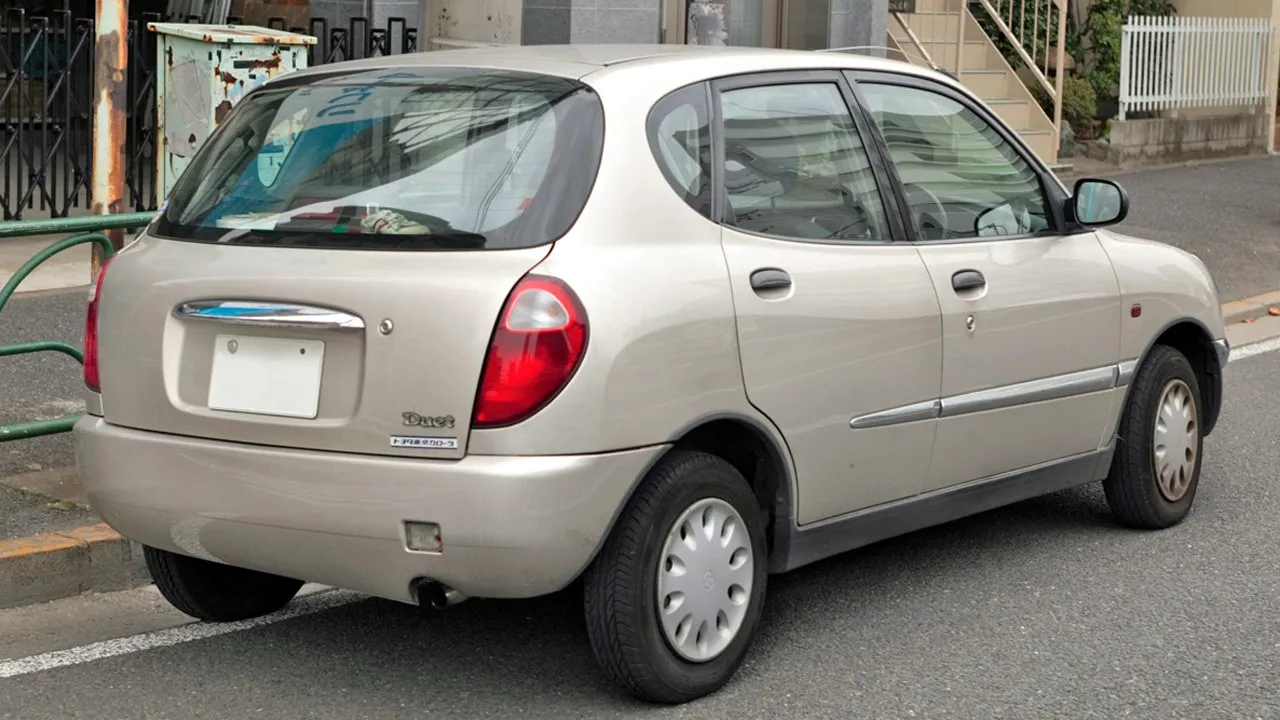
Toyota Duet M10 1.0 i 12V (60 Hp)
Overall Rating
Toyota Duet:
The Daihatsu Storia is a subcompact car/supermini which was produced by the Japanese automaker Daihatsu between 1998 and 2005. It effectively replaced the similar sized Charade, which was produced alongside it for a year. It was also sold as the Toyota Duet in Japan, which replaced the Corolla II. In international markets, with the exception of a few countries, the Storia was sold as the first-generation Daihatsu Sirion....(Read more on Wikipedia)
M10 Overview:
Toyota Duet (M10). With 94 Nm of torque, it offers ample pulling power. It boasts low fuel consumption (~6 l/100km). Weighing only 850 kg, it’s quite light. Front‑wheel drive delivers efficiency and easy handling. A compact car with a rear door that swings upward to provide access to the cargo area. Seating for 5 makes it ideal for daily use.
The Toyota Duet (M10) generation was not officially tested by Euro NCAP. As a compact car from the late 1990s/early 2000s, its passive safety features would likely be basic compared to modern standards, though it did offer ABS.
1.0 i 12V (60 Hp) Verdict:

Performance Verdict
Adequate for city driving, the 60 Hp 1.0L engine provides modest acceleration suitable for urban commutes but can feel strained on highways.
Fuel Economy
Excellent fuel economy, especially in city conditions, making it a very cost-effective option for daily driving.
Pros and Cons:
Pros:
- • Excellent fuel economy (especially 1.0L)
- • Compact and easy to maneuver in city traffic
- • Reliable Toyota/Daihatsu engineering
- • Practical interior for its size
- • Affordable to buy and maintain
Cons:
- • Basic interior materials and design
- • Limited highway performance (1.0L)
- • Lack of modern safety features
- • Can be noisy at higher speeds
- • Small trunk space with seats up
Specifications:
Specifications are compared to those of the previous generation(M10: 2000 - June, 2004).
| General: | |
|---|---|
| Brand: | Toyota |
| Model: | Duet |
| Generation: | M10 |
| Modification (Engine): | 1.0 i 12V (60 Hp) |
| Start of production: | February, 1998 |
| End of production: | June, 2004 |
| Powertrain Architecture: | Internal Combustion engine |
| Body type: | Hatchback |
| Seats: | 5 |
| Doors: | 5 |
| Engine: | |
|---|---|
| Power: | 60 Hp @ 6000 rpm. Same horsepower |
| Power per litre: | 60.7 Hp/l [Same length.] |
| Torque: | 94 Nm @ 3600 rpm. |
| Engine Model/Code: | EJ-VE More details about the engine EJ-VE |
| Engine displacement: | 989 |
| Number of cylinders: | 3 |
| Engine configuration: | Inline |
| Number of valves per cylinder: | 4 |
| Fuel injection system: | Multi-port manifold injection |
| Engine aspiration: | Naturally aspirated engine |
| Valvetrain: | DOHC |
| Engine oil capacity: | 2.3 l |
| Coolant: | 3 l |
| Engine layout: | Front, Longitudinal |
| Cylinder Bore: | 72 mm mm |
| Piston Stroke: | 81 mm mm |
| Compression ratio: | 10:1 |
| Performance: | |
|---|---|
| Fuel Type: | Petrol (Gasoline) |
| Fuel consumption (economy) - urban: | 6 l/100 km |
| Weight-to-power ratio: | 14.2 kg/Hp, 70.6 Hp/tonne |
| Weight-to-torque ratio: | 9 kg/Nm, 110.6 Nm/tonne |
| Space: | |
|---|---|
| Kerb Weight: | 850 |
| Max. weight: | 1125 |
| Max load: | 275 |
| Trunk (boot) space - maximum: | 525 l |
| Trunk (boot) space - minimum: | 235 l |
| Fuel tank capacity: | 40 l |
| Size: | |
|---|---|
| Length: | 3660 mm mm [Same length.] |
| Width: | 1600 mm mm [Same width.] |
| Height: | 1450 mm mm [Same height.] |
| Wheelbase: | 2370 mm mm [Same wheelbase.] |
| Front track: | 1395 mm |
| Rear (Back) track: | 1365 mm |
| Minimum turning circle (turning diameter): | 8.6 m [above average] |
| Powertrain: | |
|---|---|
| Drivetrain Architecture | The Internal combustion engine (ICE) drives the front wheels of the vehicle. |
| Drive wheel | Front wheel drive |
| Number of gears | 5 |
| Transmission type | Manual |
| Front brakes | Disc [bad for performance and cooling.] |
| Rear brakes | Drum [bad for performance and cooling.] |
| Assisting systems | ABS (Anti-lock braking system) |
| Steering type | Steering rack and pinion |
| Power steering | Hydraulic Steering |
| Tires size | 165/65 R14 |
| Front suspension | Spring Strut |
| Rear suspension | Torsion |





Your first impression of the Toyota Duet in one word? Go!