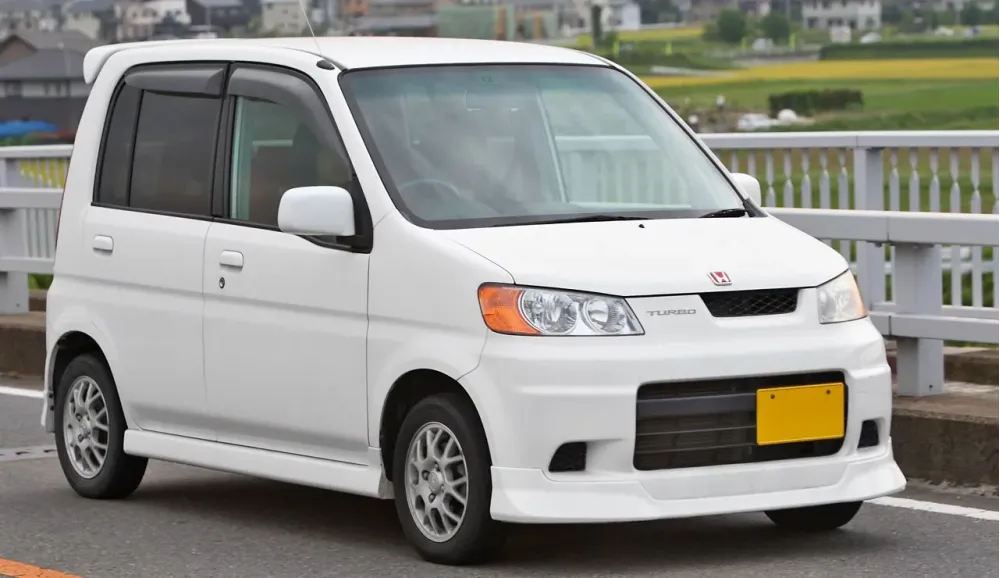
Click on image to view the full photo gallery
Honda Life III 0.7 Dunk Ts 4WD (64 Hp)
Overall Rating
Honda Life:
The Honda Life is an automobile nameplate that was used on various kei car/city cars produced by Honda: passenger cars, microvans, and kei trucks. The first series of the nameplate was built between 1971 and 1974, with the nameplate revived in 1997 and used until 2014. The Japanese-market Life has rarely been marketed outside Japan.
In 2020, Dongfeng Honda revived the "Life" nameplate in China as a rebadged variant of the Fit produced by Guangqi Honda.
The original Life range was offered as a two-door or four-door sedan and in a three-door wagon model , replacing the Honda NIII360. Compared with the previous Honda minicar series, passenger comfort was improved to make this a better family car - indeed, Honda's target was to make a kei which was as habitable as a period 1-litre car. The wheelbase, at 2,080 mm , was eight cm longer than that of the predecessor. The entire Life range had a water-cooled Honda EA 356 cc engine, usually producing 30 PS at 8,000 rpm. which began as the air-cooled engine borrowed from the Honda CB450 motorcycle. The top speed of the sedan is 105 km/h. The sprint to 100 km/h came up in 34. 9 seconds in a period test. In September 1972, the tall and curiously shaped "Life Step Van" was introduced, with either three or five doors. A pickup version of this was later added to the lineup, but had minimal impact on the market....(Read more on Wikipedia)
III Overview:
Honda Life (III). With 93 Nm of torque, it offers ample pulling power. Weighing only 920 kg, it’s quite light. All‑wheel drive provides excellent grip, ideal for off‑road use. The top speed reaches 130 km/h. A compact car with a rear door that swings upward to provide access to the cargo area. Seating for 4 makes it ideal for daily use.
The Honda Life III, being a Kei car primarily for the Japanese domestic market, was not tested by Euro NCAP. Its safety standards would align with Japanese regulations of its era, which typically differ from European benchmarks for larger vehicles.
0.7 Dunk Ts 4WD (64 Hp) Verdict:

Performance Verdict
This 64 Hp engine provides adequate power for city driving and light urban commuting, though acceleration is modest. The 4WD system adds traction but slightly impacts overall responsiveness.
Fuel Economy
With a combined fuel consumption of 5.3 l/100 km, this engine offers excellent fuel efficiency, making it a very economical choice for daily use within its segment.
Pros and Cons:
Pros:
- • Exceptional fuel economy for city driving.
- • Highly maneuverable and easy to park in urban environments.
- • Reliable Honda engineering and low maintenance costs.
- • Practical interior packaging for its compact size.
- • Available 4WD offers improved traction in adverse conditions.
Cons:
- • Limited power and acceleration, especially at highway speeds.
- • Small cabin space, not ideal for long journeys or multiple passengers.
- • Basic safety features compared to larger, more modern vehicles.
- • Minimal cargo capacity.
- • Ride comfort can be firm on rougher roads.
Specifications:
Specifications are compared to those of the previous generation(II: 1997 - 1998).
| General: | |
|---|---|
| Brand: | Honda |
| Model: | Life |
| Generation: | III |
| Modification (Engine): | 0.7 Dunk Ts 4WD (64 Hp) |
| Start of production: | 1998 |
| End of production: | 2003 |
| Powertrain Architecture: | Internal Combustion engine |
| Body type: | Hatchback |
| Seats: | 4 |
| Doors: | 5 |
| Engine: | |
|---|---|
| Power: | 64 Hp @ 6000 rpm. |
| Power per litre: | 97.6 Hp/l |
| Torque: | 93 Nm @ 4000 rpm. |
| Engine displacement: | 656 |
| Number of cylinders: | 3 |
| Engine configuration: | Inline |
| Number of valves per cylinder: | 4 |
| Fuel injection system: | Multi-port manifold injection |
| Engine aspiration: | Naturally aspirated engine |
| Valvetrain: | OHC |
| Engine layout: | Front, Transverse |
| Cylinder Bore: | 66 mm mm |
| Piston Stroke: | 64 mm mm |
| Compression ratio: | 8.5:1 |
| Performance: | |
|---|---|
| Fuel Type: | Petrol (Gasoline) |
| Fuel consumption (economy) - combined: | 5.3 l/100 km |
| Maximum speed: | 130 km/h |
| Weight-to-power ratio: | 14.4 kg/Hp, 69.6 Hp/tonne |
| Weight-to-torque ratio: | 9.9 kg/Nm, 101.1 Nm/tonne |
| Space: | |
|---|---|
| Kerb Weight: | 920 |
| Max. weight: | 1140 |
| Max load: | 220 |
| Fuel tank capacity: | 31 l |
| Size: | |
|---|---|
| Length: | 3395 mm mm [Same length.] |
| Width: | 1475 mm mm [Same width.] |
| Height: | 1605 mm mm [5mm less] |
| Wheelbase: | 2360 mm mm [Same wheelbase.] |
| Front track: | 1305 mm |
| Rear (Back) track: | 1295 mm |
| Minimum turning circle (turning diameter): | 9 m [above average] |
| Powertrain: | |
|---|---|
| Drive wheel | All wheel drive (4x4) |
| Number of gears | 3 |
| Transmission type | Automatic |
| Front brakes | Ventilated discs [Best for performance and cooling.] |
| Rear brakes | Drum [bad for performance and cooling.] |
| Assisting systems | ABS (Anti-lock braking system) |
| Steering type | Steering rack and pinion |
| Power steering | Hydraulic Steering |
| Tires size | 155/65 R13 |
| Front suspension | Spring Strut |
| Rear suspension | Coil spring |
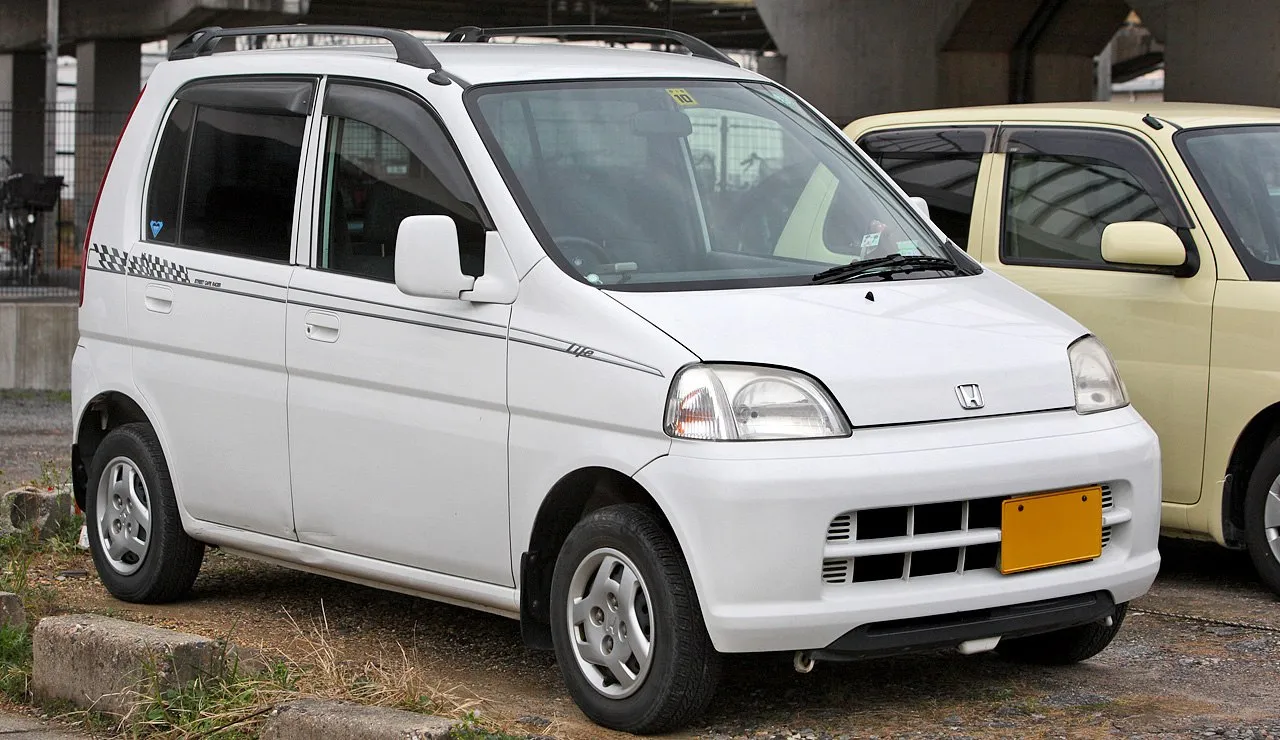




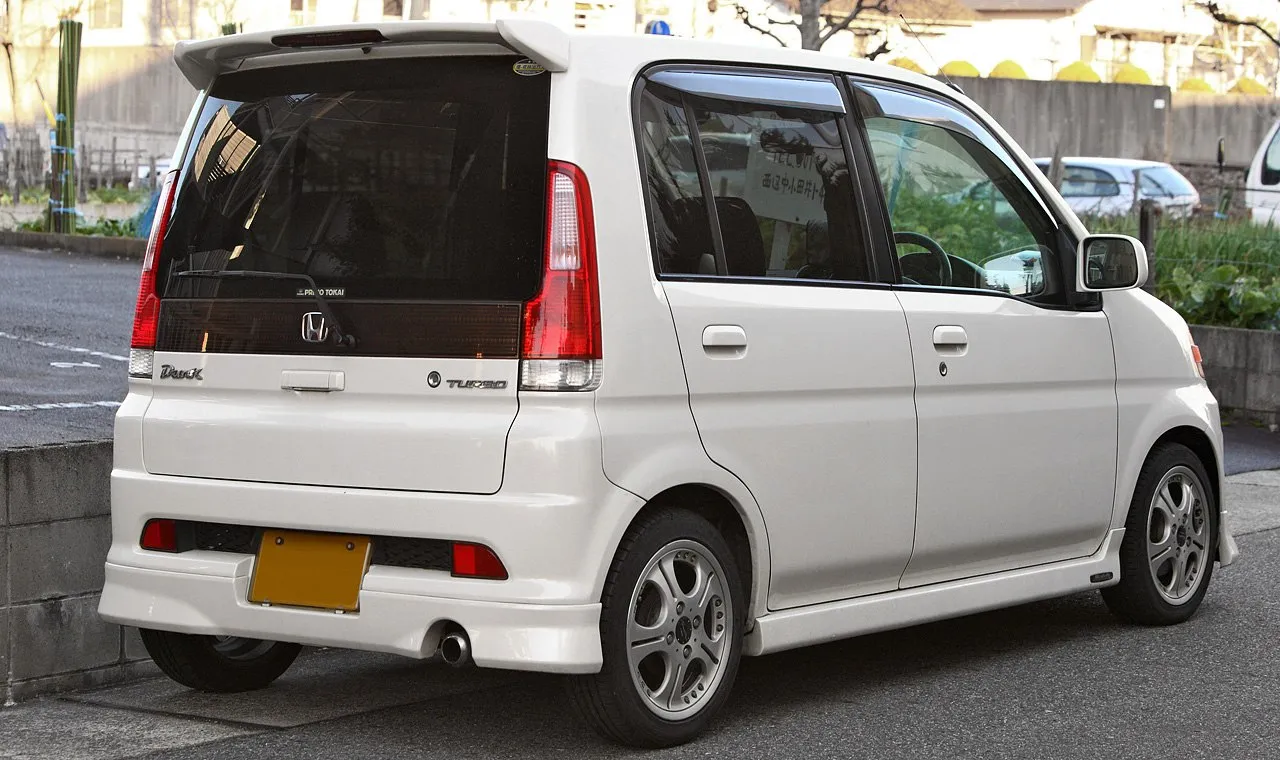
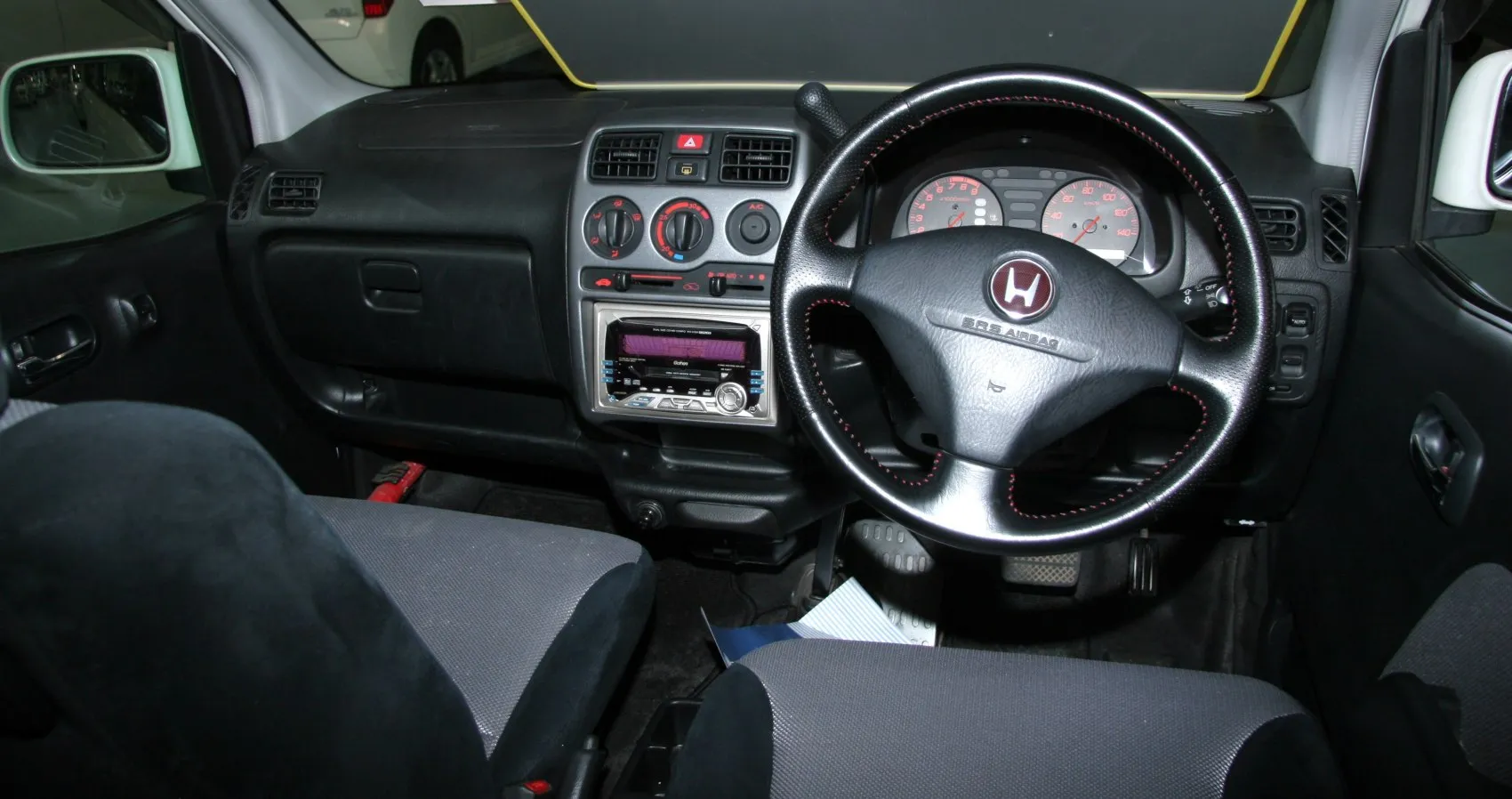
Behind the wheel of the Honda Life. How does it handle on the road?