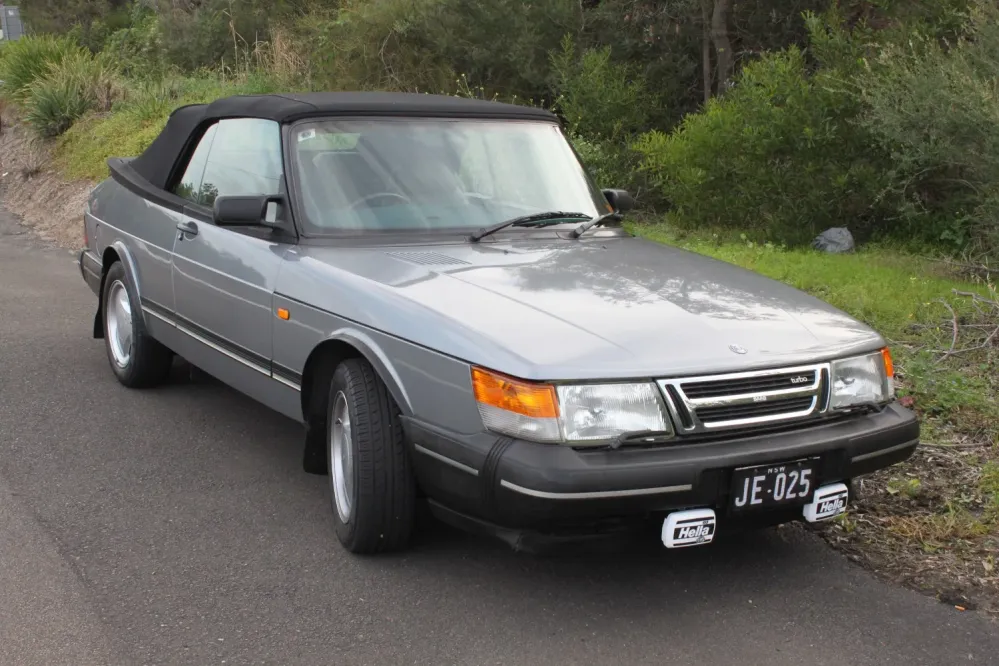
Click on image to view the full photo gallery
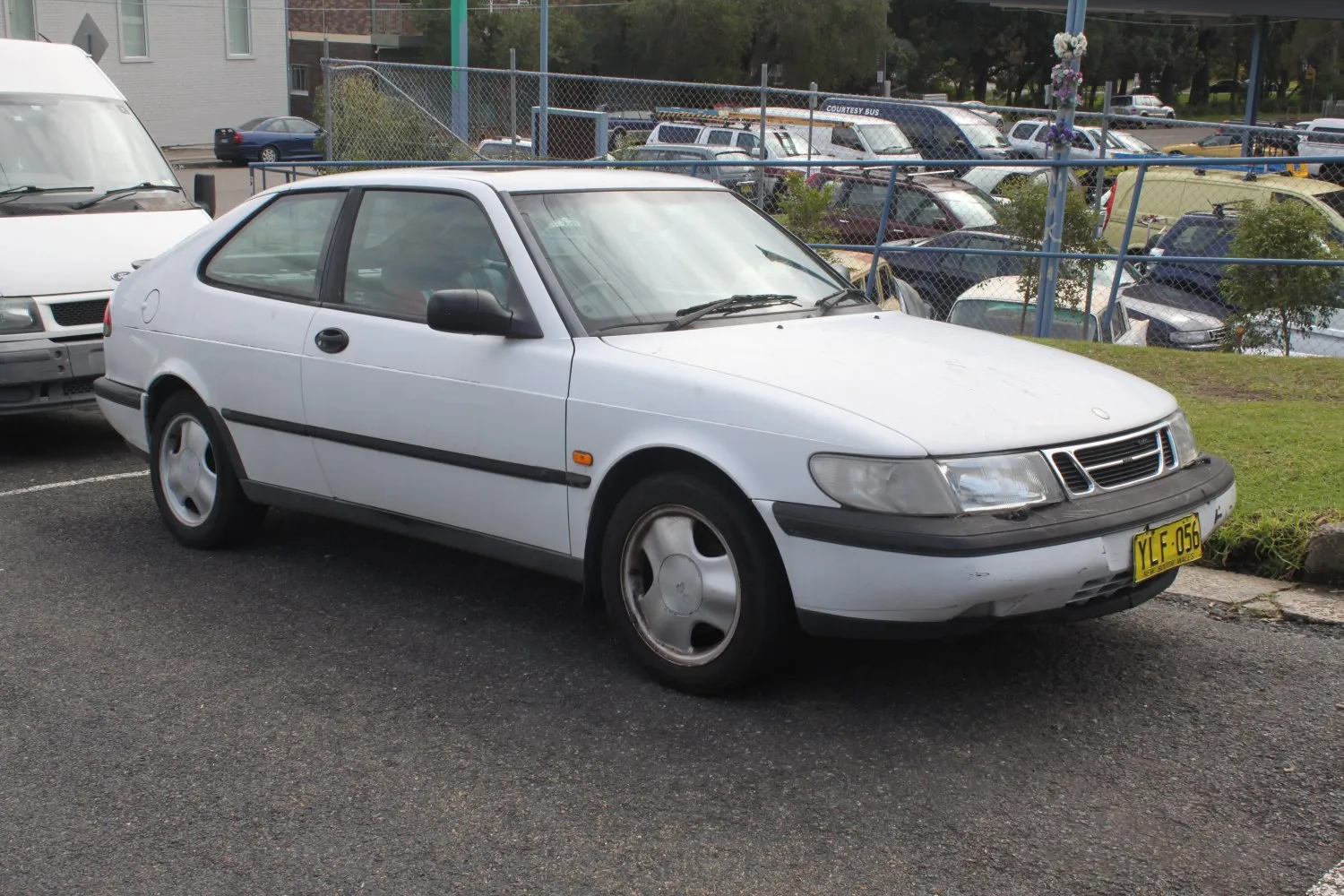
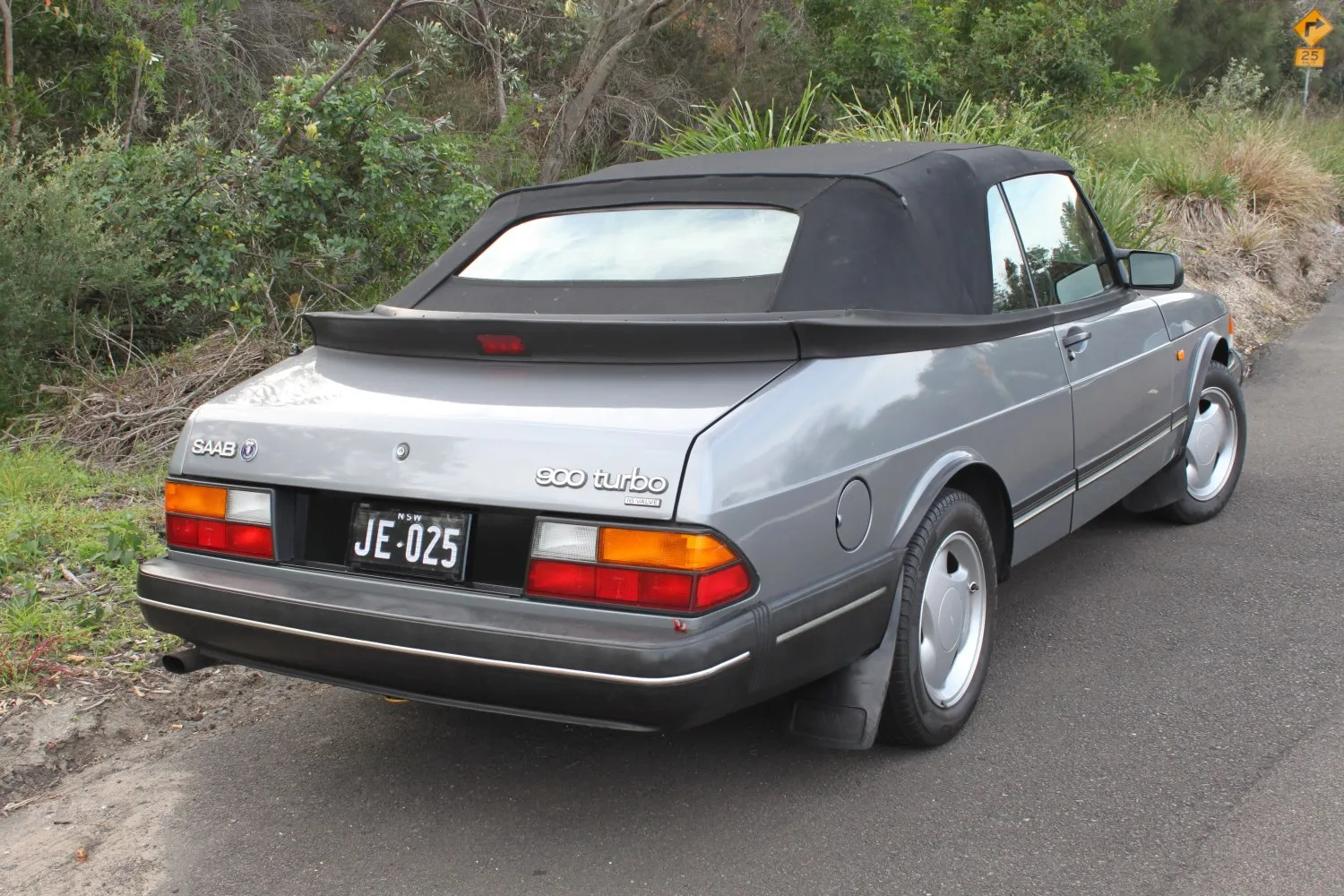
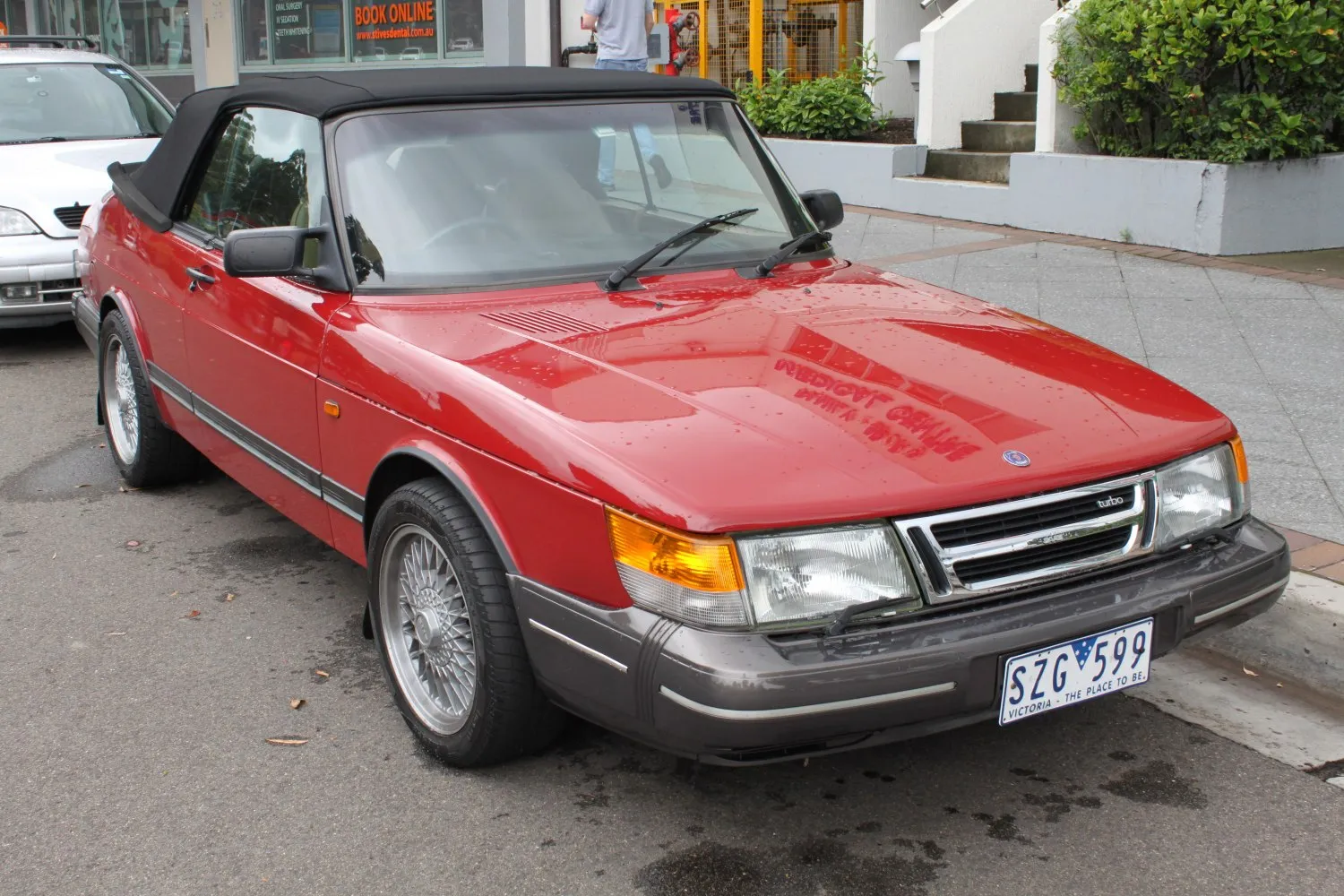
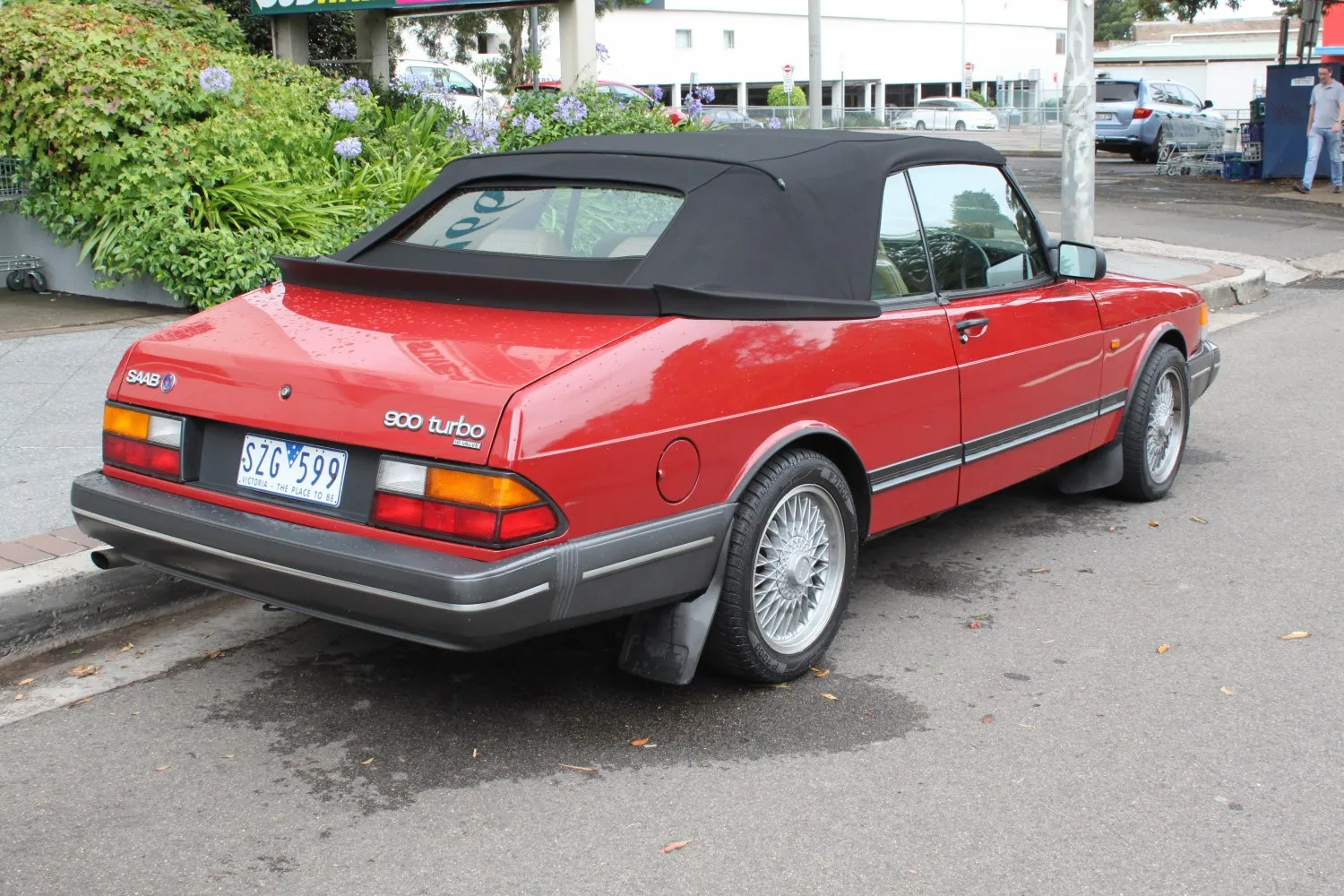
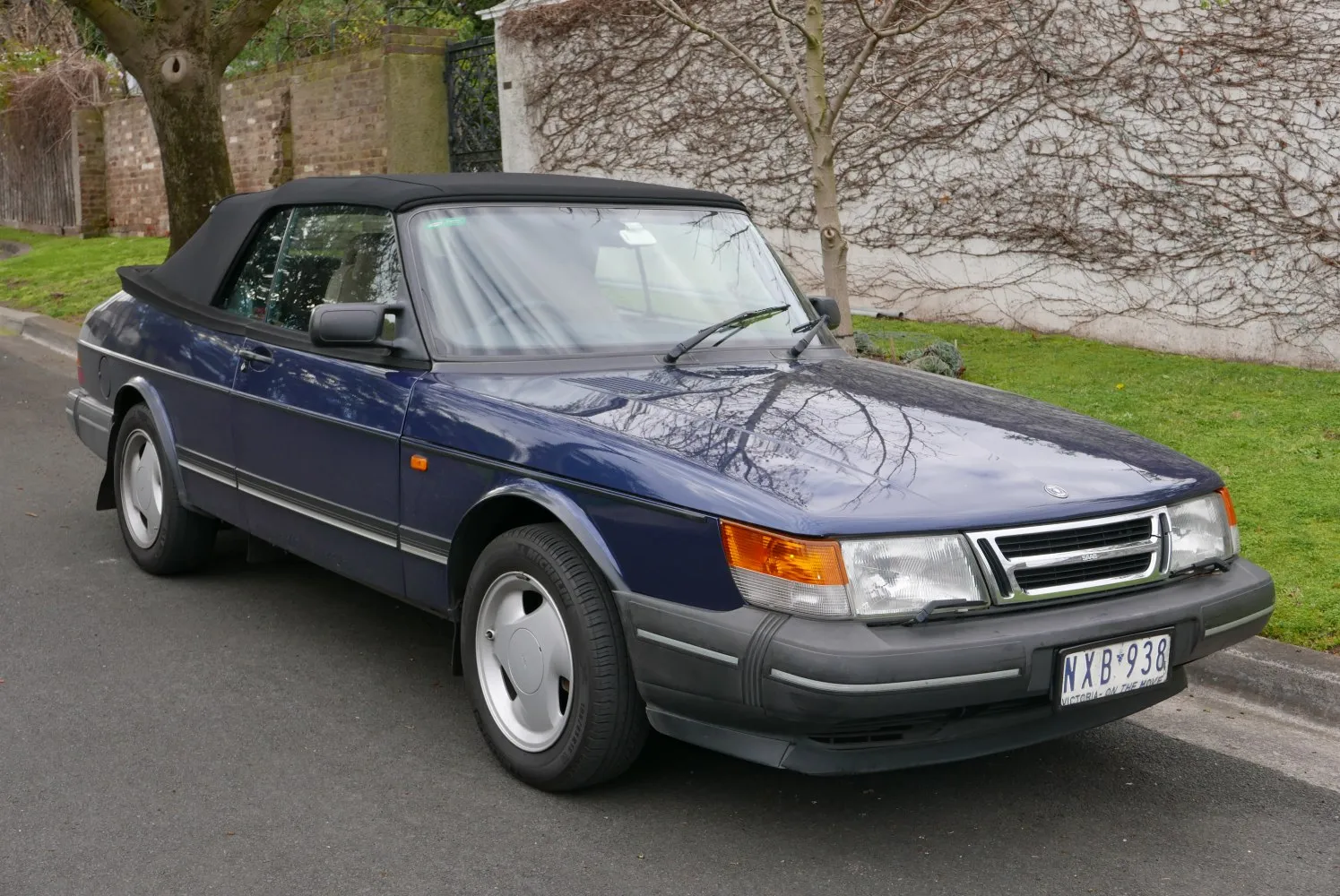
Saab 900 I Cabriolet 2.0 i 16V Turbo (141 Hp) Automatic
Overall Rating
Saab 900:
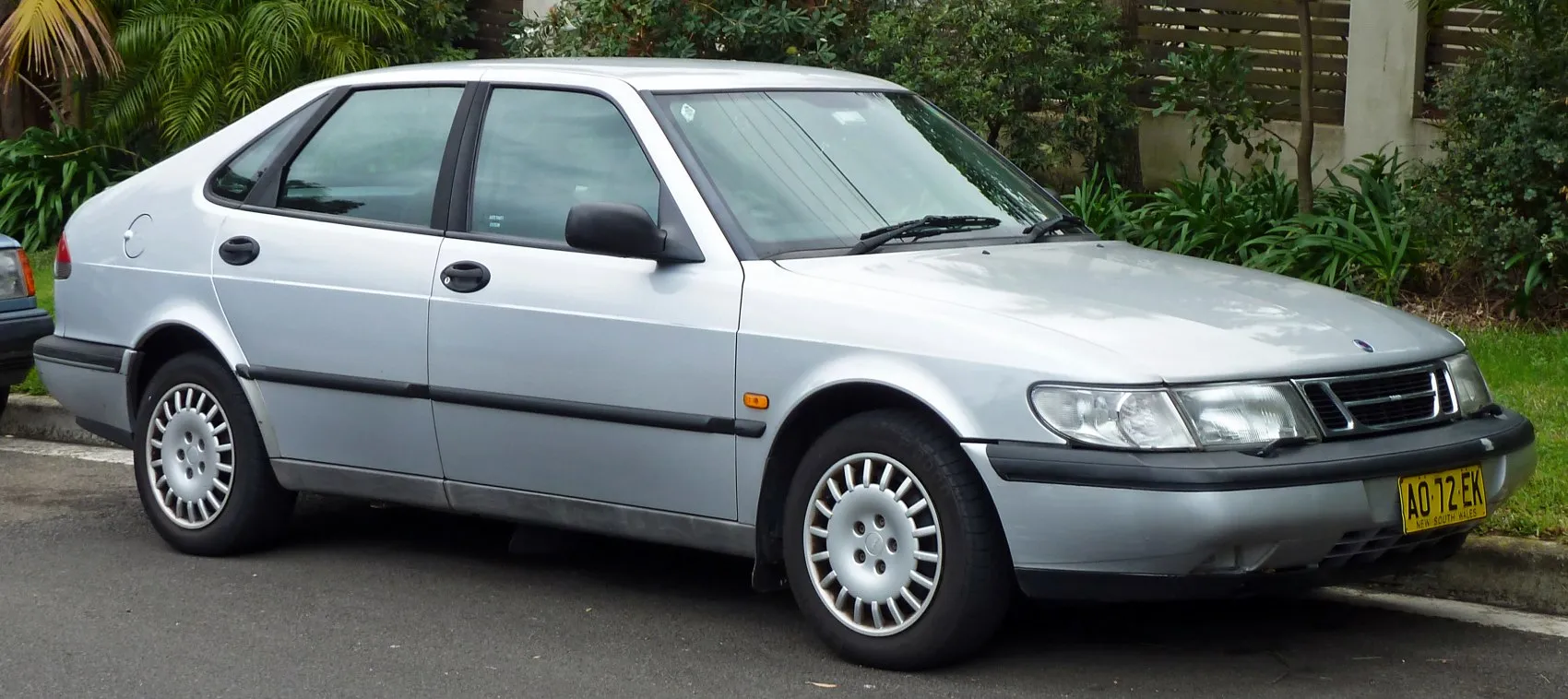
The Saab 900 is a mid-sized automobile produced by Swedish manufacturer Saab from 1978 until 1998 in two generations: the first from 1978 to 1994, and the second from 1994 to 1998.
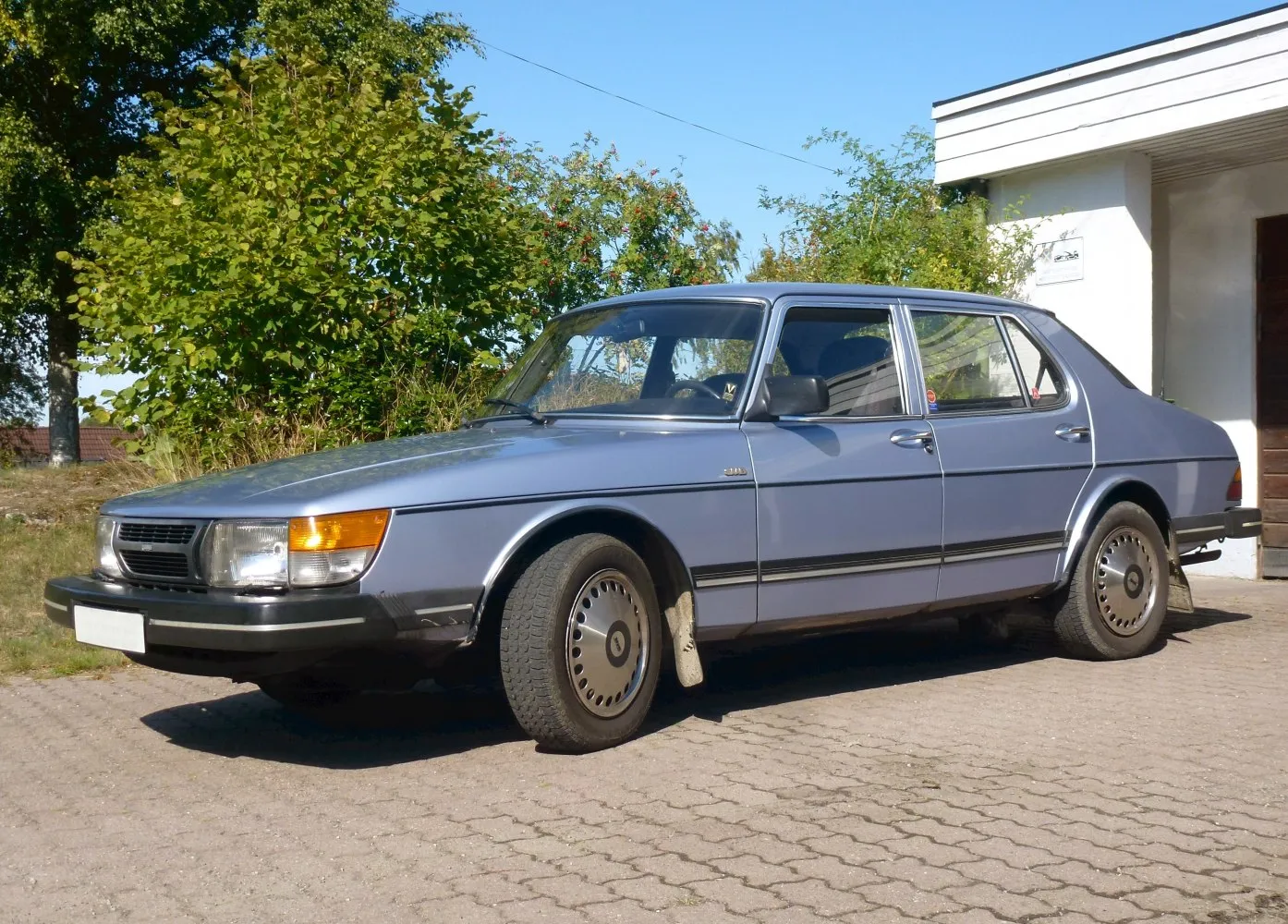
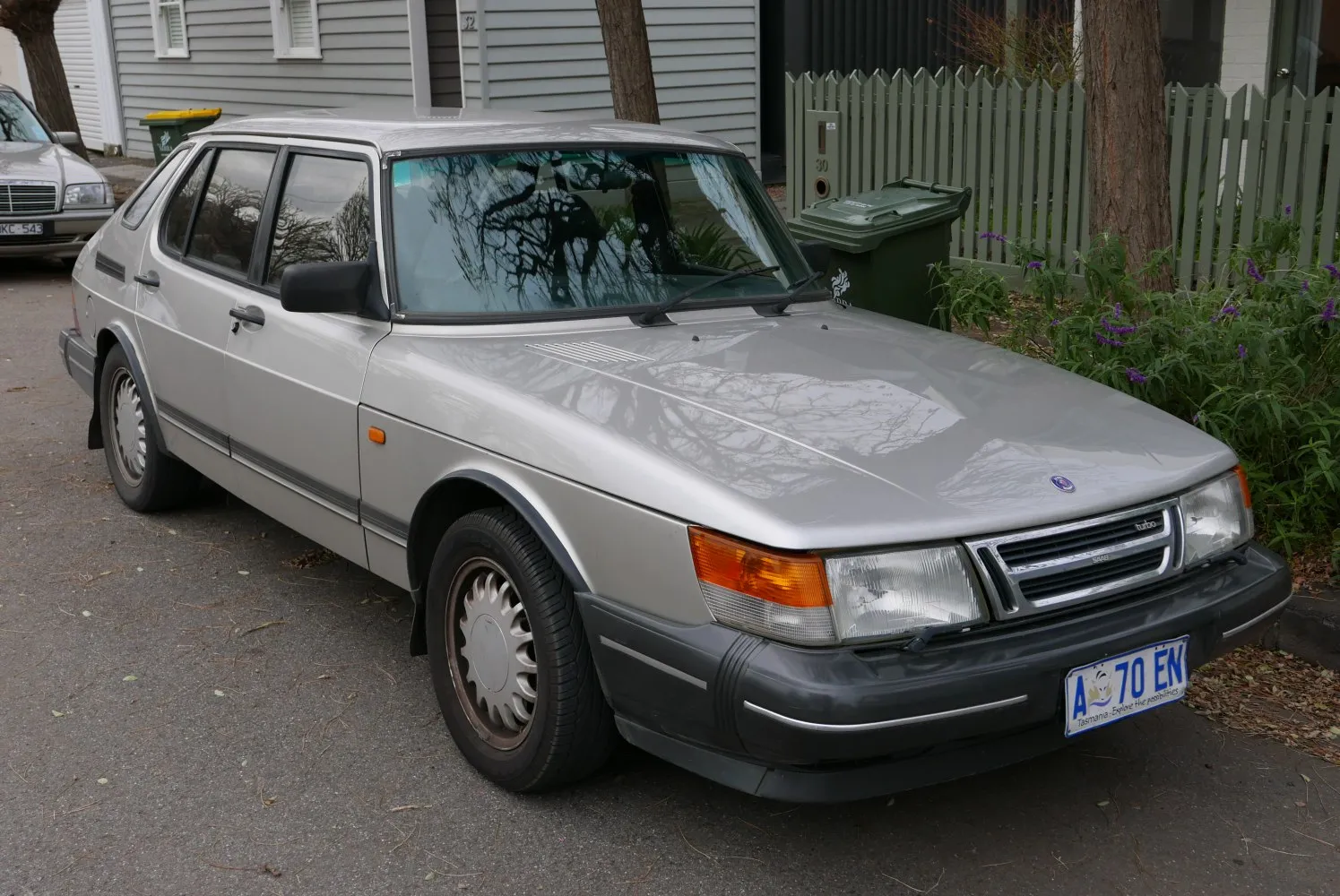
The first-generation car was based on the Saab 99 chassis, though with a longer front end to meet U. S. frontal crash regulations and to make room for the turbo-charged engines, air conditioning and other equipment that was not available in the early days of the 99 model. The 900 was produced in 2- and 4-door sedan, and 3- and 5-door hatchback configurations and, from 1986, as a cabriolet model. There were single- and twin-Zenith carburettor; fuel injected, and turbocharged engines, including Full Pressure Turbo and, in European models during the early 1990s, Low Pressure Turbos....(Read more on Wikipedia)
I Cabriolet Overview:
Saab 900 (I Cabriolet). With 202 Nm of torque, it offers ample pulling power. Weighing only 1190 kg, it’s quite light. Front‑wheel drive delivers efficiency and easy handling. Acceleration is relatively slow (0–100 km/h in 13 s). The top speed reaches 185 km/h. A convertible car with a retractable roof, offering open-air driving experiences. Seating for 4 makes it ideal for daily use.
2.0 i 16V Turbo (141 Hp) Automatic Verdict:

Performance Verdict
The turbo's torque helps overcome some of the automatic's sluggishness, providing decent acceleration, but it's not as engaging as the manual.
Fuel Economy
The least fuel-efficient option in the lineup, with the automatic and turbo combination leading to higher consumption.
Pros and Cons:
Pros:
- • Unique and timeless styling, standing out from the crowd.
- • Exceptional seating comfort, ideal for long journeys.
- • Strong and characterful turbocharged engine options.
- • Surprisingly practical trunk space for a convertible.
- • Robust build quality and distinctive driving experience.
Cons:
- • Noticeable scuttle shake, common for convertibles of its era.
- • Interior ergonomics can feel dated compared to modern cars.
- • Some parts can be challenging and expensive to source.
- • Fuel economy is not competitive by contemporary standards.
- • Potential for rust issues, especially in older, unrestored examples.
Specifications:
Specifications are compared to those of the previous generation(I Combi Coupe (facelift 1987): 1989 - 1992).
| General: | |
|---|---|
| Brand: | Saab |
| Model: | 900 |
| Generation: | I Cabriolet |
| Modification (Engine): | 2.0 i 16V Turbo (141 Hp) Automatic |
| Start of production: | 1990 |
| End of production: | 1993 |
| Powertrain Architecture: | Internal Combustion engine |
| Body type: | Cabriolet |
| Seats: | 4 |
| Doors: | 2 |
| Engine: | |
|---|---|
| Power: | 141 Hp @ 5600 rpm. Same horsepower |
| Power per litre: | 71 Hp/l [worst than previous generation] |
| Torque: | 202 Nm @ 3800 rpm. |
| Engine Model/Code: | B202i More details about the engine B202i |
| Engine displacement: | 1985 |
| Number of cylinders: | 4 |
| Engine configuration: | Inline |
| Number of valves per cylinder: | 4 |
| Fuel injection system: | Multi-port manifold injection |
| Engine aspiration: | Turbocharger |
| Engine oil capacity: | 4 l |
| Coolant: | 10 l |
| Engine layout: | Front, Transverse |
| Cylinder Bore: | 90 mm mm |
| Piston Stroke: | 78 mm mm |
| Compression ratio: | 9:1 |
| Performance: | |
|---|---|
| Fuel Type: | Petrol (Gasoline) |
| Fuel consumption (economy) - urban: | 13.1 l/100 km |
| Fuel consumption (economy) - extra urban: | 8.7 l/100 km |
| Fuel consumption (economy) - combined: | 11.8 l/100 km |
| Acceleration 0 - 100 km/h: | 13 sec |
| Acceleration 0 - 62 mph: | 13 sec |
| Maximum speed: | 185 km/h |
| Weight-to-power ratio: | 8.4 kg/Hp, 118.5 Hp/tonne |
| Weight-to-torque ratio: | 5.9 kg/Nm, 169.7 Nm/tonne |
| Acceleration 0 - 60 mph: | 12.4 sec |
| Space: | |
|---|---|
| Kerb Weight: | 1190 |
| Trunk (boot) space - maximum: | 1500 l |
| Trunk (boot) space - minimum: | 650 l |
| Fuel tank capacity: | 63 l |
| Size: | |
|---|---|
| Length: | 4680 mm mm |
| Width: | 1690 mm mm |
| Height: | 1420 mm mm |
| Wheelbase: | 2515 mm mm |
| Front track: | 1430 mm |
| Rear (Back) track: | 1440 mm |
| Powertrain: | |
|---|---|
| Drivetrain Architecture | The Internal combustion engine (ICE) drives the front wheels of the vehicle. |
| Drive wheel | Front wheel drive |
| Number of gears | 3 |
| Transmission type | Automatic |
| Front brakes | Ventilated discs [Best for performance and cooling.] |
| Rear brakes | Disc |
| Assisting systems | ABS (Anti-lock braking system) |
| Steering type | Steering rack and pinion |
| Power steering | Hydraulic Steering |
| Tires size | 185/65 R15 |
| Wheel rims size | 15 |
| Front suspension | Wishbone |
| Rear suspension | Coil spring |








Fuel, speed, and comfort: How does the Saab 900 rank in your book?