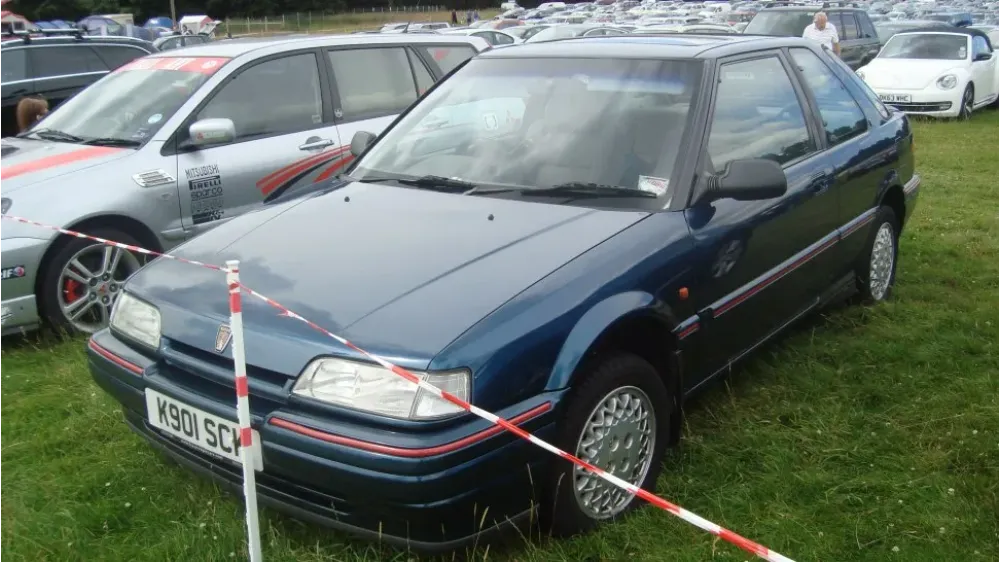
Click on image to view the full photo gallery
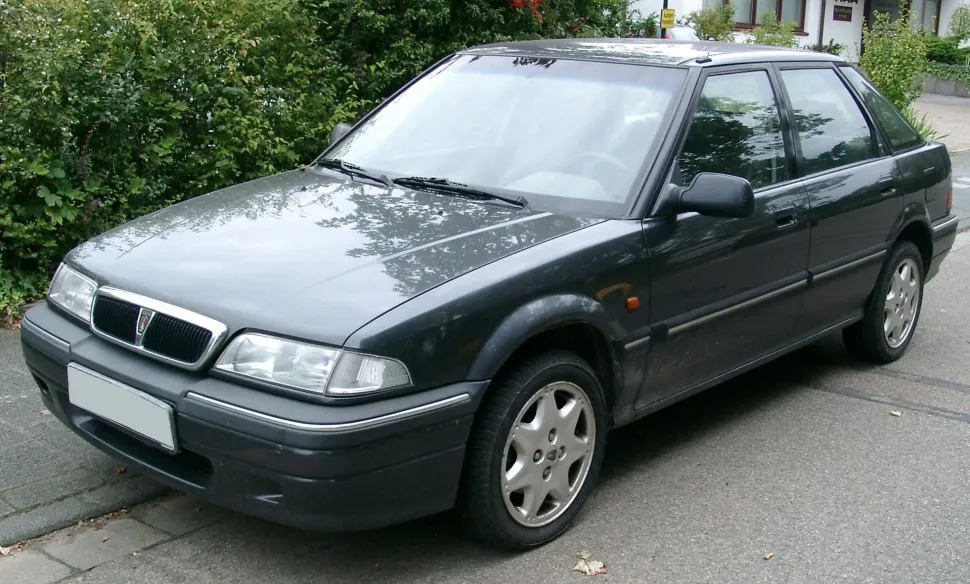
Rover 200 XW 216 GSi (112 Hp)
Overall Rating
Rover 200:
The Rover 200 Series, and later the Rover 25, are a series of small family cars that were produced at the Longbridge factory by former British manufacturer Rover from 1984 until 2005 over four distinct generations.
The Rover 200 was conceived in partnership with Honda originally as a four-door saloon car based on the Honda Ballade. The second generation introduced in 1989 was made in three or five-door hatchback forms, as well a coupé and cabriolet. Its sister model, the Honda Concerto was built on the same production line....(Read more on Wikipedia)
XW Overview:
Rover 200 (XW). With 138 Nm of torque, it offers ample pulling power. It has moderate fuel consumption (~8.9 l/100km). Weighing only 1080 kg, it’s quite light. Front‑wheel drive delivers efficiency and easy handling. Acceleration is relatively slow (0–100 km/h in 10.1 s). The top speed reaches 190 km/h. A compact car with a rear door that swings upward to provide access to the cargo area. Seating for 5 makes it ideal for daily use.
The Rover 200 (XW) generation predates the Euro NCAP crash testing program (which began in 1997). Safety features were typical for its era, including basic crumple zones and optional ABS, but it lacks modern passive and active safety systems.
216 GSi (112 Hp) Verdict:

Performance Verdict
A well-balanced engine offering a good blend of performance for daily driving and occasional spirited runs.
Fuel Economy
Decent fuel economy, striking a good compromise between power and running costs.
Pros and Cons:
Pros:
- • Diverse engine lineup, from economical to high-performance.
- • Comfortable ride quality for its class.
- • Relatively spacious interior for a compact car.
- • Distinctive British styling with Honda engineering roots.
Cons:
- • Mixed reliability reputation, particularly with age and maintenance.
- • Safety features are basic by modern standards.
- • Some interior plastics can feel dated or cheap.
- • Resale value can be low compared to rivals.
Specifications:
Specifications are compared to those of the previous generation(XH: 1985 - 1989).
| General: | |
|---|---|
| Brand: | Rover |
| Model: | 200 |
| Generation: | XW |
| Modification (Engine): | 216 GSi (112 Hp) |
| Start of production: | 1989 |
| End of production: | 1995 |
| Powertrain Architecture: | Internal Combustion engine |
| Body type: | Hatchback |
| Seats: | 5 |
| Doors: | 5 |
| Engine: | |
|---|---|
| Power: | 112 Hp @ 6300 rpm. Same horsepower |
| Power per litre: | 70.4 Hp/l |
| Torque: | 138 Nm @ 5200 rpm. |
| Engine displacement: | 1590 |
| Number of cylinders: | 4 |
| Engine configuration: | Inline |
| Number of valves per cylinder: | 4 |
| Fuel injection system: | Multi-port manifold injection |
| Engine aspiration: | Naturally aspirated engine |
| Valvetrain: | DOHC |
| Engine layout: | Front, Transverse |
| Cylinder Bore: | 75 mm mm |
| Piston Stroke: | 90 mm mm |
| Compression ratio: | 9.1:1 |
| Performance: | |
|---|---|
| Fuel Type: | Petrol (Gasoline) |
| Fuel consumption (economy) - urban: | 8.9 l/100 km |
| Fuel consumption (economy) - extra urban: | 5.5 l/100 km |
| Fuel consumption (economy) - combined: | 7.3 l/100 km |
| Acceleration 0 - 100 km/h: | 10.1 sec |
| Acceleration 0 - 62 mph: | 10.1 sec |
| Maximum speed: | 190 km/h |
| Weight-to-power ratio: | 9.6 kg/Hp, 103.7 Hp/tonne |
| Weight-to-torque ratio: | 7.8 kg/Nm, 127.8 Nm/tonne |
| Acceleration 0 - 60 mph: | 9.6 sec |
| Space: | |
|---|---|
| Kerb Weight: | 1080 |
| Max. weight: | 1580 |
| Max load: | 500 |
| Trunk (boot) space - minimum: | 352 l |
| Fuel tank capacity: | 55 l |
| Size: | |
|---|---|
| Length: | 4220 mm mm |
| Width: | 1680 mm mm |
| Height: | 1390 mm mm |
| Wheelbase: | 2550 mm mm |
| Front track: | 1475 mm |
| Rear (Back) track: | 1470 mm |
| Powertrain: | |
|---|---|
| Drivetrain Architecture | The Internal combustion engine (ICE) drives the front wheels of the vehicle. |
| Drive wheel | Front wheel drive |
| Number of gears | 5 |
| Transmission type | Manual |
| Front brakes | Ventilated discs [Best for performance and cooling.] |
| Rear brakes | Drum [bad for performance and cooling.] |
| Assisting systems | ABS (Anti-lock braking system) |
| Steering type | Steering rack and pinion |
| Power steering | Hydraulic Steering |
| Tires size | 175/65 R14 |
| Front suspension | Wishbone |
| Rear suspension | Coil spring |





Help others decide – share your experience!