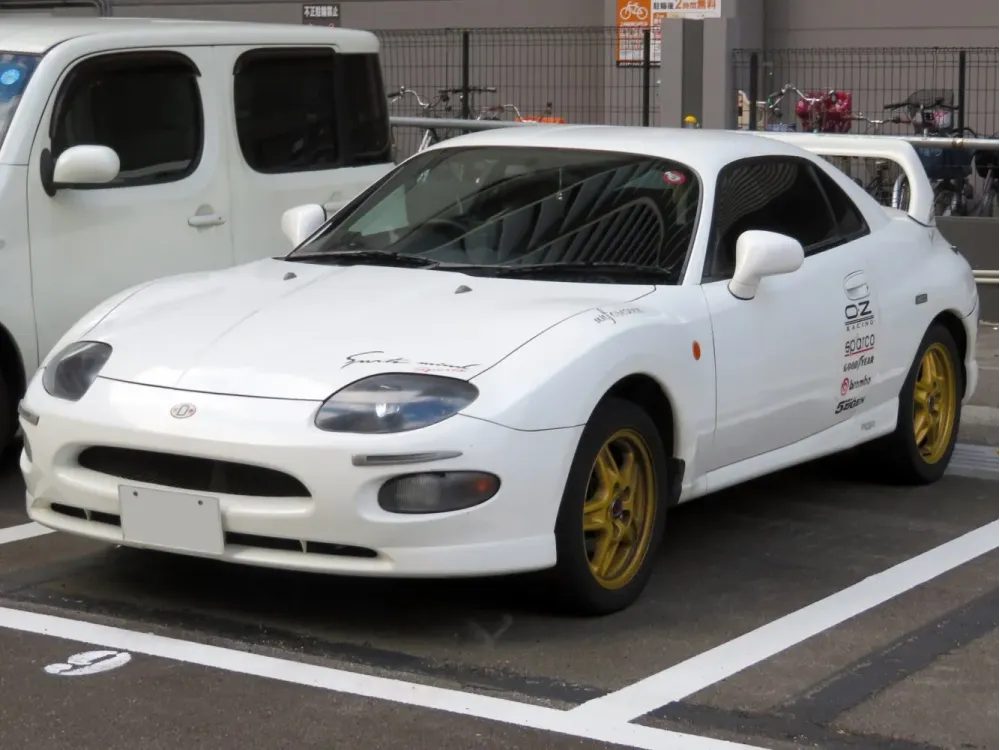
Click on image to view the full photo gallery
Mitsubishi FTO E-DE3A 3.0 i V6 24V (225 Hp)
Overall Rating
Mitsubishi FTO:
The Mitsubishi FTO is a front-engined, front-wheel drive coupe produced by Mitsubishi Motors between 1994 and 2000. Originally planned exclusively for the Japanese domestic market, its popularity as a grey market import to the United Kingdom, Ireland, Hong Kong, Singapore, Malaysia, Australia and New Zealand led to eventual limited distribution through Mitsubishi's official dealers in those regions at the tail-end of production. Upon its debut it won the Car of the Year Japan award for 1994–95, commemorated by a Limited Edition of the FTO GPX model....(Read more on Wikipedia)
E-DE3A Overview:
Mitsubishi FTO (E-DE3A). With 275 Nm of torque, it offers ample pulling power. With a weight of 1670 kg, it falls in the mid‑range. Front‑wheel drive delivers efficiency and easy handling. A two-door car with a fixed roof, known for its sporty design and dynamic performance. Seating for 2 makes it ideal for daily use.
The Mitsubishi FTO E-DE3A was primarily a Japanese Domestic Market (JDM) vehicle and was not officially tested by Euro NCAP. Therefore, no official star rating is available for this generation.
3.0 i V6 24V (225 Hp) Verdict:

Performance Verdict
This 3.0L V6, likely a 6G72 engine swap, offers significantly increased power and torque, transforming the FTO into a much more potent machine. Performance is thrilling, but it's important to note this is not a factory option.
Fuel Economy
With a larger displacement and higher power output, fuel consumption will be considerably higher than the factory engines. This setup is optimized for performance, not economy.
Pros and Cons:
Pros:
- • Distinctive and attractive styling
- • Engaging V6 engine options (especially MIVEC)
- • Good handling for a FWD coupe
- • Unique JDM appeal and rarity
- • Generally reliable Mitsubishi engineering
Cons:
- • Primarily Right-Hand Drive (RHD) only, limiting accessibility
- • Parts availability can be challenging outside Japan
- • Interior design is dated by modern standards
- • Fuel economy can be high, especially for V6 models (and given data points)
- • Front-wheel drive might deter some sports car purists
Specifications:
Specifications are compared to those of the previous generation(E-DE3A: 1994 - 1999).
| General: | |
|---|---|
| Brand: | Mitsubishi |
| Model: | FTO |
| Generation: | E-DE3A |
| Modification (Engine): | 3.0 i V6 24V (225 Hp) |
| Start of production: | 1997 |
| End of production: | 2000 |
| Powertrain Architecture: | Internal Combustion engine |
| Body type: | Coupe |
| Seats: | 2 |
| Doors: | 2 |
| Engine: | |
|---|---|
| Power: | 225 Hp @ 6000 rpm. |
| Power per litre: | 75.7 Hp/l |
| Torque: | 275 Nm @ 4500 rpm. |
| Engine displacement: | 2972 |
| Number of cylinders: | 6 |
| Engine configuration: | V-engine |
| Number of valves per cylinder: | 4 |
| Fuel injection system: | Multi-port manifold injection |
| Engine aspiration: | Naturally aspirated engine |
| Valvetrain: | DOHC |
| Engine layout: | Front, Transverse |
| Cylinder Bore: | 91.1 mm |
| Piston Stroke: | 76 mm |
| Compression ratio: | 10:1 |
| Performance: | |
|---|---|
| Fuel Type: | Petrol (Gasoline) |
| Weight-to-power ratio: | 7.4 kg/Hp, 134.7 Hp/tonne |
| Weight-to-torque ratio: | 6.1 kg/Nm, 164.7 Nm/tonne |
| Space: | |
|---|---|
| Kerb Weight: | 1670 |
| Max. weight: | 1890 |
| Max load: | 220 |
| Fuel tank capacity: | 75 l |
| Size: | |
|---|---|
| Length: | 4590 mm [270mm more] |
| Width: | 1840 mm [105mm more] |
| Height: | 1285 mm [15mm less] |
| Wheelbase: | 2470 mm [30mm less] |
| Front track: | 1560 mm |
| Rear (Back) track: | 1580 mm |
| Powertrain: | |
|---|---|
| Drivetrain Architecture | The Internal combustion engine (ICE) drives the front wheels of the vehicle. |
| Drive wheel | Front wheel drive |
| Number of gears | 5 |
| Transmission type | Manual |
| Front brakes | Ventilated discs [Best for performance and cooling.] |
| Rear brakes | Disc |
| Assisting systems | ABS (Anti-lock braking system) |
| Steering type | Steering rack and pinion |
| Power steering | Hydraulic Steering |
| Tires size | 225/50 R17 |
| Front suspension | Wishbone |
| Rear suspension | Coil spring |




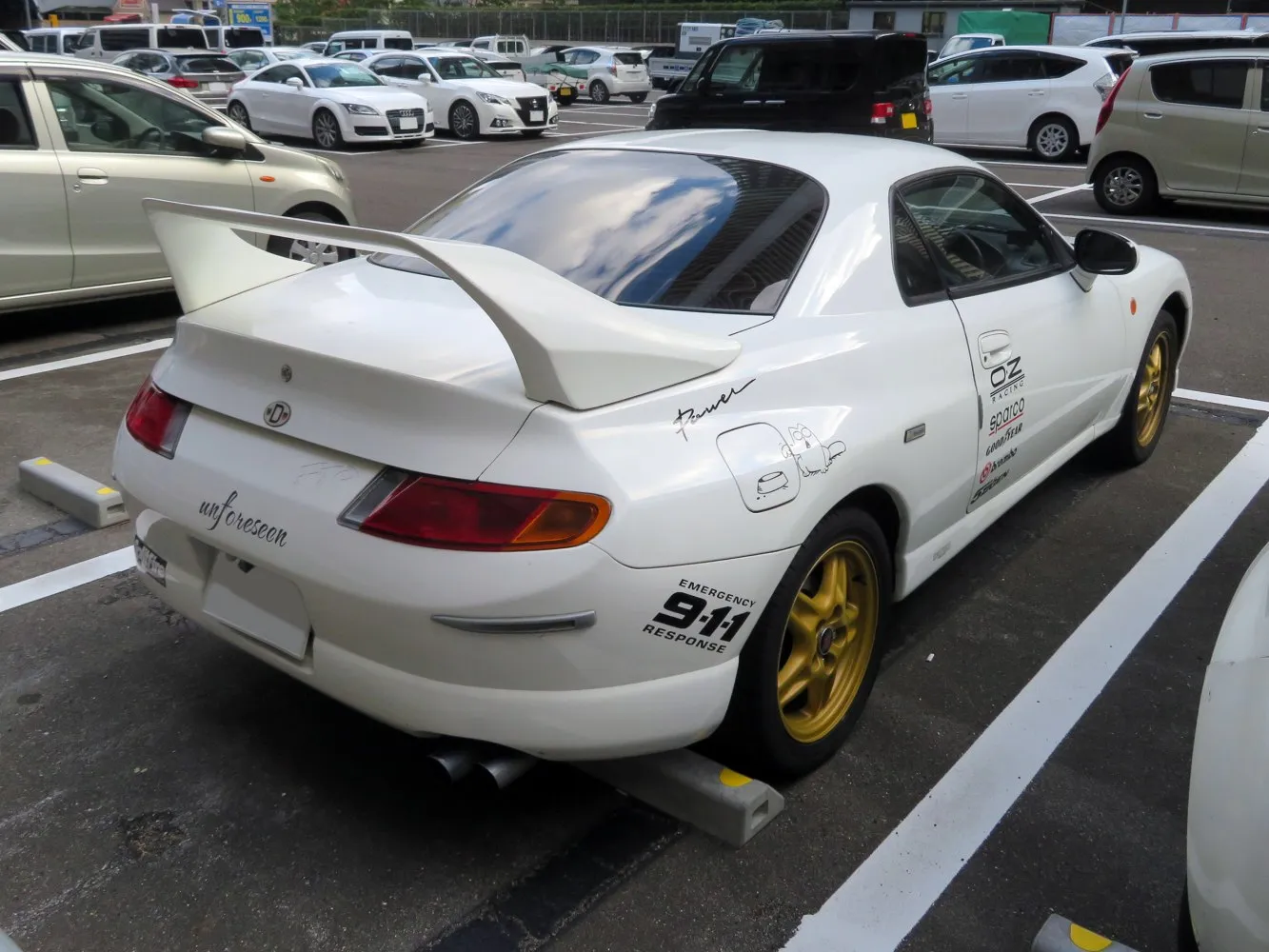
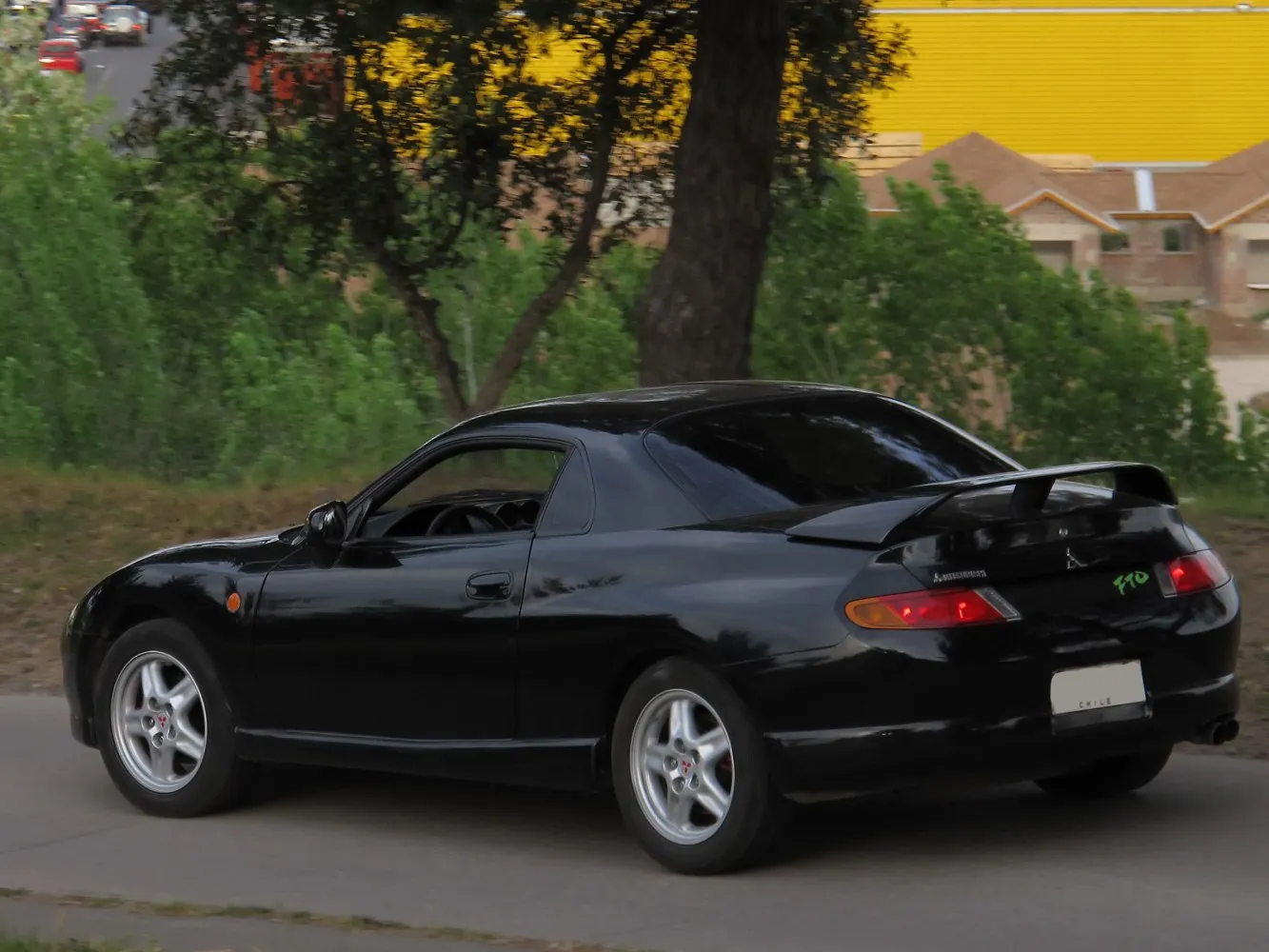
Behind the wheel of the Mitsubishi FTO. How does it handle on the road?