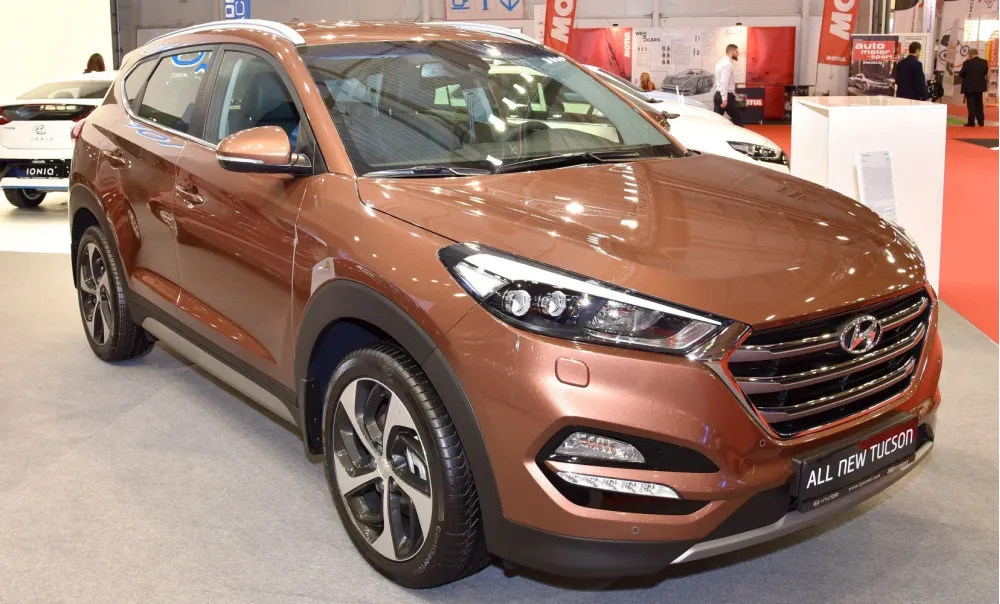
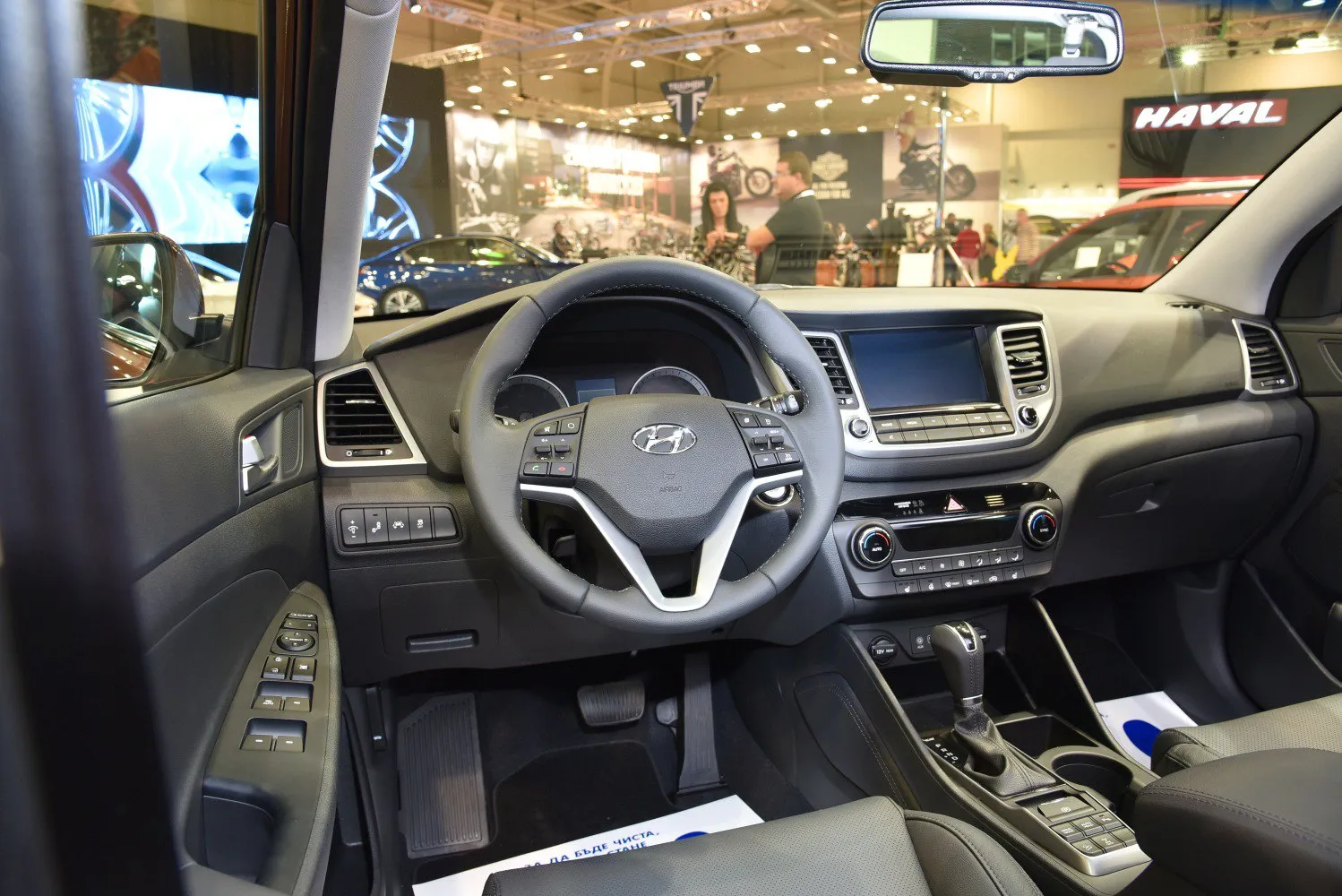
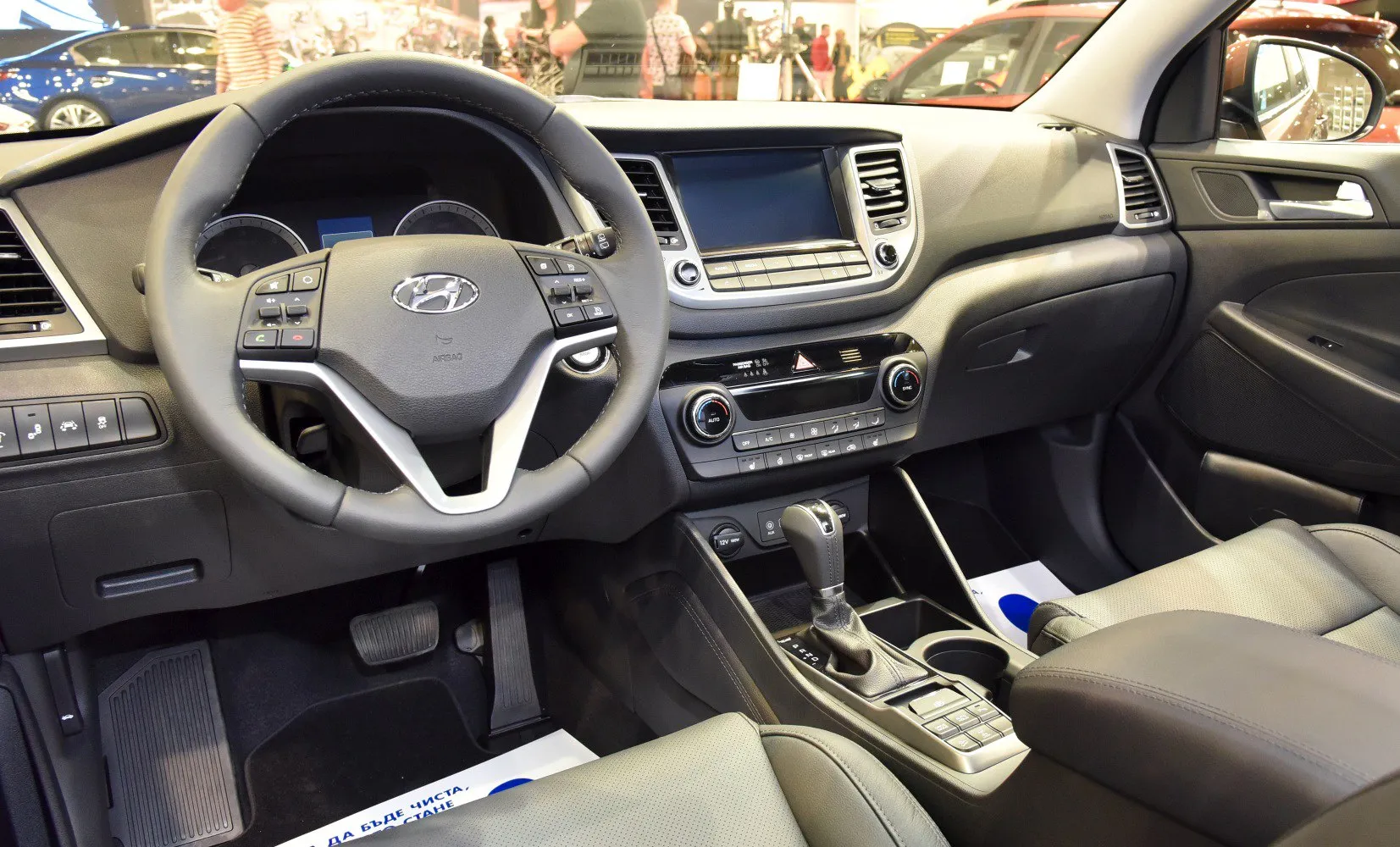
Click on image to view the full photo gallery
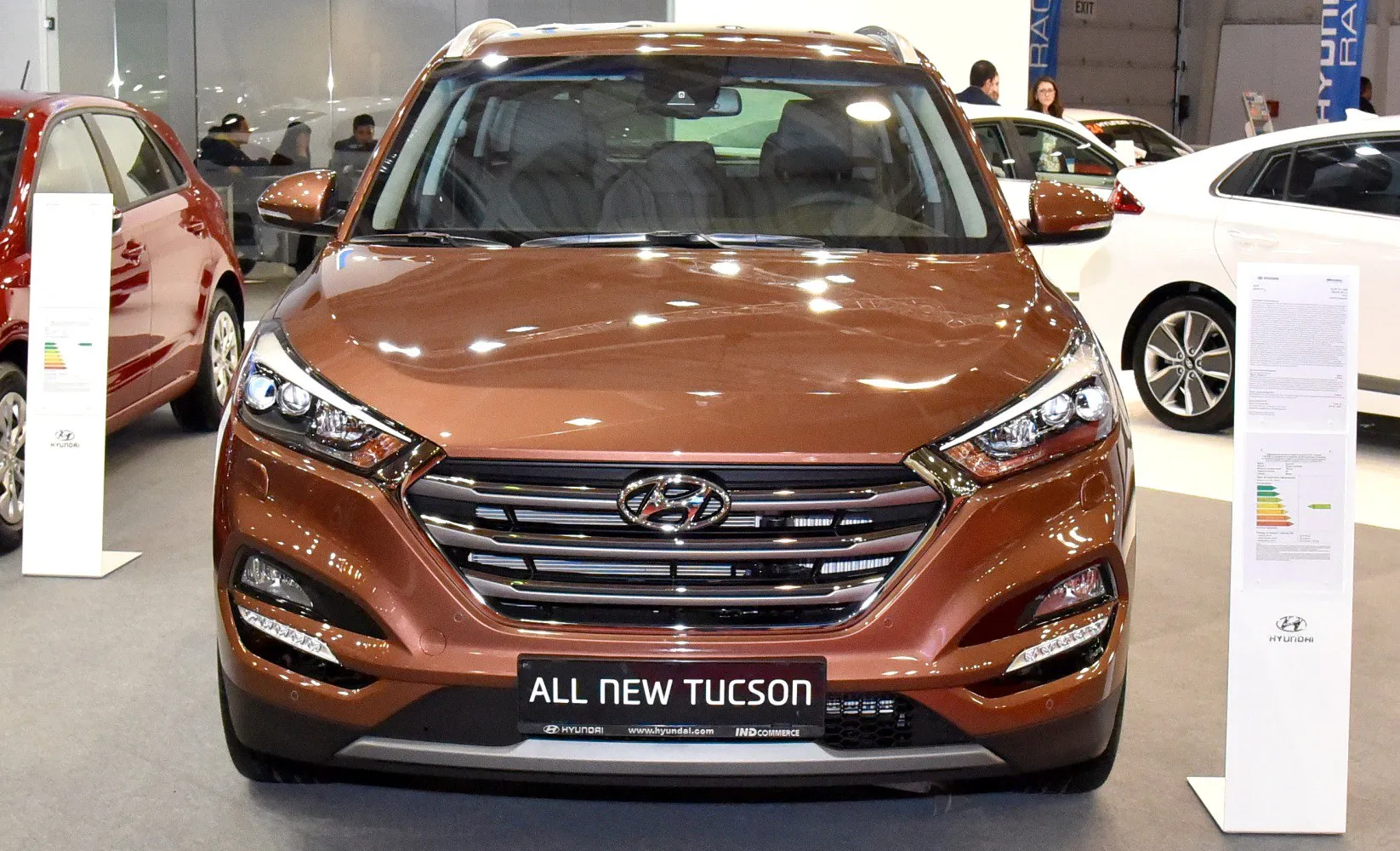
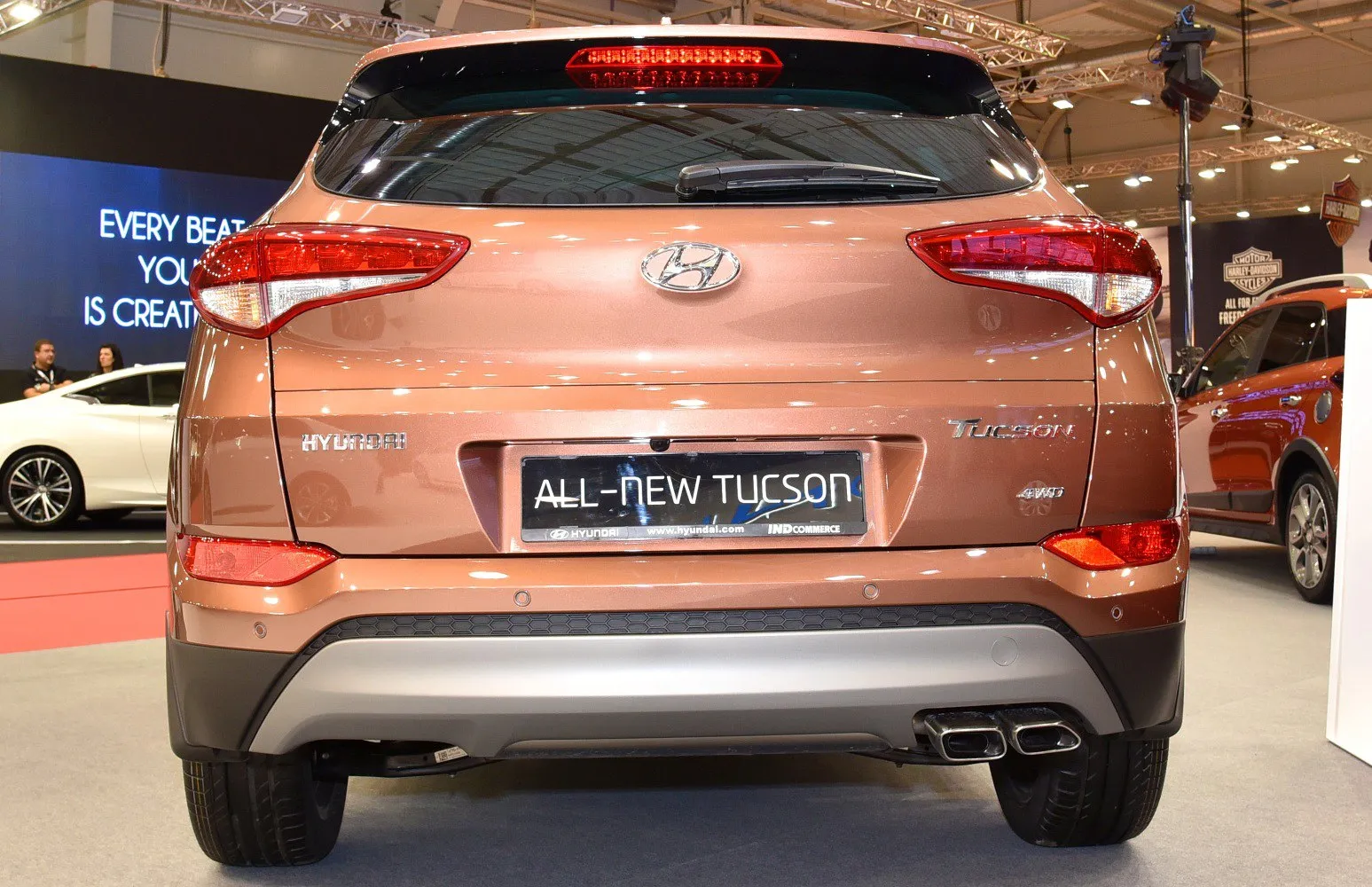
Hyundai Tucson III 2.0 MPI (153 Hp)
Overall Rating
Hyundai Tucson:
The Hyundai Tucson is a compact crossover SUV produced by the South Korean manufacturer Hyundai. It is named after the city of Tucson, Arizona, U. S.
The second-generation model was marketed as the Hyundai ix35 in several markets, including Europe, Australia and China, before reverting to Tucson for the third-generation. Since its first-generation, the Tucson has been developed alongside the Kia Sportage, sharing platforms and engines.
The Tucson is the best-selling Hyundai model, with more than 7 million units sold globally since it launched in 2004. Of these, 1. 4 million units have been sold in Europe....(Read more on Wikipedia)
III Overview:
Hyundai Tucson (III). With 192 Nm of torque, it offers ample pulling power. It has moderate fuel consumption (~10.7 l/100km). With a weight of 1491 kg, it falls in the mid‑range. Front‑wheel drive delivers efficiency and easy handling. A sport utility vehicle offering higher ground clearance and versatile cargo space. Seating for 5 makes it ideal for daily use.
The Hyundai Tucson III achieved an excellent 5-star Euro NCAP rating in 2015, demonstrating strong performance in adult and child occupant protection, making it a safe choice for families.
2.0 MPI (153 Hp) Verdict:

Performance Verdict
A basic, naturally aspirated petrol engine offering adequate power for light duties, but lacks the punch of turbocharged alternatives.
Fuel Economy
Relatively high fuel consumption for its power output, making it less competitive in terms of running costs.
Pros and Cons:
Pros:
- • Stylish and modern exterior design
- • Comfortable and spacious interior with good ergonomics
- • Wide range of efficient and capable engines (especially diesels)
- • Excellent Euro NCAP safety rating
- • Good ride quality and handling balance
- • Generous standard equipment levels
Cons:
- • Some petrol engines can be thirsty, especially with AWD
- • Base petrol engines can feel underpowered on highways
- • Infotainment system can feel dated compared to newer rivals
- • Rear visibility can be somewhat restricted
- • Higher trims can get expensive
Specifications:
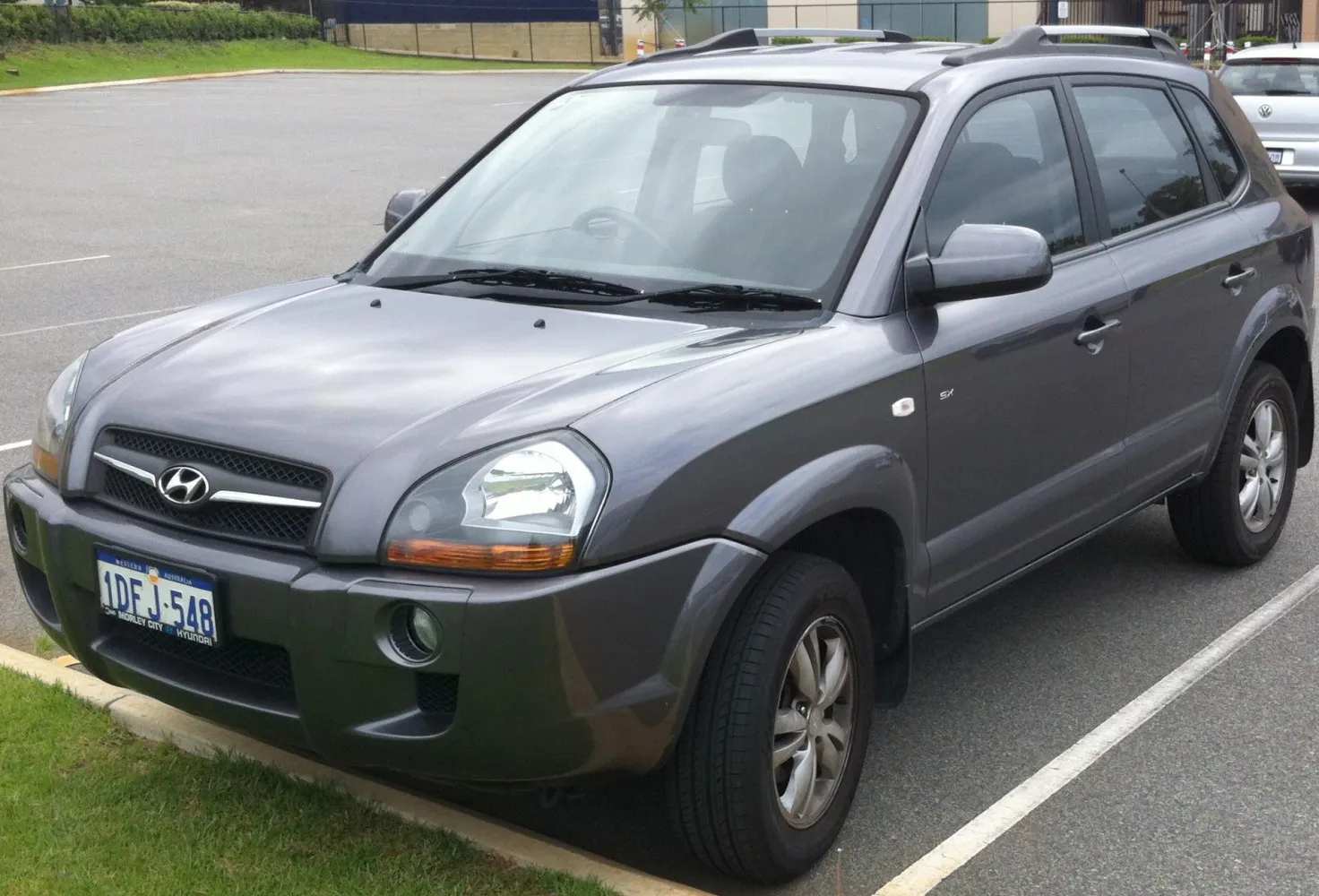
Specifications are compared to those of the previous generation(II: 2009 - 2013).
| General: | |
|---|---|
| Brand: | Hyundai |
| Model: | Tucson |
| Generation: | III |
| Modification (Engine): | 2.0 MPI (153 Hp) |
| Start of production: | 2015 |
| End of production: | 2018 |
| Powertrain Architecture: | Internal Combustion engine |
| Body type: | SUV |
| Seats: | 5 |
| Doors: | 5 |
| Engine: | |
|---|---|
| Power: | 153 Hp @ 6200 rpm. Same horsepower |
| Power per litre: | 76.5 Hp/l [76mm more] |
| Torque: | 192 Nm @ 4000 rpm. |
| Engine Model/Code: | Nu / G4NA More details about the engine Nu / G4NA |
| Engine displacement: | 1999 |
| Number of cylinders: | 4 |
| Engine configuration: | Inline |
| Number of valves per cylinder: | 4 |
| Fuel injection system: | Multi-port manifold injection |
| Engine aspiration: | Naturally aspirated engine |
| Valvetrain: | DOHC, D-CVVT |
| Engine oil capacity: | 4 l |
| Coolant: | 7.4 l |
| Engine layout: | Front, Transverse |
| Cylinder Bore: | 81 mm mm |
| Piston Stroke: | 97 mm mm |
| Compression ratio: | 10.3:1 |
| Performance: | |
|---|---|
| Fuel Type: | Petrol (Gasoline) |
| Fuel consumption (economy) - urban: | 10.7 l/100 km |
| Fuel consumption (economy) - extra urban: | 6.3 l/100 km |
| Fuel consumption (economy) - combined: | 7.9 l/100 km |
| Weight-to-power ratio: | 9.2 kg/Hp, 108.5 Hp/tonne |
| Weight-to-torque ratio: | 7.3 kg/Nm, 136.2 Nm/tonne |
| Space: | |
|---|---|
| Kerb Weight: | 1410-1572 |
| Max. weight: | 2070 |
| Max. roof load: | 100 kg |
| Max load: | 498-660 |
| Trunk (boot) space - maximum: | 1478 l |
| Trunk (boot) space - minimum: | 488 l |
| Permitted trailer load with brakes (12%): | 1600 kg |
| Fuel tank capacity: | 62 l |
| Permitted trailer load without brakes: | 750 kg |
| Permitted towbar download: | 120 kg |
| Size: | |
|---|---|
| Ramp-over (brakeover) angle: | 19.5° |
| Length: | 4475 mm mm [76mm more] |
| Width: | 1850 mm mm [29mm more] |
| Height: | 1660 mm mm [4mm more] |
| Wheelbase: | 2670 mm mm [31mm more] |
| Front track: | 1608 mm |
| Rear (Back) track: | 1620 mm |
| Ride height (ground clearance): | 172 mm |
| Minimum turning circle (turning diameter): | 10.6 m [above average] |
| Approach angle: | 17.9° |
| Departure angle: | 24.5° |
| Powertrain: | |
|---|---|
| Drivetrain Architecture | The Internal combustion engine (ICE) drives the front wheels of the vehicle. |
| Drive wheel | Front wheel drive |
| Number of gears | 6 |
| Transmission type | Manual |
| Front brakes | Ventilated discs, 305x25 mm [Best for performance and cooling.] |
| Rear brakes | Disc, 302x10 mm [above average] |
| Assisting systems | ABS (Anti-lock braking system) |
| Steering type | Steering rack and pinion |
| Power steering | Electric Steering |
| Tires size | 225/60 R17; 225/55 R18 |
| Wheel rims size | 7J x 17; 7J x 18 |
| Front suspension | Independent, type McPherson with coil spring and anti-roll bar |
| Rear suspension | Independent multi-link spring suspension with stabilizer |







Driven it? Loved it? Hated it? Share your honest review!