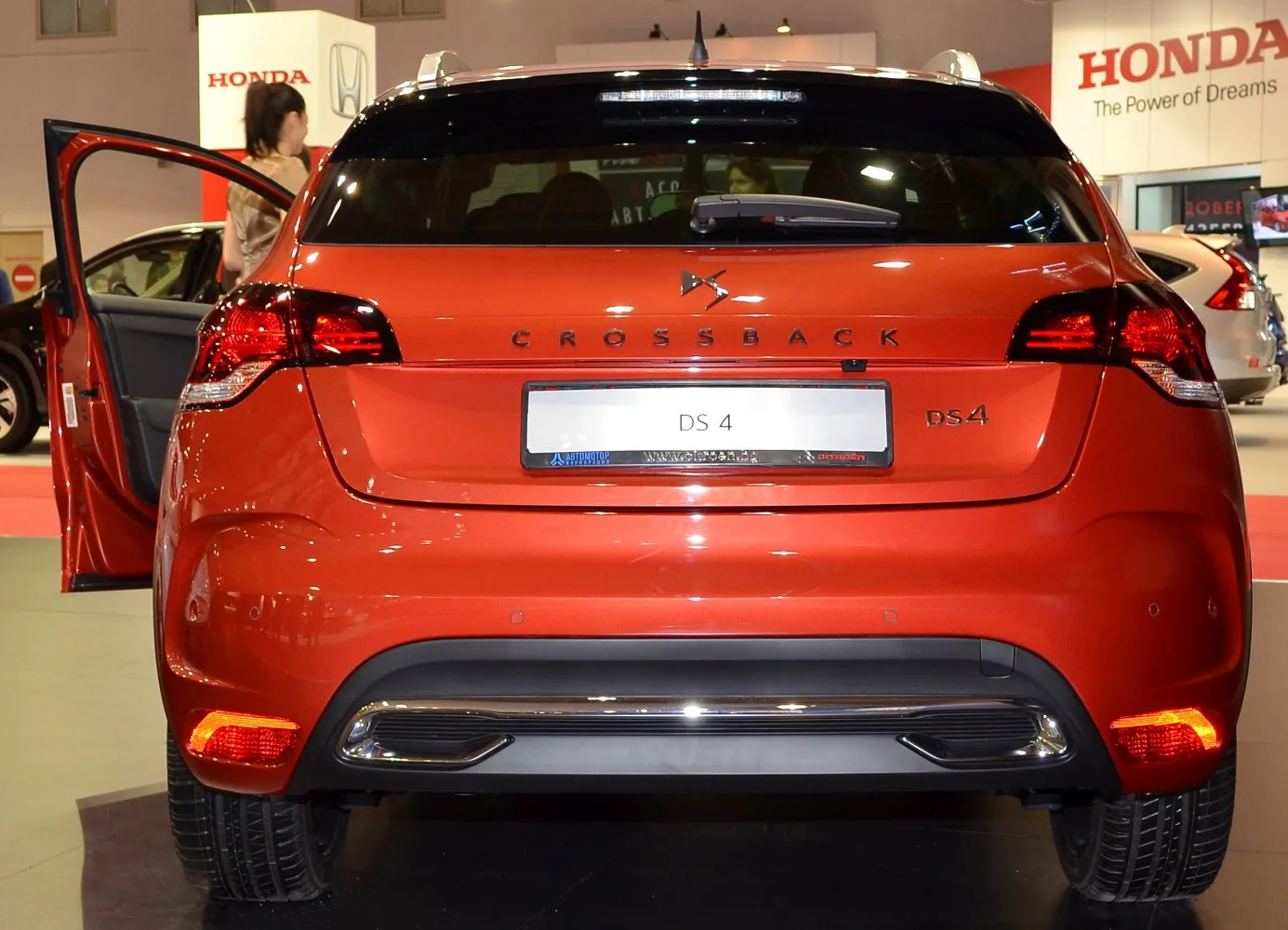
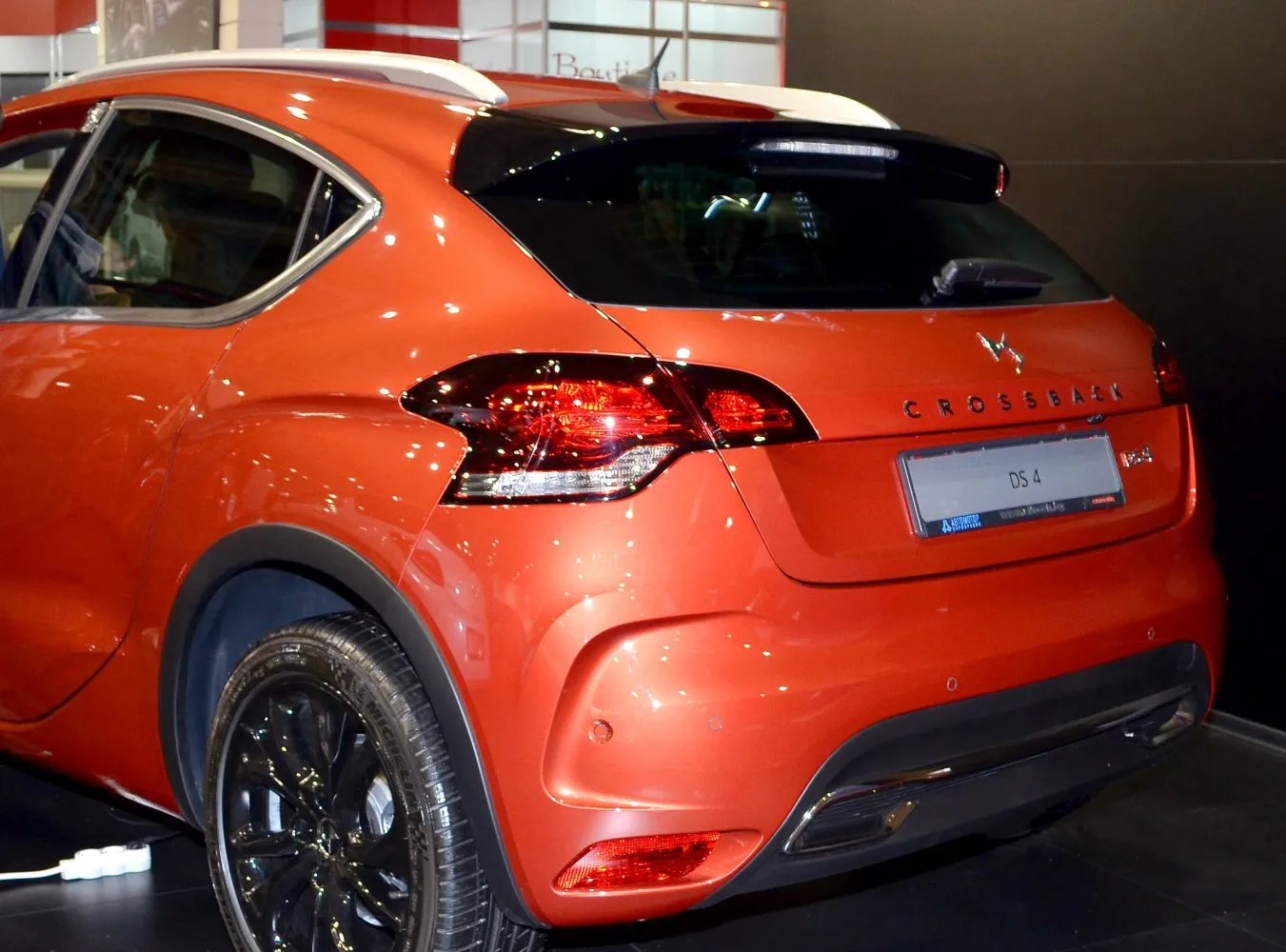
DS 4 Crossback 1.6 BlueHDi (120 Hp) Stop&Start
DS 4:
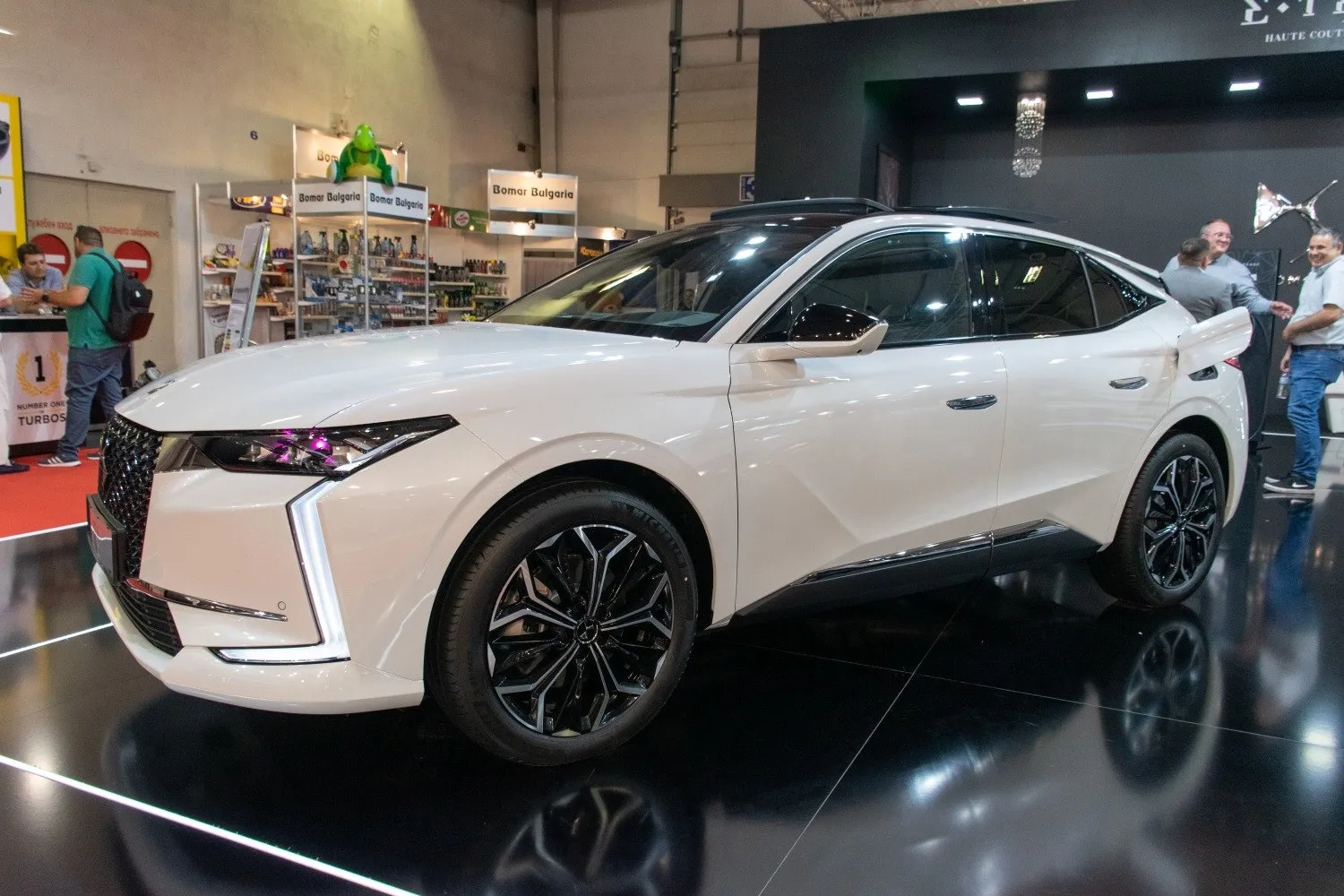
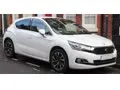
The DS 4 is a subcompact hatchback, and it is the second model in the luxury DS sub-brand created by Citroën, now an independent brand. Starting in 2021, it is currently in its second generation, which is based on an all-new EMP2 platform shared with the Opel Astra L and Peugeot 308 III. As of 2023, it is currently slotted above the DS 3 and below the DS 7 Crossback.
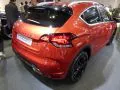
Based upon the Citroën C4 II, the first generation was officially launched internationally in March 2011, but already on sale in some countries by the end of 2010. It features raised suspension to resemble a compact SUV and repositioned door handles to give it a coupé like silhouette....(Read more on Wikipedia)
Crossback Overview:
DS 4 (Crossback). With 300 Nm of torque, it offers ample pulling power. It boasts low fuel consumption (~4.4 l/100km). With a weight of 1349 kg, it falls in the mid‑range. Front‑wheel drive delivers efficiency and easy handling. Acceleration is relatively slow (0–100 km/h in 12.15 s). The top speed reaches 189 km/h. A vehicle that combines characteristics of SUVs and hatchbacks for versatility. Seating for 5 makes it ideal for daily use.
Pros and Cons:
Pros:
- • Adequate and balanced power output (130 hp) for versatile driving.
- • Steady and predictable acceleration (0-100 km/h in 10.8 sec).
- • Exceptional fuel efficiency: 4.9 L/100 km.
- • Ventilated disc brakes for reliable cooling and stopping power.
- • Standard trunk space (359 L) suitable for daily needs.
- • Turbocharged engine ensures better torque delivery at low RPMs.
- • Direct fuel injection technology for optimized combustion.
Specifications:
| General: |
| Brand: | DS |
|---|
| Model: | 4 |
|---|
| Generation: | Crossback |
|---|
| Modification (Engine): | 1.6 BlueHDi (120 Hp) Stop&Start |
|---|
| Start of production: | 2015 |
|---|
| End of production: | 2018 |
|---|
| Powertrain Architecture: | Internal Combustion engine |
|---|
| Body type: | Crossover |
|---|
| Seats: | 5 |
|---|
| Doors: | 5 |
|---|
| Engine: |
| Engine systems: | Start & Stop System |
|---|
| Power: | 120 Hp @ 3500 rpm. |
|---|
| Power per litre: | 76.9 Hp/l |
|---|
| Torque: | 300 Nm @ 1750 rpm. |
|---|
| Engine Model/Code: | BHZ DV6FC |
|---|
| Engine displacement: | 1560 |
|---|
| Number of cylinders: | 4 |
|---|
| Engine configuration: | Inline |
|---|
| Number of valves per cylinder: | 2 |
|---|
| Fuel injection system: | Diesel Commonrail |
|---|
| Engine aspiration: | Turbocharger, Intercooler |
|---|
| Engine oil capacity: | 3.75 l |
|---|
| Engine layout: | Front, Transverse |
|---|
| Cylinder Bore: | 75 mm |
|---|
| Piston Stroke: | 88.3 mm |
|---|
| Performance: |
| Fuel Type: | Diesel |
|---|
| Fuel consumption (economy) - urban: | 4.3-4.5 l/100 km |
|---|
| Fuel consumption (economy) - extra urban: | 3.4-3.6 l/100 km |
|---|
| Fuel consumption (economy) - combined: | 3.7-3.9 l/100 km |
|---|
| Emission standard: | Euro 6 |
|---|
| Acceleration 0 - 100 km/h: | 12-12.3 sec |
|---|
| Acceleration 0 - 62 mph: | 12-12.3 sec |
|---|
| Maximum speed: | 189-193 km/h |
|---|
| Weight-to-power ratio: | 10.8 kg/Hp, 93 Hp/tonne |
|---|
| Weight-to-torque ratio: | 4.3 kg/Nm, 232.6 Nm/tonne |
|---|
| Acceleration 0 - 60 mph: | 11.4 sec |
|---|
| Space: |
| Kerb Weight: | 1290-1408 |
|---|
| Max. weight: | 1860 |
|---|
| Max load: | 452-570 |
|---|
| Trunk (boot) space - minimum: | 359 l |
|---|
| Permitted trailer load with brakes (12%): | 1550 kg |
|---|
| Fuel tank capacity: | 60 l |
|---|
| Permitted trailer load without brakes: | 680 kg |
|---|
| Permitted towbar download: | 75 kg |
|---|
| Size: |
| Length: | 4284 mm |
|---|
| Width: | 1810 mm |
|---|
| Height: | 1529-1535 mm |
|---|
| Wheelbase: | 2612 mm |
|---|
| Width including mirrors: | 2052 mm |
|---|
| Front track: | 1532 mm |
|---|
| Rear (Back) track: | 1527 mm |
|---|
| Front overhang: | 933 mm |
|---|
| Rear overhang: | 739 mm |
|---|
| Minimum turning circle (turning diameter): | 10.7 m |
|---|
| Powertrain: |
| Drivetrain Architecture | The Internal combustion engine (ICE) drives the front wheels of the vehicle. |
|---|
| Drive wheel | Front wheel drive |
|---|
| Number of gears | 6 |
|---|
| Transmission type | Manual |
|---|
| Front brakes | Ventilated discs |
|---|
| Rear brakes | Disc |
|---|
| Assisting systems | ABS (Anti-lock braking system) |
|---|
| Steering type | Steering rack and pinion |
|---|
| Power steering | Electric Steering |
|---|
| Tires size | 215/60 R16; 215/55 R17; 225/45 R18 |
|---|
| Wheel rims size | 16; 17; 18 |
|---|
| Front suspension | Independent type McPherson |
|---|
| Rear suspension | Semi-independent, coil spring |
|---|










Better than its competitors? Tell us why the DS 4 stands out.