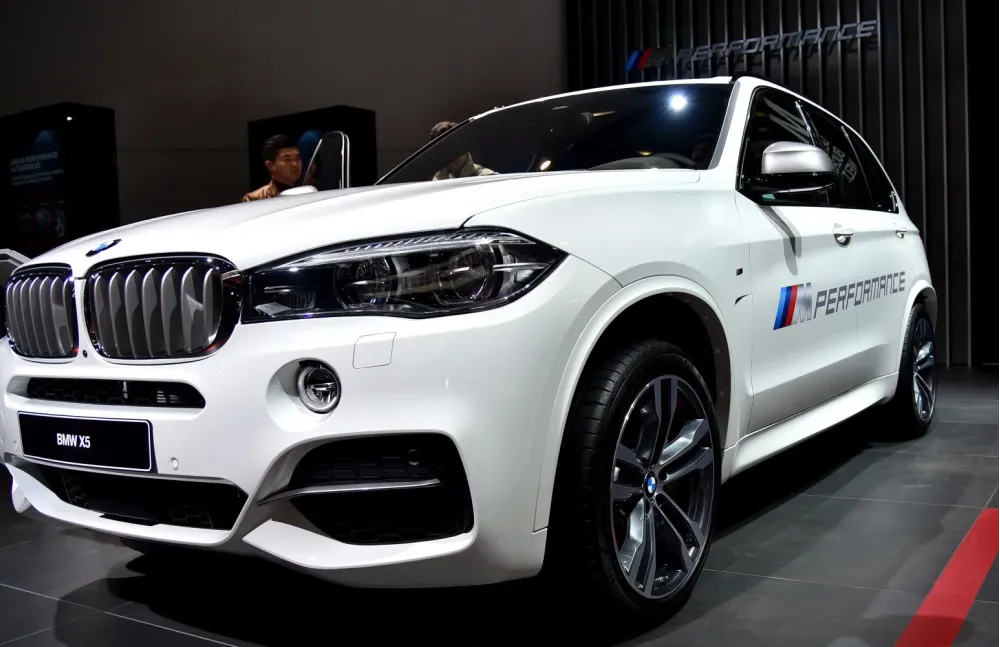
Click on image to view the full photo gallery
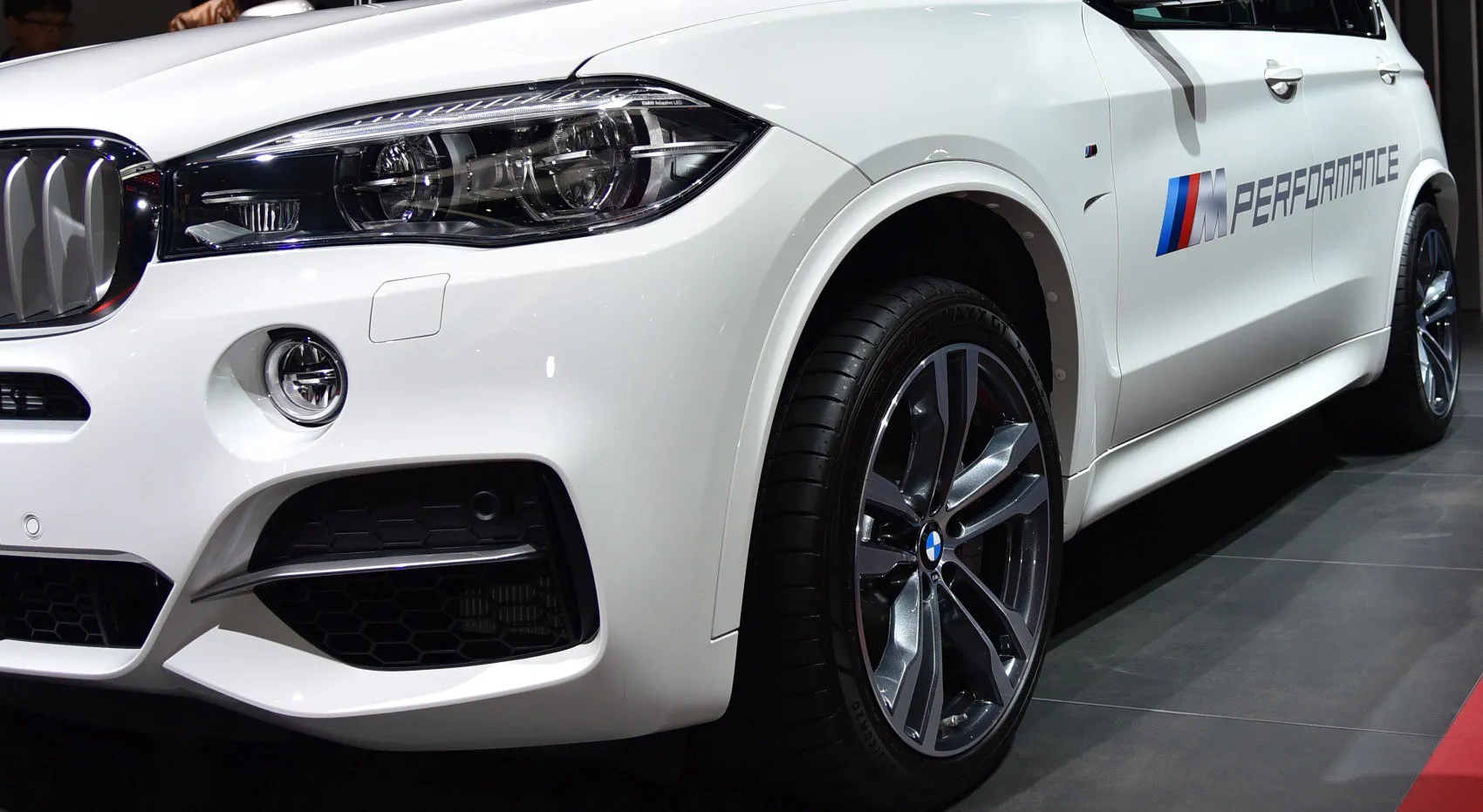
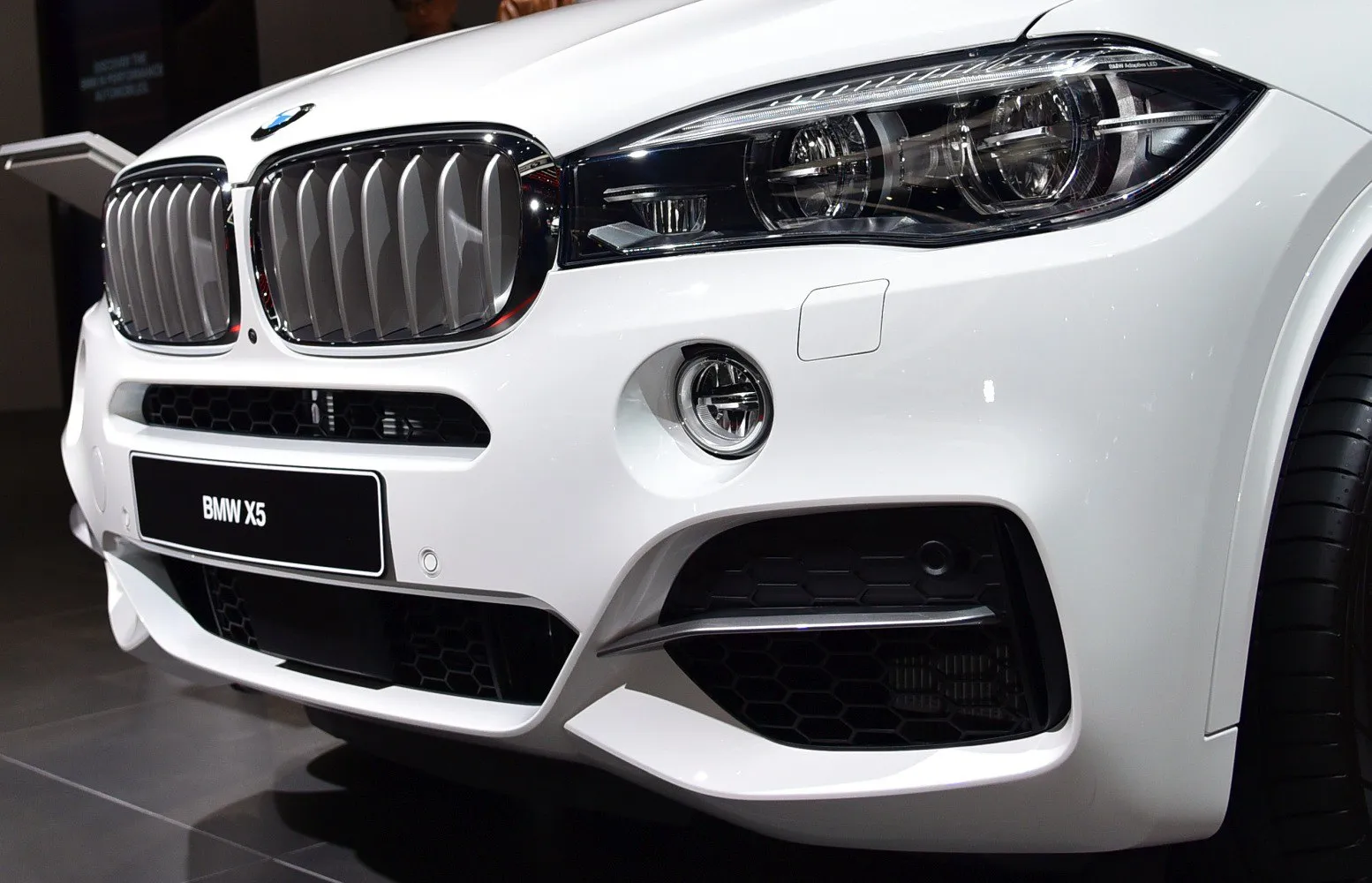
BMW X5 F15 35i (300 Hp) sDrive Steptronic
Overall Rating
BMW X5:
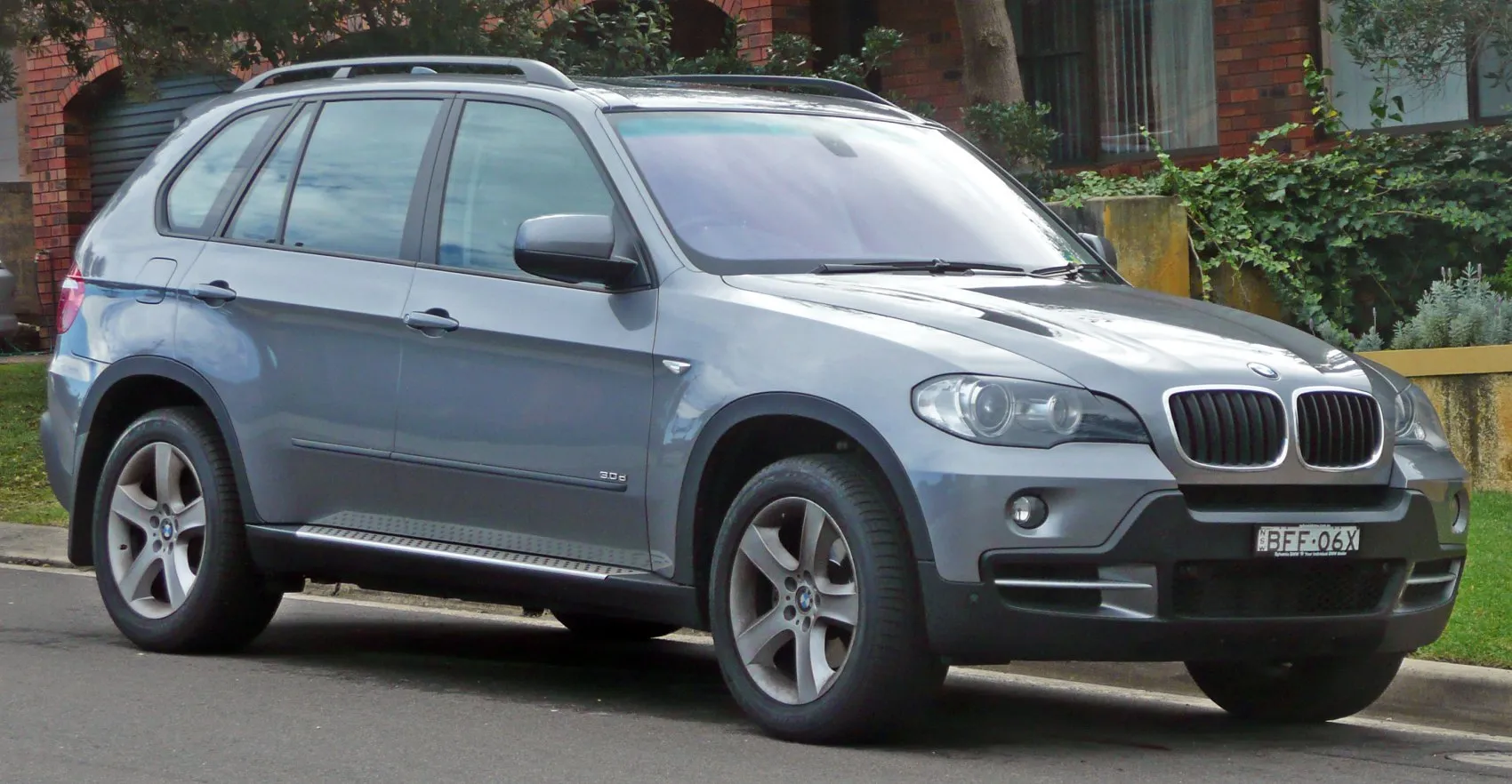
The BMW X5 is a mid-size luxury crossover SUV produced by BMW. The X5 made its debut in 1999 as the E53 model. It was BMW's first SUV. At launch, it featured all-wheel drive and was available with either a manual or automatic gearbox. The second generation was launched in 2006, and was known internally as the E70. The E70 featured the torque-split capable xDrive all-wheel drive system mated to an automatic gearbox. In 2009, the X5 M performance variant was released as a 2010 model.
BMW marketed the X5 officially as a "Sports Activity Vehicle" , rather than an SUV, to indicate its on-road handling capability despite its large dimensions. The X5 signaled a shift away from the utilisation of body-on-frame construction, in favour of more modern monocoque chassis construction. Although the Mercedes-Benz M-Class was introduced more than a year prior to the X5, the X5 was the first to utilise a monocoque chassis. The M-Class used body-on-frame construction until its second generation....(Read more on Wikipedia)
F15 Overview:
BMW X5 (F15). With 400 Nm of torque, it offers ample pulling power. At around 2110 kg, it’s on the heavier side. Rear‑wheel drive offers dynamic handling and sporty feedback. Acceleration is good (0–100 km/h in 6.6 s). The top speed reaches 210 km/h. A sports activity vehicle combining performance with utility. Seating for 5 makes it ideal for daily use.
The BMW X5 (F15) achieved an excellent 5-star Euro NCAP rating, demonstrating strong adult occupant protection and comprehensive safety features for its time.
35i (300 Hp) sDrive Steptronic Verdict:

Performance Verdict
Provides smooth and responsive petrol power, offering good acceleration for daily driving, with a classic RWD feel.
Fuel Economy
Fuel economy is moderate for a petrol engine of this size, leaning towards higher consumption in urban settings.
Pros and Cons:
Pros:
- • Luxurious and high-quality interior with excellent materials.
- • Diverse and powerful engine lineup, including highly efficient diesels and potent V8s.
- • Comfortable ride, especially with optional adaptive suspension, suitable for long journeys.
- • Advanced technology and infotainment features for a premium user experience.
- • Spacious cabin and generous trunk capacity, making it practical for families.
Cons:
- • High purchase price and potentially expensive maintenance and running costs.
- • Some specific engine variants (e.g., N63 V8) have known reliability concerns.
- • Extensive list of optional extras can significantly inflate the final price.
- • While agile for its size, it's not as nimble as smaller BMW models.
- • Rear visibility can be somewhat limited due to the design.
Specifications:
Specifications are compared to those of the previous generation(E70 LCI, facelift 2010: 2010 - 2013).
| General: | |
|---|---|
| Brand: | BMW |
| Model: | X5 |
| Generation: | F15 |
| Modification (Engine): | 35i (300 Hp) sDrive Steptronic |
| Start of production: | 2013 |
| End of production: | 2018 |
| Powertrain Architecture: | Internal Combustion engine |
| Body type: | SAV |
| Seats: | 5 |
| Doors: | 5 |
| Engine: | |
|---|---|
| Engine systems: | Start & Stop System |
| Power: | 300 Hp @ 5800-6000 rpm. Same horsepower |
| Power per litre: | 100.7 Hp/l [51mm more] |
| Torque: | 400 Nm @ 1200-5000 rpm. |
| Engine Model/Code: | N55B30M0 More details about the engine N55B30M0 |
| Engine displacement: | 2979 |
| Number of cylinders: | 6 |
| Engine configuration: | Inline |
| Number of valves per cylinder: | 4 |
| Fuel injection system: | Direct injection |
| Engine aspiration: | Twin-power turbo, Intercooler |
| Valvetrain: | VALVETRONIC, Double-VANOS |
| Engine oil capacity: | 6.5 l |
| Engine layout: | Front, Longitudinal |
| Cylinder Bore: | 84 mm mm |
| Piston Stroke: | 89.6 mm mm |
| Compression ratio: | 10.2:1 |
| Performance: | |
|---|---|
| Fuel Type: | Petrol (Gasoline) |
| Fuel consumption (economy) - urban: | 12.4-13.1 l/100 km |
| Fuel consumption (economy) - extra urban: | 8.7-9.4 l/100 km |
| Fuel consumption (economy) - urban (EPA): | 12.4-13.1 l/100 km |
| Fuel consumption (economy) - extra urban (EPA): | 8.7-9.4 l/100 km |
| Fuel consumption (economy) - combined (EPA): | 10.7-11.2 l/100 km |
| Fuel consumption (economy) - combined: | 10.7-11.2 l/100 km |
| Acceleration 0 - 100 km/h: | 6.6 sec |
| Acceleration 0 - 62 mph: | 6.6 sec |
| Maximum speed: | 210 km/h, Electronically limited |
| Weight-to-power ratio: | 7 kg/Hp, 143 Hp/tonne |
| Weight-to-torque ratio: | 5.2 kg/Nm, 190.7 Nm/tonne |
| Acceleration 0 - 60 mph: | 6.2 sec |
| Space: | |
|---|---|
| Kerb Weight: | 2098-2123 |
| Max. weight: | 2753 |
| Max. roof load: | 100 kg |
| Max load: | 630-655 |
| Trunk (boot) space - maximum: | 1870 l |
| Trunk (boot) space - minimum: | 650 l |
| Fuel tank capacity: | 85 l |
| Size: | |
|---|---|
| Ramp-over (brakeover) angle: | 17.3° |
| Wading depth: | 500 mm |
| Length: | 4908 mm mm [51mm more] |
| Width: | 1938 mm mm [5mm more] |
| Height: | 1762 mm mm [14mm less] |
| Wheelbase: | 2933 mm mm [Same wheelbase.] |
| Width including mirrors: | 2184 mm |
| Front track: | 1641-1644 mm |
| Rear (Back) track: | 1646-1650 mm |
| Front overhang: | 912 mm |
| Rear overhang: | 1064 mm |
| Ride height (ground clearance): | 209 mm |
| Minimum turning circle (turning diameter): | 12.7 m [above average] |
| Approach angle: | 22.2° |
| Departure angle: | 20.4° |
| Climb angle: | 26.6° |
| Powertrain: | |
|---|---|
| Drivetrain Architecture | The Internal combustion engine (ICE) drives the rear wheels of the vehicle. |
| Drive wheel | Rear wheel drive |
| Number of gears | 8 |
| Transmission type | Automatic |
| Gearbox type | Steptronic |
| Front brakes | Ventilated discs [Best for performance and cooling.] |
| Rear brakes | Ventilated discs [Best for performance and cooling.] |
| Assisting systems | ABS (Anti-lock braking system) |
| Steering type | Steering rack and pinion |
| Power steering | Electric Steering |
| Tires size | Front wheel tires: 255/55 R18; 255/50 R19; 275/40 R20 |
| Wheel rims size | Front wheel rims: 8.5J x 18; 9J x 19; 10J x 20 |
| Front suspension | Coil spring, Double wishbone, Transverse stabilizer |
| Rear suspension | Independent multi-link spring suspension with stabilizer, Air Suspension - Optional |




Fuel, speed, and comfort: How does the BMW X5 rank in your book?