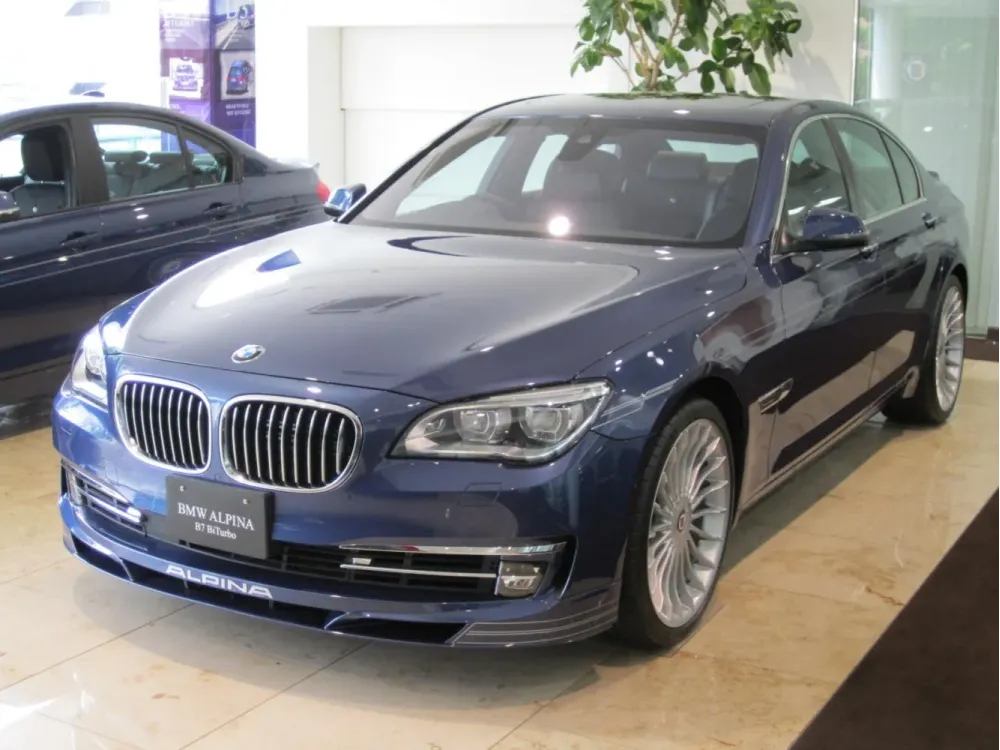
Click on image to view the full photo gallery
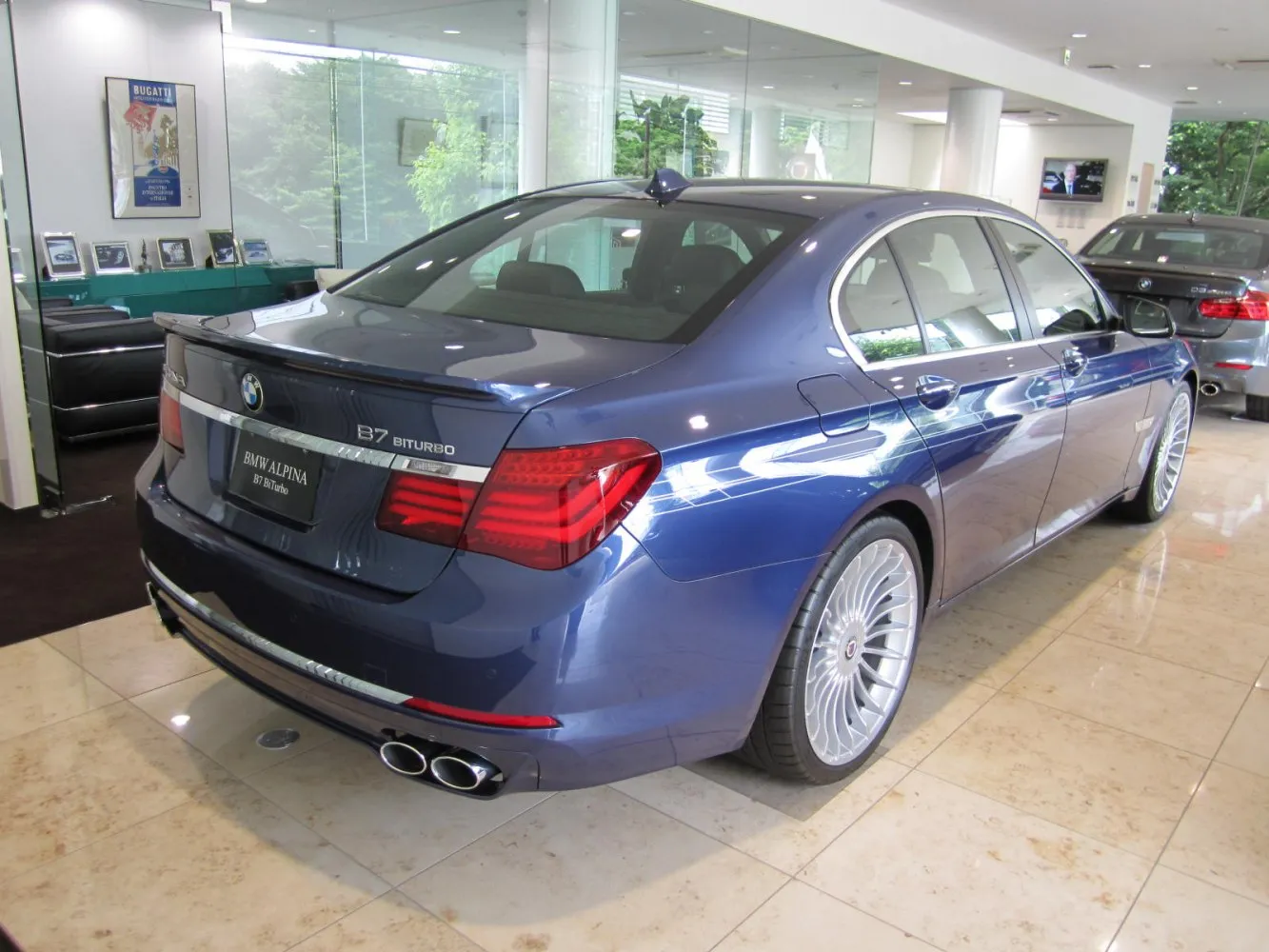
Alpina B7 F01 4.4 V8 (540 Hp) BITURBO
Overall Rating
Alpina B7:
The Alpina B7 Bi-Turbo, or Alpina B7, is the fifth generation of the high-performance full-size luxury car released by German automobile manufacturer Alpina. Based on the BMW 7 Series , the B7 Bi-Turbo was introduced at the 2016 Geneva Motor Show. Known as the B7 in North America, the car is the third B7 model to be imported to the United States. The Alpina B7 was discontinued in September 2022.
The B7 Bi-Turbo is based on the 750Li and uses a modified version of its 4. 4-litre twin-turbocharged V8 engine designated the N63M30. The engine is modified by the addition of modified twin-scroll turbochargers having larger inlet and outer dimensions and new compressors for an increased boost pressure of 1. 4 bar , replacement of the standard pistons with high-strength MAHLE pistons, new NGK spark plugs, a new air-to-water intercooler making use of short charge air intake paths to feed air to the air intake manifold, a revised cooling system with large diameter hoses for uninterrupted flow and additional external water and oil coolers. These modifications allow the engine to generate a power output of 608 PS at 6,250 rpm and 800 N⋅m of torque between 3,000 and 5,000 rpm. 670 N⋅m of torque is achieved at 2,000 rpm. The engine has a compression ratio of 10. 0:1....(Read more on Wikipedia)
F01 Overview:
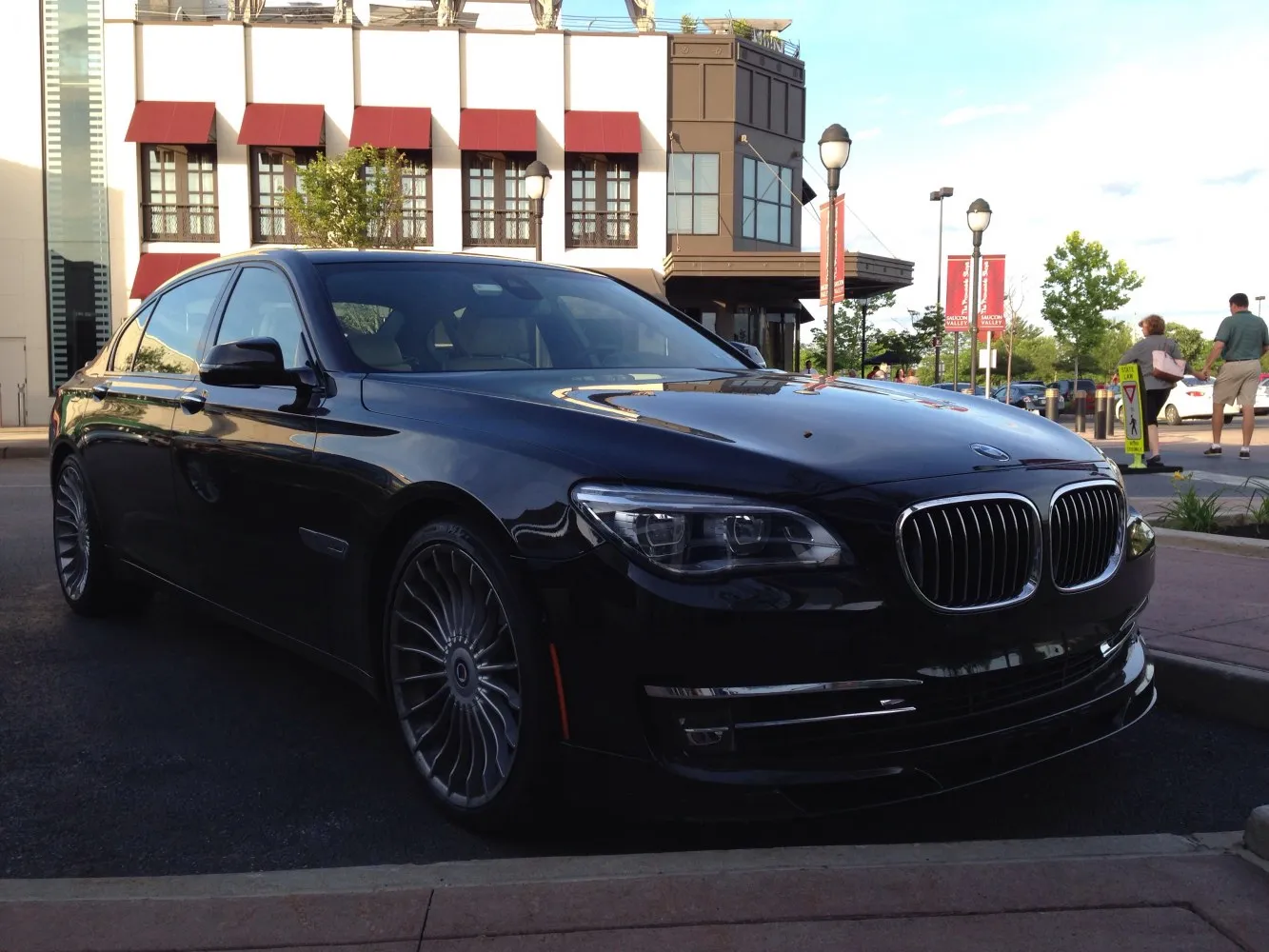
Alpina B7 (F01). With 730 Nm of torque, it offers ample pulling power. At around 2040 kg, it’s on the heavier side. Rear‑wheel drive offers dynamic handling and sporty feedback. Acceleration is excellent (0–100 km/h in 4.6 s). The top speed reaches 312 km/h. A four-door car with a separate trunk, ideal for families and daily commuting. Seating for 5 makes it ideal for daily use.
Based on the BMW 7 Series (F01) platform, the Alpina B7 benefits from a robust safety structure and comprehensive active/passive safety systems, earning a top 5-star Euro NCAP rating for the base model.
4.4 V8 (540 Hp) BITURBO Verdict:

Performance Verdict
Offers blistering straight-line speed and a more traditional rear-wheel-drive feel, providing an engaging and powerful driving experience with precise handling.
Fuel Economy
Slightly better fuel efficiency than the Allrad model, but still a thirsty V8, reflecting its high-performance nature and luxurious capabilities.
Pros and Cons:
Pros:
- • Exceptional performance from the twin-turbo V8 engine.
- • Luxurious and supremely comfortable interior with high-quality materials.
- • Understated yet distinctive Alpina styling and exclusivity.
- • Superb high-speed stability and refinement for long journeys.
- • Excellent blend of sportiness and luxury.
Cons:
- • High purchase price and significant running costs.
- • Fuel consumption is substantial, especially under spirited driving.
- • Complex high-performance engine can lead to expensive repairs if not meticulously maintained.
- • Large size can be challenging to maneuver and park in urban environments.
Specifications:
Specifications are compared to those of the previous generation(E65/E66L: 2005 - 2008).
| General: | |
|---|---|
| Brand: | Alpina |
| Model: | B7 |
| Generation: | F01 |
| Modification (Engine): | 4.4 V8 (540 Hp) BITURBO |
| Start of production: | 2013 |
| End of production: | 2015 |
| Powertrain Architecture: | Internal Combustion engine |
| Body type: | Sedan |
| Seats: | 5 |
| Doors: | 4 |
| Engine: | |
|---|---|
| Power: | 540 Hp @ 5200-6250 rpm. |
| Power per litre: | 122.9 Hp/l |
| Torque: | 730 Nm @ 2800-5000 rpm. |
| Engine displacement: | 4395 |
| Number of cylinders: | 8 |
| Engine configuration: | V-engine |
| Fuel injection system: | Direct injection |
| Engine aspiration: | Twin-Turbo, Intercooler |
| Engine layout: | Front, Longitudinal |
| Cylinder Bore: | 89 mm mm |
| Piston Stroke: | 88.3 mm mm |
| Compression ratio: | 10:1 |
| Performance: | |
|---|---|
| Fuel Type: | Petrol (Gasoline) |
| Fuel consumption (economy) - urban: | 13.5 l/100 km |
| Fuel consumption (economy) - extra urban: | 7.8 l/100 km |
| Fuel consumption (economy) - combined: | 9.9 l/100 km |
| Emission standard: | Euro 5 |
| Acceleration 0 - 100 km/h: | 4.6 sec |
| Acceleration 0 - 62 mph: | 4.6 sec |
| Maximum speed: | 312 km/h |
| Weight-to-power ratio: | 3.8 kg/Hp, 264.7 Hp/tonne |
| Weight-to-torque ratio: | 2.8 kg/Nm, 357.8 Nm/tonne |
| Acceleration 0 - 60 mph: | 4.4 sec |
| Space: | |
|---|---|
| Kerb Weight: | 2040 |
| Max. weight: | 2660 |
| Max load: | 620 |
| Trunk (boot) space - minimum: | 500 l |
| Fuel tank capacity: | 80 l |
| Size: | |
|---|---|
| Length: | 5092 mm mm [62mm more] |
| Width: | 1902 mm mm [2mm more] |
| Height: | 1485 mm mm [5mm more] |
| Wheelbase: | 3070 mm mm [80mm more] |
| Front track: | 1621 mm |
| Rear (Back) track: | 1628 mm |
| Powertrain: | |
|---|---|
| Drivetrain Architecture | The Internal combustion engine (ICE) drives the rear wheels of the vehicle. |
| Drive wheel | Rear wheel drive |
| Number of gears | 8 |
| Transmission type | Automatic |
| Assisting systems | ABS (Anti-lock braking system) |
| Steering type | Steering rack and pinion |
| Tires size | 245/35 ZR21; 285/30 ZR21 |
| Wheel rims size | 8.5J x 21; 10J x 21 |


Better than its competitors? Tell us why the Alpina B7 stands out.