Volvo V90 facelift 2020 Recharge 2.0 T8 (303 Hp) Plug-in Hybrid AWD Geartronic
People\'s Opinion
N/A / 5
Volvo V90:
The Volvo V90 is a mid-size luxury wagon manufactured and marketed by Swedish automaker Volvo Cars from 2016 to 2025. Two months after the introduction of the sedan model, the Volvo S90, the V90 was revealed at the Geneva Motor Show in March 2016.
The V90 is offered with various trim levels. In the United States the V90 was only available by special order, with dealers focusing on the V90 Cross Country.
In 2021, it was announced that the V90 would no longer be sold in the United States, with 2021 being the final model year....(Read more on Wikipedia)
facelift 2020 Overview:
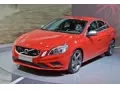
Volvo V90 (facelift 2020). With 400 Nm of torque, it offers ample pulling power. At around 2025 kg, it’s on the heavier side. All‑wheel drive provides excellent grip, ideal for off‑road use. Acceleration is excellent (0–100 km/h in 5.3 s). The top speed reaches 180 km/h. A car with an extended rear cargo area, combining passenger comfort with increased storage. Seating for 5 makes it ideal for daily use.
Performance Verdict
Exceptional performance, delivering rapid acceleration and strong power, combining petrol and electric seamlessly.
Fuel Economy
Outstanding fuel economy, with a substantial electric range making it highly efficient for daily use.
Best Use Case:
Mixed / Performance / Eco-conscious
Pros and Cons:
Pros:
- • Exceptional safety features and Euro NCAP rating
- • Luxurious and comfortable interior with high-quality materials
- • Wide range of efficient mild-hybrid and powerful plug-in hybrid powertrains
- • Practical and spacious estate body style with ample cargo room
- • Refined ride quality and quiet cabin experience
Cons:
- • Electronically limited top speed (180 km/h) for all models
- • Infotainment system can be less intuitive than some rivals
- • Entry-level diesel engines can feel underpowered for the car's size
- • Premium pricing places it at the higher end of its segment
- • Some drivers may find the steering lacks feedback compared to sportier rivals
Specifications:
Specifications are compared to those of the previous generation(Cross Country (facelift 2020): June, 2020 - 2022).
| General: |
| Brand: | Volvo |
|---|
| Model: | V90 |
|---|
| Generation: | facelift 2020 |
|---|
| Modification (Engine): | Recharge 2.0 T8 (303 Hp) Plug-in Hybrid AWD Geartronic |
|---|
| Start of production: | March, 2020 |
|---|
| End of production: | September, 2021 |
|---|
| Powertrain Architecture: | PHEV (Plug-in Hybrid Electric Vehicle) |
|---|
| Body type: | Station wagon (estate) |
|---|
| Seats: | 5 |
|---|
| Doors: | 5 |
|---|
| Engine: |
| Engine systems: | Start & Stop System |
|---|
| Power: | 303 Hp @ 6000 rpm. Same horsepower |
|---|
| Power per litre: | 153.9 Hp/l [23mm less] |
|---|
| Torque: | 400 Nm @ 2200-4800 rpm. |
|---|
| Engine Model/Code: | B4204T34 More details about the engine B4204T34 |
|---|
| Engine displacement: | 1969 |
|---|
| Number of cylinders: | 4 |
|---|
| Engine configuration: | Inline |
|---|
| Number of valves per cylinder: | 4 |
|---|
| Fuel injection system: | Direct injection |
|---|
| Engine aspiration: | Turbocharging and Supercharger, Intercooler |
|---|
| Valvetrain: | DOHC |
|---|
| Engine oil capacity: | 5.6 l |
|---|
| Engine layout: | Front, Transverse |
|---|
| Cylinder Bore: | 82 mm mm |
|---|
| Piston Stroke: | 93.2 mm mm |
|---|
| Compression ratio: | 10.3:1 |
|---|
| Maximum engine speed: | 6000 rpm. |
|---|
| Performance: |
| Fuel Type: | Petrol / electricity |
|---|
| Combined fuel consumption (WLTP): | 1.7-2.7 l/100 km |
|---|
| Fuel consumption (economy) - combined (NEDC): | 1.7 l/100 km |
|---|
| Fuel consumption (economy) - combined: | 1.7 l/100 km |
|---|
| Emission standard: | Euro 6d |
|---|
| Acceleration 0 - 100 km/h: | 5.3 sec |
|---|
| Acceleration 0 - 62 mph: | 5.3 sec |
|---|
| Maximum speed: | 180 km/h, Electronically limited |
|---|
| Weight-to-power ratio: | 6.7 kg/Hp, 149.6 Hp/tonne |
|---|
| Weight-to-torque ratio: | 5.1 kg/Nm, 197.5 Nm/tonne |
|---|
| Max speed (electric): | 125 km/h |
|---|
| Acceleration 0 - 60 mph: | 5 sec |
|---|
| 100 km/h - 0: | 35 m |
|---|
| Space: |
| Kerb Weight: | 2025 |
|---|
| Max. weight: | 2620 |
|---|
| Max. roof load: | 100 kg |
|---|
| Max load: | 595 |
|---|
| Trunk (boot) space - maximum: | 1526 l |
|---|
| Trunk (boot) space - minimum: | 560 l |
|---|
| Permitted trailer load with brakes (12%): | 2100 kg |
|---|
| Fuel tank capacity: | 60 l |
|---|
| Permitted trailer load without brakes: | 750 kg |
|---|
| Permitted towbar download: | 100 kg |
|---|
| Size: |
| Length: | 4936 mm mm [23mm less] |
|---|
| Width: | 1879 mm mm [Same width.] |
|---|
| Height: | 1475 mm mm [62mm less] |
|---|
| Wheelbase: | 2941 mm mm [Same wheelbase.] |
|---|
| Width with mirrors folded: | 1895 mm |
|---|
| Width including mirrors: | 2019 mm |
|---|
| Front track: | 1628 mm |
|---|
| Rear (Back) track: | 1629 mm |
|---|
| Front overhang: | 873 mm |
|---|
| Rear overhang: | 1122 mm |
|---|
| Ride height (ground clearance): | 156 mm |
|---|
| Minimum turning circle (turning diameter): | 12.2 m [above average] |
|---|
| Powertrain: |
| Drivetrain Architecture | The Internal combustion engine (ICE) permanently drives the front wheels of the vehicle, the electric motor drives the rear wheels of the vehicle, capable of running in full electric mode, only by the Internal combustion engine (ICE) or in mixed mode. |
|---|
| Drive wheel | All wheel drive (4x4) |
|---|
| Number of gears | 8 |
|---|
| Transmission type | Automatic |
|---|
| Gearbox type | Geartronic |
|---|
| Front brakes | Ventilated discs, 345x30 mm [Best for performance and cooling.] |
|---|
| Rear brakes | Ventilated discs, 320x20 mm [Best for performance and cooling.] |
|---|
| Assisting systems | ABS (Anti-lock braking system) |
|---|
| Steering type | Steering rack and pinion |
|---|
| Power steering | Electric Steering |
|---|
| Tires size | 245/45 R18 |
|---|
| Wheel rims size | 8J x 18 |
|---|
| Front suspension | Double wishbone, Transverse stabilizer |
|---|
| Rear suspension | Transverse stabilizer, Leaf spring |
|---|
| Electric: |
| Gross battery capacity: | 11.6 kWh |
|---|
| Battery technology: | Lithium-ion (Li-Ion) |
|---|
| Battery location: | In the central tunnel |
|---|
| All-electric range: | 51-61 km |
|---|
| Electric motor power: | 87 Hp @ 7000 rpm. |
|---|
| Electric motor Torque: | 240 Nm @ 0-3000 rpm. |
|---|
| Average Energy consumption: | 14.6-15.3 kWh/100 km |
|---|
| Electric motor location: | Rear axle, Transverse |
|---|
| Average Energy consumption (WLTP): | 14.6-15.3 kWh/100 km |
|---|
| All-electric range (WLTP): | 51-61 km |
|---|
| Battery voltage: | 400 V |
|---|
| Average Energy consumption (NEDC): | 15.8 kWh/100 km |
|---|
| All-electric range (NEDC): | 53 km |
|---|









Was the Volvo V90 what you expected? Let us know!