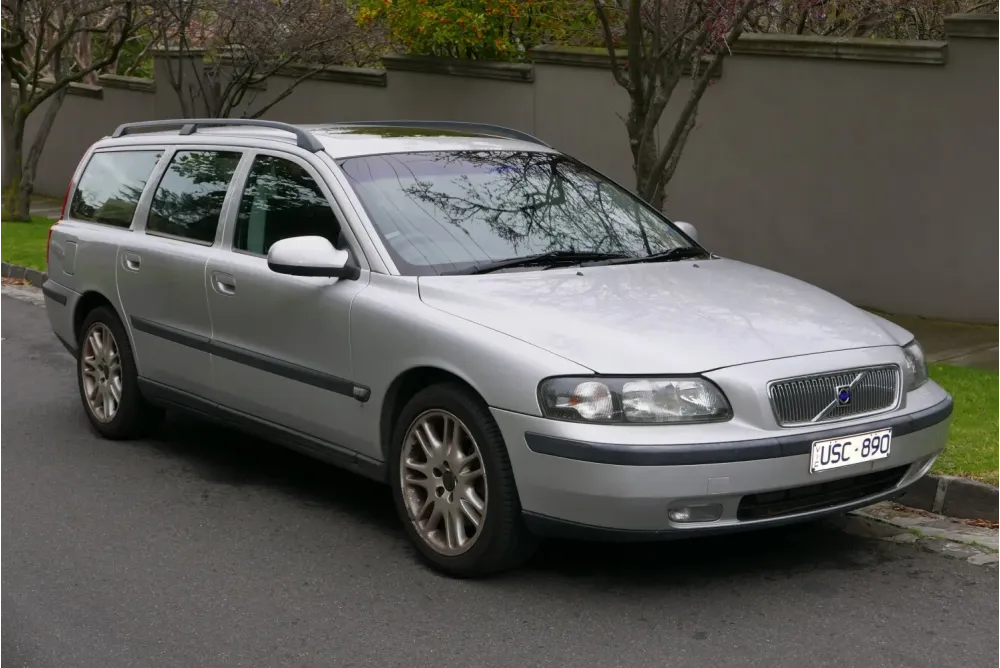
Click on image to view the full photo gallery
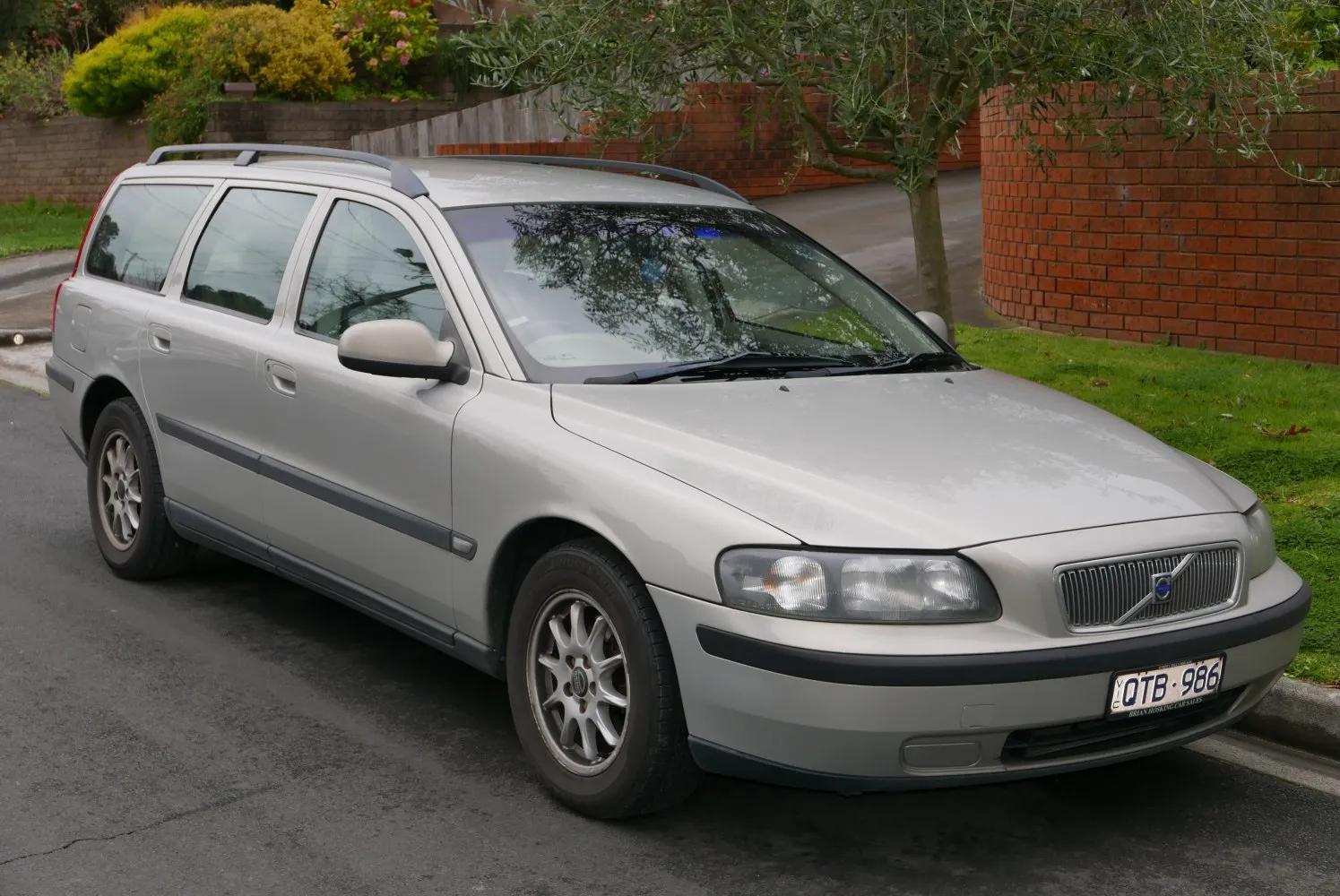
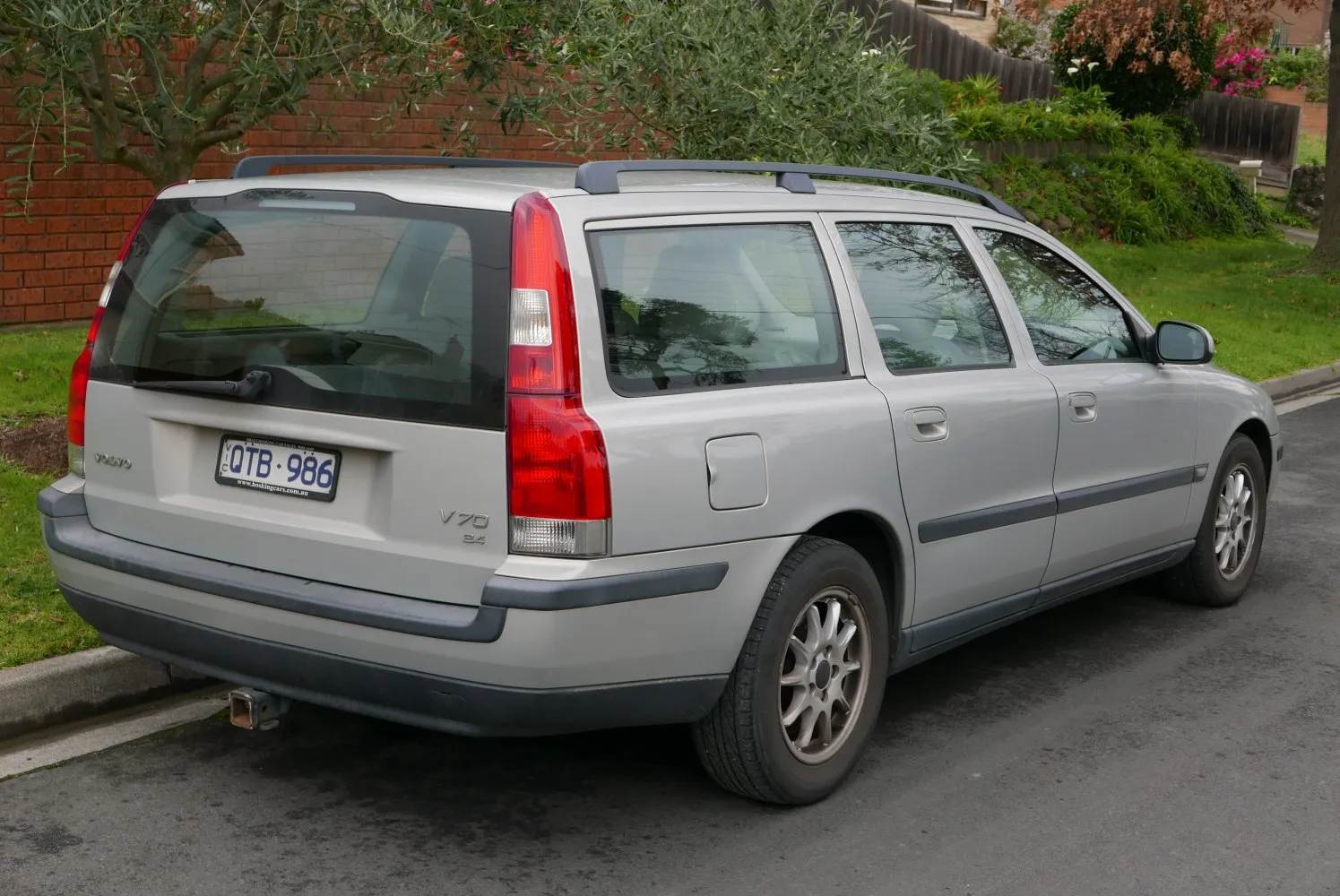
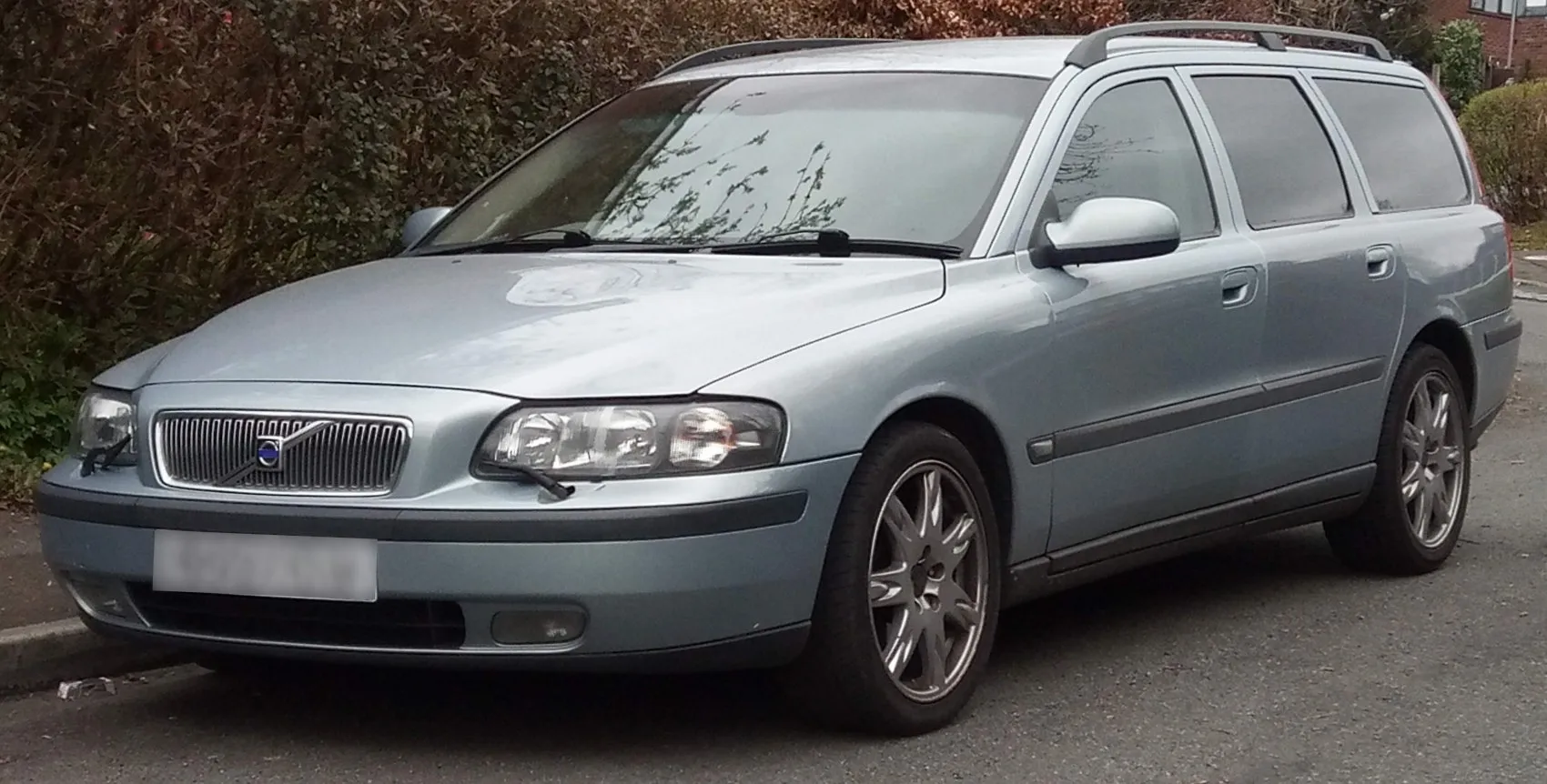
Volvo V70 II 2.4 Bi-Fuel (140 Hp)
Overall Rating
Volvo V70:
The Volvo V70 is an executive car manufactured and marketed by Volvo Cars from 1996 to 2016 across three generations. The name V70 combines the letter V, standing for versatility, and 70, denoting relative platform size.
The first generation debuted in November 1996. It was based on the P80 platform and was available with front and all-wheel drive , the latter marketed as the V70 AWD. In September 1997, a crossover version called the V70 XC or V70 Cross Country was introduced. The sedan model was called Volvo S70....(Read more on Wikipedia)
II Overview:
Volvo V70 (II). With 220 Nm of torque, it offers ample pulling power. With a weight of 1587 kg, it falls in the mid‑range. Front‑wheel drive delivers efficiency and easy handling. Acceleration is relatively slow (0–100 km/h in 10.5 s). The top speed reaches 200 km/h. A car with an extended rear cargo area, combining passenger comfort with increased storage. Seating for 5 makes it ideal for daily use.
The Volvo V70 II achieved a commendable 4-star Euro NCAP rating for adult occupant protection, reflecting Volvo's strong commitment to safety standards of its time.
2.4 Bi-Fuel (140 Hp) Verdict:

Performance Verdict
Similar performance to the standard 2.4 (140 Hp) petrol, providing adequate power for most situations.
Fuel Economy
Offers the benefit of lower running costs when operating on alternative fuels, despite slightly higher fuel consumption on petrol.
 Community Verdict
This rating is based on comments found on Reddit, scanned using artificial intelligence, and may not accurately reflect reality.

3.9 / 5
Based on AI analysis of 15 discussions
Read What Owners Say
Pros and Cons:
Pros:
- • Excellent safety record and robust build quality
- • Spacious and practical interior with large boot capacity
- • Comfortable ride quality, ideal for long journeys
- • Wide range of powerful and efficient engine options (including performance 'R' models)
- • Distinctive and timeless Scandinavian design
Cons:
- • Some petrol engines can be thirsty, especially with automatic transmissions
- • Older automatic gearboxes can be slow and less refined
- • Certain electronic components can develop faults with age
- • Parts and maintenance can be more expensive than some rivals
- • Handling is more comfort-oriented than sporty (excluding R models)
Specifications:
Specifications are compared to those of the previous generation(I: 1999 - 2000).
| General: | |
|---|---|
| Brand: | Volvo |
| Model: | V70 |
| Generation: | II |
| Modification (Engine): | 2.4 Bi-Fuel (140 Hp) |
| Start of production: | 2000 |
| End of production: | 2004 |
| Powertrain Architecture: | Internal Combustion engine |
| Body type: | Station wagon (estate) |
| Seats: | 5 |
| Doors: | 5 |
| Engine: | |
|---|---|
| Power: | 140 Hp @ 4500 rpm. Same horsepower |
| Power per litre: | 57.5 Hp/l [20mm less] |
| Torque: | 220 Nm @ 3300 rpm. |
| Engine Model/Code: | B5244SG More details about the engine B5244SG |
| Engine displacement: | 2435 |
| Number of cylinders: | 5 |
| Engine configuration: | Inline |
| Number of valves per cylinder: | 4 |
| Fuel injection system: | Multi-port manifold injection |
| Engine aspiration: | Naturally aspirated engine |
| Valvetrain: | DOHC |
| Engine oil capacity: | 5.5 l |
| Coolant: | 8 l |
| Engine layout: | Front, Transverse |
| Cylinder Bore: | 83 mm mm |
| Piston Stroke: | 90 mm mm |
| Compression ratio: | 10.3:1 |
| Power (CNG): | 140 Hp @ 5800 rpm. |
| Power per litre (CNG): | 57.5 Hp/l |
| Torque (CNG): | 192 Nm @ 4500 rpm. |
| Performance: | |
|---|---|
| Maximum speed (CNG): | 205 km/h |
| Acceleration 0 - 100 km/h (CNG): | 11 sec |
| Fuel Type: | Petrol / CNG |
| Fuel consumption (economy) - urban: | 12.6 l/100 km |
| Fuel consumption (economy) - extra urban: | 7 l/100 km |
| Fuel consumption (economy) - combined (NEDC): | 9.1 l/100 km |
| Fuel consumption (economy) - urban (NEDC): | 12.6 l/100 km |
| Fuel consumption (economy) - extra urban (NEDC): | 7 l/100 km |
| Fuel consumption (economy) - combined (CNG): | 8 kg/100 km |
| Fuel consumption (economy) - combined (CNG) (NEDC): | 8 kg/100 km |
| Fuel consumption (economy) - combined: | 9.1 l/100 km |
| Emission standard: | Euro 4 |
| Acceleration 0 - 100 km/h: | 10.5 sec |
| Acceleration 0 - 62 mph: | 10.5 sec |
| Maximum speed: | 200 km/h |
| Weight-to-power ratio: | 11.3 kg/Hp, 88.2 Hp/tonne |
| Weight-to-torque ratio: | 7.2 kg/Nm, 138.6 Nm/tonne |
| Acceleration 0 - 60 mph: | 10 sec |
| Space: | |
|---|---|
| Kerb Weight: | 1587 |
| Max. weight: | 2150 |
| Max. roof load: | 100 kg |
| Max load: | 563 |
| Trunk (boot) space - maximum: | 1641 l |
| Trunk (boot) space - minimum: | 485 l |
| Permitted trailer load with brakes (12%): | 1800 kg |
| Fuel tank capacity: | 29 l |
| CNG cylinder capacity: | 17.6 kg |
| Permitted trailer load without brakes: | 750 kg |
| Permitted towbar download: | 75 kg |
| Size: | |
|---|---|
| Length: | 4710 mm mm [20mm less] |
| Width: | 1804 mm mm [44mm more] |
| Height: | 1468 mm mm [38mm more] |
| Wheelbase: | 2755 mm mm [95mm more] |
| Front track: | 1551 mm |
| Rear (Back) track: | 1548 mm |
| Minimum turning circle (turning diameter): | 11.9 m [above average] |
| Powertrain: | |
|---|---|
| Drivetrain Architecture | The Internal combustion engine (ICE) drives the front wheels of the vehicle. |
| Drive wheel | Front wheel drive |
| Number of gears | 5 |
| Transmission type | Manual |
| Front brakes | Ventilated discs [Best for performance and cooling.] |
| Rear brakes | Disc [above average] |
| Assisting systems | ABS (Anti-lock braking system) |
| Steering type | Steering rack and pinion |
| Power steering | Hydraulic Steering |
| Tires size | 205/55 R16; 215/55 R16; 225/45 R17 |
| Wheel rims size | 6.5J x 16; 7J x 16; 7.5J x 17 |
| Front suspension | Wishbone |
| Rear suspension | Coil spring |







If you could change one thing about the Volvo V70, what would it be?