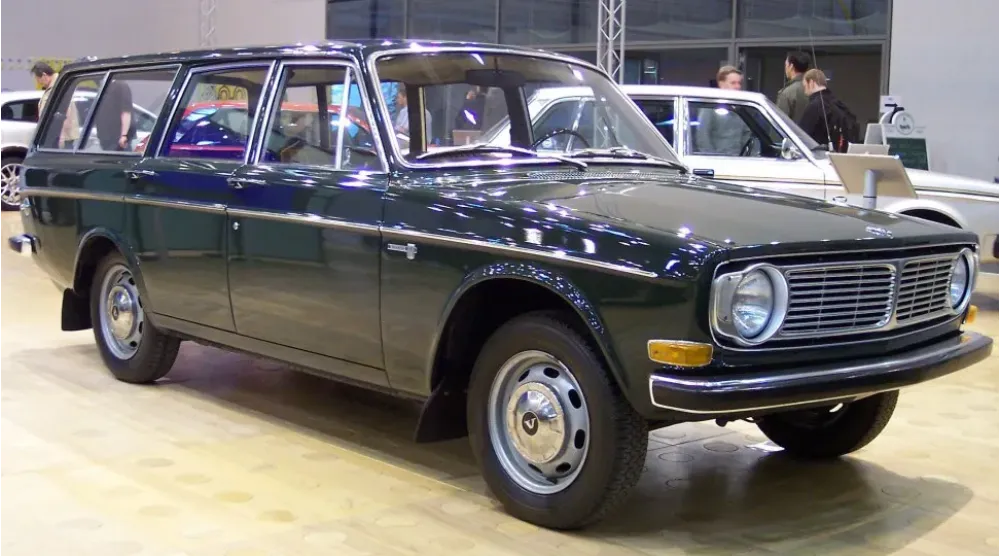
Click on image to view the full photo gallery
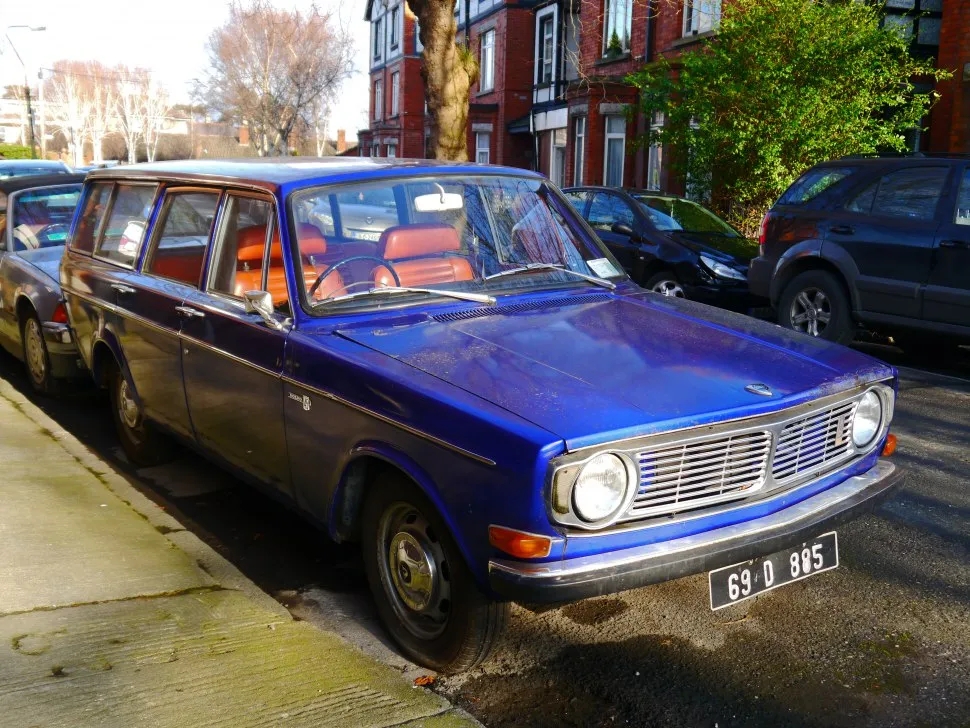
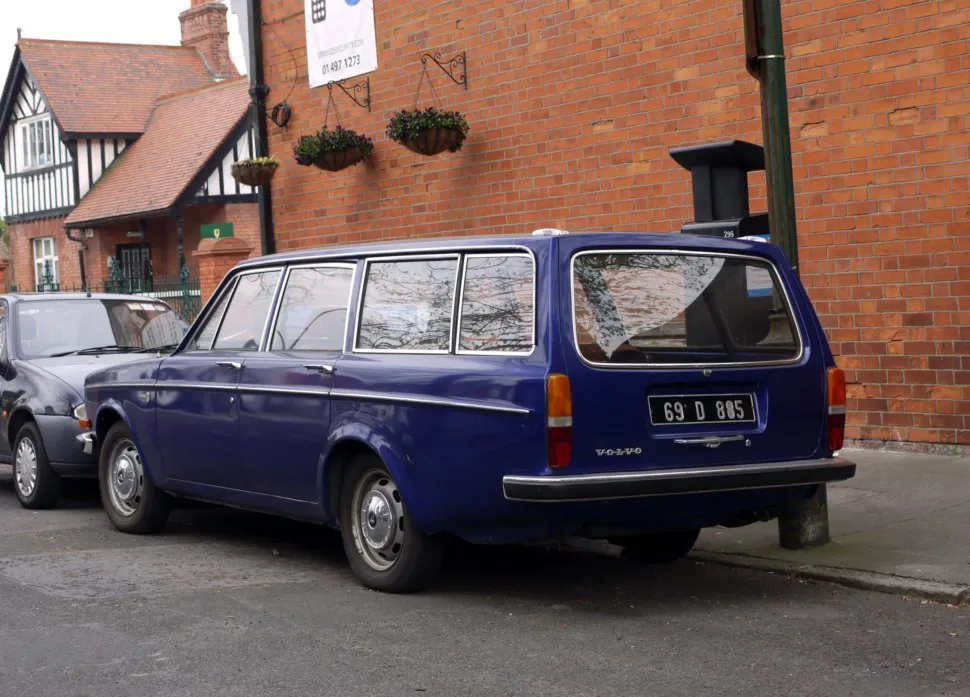
Volvo 140 Combi (145) 2.0 S (116 Hp)
Overall Rating
Volvo 140:
The Volvo 140 Series is a line of mid-size cars manufactured and marketed by Volvo from 1966 to 1974 in two- and four-door sedan as well as five-door station wagon body styles, with numerous intermediate facelifts. More than a million Volvo 140s were built in 8 years.
Volvo Cars began manufacturing the Volvo 144 at Torslandaverken in the late summer of 1966 for the 1967 model year. The 144 series, which followed the Volvo Amazon , was the first Volvo to use a tri-digit nomenclature, where the first digit indicated series, second digit indicated the number of cylinders, and third digit indicated the number of doors. Thus, a "144" was a first series, 4-cylinder, 4-door sedan. The 144 was the first Volvo to feature a more rectilinear or boxy styling. Compared to the Volvo Amazon, the 140 was a radical departure with minimal exterior and interior carryover, notably a stylised version of the front split grille. The car's basic shape would survive into the 1990s as the 200 series. Mechanically, the car used many of the same drivetrain components as the Amazon, but also showcased many improvements, including disc brakes on all four wheels. It was named car of the year in 1966 by Swedish magazine Teknikens Värld. The engine in the standard 144 was the same as found in the standard Amazon , the 1. 8l B18A, but the 144S was given the more powerful B18B from the 123GT and 1800S. Late in the 1967 model year production of the Volvo 142 began, in time to build 1500 units for the first year. In 1968 production of the Volvo 145 5-door station wagon began, completing the three body styles used in the 140 range....(Read more on Wikipedia)
Combi (145) Overview:
Volvo 140 (Combi (145)). A car with an extended rear cargo area, combining passenger comfort with increased storage. Seating for 5 makes it ideal for daily use.
2.0 S (116 Hp) Verdict:

Performance Verdict
One of the more desirable engines, providing brisk performance for a family wagon of its era. Fuel injection (likely B20E) offers smoother power delivery.
Fuel Economy
Improved efficiency compared to carbureted versions due to fuel injection, though still a classic engine. Fuel injection system requires specific maintenance.
Pros and Cons:
Pros:
- • Exceptional reliability and durability
- • Spacious and practical station wagon body
- • Pioneering safety features for its time
- • Simple and robust mechanicals, easy to maintain
- • Classic, distinctive styling
- • Strong community support
Cons:
- • Performance can be modest with lower-powered engines
- • Dated interior amenities and ergonomics
- • Fuel economy not competitive by modern standards
- • Rust can be an issue on unrestored examples
- • Steering can be heavy without power steering
Specifications:
Specifications are compared to those of the previous generation(Combi (145): 1972 - 1974).
| General: | |
|---|---|
| Brand: | Volvo |
| Model: | 140 |
| Generation: | Combi (145) |
| Modification (Engine): | 2.0 S (116 Hp) |
| Start of production: | 1973 |
| End of production: | 1975 |
| Powertrain Architecture: | Internal Combustion engine |
| Body type: | Station wagon (estate) |
| Seats: | 5 |
| Doors: | 5 |
| Engine: | |
|---|---|
| Power: | 116 Hp |
| Engine aspiration: | Naturally aspirated engine |
| Performance: | |
|---|---|
| Fuel Type: | Petrol (Gasoline) |
| Space: | |
|---|---|
| Fuel tank capacity: | 58 l |






Is the Volvo 140 worth every penny? Give us your honest ROI.