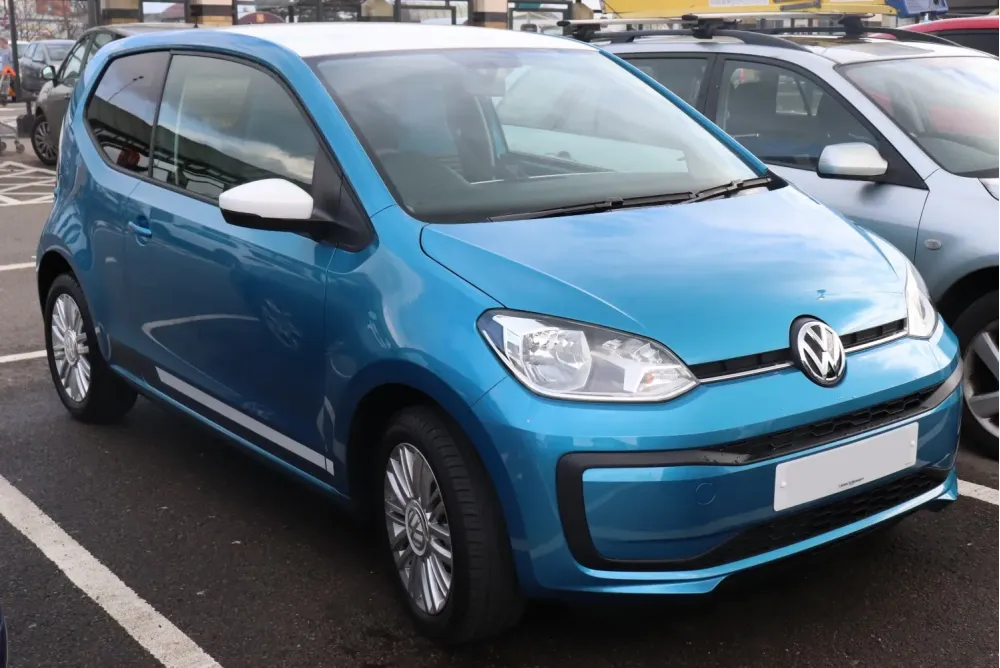
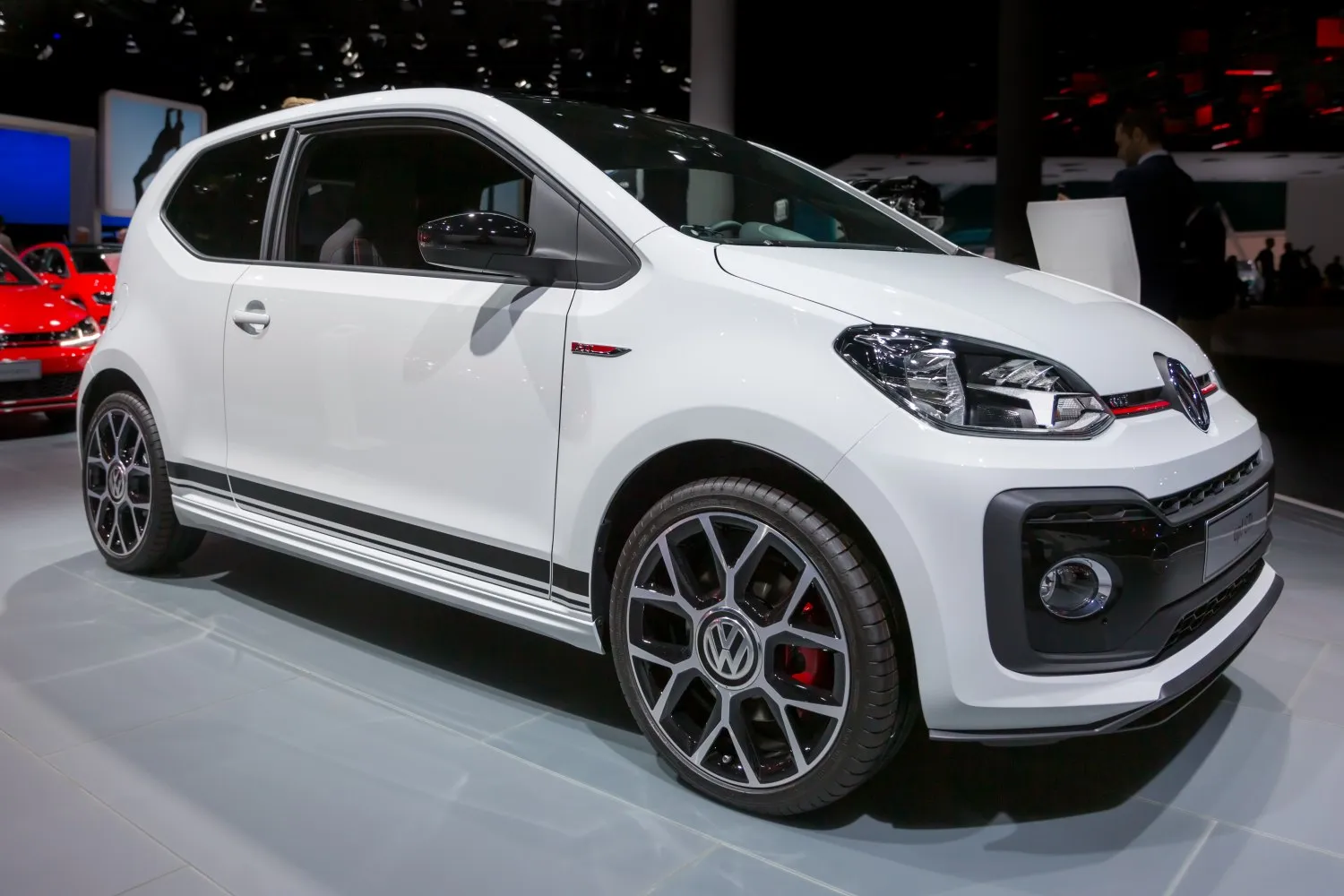
Volkswagen Up! facelift 2016 GTI 1.0 TSI (115 Hp) OPF
Volkswagen Up!:
The Volkswagen Up is a city car which was produced by the Volkswagen Group from 2011 to 2023. It is part of the New Small Family series of models, alongside the SEAT Mii and Škoda Citigo which are rebadged versions of the Up, with slightly different front and rear fascias. Production began in December 2011 at the Volkswagen Plant in Bratislava, Slovakia, with Volkswagen do Brasil making the model in Taubaté from February 2014 until 2021. The SEAT and Škoda versions were also manufactured in the Bratislava factory, before being withdrawn from sale in 2021 and 2020 respectively. Production of the Up ended in October 2023. A battery electric version, called E-up, was launched in autumn 2013....(Read more on Wikipedia)
facelift 2016 Overview:
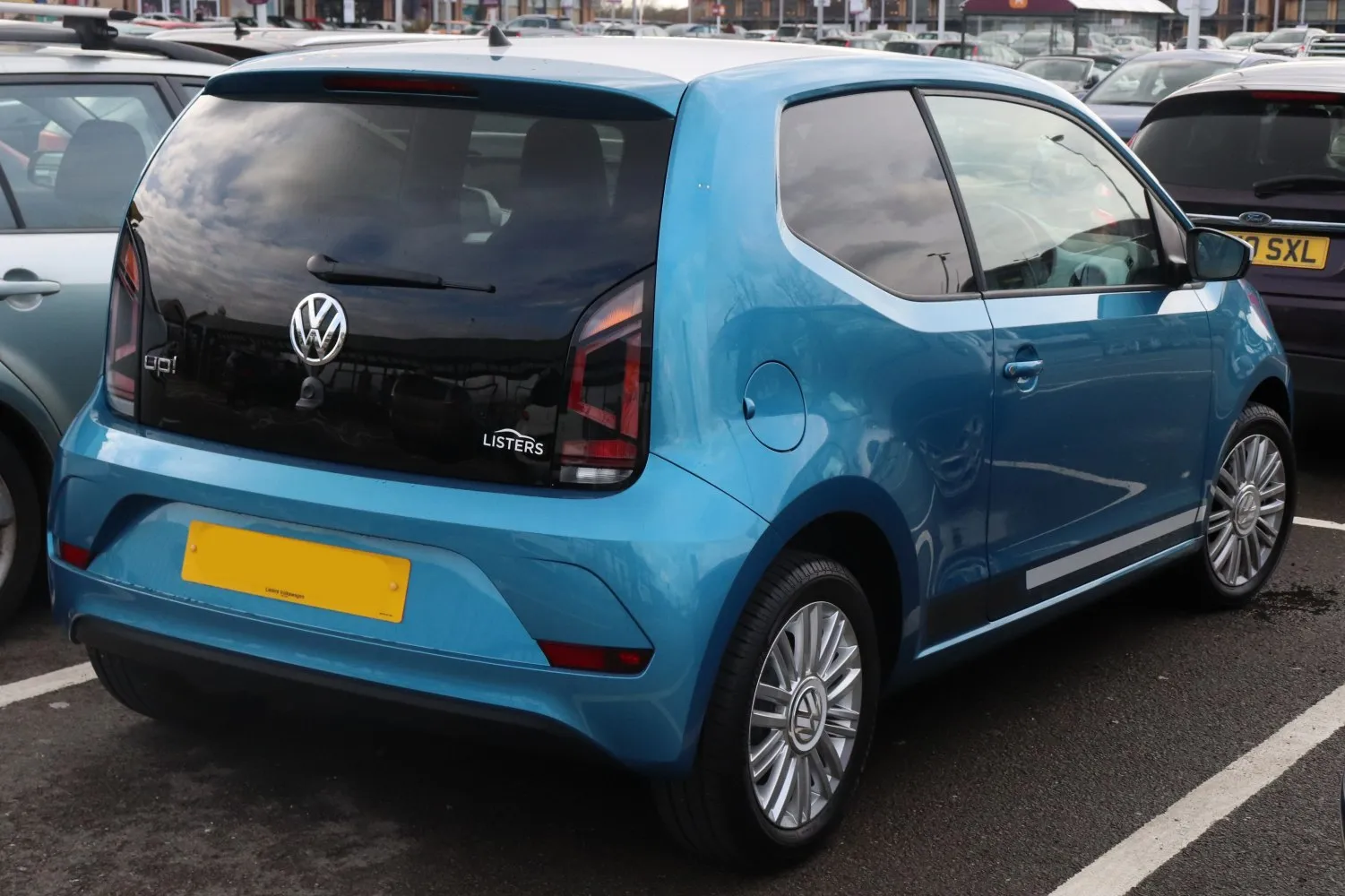
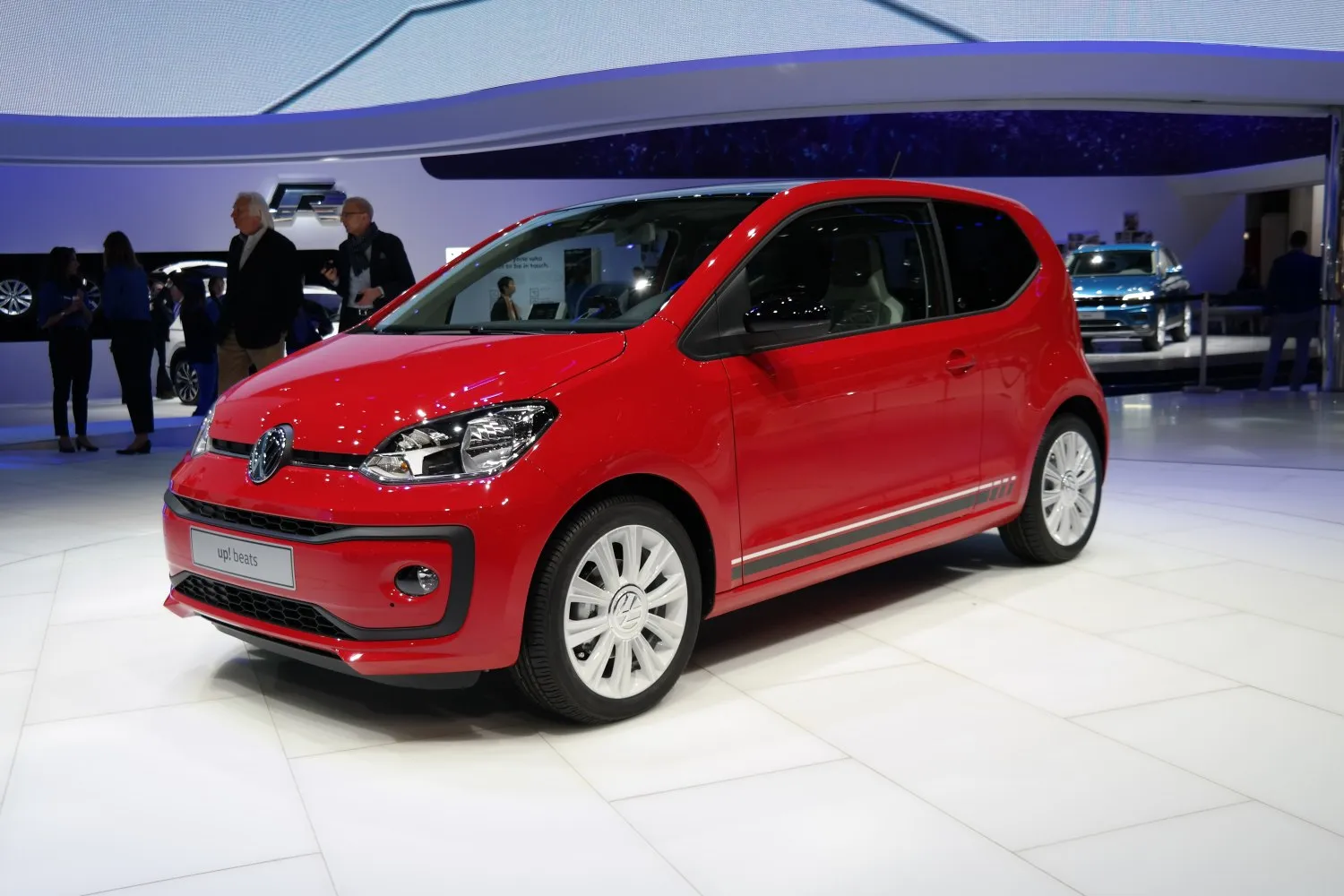
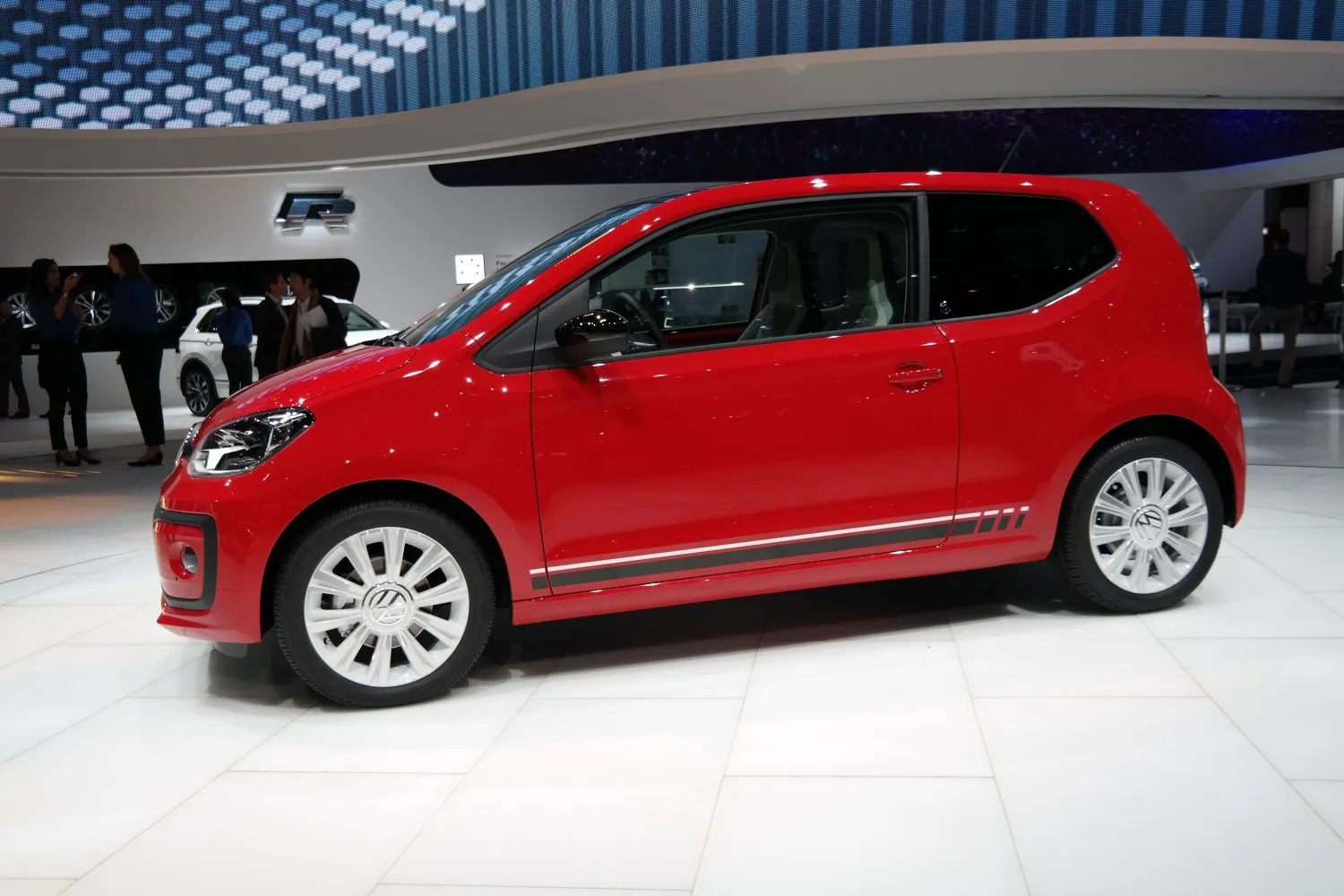
Volkswagen Up! (facelift 2016). With 200 Nm of torque, it offers ample pulling power. It has moderate fuel consumption (~6.1 l/100km). Weighing only 992 kg, it’s quite light. Front‑wheel drive delivers efficiency and easy handling. Acceleration is good (0–100 km/h in 8.8 s). The top speed reaches 196 km/h. A compact car with a rear door that swings upward to provide access to the cargo area. Seating for 4 makes it ideal for daily use.
Pros and Cons:
Pros:
- • Efficiency-focused engine (65 hp), ideal for city commuting.
- • Steady and predictable acceleration (0-100 km/h in 15.6 sec).
- • Exceptional fuel efficiency: 4.3 L/100 km.
- • Ventilated disc brakes for reliable cooling and stopping power.
Cons:
- • Compact cargo space (251 L); may require careful packing.
Specifications:
Specifications are compared to those of the previous generation(e-Up! (facelift 2019): 2019 - ).
| General: |
| Brand: | Volkswagen |
|---|
| Model: | Up! |
|---|
| Generation: | facelift 2016 |
|---|
| Modification (Engine): | GTI 1.0 TSI (115 Hp) OPF |
|---|
| Start of production: | 2020 |
|---|
| Powertrain Architecture: | Internal Combustion engine |
|---|
| Body type: | Hatchback |
|---|
| Seats: | 4 |
|---|
| Doors: | 3-5 |
|---|
| Engine: |
| Engine systems: | Start & Stop System |
|---|
| Power: | 115 Hp @ 5000-5500 rpm. [0hp less] |
|---|
| Power per litre: | 115.1 Hp/l [worst than previous generation] |
|---|
| Torque: | 200 Nm @ 2000-3500 rpm. |
|---|
| Engine Model/Code: | DKRA, DKRF More details about the engine DKRA, DKRF |
|---|
| Engine displacement: | 999 |
|---|
| Number of cylinders: | 3 |
|---|
| Engine configuration: | Inline |
|---|
| Number of valves per cylinder: | 4 |
|---|
| Fuel injection system: | Direct injection |
|---|
| Engine aspiration: | Turbocharger, Intercooler |
|---|
| Engine oil capacity: | 4 l |
|---|
| Engine layout: | Front, Transverse |
|---|
| Performance: |
| Fuel Type: | Petrol (Gasoline) |
|---|
| Fuel consumption (economy) - urban: | 6.1 l/100 km |
|---|
| Fuel consumption (economy) - extra urban: | 4.2 l/100 km |
|---|
| Combined fuel consumption (WLTP): | 5.5 l/100 km |
|---|
| Fuel consumption (economy) - combined (NEDC): | 4.9 l/100 km |
|---|
| Fuel consumption at Low speed (WLTP): | 6.6 l/100 km |
|---|
| Fuel consumption at Medium speed (WLTP): | 5.0 l/100 km |
|---|
| Fuel consumption at high speed (WLTP): | 4.7 l/100 km |
|---|
| Fuel consumption at very high speed (WLTP): | 6.1 l/100 km |
|---|
| Fuel consumption (economy) - urban (NEDC): | 6.1 l/100 km |
|---|
| Fuel consumption (economy) - extra urban (NEDC): | 4.2 l/100 km |
|---|
| Fuel consumption (economy) - combined: | 4.9 l/100 km |
|---|
| Emission standard: | Euro 6-ISC-FCM |
|---|
| Acceleration 0 - 100 km/h: | 8.8 sec |
|---|
| Acceleration 0 - 62 mph: | 8.8 sec |
|---|
| Maximum speed: | 196 km/h |
|---|
| Weight-to-power ratio: | 8.6 kg/Hp, 115.9 Hp/tonne |
|---|
| Weight-to-torque ratio: | 5 kg/Nm, 201.6 Nm/tonne |
|---|
| Acceleration 0 - 60 mph: | 8.4 sec |
|---|
| Space: |
| Kerb Weight: | 992 |
|---|
| Max. weight: | 1380 |
|---|
| Max. roof load: | 50 kg |
|---|
| Max load: | 388 |
|---|
| Trunk (boot) space - maximum: | 959 l |
|---|
| Trunk (boot) space - minimum: | 251 l |
|---|
| Fuel tank capacity: | 35 l |
|---|
| Size: |
| Length: | 3600 mm [Same length.] |
|---|
| Width: | 1645 mm [Same width.] |
|---|
| Height: | 1492 mm [15mm less] |
|---|
| Wheelbase: | 2412 mm [5mm less] |
|---|
| Width including mirrors: | 1910 mm |
|---|
| Front track: | 1412-1433 mm |
|---|
| Rear (Back) track: | 1408-1428 mm |
|---|
| Minimum turning circle (turning diameter): | 9.8 m [above average] |
|---|
| Powertrain: |
| Drivetrain Architecture | The Internal combustion engine (ICE) drives the front wheels of the vehicle. |
|---|
| Drive wheel | Front wheel drive |
|---|
| Number of gears | 6 |
|---|
| Transmission type | Manual |
|---|
| Front brakes | Ventilated discs [Best for performance and cooling.] |
|---|
| Rear brakes | Drum [bad for performance and cooling.] |
|---|
| Assisting systems | ABS (Anti-lock braking system) |
|---|
| Steering type | Steering rack and pinion |
|---|
| Power steering | Electric Steering |
|---|
| Tires size | 165/65 R15; 195/40 R17 |
|---|
| Wheel rims size | 5J x 15; 6; 5J x 17 |
|---|
| Front suspension | Coil spring, Independent coil spring, Wishbone |
|---|
| Rear suspension | Independent coil spring |
|---|




Fuel, speed, and comfort: How does the Volkswagen Up! rank in your book?