
Click on image to view the full photo gallery
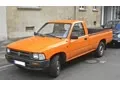
Volkswagen Taro 2.4 D (83 Hp) 4WD
Overall Rating
Volkswagen Taro:
The Volkswagen Taro was a compact pickup truck that was introduced in January 1989 by Volkswagen Commercial Vehicles It was a 1 tonne pickup truck to complement the half tonne Caddy pickup / panel van ranges, and the 1 tonne Transporter van and chassis cab ranges. The name "tarō" is a suffix used in Japanese to denote the oldest brother or son, or the first-born son of a family.
The Taro was a project of badge engineering. The Taro was a rebadged fifth generation Toyota Hilux, which was fully engineered and designed by Toyota. The two companies came together in an effort to solve each other's problems:....(Read more on Wikipedia)
Taro Overview:
Volkswagen Taro (Taro). With 165 Nm of torque, it offers ample pulling power. With a weight of 1532 kg, it falls in the mid‑range. All‑wheel drive provides excellent grip, ideal for off‑road use. The top speed reaches 130 km/h. A vehicle with an open cargo bed at the back, suitable for transporting goods. Seating for 2 makes it ideal for daily use.
The Volkswagen Taro, produced before Euro NCAP's inception and as a utilitarian vehicle, was not tested. Safety features are basic by modern standards, reflecting its era and purpose.
2.4 D (83 Hp) 4WD Verdict:

Performance Verdict
A reliable, albeit slow, workhorse diesel engine, best suited for utility and off-road tasks rather than speed.
Fuel Economy
Decent fuel economy for a 4WD pickup of its era, especially for a naturally aspirated diesel.
Pros and Cons:
Pros:
- • Exceptional reliability and durability (Toyota Hilux base)
- • Strong off-road capability (4WD models)
- • Practical and versatile for utility tasks
- • Simple, easy-to-maintain mechanics
- • Good towing and payload capacity
Cons:
- • Very basic comfort and interior features
- • Modest performance across all engine options
- • Poor fuel economy for petrol engines
- • Lacks modern safety features
- • Harsh ride quality when unladen
Specifications:
| General: | |
|---|---|
| Brand: | Volkswagen |
| Model: | Taro |
| Generation: | Taro |
| Modification (Engine): | 2.4 D (83 Hp) 4WD |
| Start of production: | 1989 |
| End of production: | 1991 |
| Powertrain Architecture: | Internal Combustion engine |
| Body type: | Pick-up |
| Seats: | 2 |
| Doors: | 2 |
| Engine: | |
|---|---|
| Power: | 83 Hp @ 4200 rpm. |
| Power per litre: | 33.9 Hp/l |
| Torque: | 165 Nm @ 2400 rpm. |
| Engine Model/Code: | 2L |
| Engine displacement: | 2446 |
| Number of cylinders: | 4 |
| Engine configuration: | Inline |
| Number of valves per cylinder: | 2 |
| Fuel injection system: | Precombustion chamber injection |
| Engine aspiration: | Naturally aspirated engine |
| Valvetrain: | SOHC |
| Engine oil capacity: | 5.8 l |
| Engine layout: | Front, Longitudinal |
| Cylinder Bore: | 92 mm |
| Piston Stroke: | 92 mm |
| Compression ratio: | 22.2:1 |
| Maximum engine speed: | 4800 rpm. |
| Performance: | |
|---|---|
| Fuel Type: | Diesel |
| Fuel consumption (economy) - extra urban: | 9.8 l/100 km |
| Maximum speed: | 130 km/h |
| Weight-to-power ratio: | 18.5 kg/Hp, 54.2 Hp/tonne |
| Weight-to-torque ratio: | 9.3 kg/Nm, 107.7 Nm/tonne |
| Space: | |
|---|---|
| Kerb Weight: | 1532 |
| Max. weight: | 2460 |
| Max load: | 928 |
| Permitted trailer load with brakes (12%): | 1500 kg |
| Fuel tank capacity: | 56 l |
| Permitted trailer load without brakes: | 600 kg |
| Permitted towbar download: | 75 kg |
| Size: | |
|---|---|
| Length: | 4725 mm |
| Width: | 1690 mm |
| Height: | 1745 mm |
| Wheelbase: | 2850 mm |
| Front track: | 1420 mm |
| Rear (Back) track: | 1400 mm |
| Minimum turning circle (turning diameter): | 13.6 m |
| Powertrain: | |
|---|---|
| Drivetrain Architecture | The Internal combustion engine (ICE) drives permanently the four wheels of the vehicle. |
| Drive wheel | All wheel drive (4x4) |
| Number of gears | 5 |
| Transmission type | Manual |
| Front brakes | Ventilated discs |
| Rear brakes | Drum |
| Steering type | Cone worm with recirculation balls |
| Wheel rims size | 6J x 16 |
| Front suspension | Rigid axle suspension, Leaf spring |
| Rear suspension | Leaf spring |




Would you recommend the Volkswagen Taro ? Tell us why or why not!